
Earthquake-proofing in four words
Kagu no tentō bōshi (家具の転倒防止) is the phrase you will see on city leaflets and home centre aisles: preventing furniture from falling over. These four expressions cover the main products.
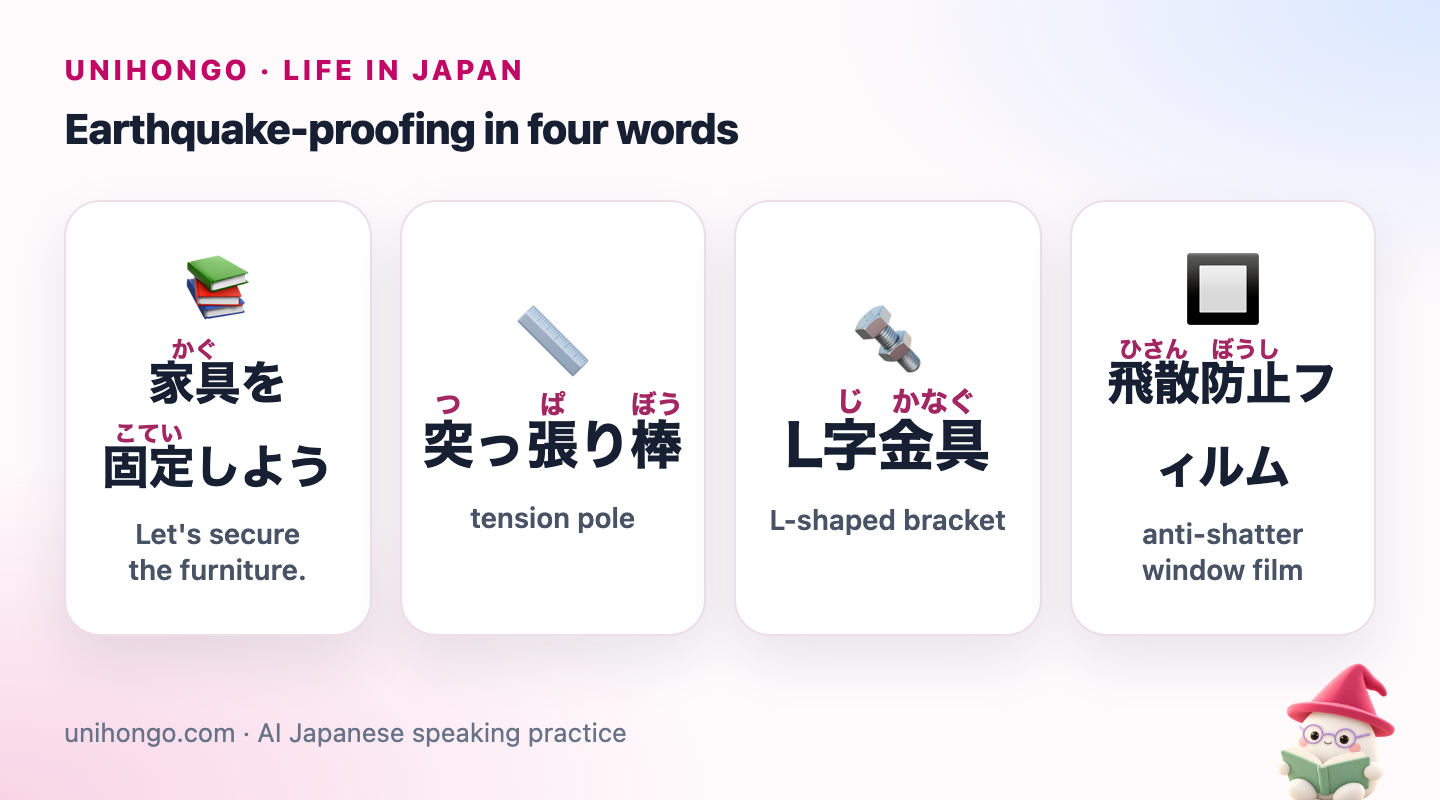
| Japanese | Romaji | Meaning |
|---|---|---|
| 家具を固定しよう | Kagu o kotei shiyō. | Let's secure the furniture. |
| 突っ張り棒 | tsupparibō | tension pole |
| L字金具 | eru ji kanagu | L-shaped bracket |
| 飛散防止フィルム | hisan bōshi firumu | anti-shatter window film |
Why furniture matters more than you think
Japanese buildings are built to strict seismic codes, especially those designed after the 1981 standard. Inside them, though, a strong quake can throw bookshelves, wardrobes, fridges and microwaves across a room, and taller buildings can sway for longer on upper floors. Fire departments and city offices regularly remind residents that much indoor injury comes from falling and sliding objects and broken glass.
The goal is not to make a room perfect but to remove the worst risks: anything tall near the bed, anything heavy up high, anything that could block the door, and any glass that could shatter where you walk.
Many cities and fire departments publish free leaflets on furniture anchoring, some in several languages, and some municipalities support older residents or people with disabilities in fitting brackets. Search your city's site for kagu no tentō bōshi, or ask at the city office.
| Japanese | Romaji | Meaning |
|---|---|---|
| 本棚が倒れるかもしれません。 | Hondana ga taoreru kamo shiremasen. | The bookshelf might fall over. |
| 重い物は下に置きます。 | Omoi mono wa shita ni okimasu. | Heavy things go at the bottom. |
| 出口をふさがないようにします。 | Deguchi o fusaganai yō ni shimasu. | I'll make sure the exit isn't blocked. |
The order to work in
- Bedroom first. Move tall furniture away from the bed or turn it so it would fall away from you. Nothing heavy on shelves above the bed.
- Exit path next. Make sure nothing can fall across the route from your bed to the front door.
- Tall furniture: bookshelves, wardrobes, cupboards. Secure the top to the wall or ceiling and stop the base sliding.
- Kitchen: secure the fridge with a belt to the wall, keep the microwave on a low stable surface, add latches to cupboard doors.
- Glass: put anti-shatter film on windows, glass doors and cabinet glass, especially near the bed.
- Small things: anti-slip gel pads under the TV, vases and lamps; heavy items moved to lower shelves.
Products and their Japanese names
Home centres usually group these products in a disaster prevention corner, bōsai yōhin (防災用品), or near the furniture hardware. The names on the packaging are below.
| Product | Japanese on the package | Renter-friendly? |
|---|---|---|
| L-shaped bracket screwed to the wall | L字金具 eru ji kanagu | Needs screws; ask the landlord |
| Tension pole between furniture and ceiling | 突っ張り棒 tsupparibō | Yes, no holes |
| Wedge or mat under the front edge | ストッパー sutoppā / 転倒防止マット | Yes |
| Strap or belt for a TV or fridge | 転倒防止ベルト tentō bōshi beruto | Adhesive types: usually yes |
| Cabinet door latch | 耐震ラッチ taishin ratchi | Adhesive types: usually yes |
| Anti-shatter film | 飛散防止フィルム hisan bōshi firumu | Usually yes; check removal |
| Anti-slip gel pad | 耐震マット taishin matto | Yes |
Tension poles hold best when the ceiling above is solid, the pole is placed at the back of the furniture against the wall, and you combine it with a stopper under the front. Adhesive products can mark wallpaper when removed, so test on a hidden spot or ask before using them on walls.
Asking the landlord before you drill
Screws in the wall are the strongest option but can count as damage beyond normal wear when you leave, which may come out of your deposit. Many landlords and management companies understand the safety reason and give permission, sometimes specifying where. Ask in writing, and keep the reply.
Japanese walls are often plasterboard over a frame; screws hold only if they go into the frame behind, called shitaji (下地). A small stud finder, shitaji sensā, from a home centre helps you find it.
| Japanese | Romaji | Meaning |
|---|---|---|
| 地震対策で家具を固定したいのですが。 | Jishin taisaku de kagu o kotei shitai no desu ga. | I'd like to secure my furniture against earthquakes. |
| 壁にネジで留めてもいいですか。 | Kabe ni neji de tomete mo ii desu ka. | May I fix it to the wall with screws? |
| 退去の時、穴の修理費はかかりますか。 | Taikyo no toki, ana no shūrihi wa kakarimasu ka. | Will I be charged to repair the holes when I leave? |
| 下地はどこにありますか。 | Shitaji wa doko ni arimasu ka. | Where are the wall studs? |
Kitchen, appliances and the front door
Kitchens are full of heavy and sharp things in high places. The fridge can walk across the floor or tip forward; a belt from its back to the wall, or a stopper under its front, reduces that. Microwaves and toasters on top of the fridge are a common risk: move them to a low, stable surface or use anti-slip pads. Cupboards with plates and glasses need latches that keep the doors shut when the building shakes.
Washing machines and water heaters can also move. Check that hoses have some slack and that nothing heavy is stored above them. In the entrance, keep the shoe cabinet secured and the floor clear: the front door is your exit, and doors can jam after a strong quake, so many people keep a pry bar or sturdy tool, and the building's emergency instructions, near the door.
Finally, look at what hangs on the walls. Framed pictures, clocks and mirrors above the bed or sofa can fall; move them or use secure hooks. Rooms with fewer things in them are safer rooms.
| Japanese | Romaji | Meaning |
|---|---|---|
| 冷蔵庫をベルトで固定する | reizōko o beruto de kotei suru | to secure the fridge with a belt |
| 電子レンジを低い所に置く | denshi renji o hikui tokoro ni oku | to put the microwave somewhere low |
| 食器棚の扉が開かないようにする | shokkidana no tobira ga akanai yō ni suru | to stop cupboard doors opening |
| 玄関の周りに物を置かない | genkan no mawari ni mono o okanai | to keep the entrance clear |
A safer room, labelled
Here is what a prepared bedroom looks like. You do not need every item, but each one removes a specific risk.
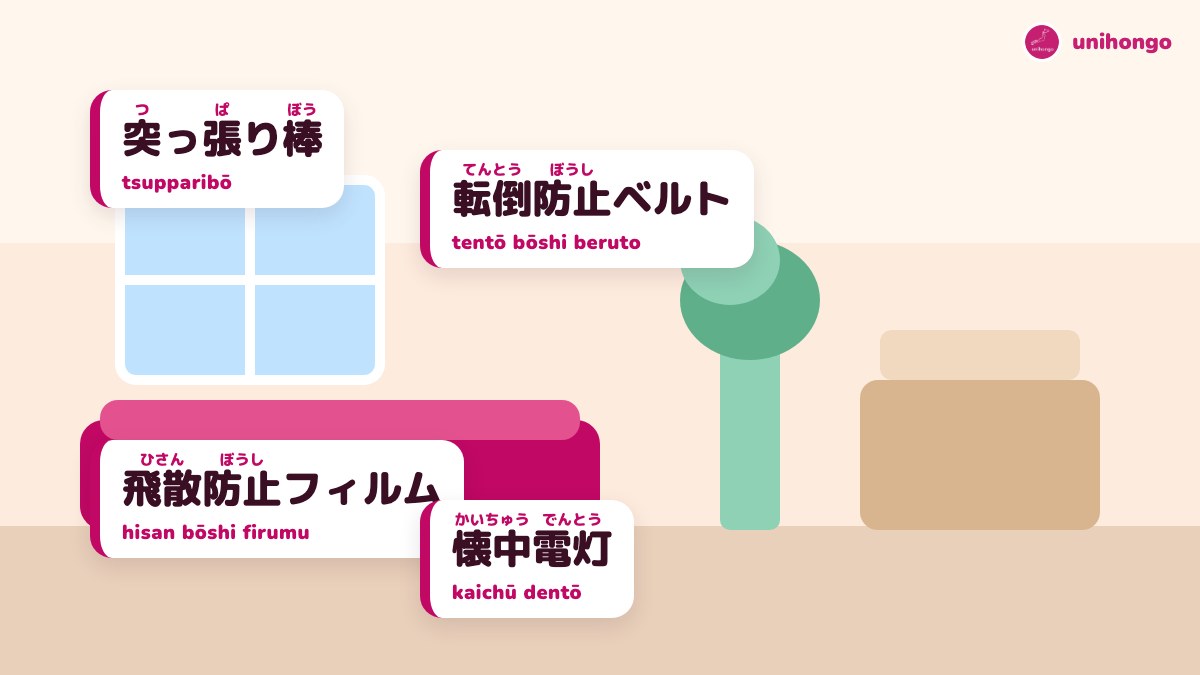
| Japanese | Romaji | Meaning |
|---|---|---|
| 枕元に懐中電灯 | makuramoto ni kaichū dentō | a flashlight by your pillow |
| スリッパを用意する | surippa o yōi suru | to keep slippers ready |
| ガラスが割れても大丈夫 | garasu ga warete mo daijōbu | safe even if the glass breaks |
Shoes or slippers by the bed matter because after a strong quake the floor may be covered in broken glass and you may need to walk out in the dark.
At the home centre: asking for help
Staff in the disaster prevention or hardware section can recommend products for your furniture's height and your ceiling. Bring the height of the gap between the furniture and the ceiling, and a photo of the furniture.
| Japanese | Romaji | Meaning |
|---|---|---|
| 家具の転倒防止グッズはどこですか。 | Kagu no tentō bōshi guzzu wa doko desu ka. | You: Where are the anti-tip products for furniture? |
| 賃貸なので、穴を開けずに固定したいです。 | Chintai na node, ana o akezu ni kotei shitai desu. | You: It's a rental, so I want to secure it without holes. |
| 天井までの高さは何センチですか。 | Tenjō made no takasa wa nansenchi desu ka. | Staff: How many centimetres is it to the ceiling? |
| 突っ張り棒とマットを一緒に使うといいですよ。 | Tsupparibō to matto o issho ni tsukau to ii desu yo. | Staff: It's best to use a pole and a mat together. |
Learn the aisle before you go
Ask Mocchi to quiz you on the product names in this guide with /quiz, mixing Japanese to English and English to Japanese. Mocchi notes the names you miss and brings them back next time, which is useful because packaging uses them without pictures.
For a faster drill, add them to your flashcards and play a round of Vocabulary Dash on the games page; the product names are short enough to recognise at speed.