
Koromogae in four phrases
Koromogae combines koromo (衣), an old word for clothing, with kae (替え), changing. These four phrases cover the season's small talk and the job itself.
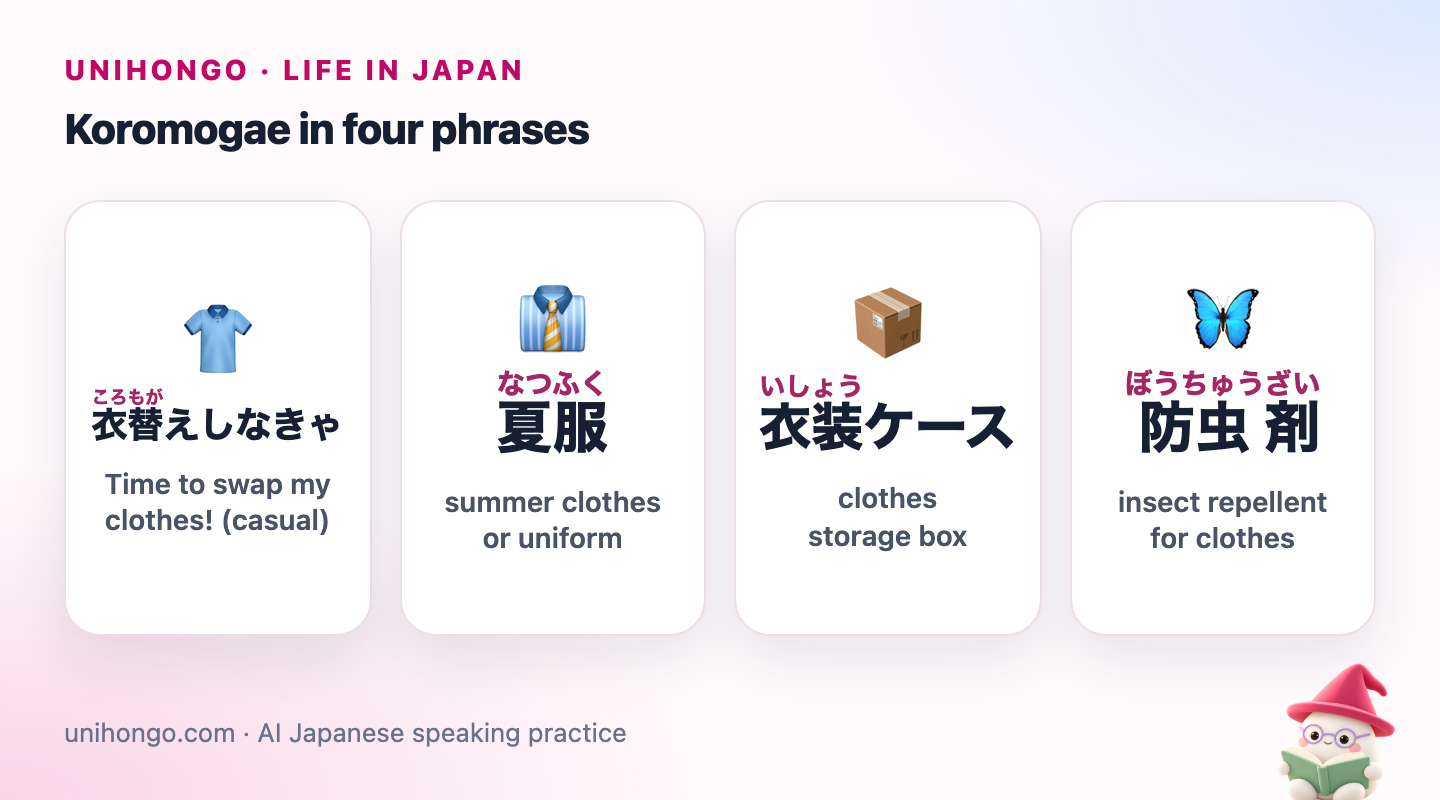
| Japanese | Romaji | Meaning |
|---|---|---|
| 衣替えしなきゃ | Koromogae shinakya. | Time to swap my clothes! (casual) |
| 夏服 | natsufuku | summer clothes or uniform |
| 衣装ケース | ishō kēsu | clothes storage box |
| 防虫剤 | bōchūzai | insect repellent for clothes |
Uniforms at school and work
Schools with uniforms traditionally switch to summer uniforms on 1 June and to winter uniforms on 1 October. Because weather does not follow the calendar, many now allow an ikō kikan (移行期間), a transition period when either uniform is fine, and some have dropped fixed dates altogether. A letter or app message from the school tells parents the dates.
Workplaces with uniforms, such as railways, banks and some shops, often change on set dates too. In offices without uniforms the summer change is usually about dress code: many employers let staff work without a jacket or tie in the hot months, an approach widely known as Cool Biz (クールビズ), and some ask for a little more formality again in autumn. Your company's notice or HR will tell you the rules.
| Japanese | Romaji | Meaning |
|---|---|---|
| 六月から夏服になります。 | Rokugatsu kara natsufuku ni narimasu. | From June it's the summer uniform. |
| 移行期間はどちらを着てもいいです。 | Ikō kikan wa dochira o kite mo ii desu. | During the transition period, either is fine. |
| クールビズは何月からですか。 | Kūrubizu wa nangatsu kara desu ka. | From which month is Cool Biz? |
| ネクタイはしなくても大丈夫ですか。 | Nekutai wa shinakute mo daijōbu desu ka. | Is it all right not to wear a tie? |
The home routine: clothes
At home, koromogae is a weekend job, often done on a dry, sunny day when the air is not humid. The basic order is simple: sort, clean, dry, store, and bring out the next season.
It is also a natural moment to declutter. Many people decide that anything they did not wear all season goes to a recycling shop, a clothes collection box or the rubbish, following the city's sorting rules for textiles. In a small flat, every box you do not store is space you get back.
| Japanese | Romaji | Meaning |
|---|---|---|
| クリーニングに出す | kuriningu ni dasu | to take to the dry cleaner |
| 圧縮袋 | asshuku bukuro | vacuum storage bag |
| 除湿剤 | joshitsuzai | moisture absorber |
| 押し入れ | oshiire | built-in storage closet |
- Sort into keep, clean, give away and throw out. Charity and recycling rules for clothes vary by city.
- Wash or dry-clean everything you will store. Sweat and food stains that you cannot see yet attract insects.
- Dry completely. Damp clothes in a closed box grow mould in a humid summer.
- Store with insect repellent and a moisture absorber, in boxes or vacuum bags, not packed too tight.
- Label the box with the season so the next swap is quick.
Bedding and heaters change too
Koromogae is not only clothes. In spring, households put away the thick quilt and the kotatsu, and bring out lighter bedding and electric fans. In autumn it reverses. Many people also give the air conditioner a test run in spring, before the first hot day, because repair visits get booked up in summer.
| Japanese | Romaji | Meaning |
|---|---|---|
| こたつをしまう | kotatsu o shimau | to put the kotatsu away |
| エアコンの試運転 | eakon no shiunten | test run of the air conditioner |
| 布団を干す | futon o hosu | to air the futon in the sun |
| Spring: put away | Spring: bring out | Autumn: reverse |
|---|---|---|
| Kotatsu and its quilt (こたつ布団) | Light summer blanket (夏掛け, タオルケット) | Thick quilt back on the bed |
| Kerosene or fan heaters | Electric fan (扇風機) | Heater out; check it before use |
| Electric carpet, thick rugs | Rush or cool-touch mats | Rugs and carpet back |
Use up or dispose of leftover kerosene at the end of winter rather than keeping it, as heater makers generally advise. Wash covers and dry futons in the sun before storing them.
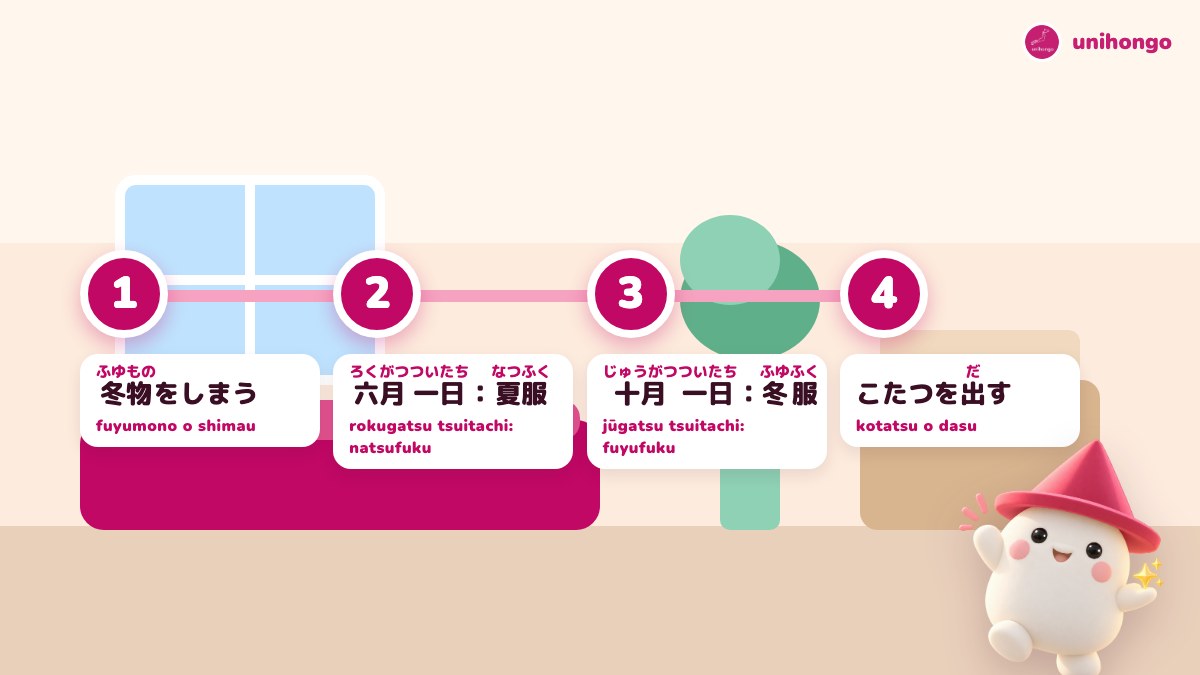
A koromogae year at a glance
Here is how the year often runs for a household in central Japan. Further north the warm months are shorter; in Okinawa the summer clothes come out earlier and stay longer.
| Japanese | Romaji | Meaning |
|---|---|---|
| 梅雨の前に片付けたいです。 | Tsuyu no mae ni katazuketai desu. | I want to put things away before the rainy season. |
| 朝晩は冷えますね。 | Asaban wa hiemasu ne. | It's getting cold in the mornings and evenings. |
- Late April to May: winter coats to the cleaner, heaters and kotatsu put away, air conditioner test run.
- 1 June: summer uniforms. Rainy season starts soon in much of Japan, so store clothes before it does.
- Late September to 1 October: winter uniforms back, light jackets out, summer clothes washed and stored.
- November: thick bedding and heating out as nights get cold.
Words on school letters and shop shelves
If you have children at a Japanese school, the uniform change arrives as a letter or app message, often with a few words that are easy to misread. Shops also fill their seasonal aisles with storage goods under the same words. The table pairs the most common ones with what they mean for you.
| Japanese | Romaji | Meaning |
|---|---|---|
| 夏服はいつから着てもいいですか。 | Natsufuku wa itsu kara kite mo ii desu ka. | From when may she wear the summer uniform? |
| 移行期間はいつまでですか。 | Ikō kikan wa itsu made desu ka. | Until when is the transition period? |
| カーディガンを着てもいいですか。 | Kādigan o kite mo ii desu ka. | May he wear a cardigan? |
| Word | Where you see it | What it means for you |
|---|---|---|
| 夏服 natsufuku / 冬服 fuyufuku | School letters, staff notices | Which uniform to wear from the stated date |
| 合服 aifuku | Some schools and shops | In-between clothes for spring and autumn |
| 移行期間 ikō kikan | School letters | Weeks when either uniform is allowed |
| 衣替えセール koromogae sēru | Shops and malls | Seasonal sale on clothes and storage goods |
| 防虫・防カビ bōchū bōkabi | Storage product labels | Protects against insects and mould |
Some schools also switch gym clothes or allow a cardigan or vest in the transition weeks. When the letter is unclear, a short question to the homeroom teacher is perfectly normal.
Mini dialogue: small talk about the change
| Japanese | Romaji | Meaning |
|---|---|---|
| 週末、衣替えしました。 | Shūmatsu, koromogae shimashita. | Coworker: I did my wardrobe change at the weekend. |
| えらいですね。私はまだです。 | Erai desu ne. Watashi wa mada desu. | You: Impressive. I haven't yet. |
| 急に暑くなりましたからね。 | Kyū ni atsuku narimashita kara ne. | Coworker: Well, it suddenly got hot. |
| 冬のコートをクリーニングに出さないと。 | Fuyu no kōto o kuriningu ni dasanai to. | You: I need to take my winter coat to the cleaner. |
| 保管サービスもありますよ。 | Hokan sābisu mo arimasu yo. | Coworker: They do storage too, you know. |
Erai desu ne literally means you are great, but here it is light praise for getting a chore done. ~ naito, short for ~ nai to ikenai, is a casual way to say I have to.
Common mistakes newcomers make
- Storing clothes that look clean but have been worn. Insects find the invisible stains.
- Packing boxes during the rainy season or on a humid day. Mould is the biggest risk in a Japanese summer.
- Mixing different insect repellents in one box. Some types should not be combined; read the packet.
- Wearing a summer uniform before the school's date. Check the school letter: transition periods differ.
- Leaving the air conditioner test until the first heatwave, when repair bookings are full.
Make the season's words stick
Koromogae words come back twice a year, which is perfect for spaced review. Ask Mocchi to make cards for this guide's storage and bedding words with /create-flashcards, choosing a photo for each, and run /review-flashcards when the season turns.
For a lighter round, load the same deck into Flashcard Flip on the games page and play it on your phone while the washing machine runs.