
Bōsai in four words
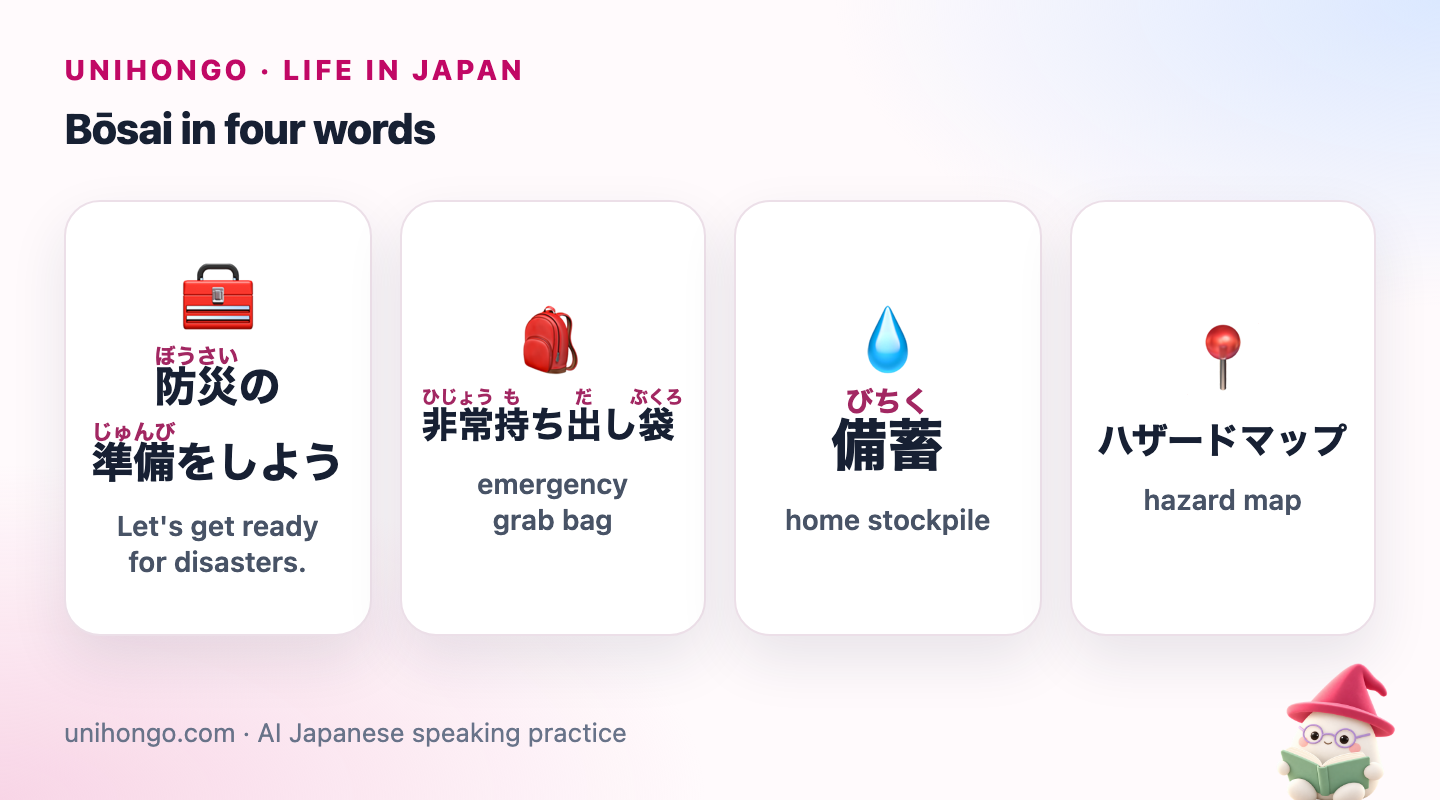
Bōsai (防災) means disaster prevention, and it is the word on every shop shelf and city leaflet about preparing. Bichiku (備蓄) means stockpiling. These four words organise everything else.
| Japanese | Romaji | Meaning |
|---|---|---|
| 防災の準備をしよう | Bōsai no junbi o shiyō. | Let's get ready for disasters. |
| 非常持ち出し袋 | hijō mochidashi bukuro | emergency grab bag |
| 備蓄 | bichiku | home stockpile |
| ハザードマップ | hazādo mappu | hazard map |
Grab bag or stockpile: two different jobs
The grab bag is for leaving: if your home is unsafe, or you are told to evacuate, you pick it up and go. It must be light enough to carry while walking a long way, so keep it to essentials. The stockpile is for staying: after a quake, many people whose homes are safe stay at home rather than go to a crowded shelter, a choice called zaitaku hinan (在宅避難), sheltering at home. Many cities now encourage this when the building is safe, because shelters have limited space.
| Japanese | Romaji | Meaning |
|---|---|---|
| 在宅避難 | zaitaku hinan | sheltering at home |
| 家が安全なら、家にいます。 | Ie ga anzen nara, ie ni imasu. | If the house is safe, I'll stay home. |
| Point | Grab bag | Home stockpile |
|---|---|---|
| Japanese | 非常持ち出し袋 hijō mochidashi bukuro | 備蓄 bichiku |
| Purpose | Leaving home quickly | Staying at home without services |
| Where to keep it | By the door or bedroom | Cupboards, under the bed |
| How much | What you can carry | At least three days, ideally a week |
The grab bag checklist
| Japanese | Romaji | Meaning |
|---|---|---|
| 懐中電灯 | kaichū dentō | flashlight |
| 携帯ラジオ | keitai rajio | portable radio |
| モバイルバッテリー | mobairu batterī | portable phone battery |
| 救急セット | kyūkyū setto | first aid kit |
| お薬手帳 | okusuri techō | medicine notebook |
- Water and food you can eat without cooking, for a day or so
- Flashlight, portable radio and spare batteries; a mobile phone battery and cable
- Regular medicines, a copy of your medicine notebook (okusuri techō) or prescriptions, and glasses
- Copies of your residence card, passport and health insurance details
- Cash, including coins and small notes, because card payments may not work
- First aid items, mask, gloves, whistle, towel, wet wipes and hygiene items
- Portable toilet bags, warm layer and rain gear
- Family extras: baby food and nappies, pet food and lead, contact list on paper
Pre-packed kits from shops are a good start, but they are made for an average person. Open yours, take out what you will never use, and add what is personal: medicines, glasses, a phone cable that fits your phone, and documents. Check it twice a year, for example on 1 September and on a date in March, and swap food and batteries that are close to expiry.
If you have children, involve them: let them pack a small bag of their own with a snack, a torch and a card with family phone numbers.
The stockpile: water, food and the toilet
Government guidance commonly cites about three litres of water per person per day for drinking and cooking, for at least three days and ideally a week. For one adult that is about 21 litres for a week; multiply by the people and add pets. Many households also keep the bath filled or store extra tap water for flushing and washing.
For food, the method most often recommended is rōringu sutokku (ローリングストック), rolling stock: keep a little more of the food you normally eat, such as rice, canned goods, retort pouches and instant noodles, eat the oldest first and replace it. Nothing expires forgotten in a cupboard. A portable gas stove, kasetto konro, with spare cartridges lets you cook if gas is off.
The item most often forgotten is the toilet. After a big quake, flushing may be impossible or prohibited until pipes are checked, so keep a supply of portable toilet bags, keitai toire (携帯トイレ), enough for several days.
| Japanese | Romaji | Meaning |
|---|---|---|
| ローリングストック | rōringu sutokku | rolling stock: eat and replace |
| 一人一日三リットル | hitori ichinichi san rittoru | three litres per person per day |
| カセットコンロ | kasetto konro | portable gas stove |
| 携帯トイレ | keitai toire | portable toilet bags |
Your kit at a glance
If you only do four things this month, do these. They cover the gaps that most often hurt people in the first days after a disaster.
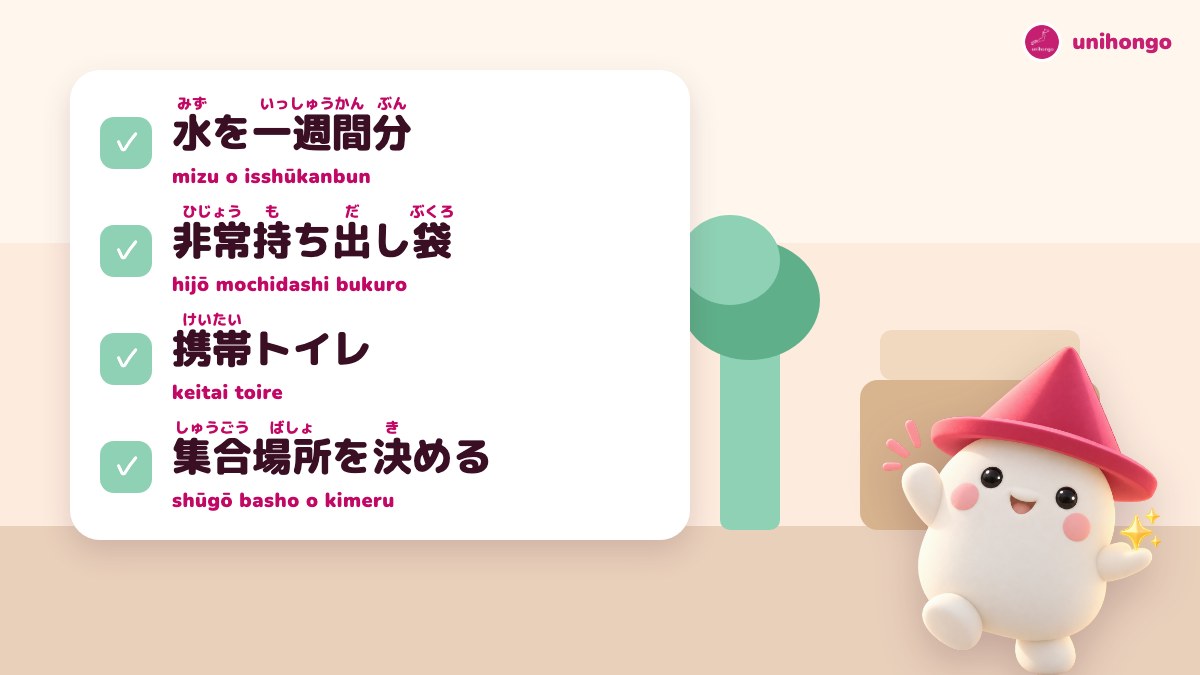
- Water for at least three days, ideally a week, for everyone in the home.
- A grab bag packed and placed by the door or bedroom.
- Portable toilet bags for several days.
- A family meeting place and contact plan, written on paper.
Hazard maps and your family plan
A hazard map shows which areas risk floods, landslides, tsunami or storm surge, and where designated evacuation sites are. Your city publishes one, and the national Hazard Map Portal Site lets you search by address. Look up both your home and your workplace or school, because the right action differs: in a flood zone you may need to go high, not far.
Agree with family on a meeting place, how you will contact each other, and who picks up children. Phone lines are congested after big disasters, so learn NTT's disaster message dial, 171, where you can record a voice message under your phone number, and its online version, web171. Practice days are held regularly, including the first of each month, so try it once.
| Japanese | Romaji | Meaning |
|---|---|---|
| 避難場所はどこですか。 | Hinan basho wa doko desu ka. | Where is the evacuation site? |
| この辺りは浸水しますか。 | Kono atari wa shinsui shimasu ka. | Does this area flood? |
| 災害用伝言ダイヤル | saigaiyō dengon daiyaru | disaster message dial (171) |
| 集合場所を決めておこう。 | Shūgō basho o kimete okō. | Let's decide on a meeting place. (casual) |
Mini dialogue: asking a neighbour
| Japanese | Romaji | Meaning |
|---|---|---|
| すみません、この辺りの避難所はどこか分かりますか。 | Sumimasen, kono atari no hinanjo wa doko ka wakarimasu ka. | You: Excuse me, do you know where the shelter around here is? |
| 小学校の体育館ですよ。 | Shōgakkō no taiikukan desu yo. | Neighbour: It's the elementary school gym. |
| 水害の時も同じですか。 | Suigai no toki mo onaji desu ka. | You: Is it the same for floods? |
| 洪水の時は別の場所みたいです。市のサイトで確認できますよ。 | Kōzui no toki wa betsu no basho mitai desu. Shi no saito de kakunin dekimasu yo. | Neighbour: For floods it seems to be another place. You can check on the city's site. |
| ありがとうございます。見てみます。 | Arigatō gozaimasu. Mite mimasu. | You: Thank you. I'll take a look. |
Shelters are designated for specific hazards, so the neighbour's answer is realistic: the building that is safe in an earthquake may not be safe in a flood. The guide to evacuation signs explains how the signs show this.
Mistakes people make with emergency kits
- Buying a kit and never opening it. Check what is inside, add your medicines and glasses, and note the expiry dates.
- Packing a bag too heavy to carry. You may walk a long way; test it.
- Forgetting the toilet. Portable toilet bags are among the most needed and least stocked items.
- Storing only bottled water and no food you actually like. Rolling stock works because you eat it.
- Relying on a phone for everything. Paper copies of contacts and documents still work without power.
Plan it, then say it
Tell Mocchi who lives with you, any pets and your type of home, and ask for a bōsai checklist in Japanese and English. Mocchi keeps those details, so you can come back later and ask what is still missing, or ask for a quiz on the item names with /quiz.
Then practise the conversation. In AI Sensei, ask Haru-sensei to play a staff member at your city office's disaster prevention desk, and ask about the nearest shelter, hazard map and how to register for alerts.