
The year-end party in four cards
The word bōnenkai is written with 忘 (forget), 年 (year) and 会 (gathering). The idea is to put the troubles of the year behind you and thank the people who helped you. Four expressions carry most of the evening.
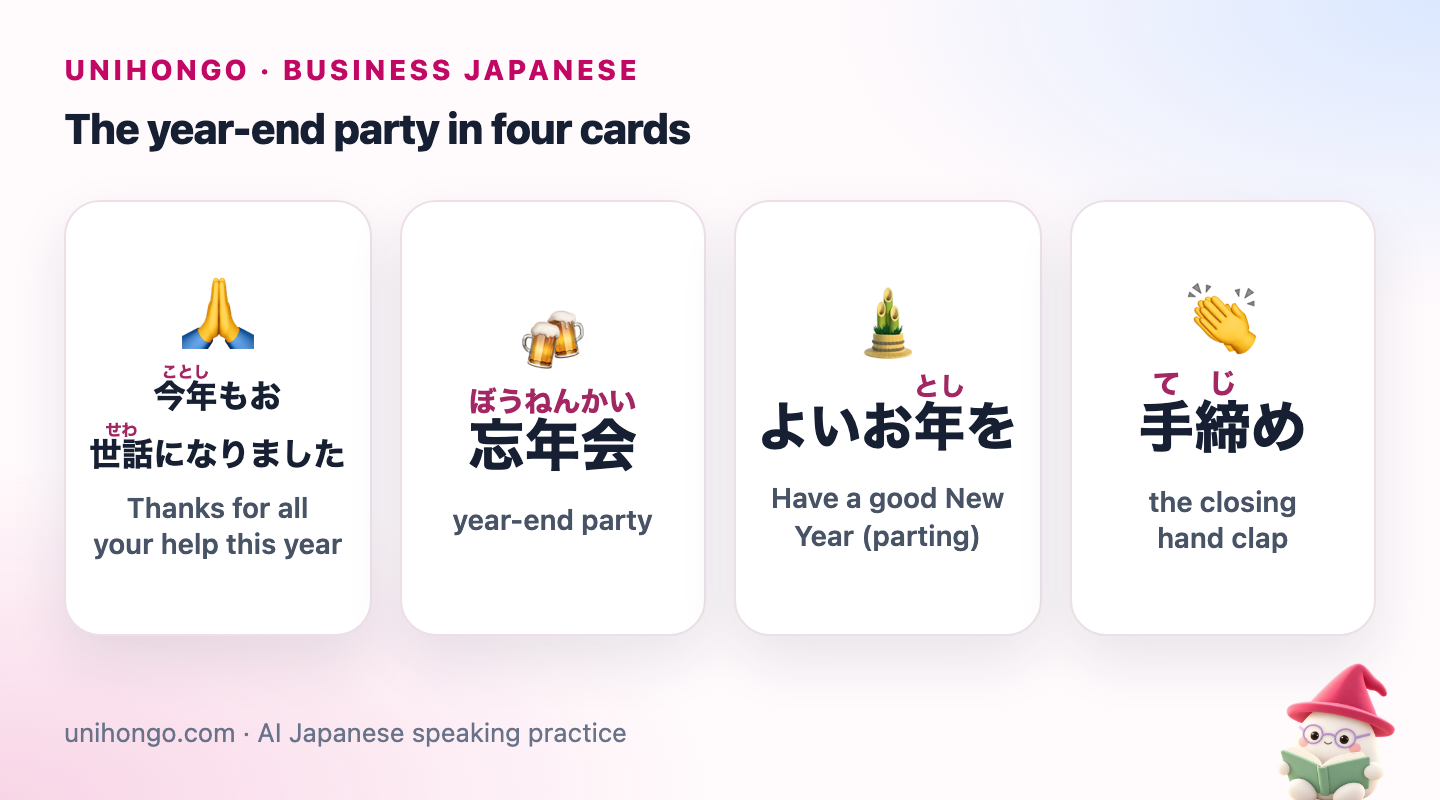
| Japanese | Romaji | Meaning |
|---|---|---|
| 今年もお世話になりました | Kotoshi mo osewa ni narimashita | Thanks for all your help this year |
| 忘年会 | bōnenkai | year-end party |
| よいお年を | Yoi otoshi o | Have a good New Year (parting) |
| 手締め | tejime | the closing hand clap |
At work or with friends: two different evenings
The same word covers very different events. A company or department bōnenkai has a structure and senior people; a bōnenkai with friends or a hobby group is simply a December dinner with a toast to the year.
| Japanese | Romaji | Meaning |
|---|---|---|
| 今年の忘年会、行く? | Kotoshi no bōnenkai, iku? | Friend: Are you going to this year's bōnenkai? (casual) |
| 部署の忘年会があります。 | Busho no bōnenkai ga arimasu. | My department has a year-end party. |
| 会費は当日集めます。 | Kaihi wa tōjitsu atsumemasu. | Organiser: We'll collect the fee on the day. |
| Aspect | Work bōnenkai | Bōnenkai with friends |
|---|---|---|
| Organiser | A colleague acting as kanji, often a younger member | Whoever suggests it |
| Place | A restaurant, izakaya or hotel banquet room | An izakaya, a home or a hot pot restaurant |
| Language | Polite with seniors, relaxed with peers | Casual |
| Programme | Opening words, toast, sometimes games, closing | Toast and free conversation |
| Payment | Fixed fee per person, sometimes subsidised | Split the bill |
At large companies, the party may include a speech by the head of the department about the year, and sometimes a short performance by new employees. Many workplaces have dropped performances, and nobody should pressure you to do one. If you are asked and do not want to, a smiling refusal is fine.
December greetings and when to use them
Year-end greetings follow the calendar. In December you thank people for the year and ask for their goodwill next year. When you part from someone for the last time before the New Year, you wish them a good one. From 1 January the greetings switch to the New Year set.
| Japanese | Romaji | Meaning |
|---|---|---|
| 今年も一年、お世話になりました。 | Kotoshi mo ichinen, osewa ni narimashita. | Thank you for your help all year. (polite) |
| 来年もよろしくお願いします。 | Rainen mo yoroshiku onegai shimasu. | I look forward to working with you next year. |
| よいお年をお迎えください。 | Yoi otoshi o omukae kudasai. | Have a happy New Year. (formal, when parting) |
| 今年もありがとう。 | Kotoshi mo arigatō. | Thanks for this year too. (casual) |
| また来年! | Mata rainen! | See you next year! (casual) |
Mini dialogue: the end of a team bōnenkai
Here is a typical exchange as the party breaks up and people go to thank their manager before leaving.
| Japanese | Romaji | Meaning |
|---|---|---|
| 部長、今年も一年ありがとうございました。 | Buchō, kotoshi mo ichinen arigatō gozaimashita. | You: Thank you for this year, sir. |
| こちらこそ。よく頑張ってくれたね。 | Kochira koso. Yoku ganbatte kureta ne. | Manager: Thank you too. You worked hard. |
| 来年もよろしくお願いいたします。 | Rainen mo yoroshiku onegai itashimasu. | You: I look forward to working with you next year. |
| 二次会は行く? | Nijikai wa iku? | Manager: Are you coming to the second party? |
| 今日はここで失礼します。よいお年を。 | Kyō wa koko de shitsurei shimasu. Yoi otoshi o. | You: I'll leave here tonight. Have a good New Year. |
| 気をつけて。よいお年を。 | Ki o tsukete. Yoi otoshi o. | Manager: Take care. Happy New Year. |
Note that buchō, department head, is used as a form of address on its own. Many workplaces address managers by their title, sometimes with the surname: Tanaka buchō.
The closing: shime and the rhythmic clap
Formal parties end with a closing word, shime no aisatsu, by a senior person or the organiser. Some groups then do a tejime, a closing hand clap, to finish together. The leader says o te o haishaku, may I borrow your hands, everyone raises their hands, and on the call they clap in a set rhythm.
The most common pattern, ippon jime, is three claps, three claps, three claps and one clap. Sanbon jime repeats that pattern three times. In parts of the Kantō region some groups use a single clap, which is also sometimes called ippon jime, so watch the leader. After the clap everyone applauds and the party is over.
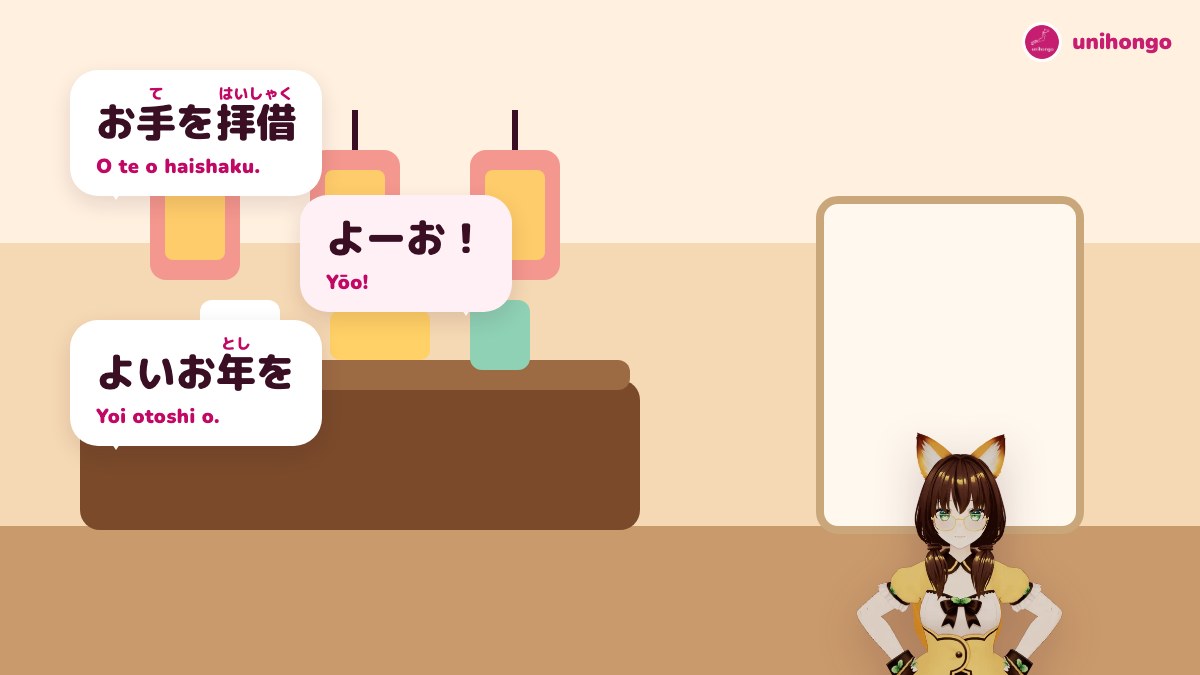
| Japanese | Romaji | Meaning |
|---|---|---|
| お手を拝借。 | O te o haishaku. | May I borrow your hands. (leader) |
| 一本締めで締めたいと思います。 | Ippon jime de shimetai to omoimasu. | Let's close with one round of clapping. |
| よーお! | Yōo! | Ready! (call before the clap) |
| ありがとうございました。 | Arigatō gozaimashita. | Thank you. (everyone, after the clap) |
Bingo, prizes and the second party
Larger work bōnenkai often include a bingo game or a lottery, with prizes, keihin, bought by the organiser or donated by managers. Winners usually say a word of thanks into the microphone. You do not need to make a speech; a short thanks and a joke about what you will use the prize for is perfect.
After the first party, some people go on to a nijikai at another bar or karaoke. It is optional. If you want to go home, say so with a smile and the year-end farewell. Pay attention to the last train, because December nights get late.
| Japanese | Romaji | Meaning |
|---|---|---|
| ビンゴ! | Bingo! | Bingo! |
| 景品 | keihin | prize |
| ありがとうございます。大事に使います。 | Arigatō gozaimasu. Daiji ni tsukaimasu. | Thank you. I'll take good care of it. |
| 二次会はカラオケだって。 | Nijikai wa karaoke datte. | They say the second party is karaoke. |
Declining politely
Not everyone wants to spend a December evening at a work party, and in most workplaces declining is accepted, especially with a little notice. Thank the organiser for the invitation, give a short reason without detail, and add the year-end greeting. You do not need to explain family plans or health. In recent years some people talk openly about skipping year-end parties, and many companies keep them optional; still, read your team.
| Japanese | Romaji | Meaning |
|---|---|---|
| お誘いありがとうございます。 | Osasoi arigatō gozaimasu. | Thank you for inviting me. |
| あいにく、その日は都合が悪くて。 | Ainiku, sono hi wa tsugō ga warukute. | Unfortunately that day doesn't work for me. |
| 今回は欠席させていただきます。 | Konkai wa kesseki sasete itadakimasu. | I'll have to miss this one. (humble) |
| 皆さんによろしくお伝えください。 | Minasan ni yoroshiku otsutae kudasai. | Please give everyone my regards. |
Common mistakes
- Saying yoi otoshi o at the start of the party. It is a parting phrase for the last meeting of the year.
- Saying akemashite omedetō in December. That greeting starts on 1 January.
- Drinking too much because it is the end of the year. Work parties are still work relationships.
- Ignoring the organiser's fee or deadline. Reply to the invitation by the date given and bring the right amount if it is cash.
- Leaving without a word to your manager. A ten-second thank-you at the end matters more than staying late.
Get the December greetings right
Year-end greetings are a small set with strict timing, which suits a quick quiz. Ask Mocchi: quiz me on Japanese year-end and New Year greetings, and tell me when each one is used. Mocchi checks your answers, explains the timing and keeps track of the ones you mix up.
If you want to try the bōnenkai conversation out loud, AI Sensei can play your manager at the end of the party with Sakura-sensei: thank the Sensei for the year, decline the second party and say yoi otoshi o.