
Four lines for leaving and taking time off
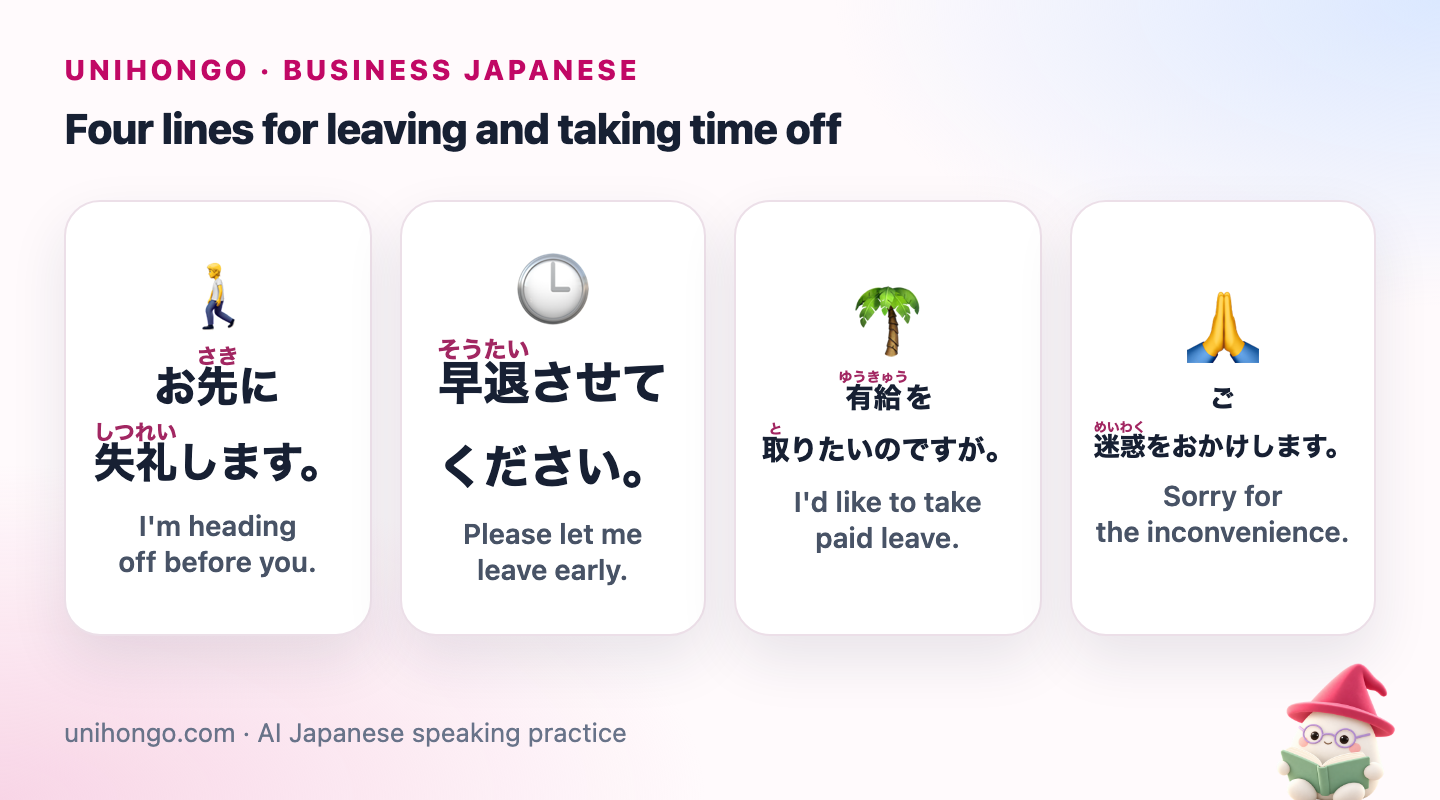
Four lines cover nearly every situation in which you leave the office: going home while others are still working, asking to leave early, asking for paid leave, and acknowledging that your absence makes work for others. The last one is the line learners skip, and it is the one colleagues notice.
Osaki ni shitsurei shimasu does not mean you are doing something wrong by leaving. It is a courtesy that recognises others are still working, and it is said even when you are leaving at the normal time.
| Japanese | Romaji | Meaning |
|---|---|---|
| お先に失礼します。 | Osaki ni shitsurei shimasu. | I'm heading off before you. |
| 早退させてください。 | Sōtai sasete kudasai. | Please let me leave early. |
| 有給を取りたいのですが。 | Yūkyū o toritai no desu ga. | I'd like to take paid leave. |
| ご迷惑をおかけします。 | Gomeiwaku o okake shimasu. | Sorry for the inconvenience. |
| お疲れさまでした。 | Otsukaresama deshita. | Colleague: Thanks for your work today. |
The same goodbyes and requests in three registers
Leaving lines shift with the listener. With a friend from work after hours, casual is normal. In the office, osaki ni shitsurei shimasu is the standard. With senior managers or in a very formal company, itashimasu replaces shimasu. Requests to leave early follow the same steps, from a casual question to a soft negative question in keigo.
| Japanese | Romaji | Meaning |
|---|---|---|
| じゃあ、お先に。 | Jā, osaki ni. | Right, I'm off. (casual) |
| お先に失礼します。 | Osaki ni shitsurei shimasu. | I'm leaving now, see you. (polite) |
| お先に失礼いたします。 | Osaki ni shitsurei itashimasu. | I'll take my leave before you. (humble) |
| 今日、早く帰ってもいい? | Kyō, hayaku kaette mo ii? | Can I go home early today? (casual) |
| 今日、早めに帰ってもいいですか。 | Kyō, hayame ni kaette mo ii desu ka. | May I go home a bit early today? (polite) |
| 本日、早退させていただけないでしょうか。 | Honjitsu, sōtai sasete itadakenai deshō ka. | Might I be allowed to leave early today? (keigo) |
Going home on time
In many Japanese offices it is common to say goodbye to the room, not to each person. Stand up, pack your things, and say osaki ni shitsurei shimasu clearly enough for those nearby to hear. Colleagues answer otsukaresama deshita, sometimes without looking up. If your manager is busy with something you helped on, a quick offer of help before you leave is a kind gesture, though nobody expects it every day.
Workplaces differ a lot. Some teams leave together at the same time; in others people leave as soon as their work is done. Watch the first week and follow the local habit.
| Japanese | Romaji | Meaning |
|---|---|---|
| 何かお手伝いできることはありますか。 | Nanika otetsudai dekiru koto wa arimasu ka. | Is there anything I can help with? |
| 大丈夫だよ。お疲れさま。 | Daijōbu da yo. Otsukaresama. | Manager: We're fine. Thanks, see you. |
| では、お先に失礼します。 | Dewa, osaki ni shitsurei shimasu. | Then I'll head off. See you tomorrow. |
Asking to leave early
Sōtai, leaving early, is usually asked for on the day or a day before. Ask your manager in person if you can, with a short reason and a time, and mention what will happen to urgent work. For a planned appointment, asking the day before is more considerate than asking an hour before.
| Japanese | Romaji | Meaning |
|---|---|---|
| 申し訳ないのですが、体調が優れないため、本日は早退させていただけないでしょうか。 | Mōshiwake nai no desu ga, taichō ga sugurenai tame, honjitsu wa sōtai sasete itadakenai deshō ka. | I'm sorry, I'm not feeling well; might I leave early today? |
| 保育園から、子どもが熱を出したと連絡がありまして。 | Hoikuen kara, kodomo ga netsu o dashita to renraku ga arimashite. | The nursery called to say my child has a fever. |
| 明日、通院のため三時に早退してもよろしいでしょうか。 | Ashita, tsūin no tame sanji ni sōtai shite mo yoroshii deshō ka. | Tomorrow, may I leave at three for a medical appointment? |
| 急ぎの件は、佐藤さんにお願いしてあります。 | Isogi no ken wa, Satō san ni onegai shite arimasu. | I've asked Sato to handle anything urgent. |
Model dialogue: asking for a day of paid leave
Lee wants a day of paid leave next month and asks the manager in person a few weeks ahead. Notice that Lee asks rather than announces, gives a short reason, answers the manager's concern with a plan, and confirms the formal application.
| Japanese | Romaji | Meaning |
|---|---|---|
| 部長、今少しよろしいでしょうか。 | Buchō, ima sukoshi yoroshii deshō ka. | You: Do you have a moment? |
| うん、何? | Un, nani? | Manager: Sure, what is it? |
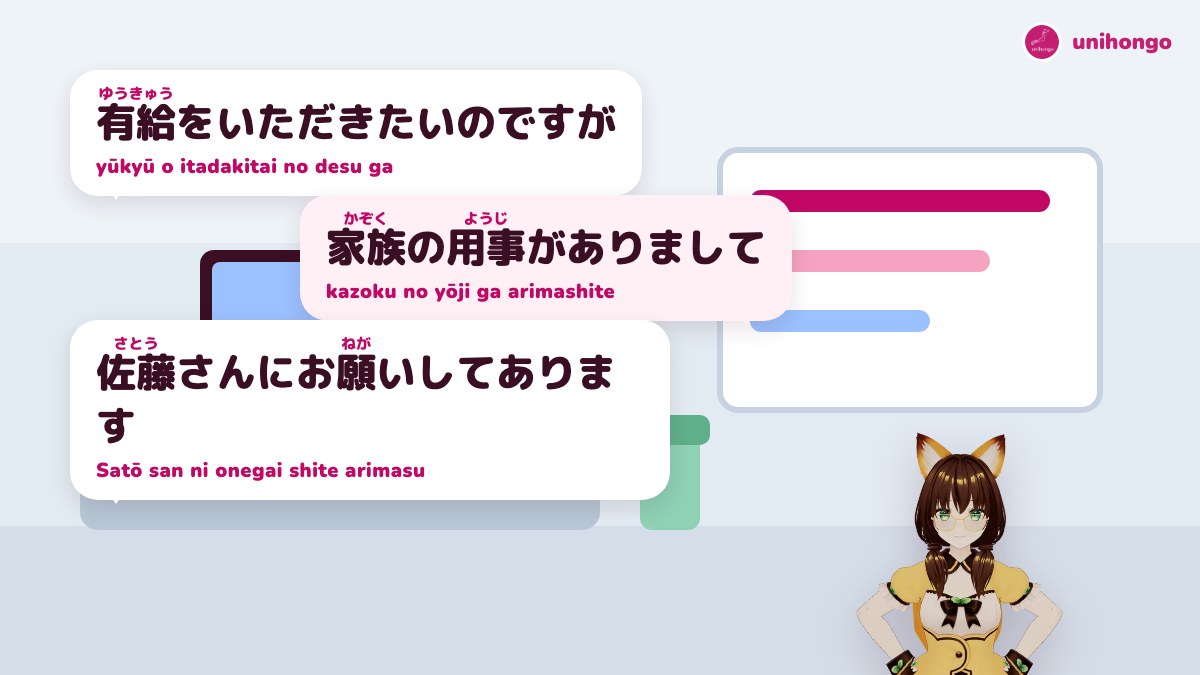
| 来月の十日に、有給をいただきたいのですが、よろしいでしょうか。 | Raigetsu no tōka ni, yūkyū o itadakitai no desu ga, yoroshii deshō ka. | You: I'd like to take paid leave on the 10th next month. Would that be all right? |
| 十日か。何かあるの? | Tōka ka. Nanika aru no? | Manager: The 10th? Something on? |
| 家族の用事がありまして。 | Kazoku no yōji ga arimashite. | You: I have a family matter. |
| いいよ。その週は会議があるけど、大丈夫? | Ii yo. Sono shū wa kaigi ga aru kedo, daijōbu? | Manager: Fine. There's a meeting that week, is that OK? |
| はい、会議の資料は前日までに準備しておきます。 | Hai, kaigi no shiryō wa zenjitsu made ni junbi shite okimasu. | You: Yes, I'll have the meeting materials ready the day before. |
| 休みの間の対応は、佐藤さんにお願いしてあります。 | Yasumi no aida no taiō wa, Satō san ni onegai shite arimasu. | You: I've asked Sato to cover while I'm away. |
| わかった。申請も出しておいてね。 | Wakatta. Shinsei mo dashite oite ne. | Manager: Got it. Submit the request form too. |
| 承知しました。本日中に申請いたします。 | Shōchi shimashita. Honjitsuchū ni shinsei itashimasu. | You: Understood. I'll submit it today. |
A sudden day off: the morning call or message
When you are ill in the morning, many workplaces expect a call or a message before the start of work; the channel depends on the team. Keep it short: who you are, that you would like to take the day off, the reason in a few words, and anything urgent that needs covering. The message version uses itadakimasu, I will take, because it is informing rather than asking; on the phone, a question is more polite.
| Japanese | Romaji | Meaning |
|---|---|---|
| おはようございます。リーです。申し訳ございませんが、熱があるため、本日はお休みをいただけないでしょうか。 | Ohayō gozaimasu. Rī desu. Mōshiwake gozaimasen ga, netsu ga aru tame, honjitsu wa oyasumi o itadakenai deshō ka. | Good morning, it's Lee. I'm sorry, I have a fever; may I take today off? |
| 本日の打ち合わせは、佐藤さんに代わりをお願いしてもよろしいでしょうか。 | Honjitsu no uchiawase wa, Satō san ni kawari o onegai shite mo yoroshii deshō ka. | Could Sato take my place at today's meeting? |
| 体調不良のため、本日はお休みをいただきます。ご迷惑をおかけして申し訳ありません。 | Taichō furyō no tame, honjitsu wa oyasumi o itadakimasu. Gomeiwaku o okake shite mōshiwake arimasen. | Message: I'm unwell and will take today off. Sorry for the trouble. |
Your first day back
When you return, thank your manager and whoever covered for you, early in the day. It closes the loop and makes your next request easier. After a longer holiday, some people bring a small box of sweets for the team, called omiyage; it is a common custom in many offices but not a rule.
| Japanese | Romaji | Meaning |
|---|---|---|
| 昨日はお休みをいただき、ありがとうございました。 | Kinō wa oyasumi o itadaki, arigatō gozaimashita. | Thank you for letting me take yesterday off. |
| 休みの間、対応していただいて助かりました。 | Yasumi no aida, taiō shite itadaite tasukarimashita. | Thank you for covering while I was away. |
| ご迷惑をおかけしました。 | Gomeiwaku o okake shimashita. | Sorry for the trouble I caused. |
Announcements, short forms and greetings to avoid
The common mistakes are not about grammar but about direction: stating a decision when you should be asking, or using a greeting that only works toward juniors.
| Japanese | Romaji | Meaning |
|---|---|---|
| 明日休みます。 | Ashita yasumimasu. | I'm off tomorrow. (sounds like an announcement) |
| 明日、お休みをいただいてもよろしいでしょうか。 | Ashita, oyasumi o itadaite mo yoroshii deshō ka. | May I take tomorrow off? (a request) |
| お先です。 | Osaki desu. | I'm off. (casual, close peers only) |
| ご苦労さまでした。 | Gokurōsama deshita. | Thanks for your work. (to seniors: avoid) |
- Leaving without a word. Even if nobody looks up, the leaving line is expected in many offices.
- Long, detailed reasons for leave. A short reason sounds more natural, and personal details are not usually expected.
- Asking for leave in a group chat before talking to your manager, when your team expects a personal request first.
Make the leave conversation routine
Ask Mocchi for a quick drill: quiz me on what to say when leaving work, asking to leave early and asking for paid leave, and correct my keigo. Mocchi runs the quiz one line at a time, explains each correction, and keeps track of the forms you hesitate over, so the next /review starts with them.
Then rehearse the real conversation with Sakura-sensei in AI Sensei. Ask the Sensei to play your manager, request a day of paid leave in a busy week, and answer the follow-up questions about meetings and cover. A second round, asking to leave early because you feel unwell, makes a good contrast.