
Last-train words in four cards
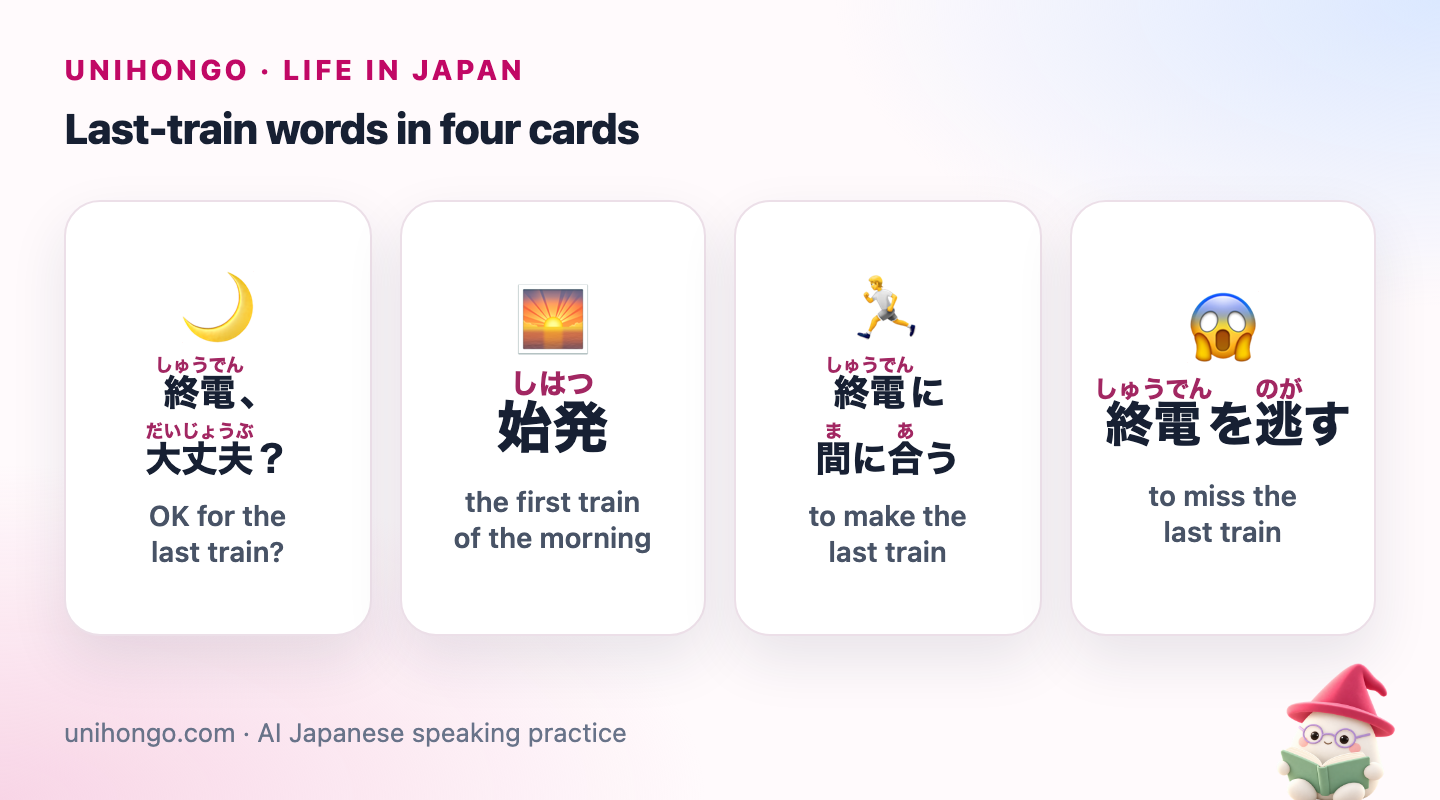
A handful of words cover almost every last-train conversation. Shūden is the last train and shihatsu the first one in the morning. Ma ni au means to make it in time, and nogasu means to miss something you were trying to catch.
| Japanese | Romaji | Meaning |
|---|---|---|
| 終電、大丈夫? | Shūden, daijōbu? | OK for the last train? |
| 始発 | shihatsu | the first train of the morning |
| 終電に間に合う | shūden ni ma ni au | to make the last train |
| 終電を逃す | shūden o nogasu | to miss the last train |
You will also see shūsha, last vehicle, on bus stops and some station signs, and saishū densha, last train, in formal announcements. In casual talk people just say shūden.
Finding your real last train
The most common mistake is checking the last train on the first line only. If your journey has a transfer, the second train may finish earlier, or the last train on the first line may arrive after the connection has gone. The time that matters is the last departure that gets you all the way home.
Route apps and railway websites let you search by arrival or show the last-train result directly. In Japanese apps, look for the shūden button or search with the departure time set late. Also check which timetable applies: many lines run a weekday schedule, heijitsu daiya, and a different one on Saturdays, Sundays and holidays, often called dokyūjitsu daiya, and the last trains can differ.
| Japanese | Romaji | Meaning |
|---|---|---|
| 終電検索 | shūden kensaku | last-train search |
| 平日ダイヤ | heijitsu daiya | weekday timetable |
| 土休日ダイヤ | dokyūjitsu daiya | weekend and holiday timetable |
| 乗り換え | norikae | transfer |
- Search your full route from where you will be, not from your usual station.
- Note the transfer station and the time of the last connection.
- Check whether the last train goes all the way or stops short of your station.
- Set a phone alarm 30 minutes before you need to leave.
Announcements and signs late at night
Near the end of the night, stations announce the last trains for each direction, and the departure board may show them in a different colour or with a last-train mark. Listen for the destination too. A last train often terminates before the end of the line, so it may say it goes only as far as a certain station. That word is domari or yuki, and it matters if your station is further on.
| Japanese | Romaji | Meaning |
|---|---|---|
| 本日の最終電車です。 | Honjitsu no saishū densha desu. | This is today's last train. |
| この電車は大宮止まりです。 | Kono densha wa Ōmiya domari desu. | This train terminates at Ōmiya. |
| お乗り遅れのないようご注意ください。 | Onoriokure no nai yō gochūi kudasai. | Please take care not to miss your train. |
| 最終電車が発車いたします。 | Saishū densha ga hassha itashimasu. | The last train is now departing. |
Leaving a party in time, politely
Catching the last train is one of the most accepted reasons to leave a party in Japan, at work or among friends. Nobody expects you to stay and miss it, and saying so early avoids awkwardness. A good habit is to tell the organiser at the start that you need to leave at a certain time; then you only need a short goodbye later.
At a work party, use osaki ni shitsurei shimasu, excuse me for leaving first, and thank the senior people or the organiser. With friends, a casual line is fine. If the bill is being split, pay your share before you go, or ask the organiser how much you owe.
| Japanese | Romaji | Meaning |
|---|---|---|
| 終電があるので、そろそろ失礼します。 | Shūden ga aru node, sorosoro shitsurei shimasu. | I have a last train to catch, so I'll be going. |
| お先に失礼します。 | Osaki ni shitsurei shimasu. | Excuse me for leaving first. (polite) |
| 今日はありがとうございました。 | Kyō wa arigatō gozaimashita. | Thank you for today. |
| ごめん、終電だから先に帰るね。 | Gomen, shūden dakara saki ni kaeru ne. | Sorry, I'm off for the last train. (casual) |
| 私の分、いくらですか。 | Watashi no bun, ikura desu ka. | How much is my share? |
Mini dialogue: the last-train moment at a work dinner
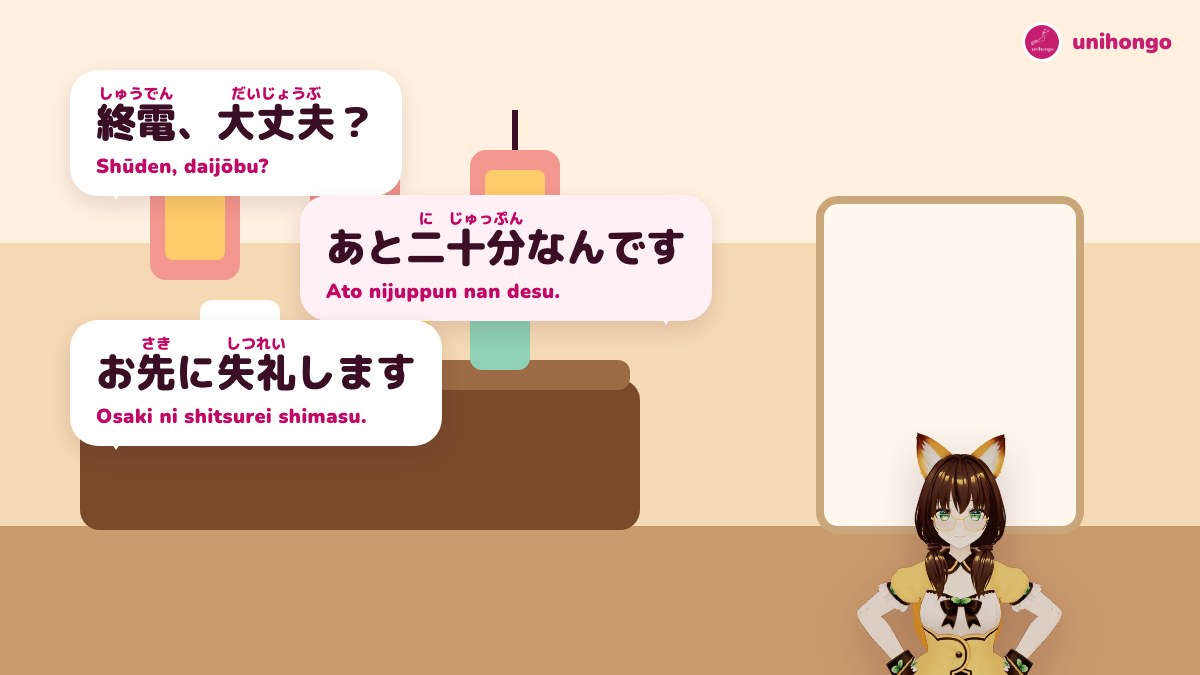
Around eleven, someone checks the time and the table starts to split into those who are going home and those who are staying. Here is a natural exchange with a colleague who is the organiser.
| Japanese | Romaji | Meaning |
|---|---|---|
| もう十一時だ。終電、大丈夫? | Mō jūichi ji da. Shūden, daijōbu? | Colleague: It's already eleven. Are you OK for the last train? |
| 実はあと二十分なんです。 | Jitsu wa ato nijuppun nan desu. | You: Actually, I have twenty minutes. |
| じゃあ、もう出たほうがいいね。 | Jā, mō deta hō ga ii ne. | Colleague: Then you'd better go now. |
| すみません、お先に失礼します。 | Sumimasen, osaki ni shitsurei shimasu. | You: Sorry, I'll leave ahead of you. |
| 気をつけてね。お疲れさま。 | Ki o tsukete ne. Otsukaresama. | Colleague: Take care. Good work today. |
| お疲れさまでした。また月曜日に。 | Otsukaresama deshita. Mata getsuyōbi ni. | You: Thanks for today. See you Monday. |
If you miss it: the realistic options
It happens to everyone once. Stay calm and decide based on the distance, your budget and how tired you are. In big cities there are usually several choices near a large station; in smaller towns there may only be a taxi.
| Japanese | Romaji | Meaning |
|---|---|---|
| 終電を逃しちゃった。 | Shūden o nogashichatta. | I missed the last train. (casual) |
| 始発まで待ちます。 | Shihatsu made machimasu. | I'll wait for the first train. |
| 今夜、空いている部屋はありますか。 | Kon'ya, aite iru heya wa arimasu ka. | Do you have a room free tonight? |
| タクシー乗り場はどこですか。 | Takushī noriba wa doko desu ka. | Where is the taxi rank? |
| Option | Good for | Keep in mind |
|---|---|---|
| Taxi | Short or medium distances, groups who can share | A late-night surcharge applies in many areas, so long rides get expensive |
| Business or capsule hotel | A proper sleep before work | Rooms near big stations can fill up on Friday nights |
| Internet or manga café | A cheap private booth until morning | Membership registration with ID is often required |
| Karaoke box | Groups who want to stay together | Look for a late-night or overnight package |
| Wait for the first train | When you are close to morning anyway | First trains usually start around 5 a.m. |
Taking a taxi home late at night
Japanese taxis are safe and drivers are used to late-night passengers. Give a clear destination: an address, a well-known building or a station near your home. Many drivers use navigation, so showing the address on your phone helps. Many city taxis now accept cards and IC or QR payments, but ask before you get in if you only have a card. If you are sharing with colleagues, the most junior person often sits in the front, and the group settles the fare among themselves.
| Japanese | Romaji | Meaning |
|---|---|---|
| 〇〇駅までお願いします。 | Marumaru eki made onegai shimasu. | To ___ station, please. |
| この住所までお願いします。 | Kono jūsho made onegai shimasu. | To this address, please. |
| カードで払えますか。 | Kādo de haraemasu ka. | Can I pay by card? |
| そこの角で止めてください。 | Soko no kado de tomete kudasai. | Please stop at that corner. |
| 領収書をください。 | Ryōshūsho o kudasai. | A receipt, please. |
Common last-train mistakes
- Checking only the first line of a journey with a transfer, then missing the connection.
- Using the weekday timetable on a Saturday or a holiday, when the last train can leave at a different time.
- Boarding a last train that terminates before your station without noticing the domari announcement.
- Waiting until the last second to say goodbye at a party. A long farewell round can cost you ten minutes.
- Falling asleep on the last train and waking at the terminal, far from home, with no train back.
A taxi ride and a polite exit, rehearsed
The two moments that need fast spoken Japanese are the exit from the table and the taxi. Ask Mocchi to write three ways of leaving a party for the last train, from casual to formal, then use /correct on your own version to make sure the tone fits a work dinner.
Then open AI Sensei, pick Ibuki-sensei and ask for a late-night taxi driver who asks where exactly you are going and how you will pay. Practising directions to your own home is more useful than any textbook route.