
Shopping signs to read first
Four words cover most of what you need to read in a shop: the activity itself, where things are sold, whether they are still available and where to pay.
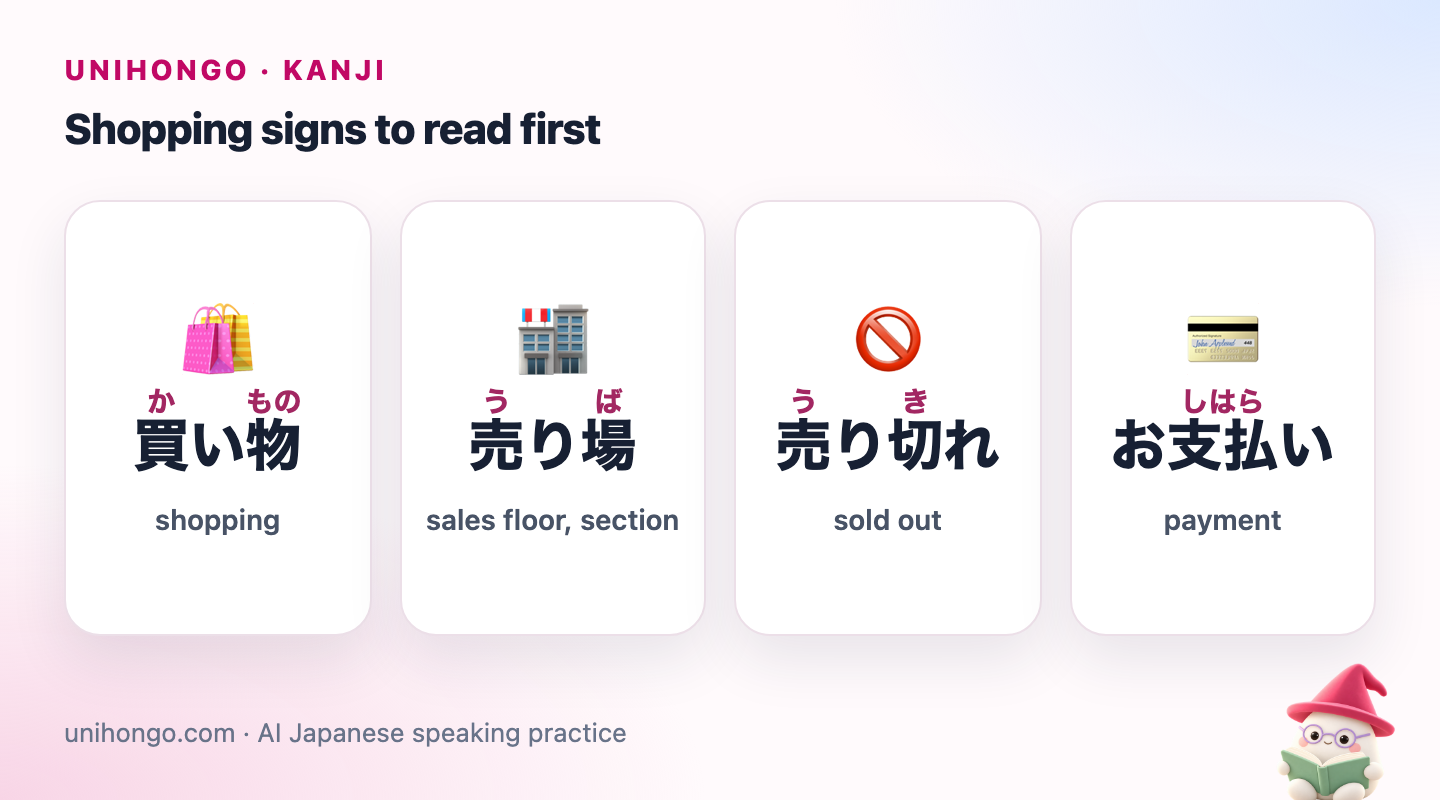
| Japanese | Romaji | Meaning |
|---|---|---|
| 買い物 | kaimono | shopping |
| 売り場 | uriba | sales floor, section |
| 売り切れ | urikire | sold out |
| お支払い | oshiharai | payment |
売り場 appears on department store floor guides: 食品売り場 is the food floor and 婦人服売り場 is women's clothing. Ask 〜売り場はどこですか to find any section.
The ten kanji and their readings
| Kanji | Meaning | Main readings | Word |
|---|---|---|---|
| 円 | yen, circle | en, maru(i) | 百円 (hyakuen) |
| 金 | money, gold | kane, kin | お金 (okane), 現金 (genkin, cash) |
| 買 | buy | ka(u), bai | 買い物 (kaimono) |
| 売 | sell | u(ru), bai | 売店 (baiten, kiosk) |
| 安 | cheap, calm | yasu(i), an | 安心 (anshin, relief) |
| 高 | high, expensive | taka(i), kō | 高校 (kōkō, high school) |
| 店 | shop | mise, ten | 店員 (ten'in, clerk) |
| 品 | goods, quality | shina, hin | 商品 (shōhin, product) |
| 払 | pay | hara(u) | 支払い (shiharai, payment) |
| 物 | thing | mono, butsu, motsu | 荷物 (nimotsu, luggage) |
安 has a second, very common meaning: calm or safe. You see it in 安心 (anshin, relief), 安全 (anzen, safety) and 不安 (fuan, anxiety). The picture is a woman 女 under a roof 宀, a home at peace. So when you see 安 on a sign, check the word: 安売り (yasuuri) is a sale, but 安全 is about safety, not price.
Buy and sell: a pair that shares a reading
買 and 売 are the most important pair in this set and the easiest to confuse, because both are bai in compounds. The verbs are completely different, though, and the direction matters.
| Japanese | Romaji | Meaning |
|---|---|---|
| パンを買う | pan o kau | to buy bread |
| 古い本を売る | furui hon o uru | to sell old books |
| 売れる | ureru | to sell well, be popular |
| 売買 | baibai | buying and selling |
| この本はよく売れています。 | Kono hon wa yoku urete imasu. | This book is selling well. |
| どこで買えますか。 | Doko de kaemasu ka. | Where can I buy it? |
Watch for the potential and passive-looking forms: 売れる (ureru) means something sells, and 売れ筋 (uresuji) is a bestselling line. When a clerk says 人気で、すぐ売れてしまいます, they mean it is so popular it sells out fast.
Shop and goods words
店 and 品 build most of the vocabulary for places and things you buy. 店 is mise on its own and ten in compounds; 品 is shina on its own and hin in compounds.
| Japanese | Romaji | Meaning |
|---|---|---|
| 店員 | ten'in | shop clerk |
| 売店 | baiten | kiosk (at stations, hospitals) |
| 新品 | shinpin | brand new |
| 中古品 | chūkohin | second-hand goods |
| 品切れ | shinagire | out of stock |
| 返品 | henpin | returned goods; a return |
| 上品 | jōhin | elegant, refined |
上品 shows how 品 also means quality or class: 上品な人 is a refined person, and its opposite 下品 (gehin) means vulgar. These are about manners, not goods.
Paying: cash, card and change
Most of the payment conversation happens at the register, the レジ. Cashiers speak quickly and politely, so it helps to know the fixed phrases in advance.
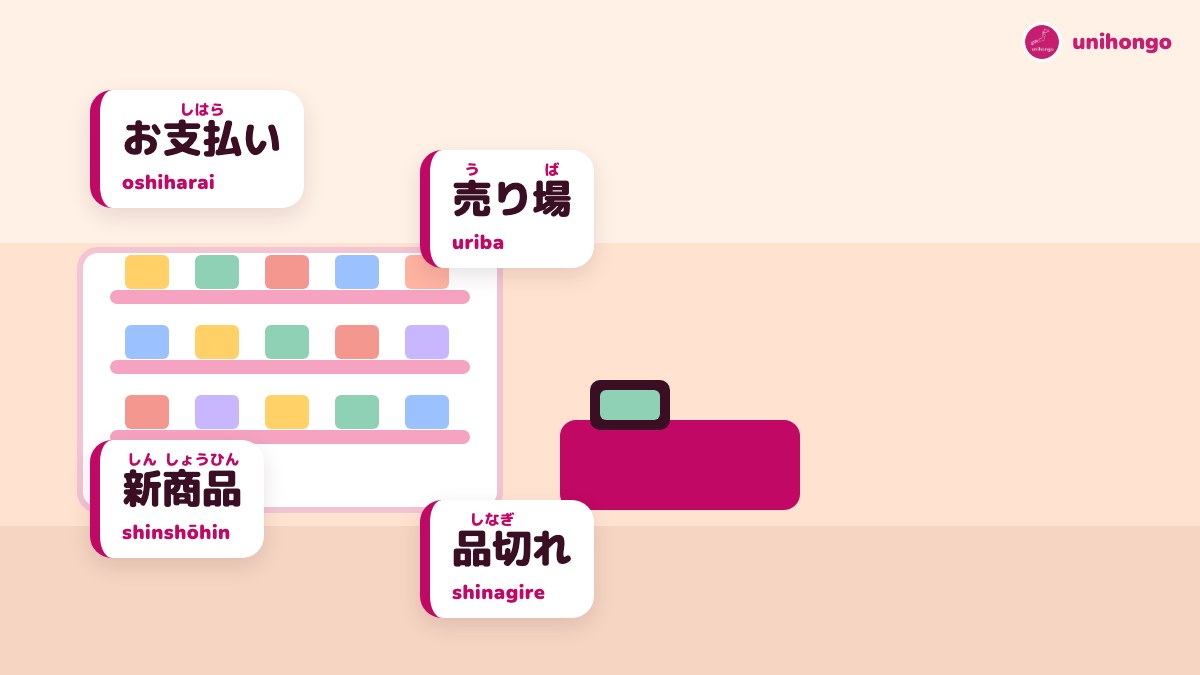
| Japanese | Romaji | Meaning |
|---|---|---|
| お支払いはどうされますか。 | Oshiharai wa dō saremasu ka. | Cashier: How would you like to pay? (polite) |
| 現金でお願いします。 | Genkin de onegai shimasu. | You: Cash, please. |
| カードは使えますか。 | Kādo wa tsukaemasu ka. | You: Can I use a card? |
| 千円お預かりします。 | Sen'en oazukari shimasu. | Cashier: Out of one thousand yen. (taking your note) |
| 二百円のお返しです。 | Nihyakuen no okaeshi desu. | Cashier: Here's two hundred yen change. |
Mini dialogue: asking about stock
| Japanese | Romaji | Meaning |
|---|---|---|
| すみません、この靴の二十六センチはありますか。 | Sumimasen, kono kutsu no nijūroku senchi wa arimasu ka. | You: Excuse me, do you have these shoes in 26 cm? |
| 申し訳ありません、今品切れでございます。 | Mōshiwake arimasen, ima shinagire de gozaimasu. | Clerk: I'm very sorry, they are out of stock right now. (very polite) |
| いつ入りますか。 | Itsu hairimasu ka. | You: When will they come in? |
| 来週の予定です。お取り置きしましょうか。 | Raishū no yotei desu. Otorioki shimashō ka. | Clerk: They should come next week. Shall I put a pair aside? |
| はい、お願いします。 | Hai, onegai shimasu. | You: Yes, please. |
Clerks in department stores and fashion shops speak in very polite Japanese, with forms such as ございます and いたします. You do not need to answer in the same register: ordinary polite Japanese with です and ます is perfectly appropriate for a customer.
Look-alikes and reading traps
- 買 (buy) vs 貝 (shellfish): 買 is 貝 with 罒 on top. 貝 is in many money kanji, such as 費 (cost) and 貯 (save), because shells were once used as money.
- 売 (sell) vs 読 (read): 読 is 言 (speech) plus 売, but the readings differ, doku in 読書 against bai in 売店, so do not guess one from the other.
- 円 (yen) vs 内 (inside): 円 has a short vertical and a horizontal stroke inside the frame, 内 has 人.
- 安 (cheap) vs 案 (plan): 案 is 安 on top of 木, as in 案内 (annai, guidance).
- 店 (shop) vs 広 (wide) vs 庁 (government office): all have the 广 roof; 店 has 占 underneath.
- Writing tip: 金 is eight strokes; the two short dots in the lower half slant towards each other, and the long horizontal line at the bottom comes last.
Common learner mistakes in shops
These slips do not stop you buying anything, but they are easy to fix once you know them.
- Saying 売ります when you mean you will buy. Double-check the verb: 買います is buy, 売ります is sell.
- Using 安い about people or places in the sense of calm. 安い is only cheap; for calm, use 安心 or 落ち着いた.
- Reading 品物 as hinmono. It is shinamono, goods or merchandise, with the kun'yomi of both kanji.
- Treating 売り切れ and 品切れ as different problems. Both mean you cannot buy it now; just ask when it will be back.
- Answering お支払いは? with はい. The cashier wants a method: 現金で, カードで, or the name of the payment app you use.
Shop in Japanese before you go
- Write a short list of what you plan to buy and ask Mocchi to /correct it, so each item has the right particle and counter.
- Ask Mocchi to give you a price-reading drill with 円, mixing amounts such as 四百八十円 and 三千二百円, and to remember which numbers slow you down.
- Then practise the full exchange with Hana-sensei in AI Sensei, who can play a shoe-shop clerk: ask for your size, hear that it is out of stock and arrange to have it put aside.