
Body kanji in four idioms
Before the list, here are four idioms that show why body kanji are worth learning well. You will hear all four in ordinary conversation, at work and at home.
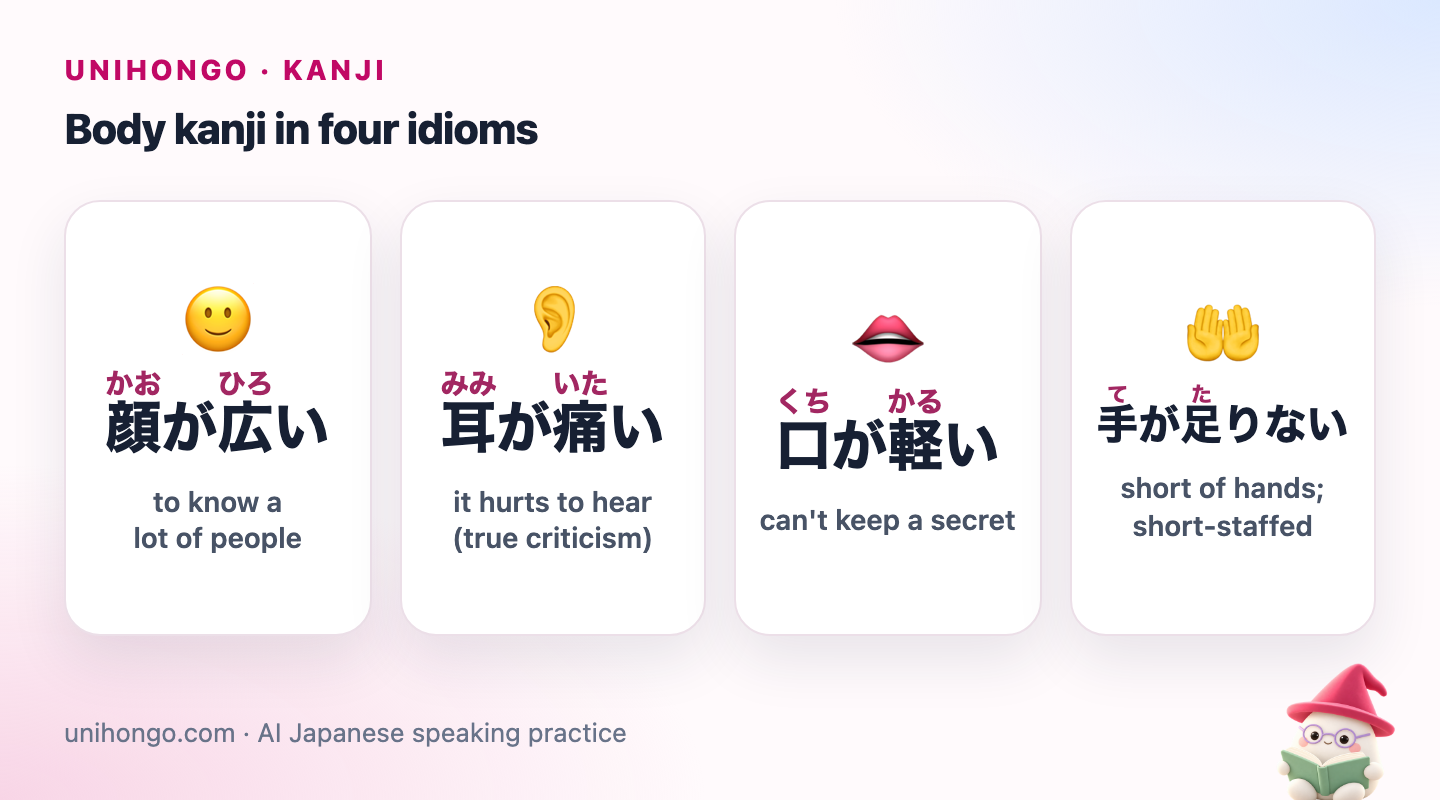
| Japanese | Romaji | Meaning |
|---|---|---|
| 顔が広い | kao ga hiroi | to know a lot of people |
| 耳が痛い | mimi ga itai | it hurts to hear (true criticism) |
| 口が軽い | kuchi ga karui | can't keep a secret |
| 手が足りない | te ga tarinai | short of hands; short-staffed |
耳が痛い can also be literal, my ear hurts, so context decides. When a colleague smiles and says 耳が痛いです after a speech about working late, they mean the advice applies to them.
The eleven body kanji
These are the words you say when you point at your own body. Each is the kun'yomi, the native Japanese reading.
| Japanese | Romaji | Meaning |
|---|---|---|
| 目 | me | eye |
| 耳 | mimi | ear |
| 口 | kuchi | mouth |
| 鼻 | hana | nose |
| 顔 | kao | face |
| 頭 | atama | head |
| 首 | kubi | neck |
| 手 | te | hand |
| 足 | ashi | foot; leg |
| 心 | kokoro | heart; mind |
| 体 | karada | body |
足 covers both foot and leg. If you need to be precise, 脚 (also ashi) is sometimes used for the leg, but 足 is the everyday kanji for both. Similarly, 心 is the heart as the seat of feelings; the physical heart organ is usually 心臓 (shinzō).
Readings and everyday compounds
In compounds most body kanji switch to their on'yomi. Learn one compound per kanji and the reading sticks.
| Japanese | Romaji | Meaning |
|---|---|---|
| 入口と出口 | iriguchi to deguchi | entrance and exit |
| 切手 | kitte | postage stamp |
| 上手 | jōzu | skilful, good at |
| 中心 | chūshin | centre |
| Kanji | Kun'yomi | On'yomi | Everyday compound |
|---|---|---|---|
| 目 | me | moku | 目的 (mokuteki, purpose) |
| 耳 | mimi | ji | 耳鼻科 (jibika, ear, nose and throat clinic) |
| 口 | kuchi | kō, ku | 人口 (jinkō, population) |
| 手 | te | shu | 歌手 (kashu, singer) |
| 足 | ashi, ta(riru) | soku | 遠足 (ensoku, school outing) |
| 頭 | atama | tō, zu | 頭痛 (zutsū, headache) |
| 顔 | kao | gan | 洗顔 (sengan, face wash) |
| 首 | kubi | shu | 首都 (shuto, capital city) |
| 心 | kokoro | shin | 安心 (anshin, relief, peace of mind) |
| 体 | karada | tai | 体育 (taiiku, PE) |
| 鼻 | hana | bi | 耳鼻科 (jibika) |
A useful habit is to learn each body kanji with one body word and one non-body word. 目 gives 目 (eye) and 目的 (purpose); 手 gives 手 (hand) and 歌手 (singer); 首 gives 首 (neck) and 首都 (capital). When you meet a new compound, ask yourself which meaning of the kanji is at work: the body part itself, or an extended sense such as entrance for 口, person or skill for 手, and leader for 首.
More body idioms people really use
Here are five more well-known idioms. They are neutral in register unless noted, and they are spoken as often as written.
| Japanese | Romaji | Meaning |
|---|---|---|
| 目が高い | me ga takai | to have a good eye (for quality) |
| 頭が固い | atama ga katai | stubborn, inflexible in thinking |
| 足を洗う | ashi o arau | to quit a bad line of work |
| 首になる | kubi ni naru | to be fired (blunt) |
| 心が広い | kokoro ga hiroi | generous, open-minded |
| さすが、目が高いですね。 | Sasuga, me ga takai desu ne. | Shop clerk: As expected, you have a good eye. |
| 部長は頭が固いから、説明が大変だ。 | Buchō wa atama ga katai kara, setsumei ga taihen da. | Our manager is stubborn, so explaining is hard work. (casual) |
Be careful with literal and idiomatic readings. 頭が痛い can mean I have a headache, or, figuratively, this problem gives me a headache. 足を洗う is usually figurative and slightly dramatic, but the same words can also mean literally washing your feet, so again context decides.
Mini dialogue: the friend who knows everyone
Two friends are planning a party and need a venue. Listen for 顔が広い and 手が足りない.
| Japanese | Romaji | Meaning |
|---|---|---|
| 会場、まだ決まってないんだ。 | Kaijō, mada kimatte nai n da. | Aki: We still haven't found a venue. |
| 佐藤さんに聞いてみたら?顔が広いから。 | Satō san ni kiite mitara? Kao ga hiroi kara. | Ken: Why not ask Sato? Sato knows everyone. |
| そうだね。それに、当日は手が足りないかも。 | Sō da ne. Sore ni, tōjitsu wa te ga tarinai kamo. | Aki: True. And we might be short of hands on the day. |
| じゃあ、弟にも手伝ってもらうよ。 | Jā, otōto ni mo tetsudatte morau yo. | Ken: Then I'll get my brother to help too. |
| 助かる!これで安心だ。 | Tasukaru! Kore de anshin da. | Aki: That's a big help! Now I can relax. |
Look-alike kanji to watch
- 目 (eye) vs 日 (sun, day) vs 自 (self): 目 has two inner lines, 日 has one, and 自 adds a short stroke on top.
- 頭 (head) vs 題 (topic) vs 顔 (face): all three have 頁 on the right. 頭 has 豆 (bean) on the left, 題 has 是, and 顔 has 彦.
- 手 (hand) vs 毛 (hair): 手 ends with a hook to the left, 毛 with a curve to the right.
- 首 (neck) vs 道 (road): 道 is 首 sitting on the road radical ⻌.
- 体 (body) vs 休 (rest): 体 has 本 on the right, 休 has 木 (tree), a person resting against a tree.
Where you see body kanji every day
- Station and building signs: 入口, 出口, 北口, 東口.
- Clinic signs: 耳鼻科 (ear, nose and throat), 眼科 (ganka, eye clinic) and 歯科 (shika, dentist).
- Post offices and shops: 切手 on the counter sign, 手数料 (tesūryō, handling fee) on receipts.
- Product labels: 洗顔 on face wash, 手洗い (tearai) on hand-wash only clothing and on toilet signs.
- Weather and news: 首都圏 (shutoken, the greater Tokyo area) in forecasts.
Common learner mistakes with body kanji
Body words are among the first you learn, so mistakes with them tend to become habits. These are the ones teachers often hear.
- Using 足 only for feet. In Japanese 足 covers the whole leg too, so 足が長い means someone has long legs, not long feet.
- Saying 心が痛い for chest pain at a clinic. 心 is the heart as feelings; for physical chest pain say 胸が痛い (mune ga itai).
- Translating idioms word for word. 顔が広い is not a wide face, and 口が軽い is not a light mouth; learn idioms as whole phrases with their real meaning.
- Reading 頭 as atama in every word. In 頭痛 it is zu, and in 先頭 (sentō, the front of a line) it is tō.
- Using 首になる about the listener. Saying it about yourself or a situation is fine, but telling someone they will be fired with this blunt phrase sounds harsh.
Learn the idioms by using them
Idioms stick when you use them about real people. Type /explain 部長は頭が固いから、説明が大変だ into the Mocchi chat and Mocchi breaks the sentence down word by word, then ask for five more body idioms at your level with one example each. Turn the ones you like into flashcards with /create-flashcards, picking a photo that reminds you of the meaning, and review them with /review-flashcards.
For quick recall of the single kanji, play Flashcard Flip in Unihongo's games with your own deck, so the body words and idioms come back at spaced intervals.