
The first animal kanji to learn
Start with four animals you will meet everywhere. On their own, animal kanji are almost always read with the native Japanese reading, the kun reading, so you can read a zoo sign or a pet shop window long before you know the on readings that appear in compounds.
Say each word aloud as you look at the kanji. 犬 looks like 大 (big) with an extra dot, and 猫 has the animal radical 犭 on the left, a sign that the character is about a four-legged animal.
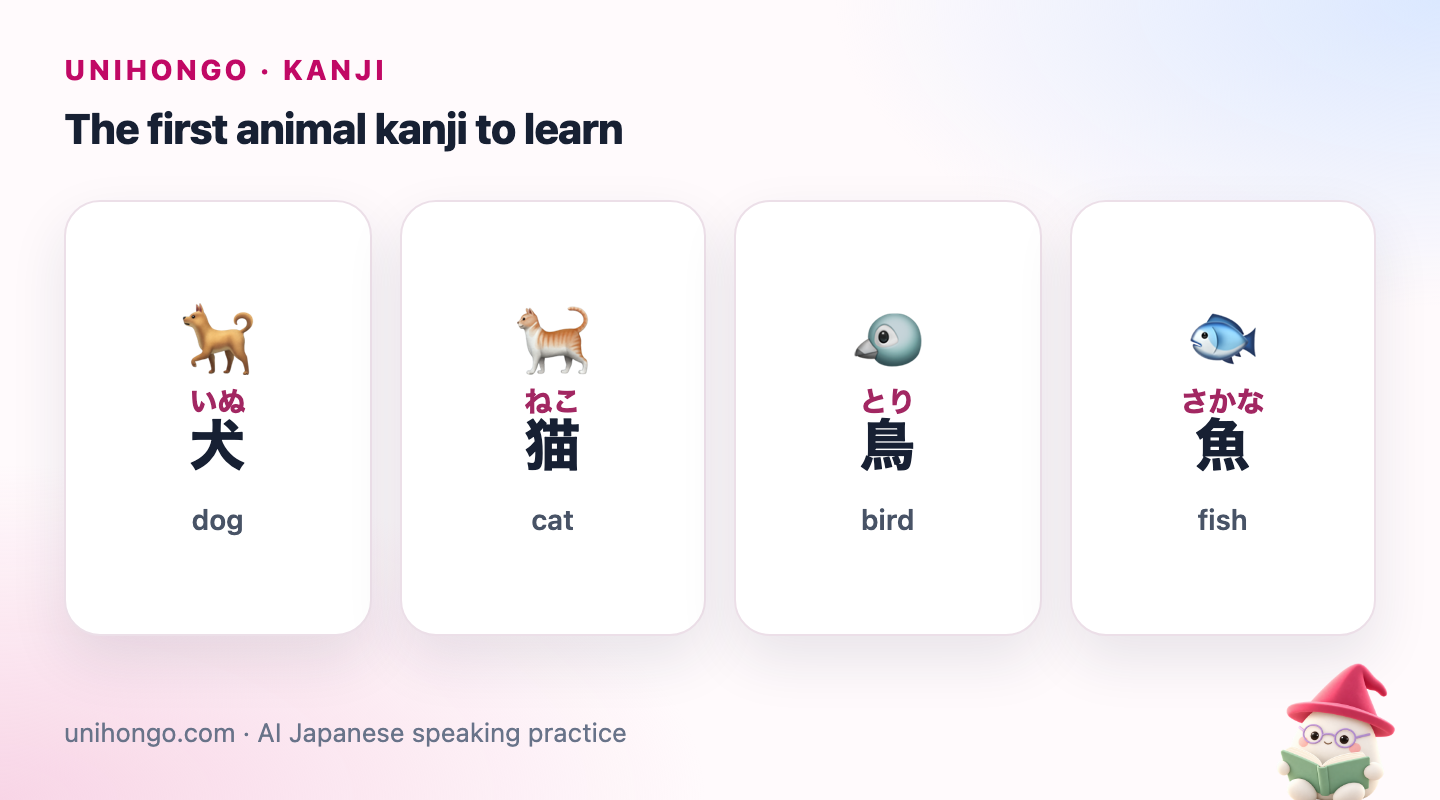
| Japanese | Romaji | Meaning |
|---|---|---|
| 犬 | inu | dog |
| 猫 | neko | cat |
| 鳥 | tori | bird |
| 魚 | sakana | fish |
| 子犬 | koinu | puppy |
| 子猫 | koneko | kitten |
| 小鳥 | kotori | small bird, songbird |
| 金魚 | kingyo | goldfish |
Farm animals, insects and the wild ones
The next group are farm and wild animals. Several of them are more common in food words and place names than as animals you talk about, so the example words below include the ones you will actually read.
動物 itself, dōbutsu, means animal: 動 is to move and 物 is thing, so an animal is literally a moving thing. 動物園, dōbutsuen, is a zoo.
| Japanese | Romaji | Meaning |
|---|---|---|
| 馬 | uma | horse |
| 牛 | ushi | cow, cattle |
| 羊 | hitsuji | sheep |
| 豚 | buta | pig |
| 虫 | mushi | insect, bug |
| 熊 | kuma | bear |
| 猿 | saru | monkey |
| 象 | zō | elephant |
| 動物園 | dōbutsuen | zoo |
| 牛乳 | gyūnyū | milk |
| 昆虫 | konchū | insect (formal, science) |
Readings at a glance
The table lists each kanji's main readings and one compound that uses the on reading. The kun reading is what you say for the animal itself; the on reading is what you meet in longer words.
| Kanji | Kun reading | On reading | Common compound |
|---|---|---|---|
| 犬 | inu | ken | 番犬 banken, guard dog |
| 猫 | neko | byō | 招き猫 maneki neko, beckoning cat (kun) |
| 鳥 | tori | chō | 白鳥 hakuchō, swan |
| 魚 | sakana, uo | gyo | 金魚 kingyo, goldfish |
| 馬 | uma | ba | 乗馬 jōba, horse riding |
| 牛 | ushi | gyū | 牛肉 gyūniku, beef |
| 羊 | hitsuji | yō | 羊毛 yōmō, wool |
| 豚 | buta | ton | 豚汁 tonjiru, pork miso soup |
| 虫 | mushi | chū | 昆虫 konchū, insect |
| 熊 | kuma | yū | 熊本 Kumamoto (place name, kun) |
| 猿 | saru | en | 犬猿の仲 ken'en no naka, like cat and dog |
| 象 | (none in daily use) | zō, shō | 印象 inshō, impression |
象 is unusual: the animal is read zō, which is an on reading, and the same kanji is read shō in abstract words such as 印象, impression, and 現象, phenomenon. 犬猿の仲 is a real, common idiom: two people who are like dog and monkey always fight, much like the English like cats and dogs.
Animals on the menu: meat and fish words
Animal kanji pay off quickly at the supermarket and in restaurants. Meat packs show the animal first and the cut second, and menus use the same kanji. Notice that the readings do not follow one rule: beef uses two on readings, while pork mixes buta with niku. Learn each as a fixed word.
For fish, 魚 is sakana in daily speech and uo in a few older words such as 魚市場, uoichiba, fish market. On sushi menus, many fish names are written with the fish radical 魚 on the left, such as 鮭 (sake, salmon) and 鮪 (maguro, tuna), though many menus write these in hiragana or katakana instead.
| Japanese | Romaji | Meaning |
|---|---|---|
| 牛肉 | gyūniku | beef |
| 豚肉 | butaniku | pork |
| 鶏肉 | toriniku | chicken (meat) |
| 焼き鳥 | yakitori | grilled chicken skewers |
| 牛丼 | gyūdon | beef rice bowl |
| 焼き魚 | yakizakana | grilled fish |
| 国産牛 | kokusangyū | domestic beef (on labels) |
Look-alikes and hidden animals
A few animal kanji have twins that trip up learners, and several animals hide inside other kanji. Knowing the hidden animal often explains the meaning.
- 犬 (dog) vs 大 (big) vs 太 (fat, thick): the dot on 犬 sits top right; the dot on 太 sits underneath.
- 鳥 (bird) vs 島 (shima, island): 島 has a mountain 山 tucked under the bird, a bird resting on a mountain in the sea.
- 牛 (cow) vs 午 (go, noon): 牛 has a vertical stroke that pokes through the top; 午 does not. 午前 is morning, a.m.
- 馬 inside 駅 (eki, station): stations were once post stops where horses were changed.
- 虫 inside 蚊 (ka, mosquito) and 蝶 (chō, butterfly): the insect radical on the left marks small creatures.
- 羊 inside 美 (beautiful) and 洋 (ocean, Western): the sheep is part of the shape, not the meaning, in everyday use.
Where you meet animal kanji
Zoos and aquariums label every enclosure, and many signs mix kanji and katakana. Mountain trails and rural roads warn about bears, often in katakana. Pet shops, vet clinics and parks use 犬 constantly, for example in signs about walking dogs. At the dentist you will meet 虫 in 虫歯, mushiba, a cavity, literally an insect tooth.
Animals also appear in common expressions. 猫舌, nekojita, cat tongue, describes someone who cannot eat or drink hot things. 弱虫, yowamushi, weak insect, is a casual word for a coward, used teasingly among friends and children.
| Japanese | Romaji | Meaning |
|---|---|---|
| 犬の散歩をしています。 | Inu no sanpo o shite imasu. | I'm walking the dog. |
| クマ出没注意 | kuma shutsubotsu chūi | Beware of bears (trail sign) |
| 虫歯があります。 | Mushiba ga arimasu. | I have a cavity. |
| 私は猫舌です。 | Watashi wa nekojita desu. | I can't handle hot food or drinks. |
| ペット可 | petto ka | pets allowed (on flat listings) |
Mini dialogue: talking about pets
Pets are a safe small-talk topic. Listen for the counters: 匹 for cats and dogs changes its sound, ippiki, nihiki, sanbiki.
| Japanese | Romaji | Meaning |
|---|---|---|
| ペットを飼っていますか。 | Petto o katte imasu ka. | Colleague: Do you have any pets? |
| はい、猫を二匹飼っています。 | Hai, neko o nihiki katte imasu. | You: Yes, I have two cats. |
| いいですね。うちは犬が一匹います。 | Ii desu ne. Uchi wa inu ga ippiki imasu. | Colleague: Nice. We have one dog. |
| どんな犬ですか。 | Donna inu desu ka. | You: What kind of dog? |
| 柴犬です。とても元気ですよ。 | Shibainu desu. Totemo genki desu yo. | Colleague: A Shiba. Very lively. |
| 今度写真を見せてください。 | Kondo shashin o misete kudasai. | You: Please show me a photo sometime. |
Writing tip: the four dots and the animal radical
鳥, 馬 and 魚 all end with four short dots along the bottom. Write them left to right, the first one slanting slightly left and the other three slanting right. Keep them evenly spaced; crowded dots are the most common reason these kanji look untidy.
The animal radical 犭 on the left of 猫 and 猿 is written in three strokes: a short slanting stroke, a long curved hook, then a short slanting stroke across it. It is called けものへん, kemonohen, the beast radical, and it tells you the character is about an animal even before you know the right side.
- Write 鳥, 馬 and 魚 in a row and compare the dots.
- Write 大, 犬 and 太 three times each and say the difference aloud.
- Write 牛 and 午 side by side, checking whether the stroke pokes through.
Keep the animals in your head
Ask Mocchi something specific, for example: /kanji 魚, then give me five food words with it and quiz me tomorrow. Mocchi explains the readings, notes which ones you miss and brings those back in your next review, so 魚 and 鳥 stop blurring together.
Then turn the list into flashcards and play Vocabulary Dash in Unihongo's games with your own cards. Fast rounds force you to read 牛, 馬 and 羊 at a glance rather than working them out stroke by stroke.