
Airport and bus words to read first
For many visitors, the first kanji they need are not at a station but at the airport and on the bus into town. These four come first.
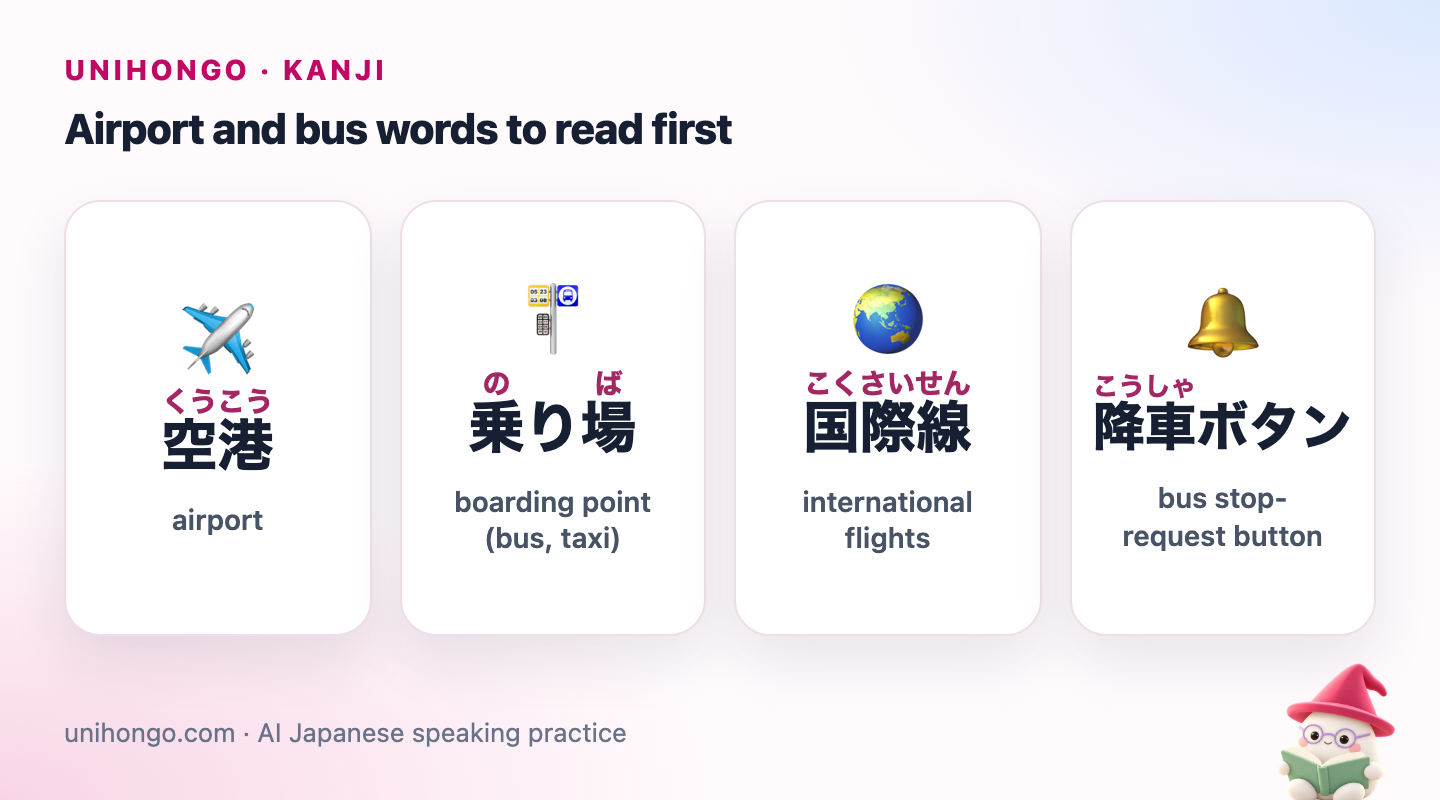
| Japanese | Romaji | Meaning |
|---|---|---|
| 空港 | kūkō | airport |
| 乗り場 | noriba | boarding point (bus, taxi) |
| 国際線 | kokusaisen | international flights |
| 降車ボタン | kōsha botan | bus stop-request button |
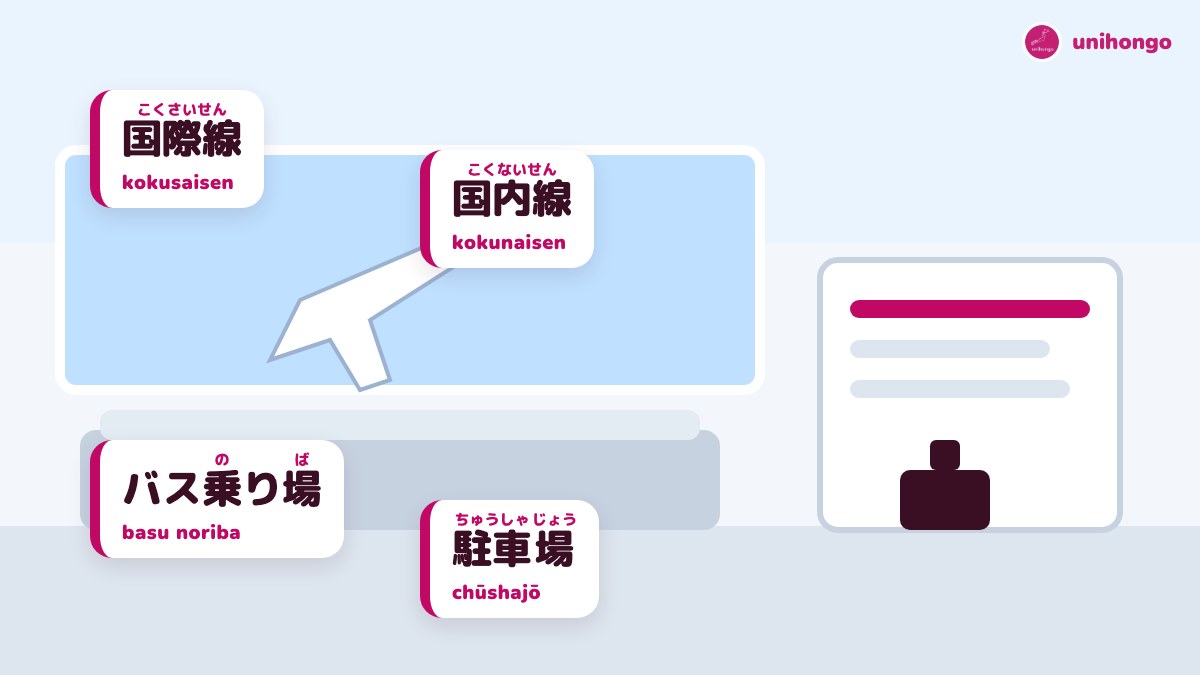
乗り場 combines 乗 (get on) with 場 (place). You see it on signs such as バス乗り場 (bus stops) and タクシー乗り場 (taxi rank). 国際線 and 国内線 (kokunaisen, domestic flights) use 線, line, in the sense of a route.
The eleven travel kanji and their readings
| Kanji | Meaning | Main readings | Word |
|---|---|---|---|
| 駅 | station | eki | 駅員 (ekiin, station staff) |
| 道 | road, way | michi, dō | 道路 (dōro, road) |
| 車 | vehicle | kuruma, sha | 自転車 (jitensha, bicycle) |
| 電 | electricity | den | 電車 (densha, train) |
| 線 | line | sen | 新幹線 (shinkansen) |
| 空 | sky, empty | sora, a(ku), kara, kū | 空席 (kūseki, vacant seat) |
| 港 | port | minato, kō | 空港 (kūkō) |
| 乗 | ride, get on | no(ru), jō | 乗車 (jōsha, boarding) |
| 降 | descend, fall | o(riru), fu(ru), kō | 降車 (kōsha, getting off) |
| 便 | service, flight | bin, ben | 便名 (binmei, flight number) |
| 路 | road, route | ro, ji | 線路 (senro, railway track) |
車 is one of the most productive kanji in the set: 電車 (train), 自転車 (bicycle), 自動車 (car), 駐車 (parking), 乗車 (boarding) and 下車 (getting off) all use the sha reading. 乗 and 降 pair up in many signs: 乗車口 is the boarding door and 降車口 the exit door on a bus, and 乗り換え (norikae) is changing trains or buses. Learn them as pairs and the signs become predictable.
Two kanji with double lives: 空 and 降
空 means sky, but also empty, and you need both meanings when travelling. 降 means to descend, which covers both getting off a vehicle and rain or snow falling from the sky.
| Japanese | Romaji | Meaning |
|---|---|---|
| 青い空 | aoi sora | blue sky |
| 空席 | kūseki | vacant seat |
| 空いている席 | aite iru seki | a free seat |
| 次の駅で降ります。 | Tsugi no eki de orimasu. | I'm getting off at the next station. |
| 雨が降っています。 | Ame ga futte imasu. | It's raining. |
| 雪で電車が遅れています。 | Yuki de densha ga okurete imasu. | Trains are delayed because of snow. |
Careful with 空く: as aku it means to become empty or free, and as suku, also written 空く, it means to be uncrowded, as in 電車が空いている, the train is not crowded. Both readings are common; the sentence decides.
Roads, cars and road signs
If you take a taxi, rent a car or simply walk along a main road, you will see 道, 路 and 車 everywhere. Some road-sign kanji, such as 止まれ (stop), are covered in our guide to signs; these are the travel words around them.
| Japanese | Romaji | Meaning |
|---|---|---|
| 道路 | dōro | road |
| 歩道 | hodō | pavement, sidewalk |
| 高速道路 | kōsoku dōro | expressway |
| 駐車場 | chūshajō | car park |
| 車線 | shasen | traffic lane |
| 一方通行 | ippō tsūkō | one way (road sign) |
道 has a second meaning, way or art, in the names of traditional disciplines: 書道 (shodō, calligraphy), 柔道 (jūdō) and 茶道 (sadō or chadō, the tea ceremony). It also appears in 北海道, where it once meant a region or circuit. 道 is read michi on its own and dō in compounds.
At the airport bus counter
Many travellers take a limousine bus from the airport to the city. The counter staff will ask where you are going and give you a stop and a time.
| Japanese | Romaji | Meaning |
|---|---|---|
| 新宿駅までのバスはありますか。 | Shinjuku eki made no basu wa arimasu ka. | You: Is there a bus to Shinjuku Station? |
| はい、次は十時二十分発です。 | Hai, tsugi wa jūji nijuppun hatsu desu. | Staff: Yes, the next one leaves at 10:20. |
| 大人一枚お願いします。 | Otona ichimai onegai shimasu. | You: One adult ticket, please. |
| 乗り場は八番です。 | Noriba wa hachiban desu. | Staff: It leaves from stop number 8. |
| 荷物はどうしますか。 | Nimotsu wa dō shimasu ka. | You: What do I do with my luggage? |
| 係員が下に入れますので、そのままで大丈夫です。 | Kakariin ga shita ni iremasu node, sono mama de daijōbu desu. | Staff: Our staff will load it underneath, so just leave it. |
On the bus: getting off at the right stop
City buses work differently from city to city. On many, you board at the back or middle and pay at the front when you get off, but some cities have you board at the front; follow the signs on the door.
| Japanese | Romaji | Meaning |
|---|---|---|
| このバスは市役所に止まりますか。 | Kono basu wa shiyakusho ni tomarimasu ka. | You: Does this bus stop at the city hall? |
| 次、止まります。 | Tsugi, tomarimasu. | Announcement: Next stop requested. |
| 市役所前で降りたいんですが。 | Shiyakusho mae de oritai n desu ga. | You: I'd like to get off at City Hall. |
| 前のドアからお降りください。 | Mae no doa kara oori kudasai. | Driver: Please get off by the front door. |
Bus stops are often named after the nearest landmark plus 前 (in front of): 市役所前, 駅前, 病院前. Knowing 前 helps you predict where to get off.
Look-alikes and writing tips
- 降 (get off, fall) vs 隆 (rise, prosper): both start with the hill radical 阝; 隆 has 生 in the lower right.
- 駅 (station) vs 験 (test): both have 馬 (horse) on the left, because stations were once post-horse stops; 験 has a different right side.
- 線 (line) vs 緑 (green): both have 糸 (thread) on the left; 線 has 泉 (spring) on the right, 緑 has 录.
- 港 (port) vs 巷 (street, rare): 港 adds the water radical 氵, fitting for a harbour.
- 空 (sky) vs 究 (research): both have the hole radical 穴 on top; 空 has 工, 究 has 九.
- Writing tip: 道 and other ⻌ kanji are written inside first, road radical last: write 首, then the ⻌ that sweeps underneath.
Common learner mistakes with travel words
Travel words are learned in a hurry before a trip, so a few mistakes are very common. Fix these before you go.
- Saying 電車に降ります. The vehicle you leave takes を or から: 電車を降ります or 電車から降ります.
- Saying 電車を乗ります. 乗る takes に: 電車に乗ります, バスに乗ります.
- Reading 空港 as sorakō. It is kūkō, with the on'yomi of both kanji.
- Confusing 空いている (free, uncrowded) with 開いている (open). A shop that is open is 開いている; a seat that is free is 空いている.
- Reading 便 as ben on a flight board. A flight is bin: 次の便, 午後の便.
Travel practice before you land
A good warm-up is a reading quiz. Ask Mocchi to /quiz you on airport and bus signs from this guide, mixing in 空 as empty and 降 as falling, and Mocchi will remember which double meanings still catch you out for your next review.
Then practise the spoken part with Ibuki-sensei in AI Sensei. Choose the airport topic and ask the Sensei to play the bus counter staff: buy a ticket into the city, ask about your luggage and confirm the stop, then ask for the same exchange again at natural speed.