
Direction kanji hiding in everyday words
These four words are among the most common in conversation, and each is built from two direction kanji. None of them is about a place.
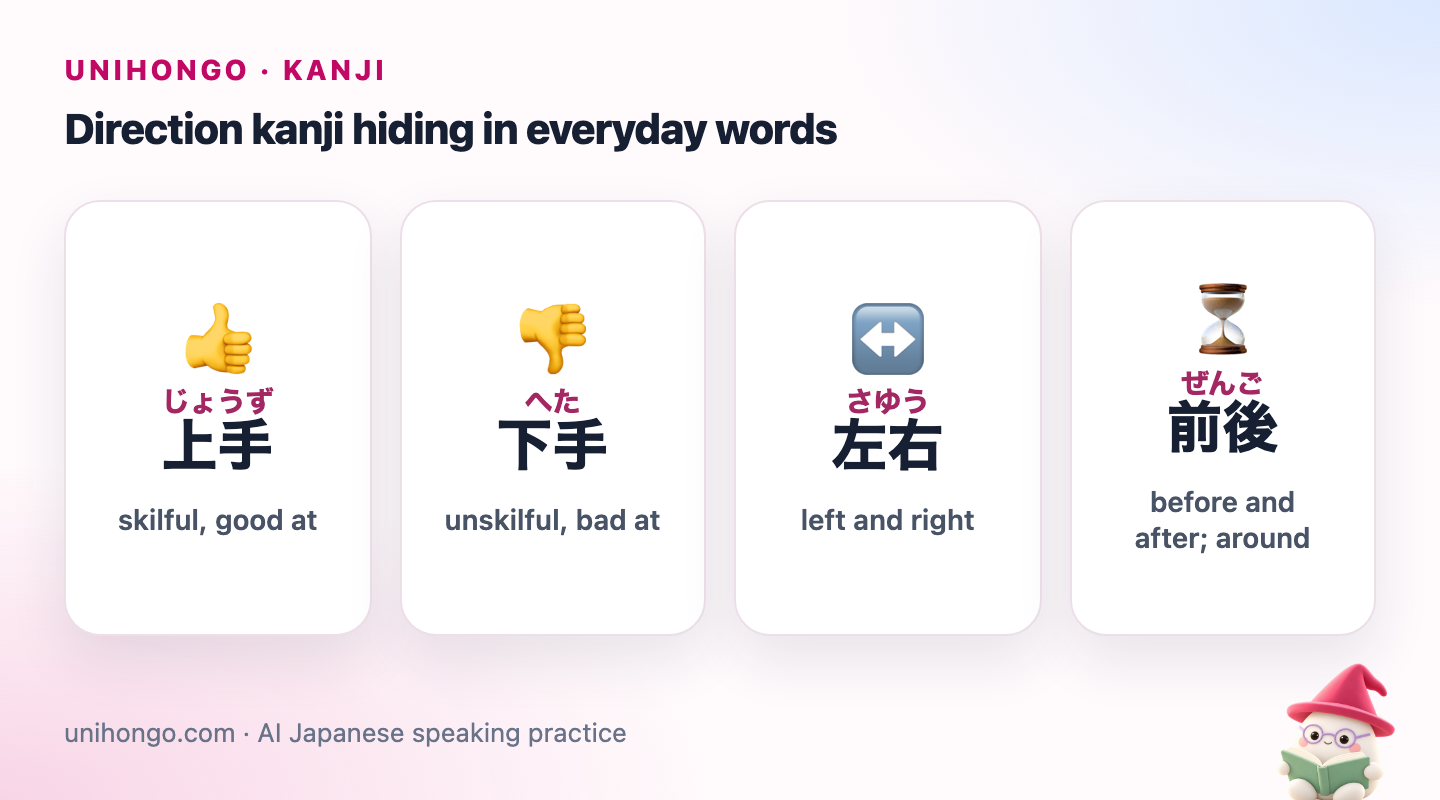
| Japanese | Romaji | Meaning |
|---|---|---|
| 上手 | jōzu | skilful, good at |
| 下手 | heta | unskilful, bad at |
| 左右 | sayū | left and right |
| 前後 | zengo | before and after; around |
前後 after a number means about: 三十歳前後 is around thirty years old. 左右 is the classic road-safety word: 左右をよく見て, look carefully left and right, is what children learn before crossing.
The twelve direction kanji and their readings
| Kanji | Meaning | Kun'yomi | On'yomi | Word |
|---|---|---|---|---|
| 東 | east | higashi | tō | 東京 (Tōkyō) |
| 西 | west | nishi | sei, sai | 関西 (Kansai) |
| 南 | south | minami | nan | 南米 (nanbei, South America) |
| 北 | north | kita | hoku | 北海道 (Hokkaidō) |
| 上 | up, above | ue, a(garu), nobo(ru) | jō | 以上 (ijō) |
| 下 | down, below | shita, sa(garu), o(riru) | ka, ge | 地下 (chika, basement) |
| 左 | left | hidari | sa | 左折 (sasetsu, left turn) |
| 右 | right | migi | u, yū | 右折 (usetsu, right turn) |
| 前 | front, before | mae | zen | 午前 (gozen) |
| 後 | back, after | ushiro, ato | go, kō | 午後 (gogo) |
| 中 | inside, middle | naka | chū, jū | 中心 (chūshin) |
| 外 | outside | soto, hoka | gai, ge | 外国 (gaikoku) |
上 and 下 have the most readings of the set because they are also verbs. 上がる (agaru) and 上る (noboru) both mean to go up, 上げる (ageru) is to raise or give, 下がる (sagaru) is to go down, and 下りる (oriru) is to descend. In compounds they become jō and ka or ge: 屋上 (okujō, rooftop), 地下 (chika, underground) and 下車 (gesha, getting off a train). Learn each verb with an example rather than as a list of readings.
Region and city names
Japan's regional names are full of direction kanji, and you read them on weather maps, news reports and train boards. Kantō and Kansai take their names from historical barrier checkpoints, 関 (seki): broadly, Kantō meant east of the barriers and Kansai west of them.
| Japanese | Romaji | Meaning |
|---|---|---|
| 東京 | Tōkyō | Tokyo (eastern capital) |
| 関東 | Kantō | Kanto region (around Tokyo) |
| 関西 | Kansai | Kansai region (around Osaka) |
| 東北 | Tōhoku | Tohoku region (the north-east) |
| 北海道 | Hokkaidō | Hokkaido |
| 九州の南 | Kyūshū no minami | the south of Kyushu |
Note the sound change in 東京: higashi becomes tō, and 京 (capital) is kyō. Kyoto is 京都, capital city, and Tokyo was named as the eastern capital when the emperor moved there in the nineteenth century.
Time words built from front and back
前 and 後 move easily between space and time. The pairs below are some of the most frequent in Japanese.
| Japanese | Romaji | Meaning |
|---|---|---|
| 駅の前 | eki no mae | in front of the station |
| 三日前 | mikka mae | three days ago |
| 後ろの席 | ushiro no seki | the seat behind |
| 後で電話します。 | Ato de denwa shimasu. | I'll call you later. |
| 食事の後に薬を飲みます。 | Shokuji no ato ni kusuri o nomimasu. | I take the medicine after meals. |
| 前半と後半 | zenhan to kōhan | first half and second half |
A frequent learner mistake is mixing 後ろ (ushiro, behind a place) with 後 (ato, after an event). 駅の後ろ is behind the station; 授業の後 is after class.
Giving and following directions
When people give directions in Japanese, they rely on landmarks and a few verbs. These lines are polite and natural for asking or helping on the street.
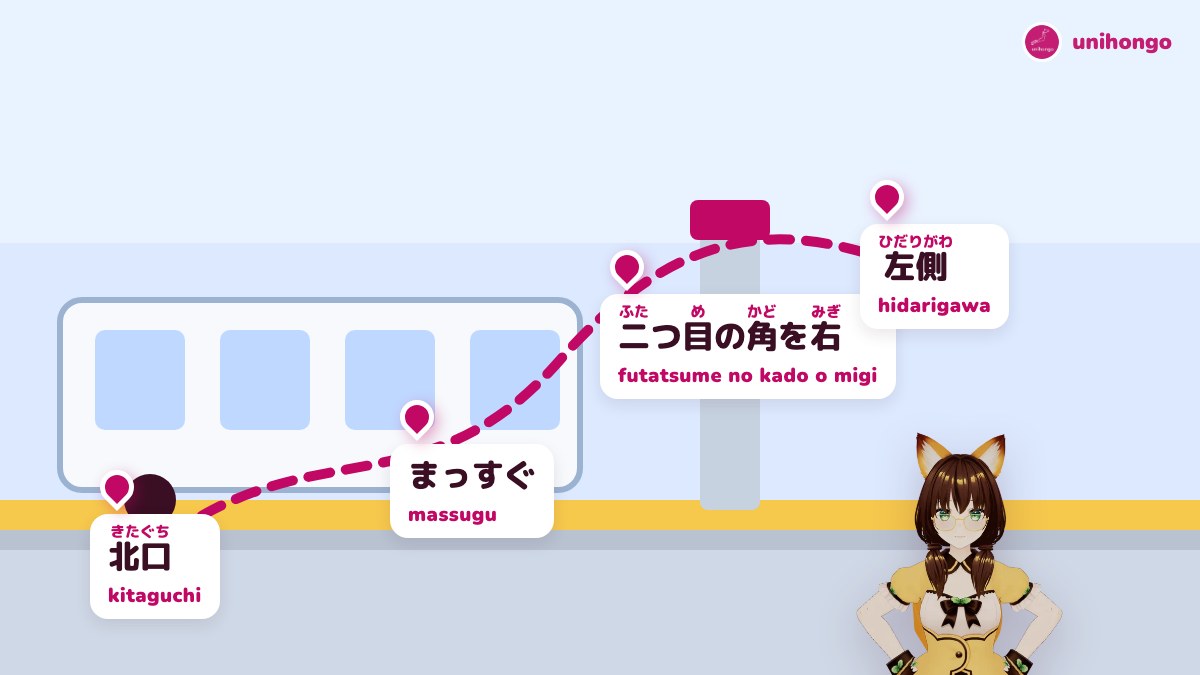
| Japanese | Romaji | Meaning |
|---|---|---|
| 北口を出て、まっすぐ行ってください。 | Kitaguchi o dete, massugu itte kudasai. | Leave by the north exit and go straight. |
| 二つ目の角を右に曲がります。 | Futatsume no kado o migi ni magarimasu. | Turn right at the second corner. |
| 左側にコンビニがあります。 | Hidarigawa ni konbini ga arimasu. | There's a convenience store on the left. |
| 郵便局の向かいです。 | Yūbinkyoku no mukai desu. | It's opposite the post office. |
| この近くに銀行はありますか。 | Kono chikaku ni ginkō wa arimasu ka. | Is there a bank near here? |
Mini dialogue: asking the way to the museum
| Japanese | Romaji | Meaning |
|---|---|---|
| すみません、美術館はどちらですか。 | Sumimasen, bijutsukan wa dochira desu ka. | You: Excuse me, which way is the art museum? |
| 南口から歩いて十分ぐらいですよ。 | Minamiguchi kara aruite juppun gurai desu yo. | Passer-by: About ten minutes' walk from the south exit. |
| 南口はどちらですか。 | Minamiguchi wa dochira desu ka. | You: Where's the south exit? |
| この階段を下りて、右です。 | Kono kaidan o orite, migi desu. | Passer-by: Go down these stairs, then it's on the right. |
| ありがとうございます。助かりました。 | Arigatō gozaimasu. Tasukarimashita. | You: Thank you, that's a great help. |
In a big station, people often give directions by exit name rather than by left and right: 東口を出てください, please leave by the east exit. If you are unsure, ask 何口ですか, which exit is it? Station maps and signs mark exits with the same four compass kanji, so knowing 東, 西, 南 and 北 saves a lot of walking.
Look-alikes and writing tips
- 左 (left) vs 右 (right): 左 has 工 at the bottom, 右 has 口. In 左 the horizontal stroke is written first; in 右 the diagonal comes first.
- 上 vs 土 (earth) vs 止 (stop): 上 has a short stroke pointing right from the vertical line; 土 is a cross on a base.
- 下 vs 不 (not): 不 has an extra stroke on each side of the vertical.
- 北 (north) vs 比 (compare): 北 is two figures back to back; 比 has two similar halves side by side, both facing right.
- 東 (east) vs 車 (car) vs 束 (bundle): 東 is 木 with 日 inside, often remembered as the sun rising behind a tree; 束 has 口 instead of 日, and 車 has no tree shape at all.
- 前 (front) vs 煎 (roast): 煎 adds four dots of fire below; you see it in 煎茶 (sencha), a kind of green tea.
Common learner mistakes with direction words
Direction words are short, so learners often reach for them without checking the pattern. These are frequent slips.
- Saying 上手です about yourself. It sounds boastful; say 得意です or まだまだです instead, and accept 上手ですね from others with a modest reply.
- Mixing up 後ろ and 後. 後ろ is a place behind something, 後 is a time after something.
- Using に for the corner you turn at. Say 角を曲がる, with を, and 右に曲がる for the direction.
- Reading 東京 or 関東 with higashi. Inside compounds 東 is tō.
- Forgetting that 以上 includes the number. 二十歳以上 means twenty and over, and 以下 means that number and under.
Rehearse directions before you need them
Directions are much easier to understand when you have already said them yourself. In the Mocchi chat, type /kaiwa and ask for a short directions practice: Mocchi suggests a scenario and sends you to AI Sensei, where you can try the Ask the Way to the Station mission and ask the passer-by to repeat or slow down.
For the reading side, ask Mocchi to write five short direction notices with 東口, 地下, 右折 and 以上, and to quiz you on what each means.