
Four food words to read first
Menus in Japan are often grouped into sections. These four headings tell you where to look, and together they use six of the kanji in this guide.
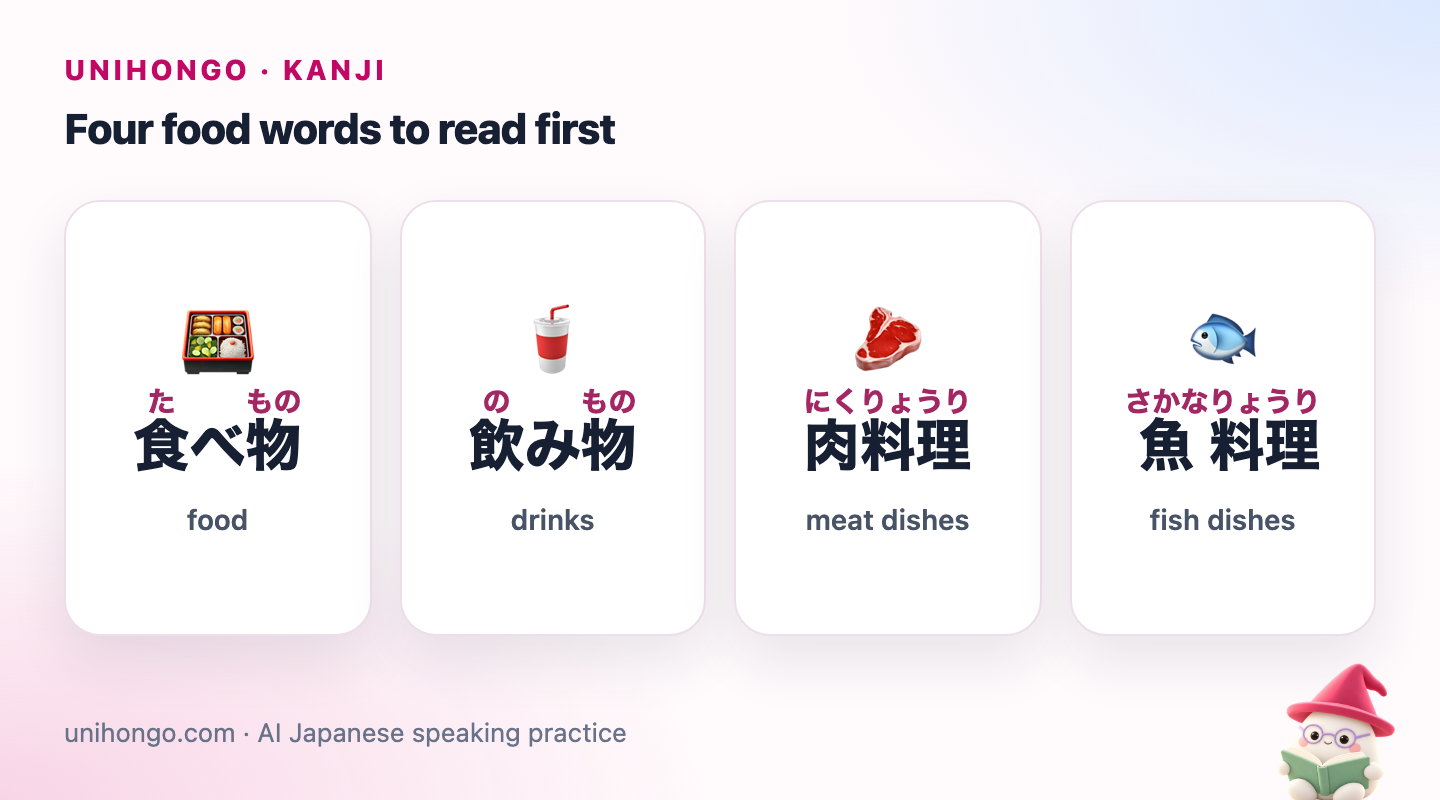
| Japanese | Romaji | Meaning |
|---|---|---|
| 食べ物 | tabemono | food |
| 飲み物 | nomimono | drinks |
| 肉料理 | niku ryōri | meat dishes |
| 魚料理 | sakana ryōri | fish dishes |
The thirteen food kanji and their readings
| Kanji | Meaning | Main readings | Word |
|---|---|---|---|
| 食 | eat | ta(beru), shoku | 食事 (shokuji, meal) |
| 飲 | drink | no(mu), in | 飲食店 (inshokuten, restaurant) |
| 米 | rice | kome, bei, mai | お米 (okome, rice) |
| 肉 | meat | niku | 肉 (niku) |
| 魚 | fish | sakana, uo, gyo | 金魚 (kingyo, goldfish) |
| 野 | field | no, ya | 野球 (yakyū, baseball) |
| 菜 | greens | na, sai | 野菜 (yasai, vegetables) |
| 料 | ingredients, fee | ryō | 材料 (zairyō, ingredients) |
| 理 | reason, logic | ri | 理由 (riyū, reason) |
| 味 | taste | aji, mi | 味見 (ajimi, tasting) |
| 牛 | cow | ushi, gyū | 牛乳 (gyūnyū, milk) |
| 豚 | pig | buta, ton | 豚汁 (tonjiru, pork soup) |
| 鶏 | chicken | niwatori, kei | 鶏肉 (toriniku, chicken) |
Note that 料 and 理 do not mean food on their own. 料 is material or a charge, and 理 is reason or logic; together, 料理 is the art of putting ingredients together properly, cooking.
Menu words: meat, fish, rice and vegetables
These are the words you will meet most often on restaurant menus, set-meal boards and ticket machines.
| Japanese | Romaji | Meaning |
|---|---|---|
| 牛肉 | gyūniku | beef |
| 豚肉 | butaniku | pork |
| 鶏肉 | toriniku | chicken |
| 焼き魚 | yakizakana | grilled fish |
| 刺身 | sashimi | sashimi, raw sliced fish |
| 野菜炒め | yasai itame | stir-fried vegetables |
| 定食 | teishoku | set meal |
| 大盛り | ōmori | large portion |
牛丼 (gyūdon) is a beef rice bowl and 豚丼 (butadon) a pork rice bowl; both are common at quick-service chains. 生 on a menu means raw or draught: 生ビール (nama bīru) is draught beer and 生卵 (nama tamago) is raw egg.
Cooking at home: recipe kanji
Japanese recipes, on websites, in magazines or on the back of a packet, use a small set of words again and again. Learn these and you can follow most simple recipes.
| Japanese | Romaji | Meaning |
|---|---|---|
| 二人分の材料 | futaribun no zairyō | ingredients for two people |
| 調味料 | chōmiryō | seasonings |
| 味をみる | aji o miru | to taste and check the seasoning |
| 肉を焼く | niku o yaku | to grill or fry the meat |
| 野菜を切る | yasai o kiru | to cut the vegetables |
| 少々 | shōshō | a pinch (of salt etc.) |
Recipe steps are usually in plain or polite instruction form: 野菜を切ります or 野菜を切る. Amounts use 大さじ (ōsaji, tablespoon) and 小さじ (kosaji, teaspoon). 味をみる is often written with hiragana みる, as here, rather than 見る.
Japanese recipes also use a few kanji for heat and timing: 弱火 (yowabi, low heat), 中火 (chūbi, medium heat) and 強火 (tsuyobi, high heat), plus 分 for minutes, as in 五分煮る, simmer for five minutes. These are worth learning if you cook from packets, because instant noodles and ready meals use the same words in their instructions.
Ordering and asking about ingredients
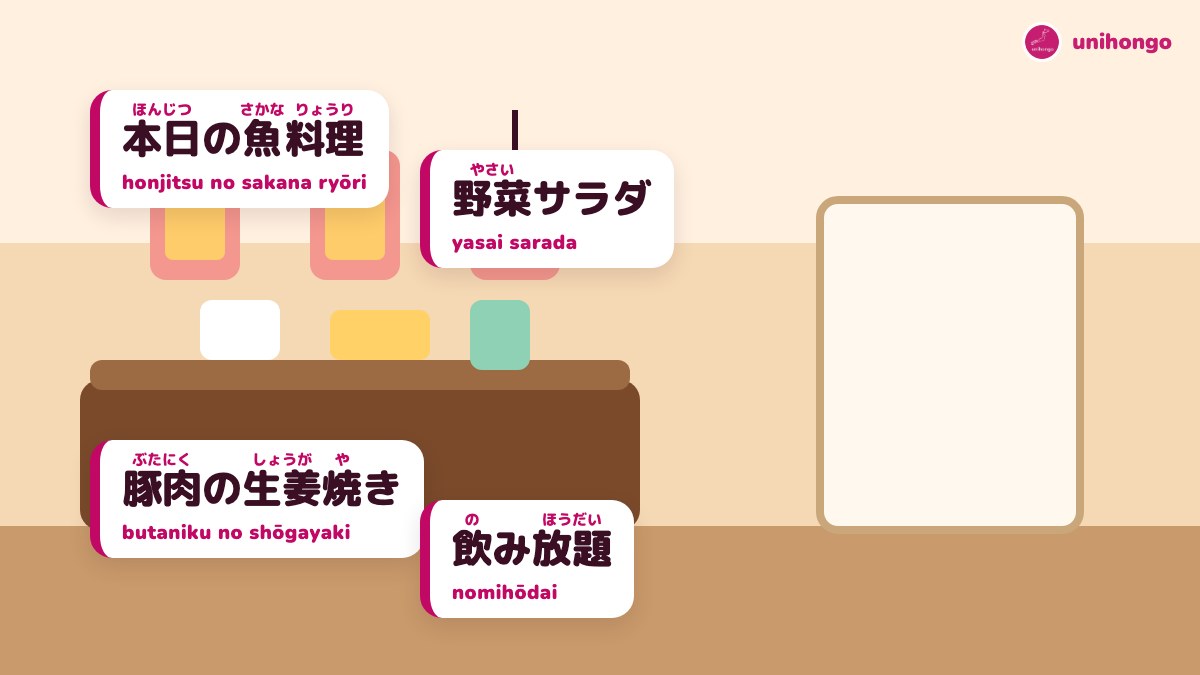
The menu words matter most when you order or need to avoid something. These phrases are polite and work in any restaurant.
| Japanese | Romaji | Meaning |
|---|---|---|
| 焼き魚定食をお願いします。 | Yakizakana teishoku o onegai shimasu. | You: The grilled fish set meal, please. |
| お飲み物はいかがですか。 | Onomimono wa ikaga desu ka. | Staff: Would you like something to drink? |
| これは豚肉が入っていますか。 | Kore wa butaniku ga haitte imasu ka. | You: Does this have pork in it? |
| 肉が食べられないんです。 | Niku ga taberarenai n desu. | You: I can't eat meat. |
| 野菜だけの料理はありますか。 | Yasai dake no ryōri wa arimasu ka. | You: Do you have any vegetable-only dishes? |
| 味が濃いですね。 | Aji ga koi desu ne. | It's quite strongly flavoured. |
If you have a food allergy or a strict diet, a short written note in Japanese can help, because restaurant staff can show it to the kitchen. Keep it simple and polite, for example 私は豚肉と魚が食べられません, I cannot eat pork or fish. Customs and the level of detail staff can give vary a lot from place to place, so ask, and be ready to choose a simpler dish.
Look-alikes on the menu
- 牛 (cow) vs 午 (noon): 牛 has a vertical stroke that goes through the top line; 午, as in 午後 (afternoon), does not.
- 肉 (meat) vs 内 (inside): 肉 has two 人 shapes inside the frame, 内 has one.
- 飲 (drink) vs 飯 (cooked rice): both have the food radical 飠 on the left; 飲 has 欠 (yawn, open mouth), 飯 has 反.
- 鶏 (chicken) vs 鳥 (bird): 鶏 is 鳥 with an extra part on the left. Yakitori is written 焼き鳥, with 鳥.
- 魚 (fish) vs 漁 (fishing): 漁 adds the water radical 氵, as in 漁師 (ryōshi, fisherman).
- Writing tip: 魚 ends with four dots, which were originally the fish's tail; in 黒 and 点 the same four dots stand for fire. Write them left to right.
Where you meet food kanji
- Ticket machines at ramen and set-meal restaurants, where pressing the right button depends on reading 肉, 野菜 or 大盛り.
- Supermarket aisle signs: 精肉 (seiniku, fresh meat), 鮮魚 (sengyo, fresh fish) and 青果 (seika, fruit and vegetables).
- Allergy and ingredient labels on packaged food, listed under 原材料名 (genzairyō mei, ingredients).
- Signs for 飲食禁止 (inshoku kinshi, no eating or drinking) on trains, in museums and in some shops.
- School and office canteens: 食堂 (shokudō) and 本日の定食 (today's set meal).
Common learner mistakes with food words
Food words are easy to remember and easy to misuse. Watch for these.
- Reading 鶏肉 as niwatoriniku. The everyday reading is toriniku.
- Assuming 料 means food. It means materials or a fee, so 無料 (muryō) is free of charge and 料金 (ryōkin) is a fare or charge.
- Saying ご飯 when you mean any meal type. ご飯 is both rice and a meal, but 料理 is the word for a dish or cuisine: 日本料理, not 日本ご飯.
- Using 飲む only for drinks. Japanese also says 薬を飲む, to take medicine, and スープを飲む, to have soup.
- Reading 生 always as sei. On menus it is nama, as in 生ビール, raw or draught.
From menu to conversation
Reading the menu is half the meal; ordering is the other half. Paste a dish name you find, such as 豚肉の生姜焼き定食, into the Mocchi chat with /explain, and Mocchi splits it into its parts and readings. Ask it to turn the new words into flashcards so they come back for review.
Then practise ordering out loud with Sakura-sensei in AI Sensei, who can play a busy restaurant server. Ask about ingredients, change your order and request a large portion; the session report lists any food words you mispronounced.