
Now, this week, this month, this year
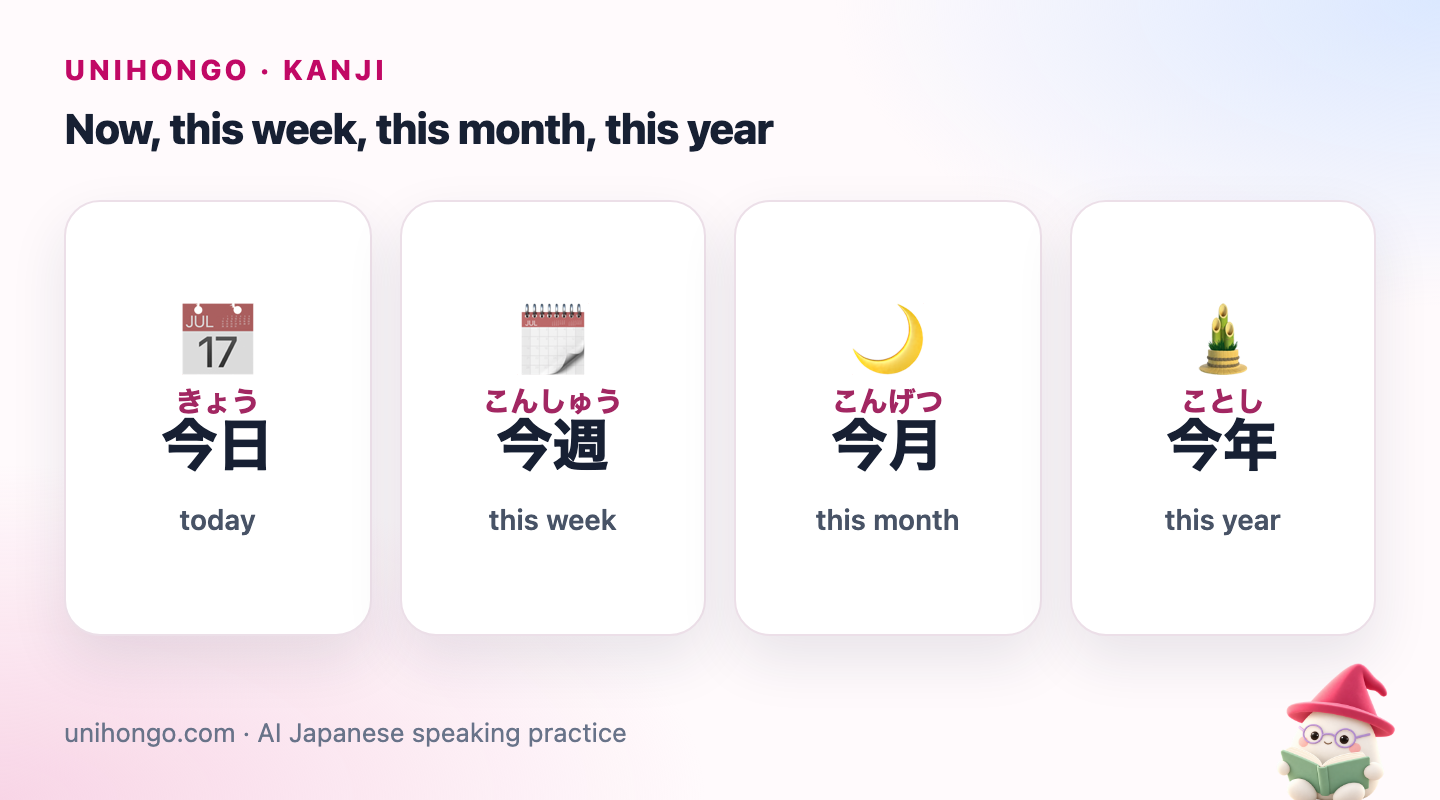
The kanji 今 (now) combines with day, week, month and year to make four words you will use every day. Two of them have special readings.
| Japanese | Romaji | Meaning |
|---|---|---|
| 今日 | kyō | today |
| 今週 | konshū | this week |
| 今月 | kongetsu | this month |
| 今年 | kotoshi | this year |
| 今朝 | kesa | this morning |
| 今晩 | konban | this evening |
今週 and 今月 are regular: kon plus the on'yomi of week and month. 今日, 今年 and 今朝 are whole-word readings you simply memorise. 今度 (kondo) means next time or this time, depending on context.
The twelve time kanji and their readings
| Kanji | Meaning | Main readings | Example |
|---|---|---|---|
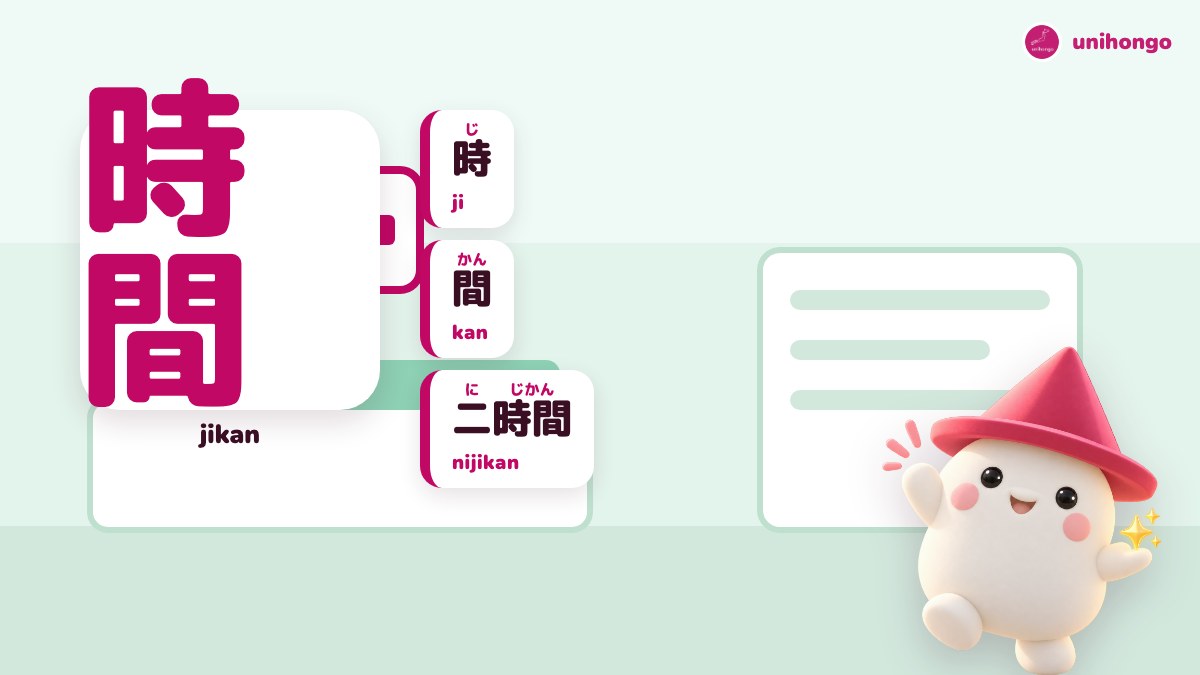
| 時 | time, o'clock | ji, toki | 三時 (sanji), 時々 (tokidoki) |
| 分 | minute, part | fun, pun, bun, wa(karu) | 五分 (gofun), 分かる (wakaru) |
| 秒 | second | byō | 十秒 (jūbyō) |
| 日 | day, sun | nichi, hi, ka | 毎日 (mainichi), 三日 (mikka) |
| 週 | week | shū | 週末 (shūmatsu, weekend) |
| 月 | month, moon | getsu, gatsu, tsuki | 今月 (kongetsu), 一月 (ichigatsu) |
| 年 | year | nen, toshi | 来年 (rainen), 年上 (toshiue) |
| 今 | now | ima, kon | 今 (ima), 今週 (konshū) |
| 毎 | every | mai | 毎週 (maishū) |
| 午 | noon | go | 午前 (gozen), 午後 (gogo) |
| 曜 | weekday | yō | 日曜日 (nichiyōbi) |
| 間 | interval, between | kan, aida, ma | 時間 (jikan), 間に合う (ma ni au) |
月 is getsu in 今月 and 来月, gatsu in month names such as 四月 (shigatsu), and tsuki for the moon. 日 has the most readings of all; for the days of the month, see our guide to reading dates.
Clock time: the sound changes of 時 and 分
Hours are mostly regular, but three are irregular: 4 o'clock is yoji, 7 o'clock is shichiji (some people say nanaji to avoid confusion with ichiji), and 9 o'clock is kuji. Minutes change more often, so practise them as a chant.
| Japanese | Romaji | Meaning |
|---|---|---|
| 一分 | ippun | one minute |
| 三分 | sanpun | three minutes |
| 六分 | roppun | six minutes |
| 十分 | juppun | ten minutes |
| 四時 | yoji | four o'clock |
| 九時 | kuji | nine o'clock |
| 三十秒 | sanjūbyō | thirty seconds |
| 午後二時半 | gogo niji han | half past two in the afternoon |
Questions about time use 何 (nan): 何時 (nanji, what time), 何分 (nanpun, how many minutes), 何時間 (nanjikan, how many hours) and 何曜日 (nan'yōbi, what day of the week). Notice that 何分 takes the pun form after nan. For the time of an event, add に: 何時に会いましょうか, what time shall we meet? For a length of time, no particle is needed: 何時間かかりますか, how many hours does it take?
Points in time and lengths of time
Japanese marks durations with 間 or a counter. Compare the pairs below; the first in each is a point or a calendar unit, the second a length of time.
| Japanese | Romaji | Meaning |
|---|---|---|
| 毎日一時間勉強しています。 | Mainichi ichijikan benkyō shite imasu. | I study for an hour every day. |
| 日本に三年住んでいます。 | Nihon ni sannen sunde imasu. | I have lived in Japan for three years. |
| 会議は何時からですか。 | Kaigi wa nanji kara desu ka. | What time does the meeting start? |
| あと五分で着きます。 | Ato gofun de tsukimasu. | I'll arrive in five minutes. |
| Point or unit | Duration | Notes |
|---|---|---|
| 三時 (three o'clock) | 三時間 (three hours) | add 間 for hours |
| 今週 (this week) | 一週間 (one week) | 週 needs 間 for durations |
| 三月 (March) | 三か月 (three months) | months use か or ヶ for durations |
| 二〇二七年 (the year 2027) | 二年間 (for two years) | 間 is optional with years |
| 五日 (the fifth) | 五日間 (for five days) | same reading, itsuka |
Every day, every week: the 毎 family
毎 (mai) means every and combines with the same time words as 今. Two have alternative readings that are both correct.
| Japanese | Romaji | Meaning |
|---|---|---|
| 毎朝 | maiasa | every morning |
| 毎日 | mainichi | every day |
| 毎週 | maishū | every week |
| 毎月 | maitsuki | every month (also maigetsu) |
| 毎年 | maitoshi | every year (also mainen) |
| 毎週土曜日にジムに行きます。 | Maishū doyōbi ni jimu ni ikimasu. | I go to the gym every Saturday. |
A common mistake is adding に after 毎日 or 今日: 毎日に勉強します is wrong. Relative time words such as 今日, 明日, 毎日 and 来年 take no particle, while specific times and dates take に: 三時に, 五月十日に.
Reading a real schedule
Opening hours, school timetables and appointment cards all use the same handful of kanji. Here is the kind of notice you might see on a clinic door, followed by the phrases to ask about it.
| Japanese | Romaji | Meaning |
|---|---|---|
| 受付時間 | uketsuke jikan | reception hours |
| 午前九時から午後六時まで | gozen kuji kara gogo rokuji made | from 9 a.m. to 6 p.m. |
| 土曜日は午前のみ | doyōbi wa gozen nomi | Saturdays: mornings only |
| 日曜と祝日は休診 | nichiyō to shukujitsu wa kyūshin | closed on Sundays and public holidays |
| 今日は何時まで開いていますか。 | Kyō wa nanji made aite imasu ka. | You: Until what time are you open today? |
| 六時までです。受付は五時半までです。 | Rokuji made desu. Uketsuke wa goji han made desu. | Staff: Until six. Reception closes at half past five. |
Look-alikes and writing tips
- 時 (time) vs 持 (hold) vs 待 (wait): all share 寺 on the right; 時 has 日 (sun), 持 has 扌 (hand) and 待 has 彳 (going).
- 間 (interval) vs 問 (question) vs 聞 (listen): all have the gate 門; 間 has 日 inside, 問 has 口, 聞 has 耳.
- 今 (now) vs 令 (order): 今 ends with a short angled stroke, 令 with a vertical stroke.
- 午 (noon) vs 牛 (cow): 牛 has a vertical stroke that sticks out through the top; 午 does not.
- 週 (week) vs 周 (around): 週 is 周 on the road radical ⻌.
- Writing tip: 曜 is 18 strokes and appears on every calendar. Learn it as 日 plus 羽 (wings) plus 隹 (bird), the sun with a bird flying.
Common learner mistakes with time words
Most time mistakes are about readings and particles rather than meaning. These come up again and again in classes and exams.
- Reading 四時 as yonji or 九時 as kyūji. The standard forms are yoji and kuji.
- Saying 三時 when you mean three hours. Add 間 for a length of time: 三時間.
- Putting に after 今日, 毎日 or 来週. Relative time words take no particle: 来週行きます, not 来週に行きます.
- Reading 今年 as konnen or 今日 as konnichi in everyday speech. Use kotoshi and kyō.
- Putting 午前 and 午後 after the time, as in English. Japanese puts them first: 午後七時, not 七時午後.
A clock-reading habit in five minutes a day
Time words become automatic only with daily repetition. Each morning, type /quiz into the Mocchi chat and ask for five clock times and five durations to read; Mocchi checks your readings and remembers that, say, roppun and happun still slow you down, so they come back more often in later quizzes.
Then hear them at natural speed. In AI Sensei, ask Haru-sensei to play a clinic receptionist who gives you appointment times, and repeat each time back to confirm it.