
The referral in four words
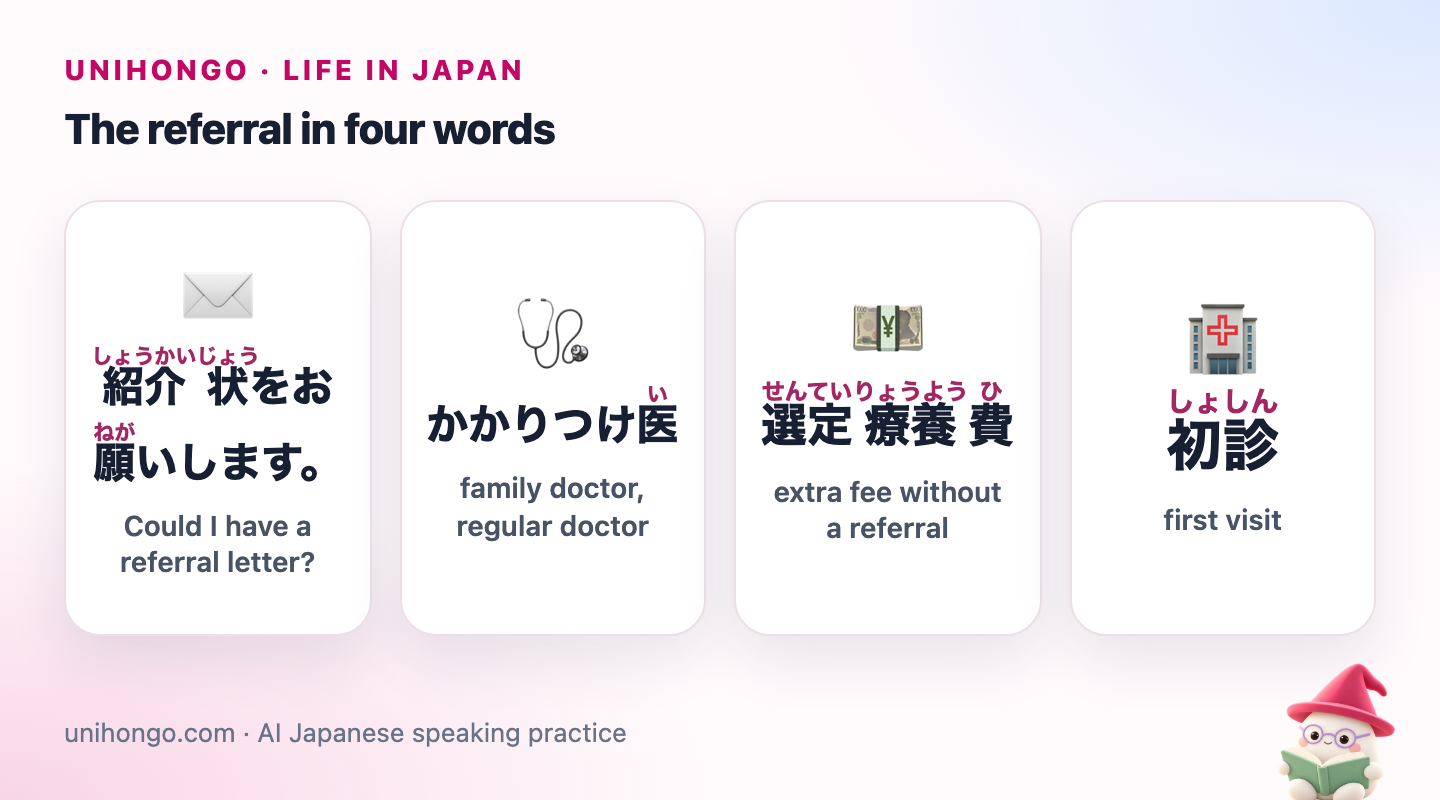
Four words explain the whole system: the request you make at the clinic, the doctor you see first, the fee you avoid, and the first visit at the hospital, which is where that fee would apply.
| Japanese | Romaji | Meaning |
|---|---|---|
| 紹介状をお願いします。 | Shōkaijō o onegai shimasu. | Could I have a referral letter? |
| かかりつけ医 | kakaritsukei | family doctor, regular doctor |
| 選定療養費 | sentei ryōyōhi | extra fee without a referral |
| 初診 | shoshin | first visit |
Why big hospitals want a referral
Japan's health system asks clinics and hospitals to play different roles. Local clinics, often called kurinikku or iin, handle everyday illness, checkups and long-term conditions. Large hospitals focus on surgery, inpatient care, emergencies and advanced tests. If everyone went straight to the big hospital, waits would be long and specialists would spend time on colds.
So the system nudges patients towards a local doctor first. A family doctor, kakaritsukei, knows your history, can treat most problems, and refers you on when you need a specialist. The referral letter means the hospital knows why you are there before you sit down.
| Japanese | Romaji | Meaning |
|---|---|---|
| 近くのクリニック | chikaku no kurinikku | a nearby clinic |
| 大学病院 | daigaku byōin | university hospital |
| 専門医 | senmon'i | specialist doctor |
| Point | Local clinic | Large hospital |
|---|---|---|
| Typical names | Kurinikku, iin, shinryōjo | Byōin, university hospital, medical centre |
| Good for | Common illness, checkups, ongoing care | Specialist tests, surgery, inpatient care |
| Appointment | Often walk-in or simple booking | Often by appointment, especially with a referral |
| First visit without referral | Normal fee | Extra fee at many large hospitals |
The fee without a referral
The extra fee is called sentei ryōyōhi (選定療養費) on hospital websites and signs, and is often described as the fee for a first visit without a referral letter. Since 2022, hospitals in certain categories must charge at least 7,000 yen for a first medical visit without a referral, and a smaller amount for a dental visit. These include special function hospitals, such as many university hospitals, and other large hospitals that have a regional referral role. Many hospitals show the fee including tax, and some other hospitals with many beds set their own fee.
The fee is not covered by insurance or the child medical subsidy, and it is added on top of your normal share of the treatment. A similar extra fee can also apply for return visits if the hospital has told you to continue care at a local clinic but you keep coming back.
Exemptions exist, such as patients brought by ambulance and some patients on public medical programmes. Each hospital lists its own rules on a page about the first visit, often titled shoshin no kata e, for first-time patients.
| Japanese | Romaji | Meaning |
|---|---|---|
| 紹介状をお持ちでない方 | shōkaijō o omochi de nai kata | Sign: Patients without a referral letter |
| 初診の方へ | shoshin no kata e | Sign: For first-time patients |
| 予約制 | yoyakusei | by appointment only |
| 保険適用外 | hoken tekiyōgai | not covered by insurance |
Asking your clinic for a letter
Often the doctor suggests a referral first: they want a specialist or a test the clinic does not have. You can also ask yourself, for example if a problem is not improving, if you were told at a checkup to see a specialist, or if you want to go to a particular hospital. Asking is completely normal and does not offend Japanese doctors.
If you have a preference, name the hospital. The doctor may suggest another one nearer or better suited to your problem. Many clinics can also make the appointment for you through the hospital's referral office, the chiiki renkei shitsu (地域連携室), which saves a phone call.
| Japanese | Romaji | Meaning |
|---|---|---|
| 大きい病院で詳しく診てもらいたいんですが。 | Ōkii byōin de kuwashiku mite moraitai n desu ga. | I'd like to be examined in detail at a big hospital. |
| 〇〇病院への紹介状を書いていただけますか。 | Maru maru byōin e no shōkaijō o kaite itadakemasu ka. | Could you write me a referral to ___ Hospital? |
| 予約も取っていただけますか。 | Yoyaku mo totte itadakemasu ka. | Could you also make the appointment? |
| 検査の画像もいただけますか。 | Kensa no gazō mo itadakemasu ka. | Could I also have the test images? |
From the letter to the first visit
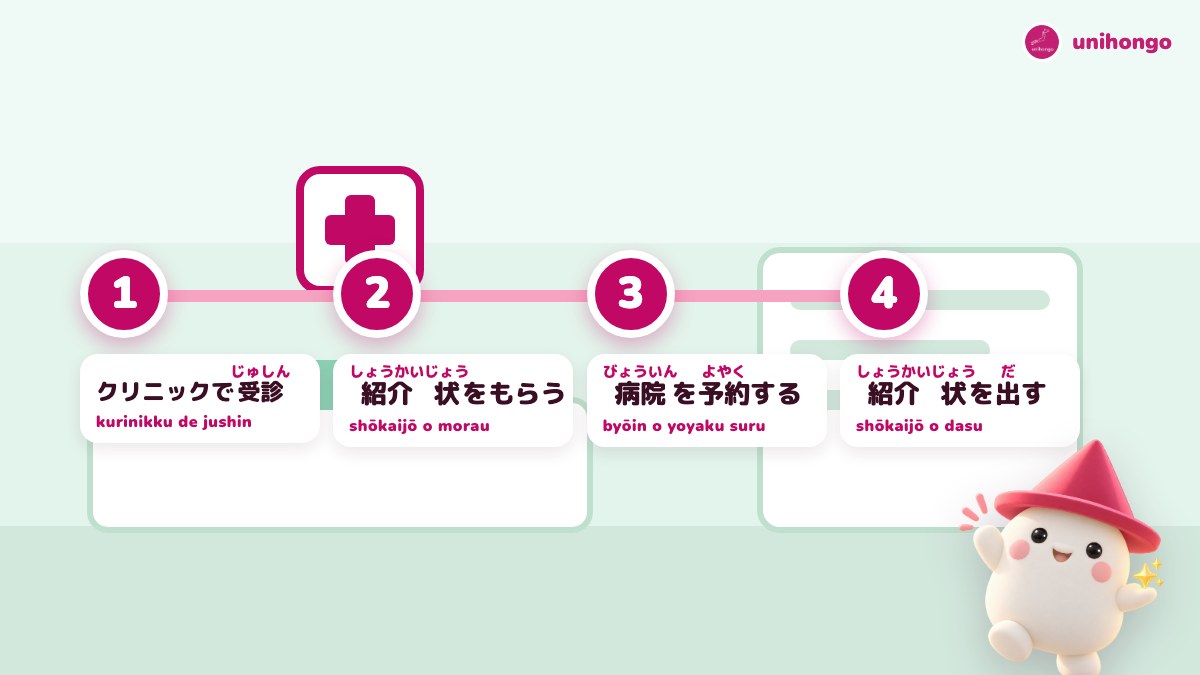
The letter usually comes in a sealed envelope addressed to the hospital or department, sometimes with a disc of X-ray or scan images and copies of test results. Do not open it; the hospital expects it sealed. Use it reasonably soon, because it describes your condition at that time. If you are unsure how long it stays useful, ask the clinic.
| Japanese | Romaji | Meaning |
|---|---|---|
| 初診受付 | shoshin uketsuke | first-visit reception |
| 紹介患者 | shōkai kanja | referred patient |
| お薬手帳 | okusuri techō | medicine notebook |
| 封を開けないでください。 | Fū o akenaide kudasai. | Please don't open the seal. |
- Check the hospital's first-visit page: whether an appointment is needed, the hours for new patients and what to bring.
- Book the appointment if the clinic has not done so, or go to the new-patient reception during the hours shown.
- Bring the sealed letter, any images, your insurance, any subsidy card, your medicine notebook (okusuri techō) and a list of your current medicines.
- At the hospital, go to the first-visit reception, shoshin uketsuke, hand over the letter and fill in the questionnaire.
Mini dialogue: at the hospital reception
| Japanese | Romaji | Meaning |
|---|---|---|
| 初めてなんですが、紹介状があります。 | Hajimete nan desu ga, shōkaijō ga arimasu. | You: It's my first visit, and I have a referral letter. |
| ありがとうございます。ご予約はされていますか。 | Arigatō gozaimasu. Goyoyaku wa sarete imasu ka. | Staff: Thank you. Do you have an appointment? |
| はい、十時に整形外科で予約しています。 | Hai, jūji ni seikei geka de yoyaku shite imasu. | You: Yes, at ten with orthopaedics. |
| 保険証かマイナンバーカードをお願いします。 | Hokenshō ka mainanbā kādo o onegai shimasu. | Staff: Your insurance card or My Number card, please. |
| はい。検査の画像も預かっています。 | Hai. Kensa no gazō mo azukatte imasu. | You: Here. The clinic also gave me the test images for you. |
| では、こちらの問診票にご記入ください。 | Dewa, kochira no monshinhyō ni gokinyū kudasai. | Staff: Then please fill in this questionnaire. |
After the hospital: being sent back
Once the specialist has done the tests or treatment, the hospital often sends you back to your clinic with a letter of its own, a reverse referral called gyaku shōkai (逆紹介). This is not a sign of being dismissed; it is the same system working in the other direction, so that follow-up happens close to home. If you want to keep seeing the hospital, ask, but be aware of the possible return-visit fee.
A second opinion, sekando opinion, is different from a referral. It means asking another specialist to review your diagnosis, usually by appointment, often with a fee not covered by insurance. Your doctor can prepare the documents for it.
| Japanese | Romaji | Meaning |
|---|---|---|
| 今後はクリニックで診てもらってください。 | Kongo wa kurinikku de mite moratte kudasai. | Doctor: From now on, please see your clinic. |
| 何かあったら、また紹介してもらえますか。 | Nanika attara, mata shōkai shite moraemasu ka. | If something happens, can I be referred again? |
| セカンドオピニオンを受けたいです。 | Sekando opinion o uketai desu. | I'd like a second opinion. |
Common mistakes
- Going straight to a university hospital for a cold. You will usually pay the extra fee and wait a long time.
- Opening the envelope. The hospital may ask why the seal is broken; keep it closed.
- Arriving outside new-patient hours. Many hospitals take first visits only in the morning.
- Forgetting the images. If the clinic gave you a disc, the specialist needs it to avoid repeating tests.
- Thinking the referral is a complaint about the clinic. Asking for one is routine and part of the system.
Practise the clinic request and the hospital desk
Asking a doctor for something can feel awkward in a second language. Open AI Sensei, choose Haru-sensei and ask for the role of a clinic doctor who has just examined you: ask for a referral to a named hospital, ask whether the clinic can book it, and ask for the test images. Then ask the Sensei to switch and play the first-visit receptionist at the hospital.
Hospital websites are dense. Paste a paragraph from the first-visit page into Mocchi with /explain and it breaks down the rules, fees and hours word by word.