
Four weather words to learn first
If you learn only four weather words, make them these. They cover the two kinds of rain you meet most, the nicest kind of warmth and the least pleasant kind of heat. Each one is common in conversation, on television and in children's books, and none of them is slang.
Zāzā is giongo: it copies the hiss and drum of heavy rain. Shitoshito is closer to gitaigo, describing how the rain falls rather than a loud sound. Pokapoka and mushimushi are gitaigo: they describe how the air feels on your skin.
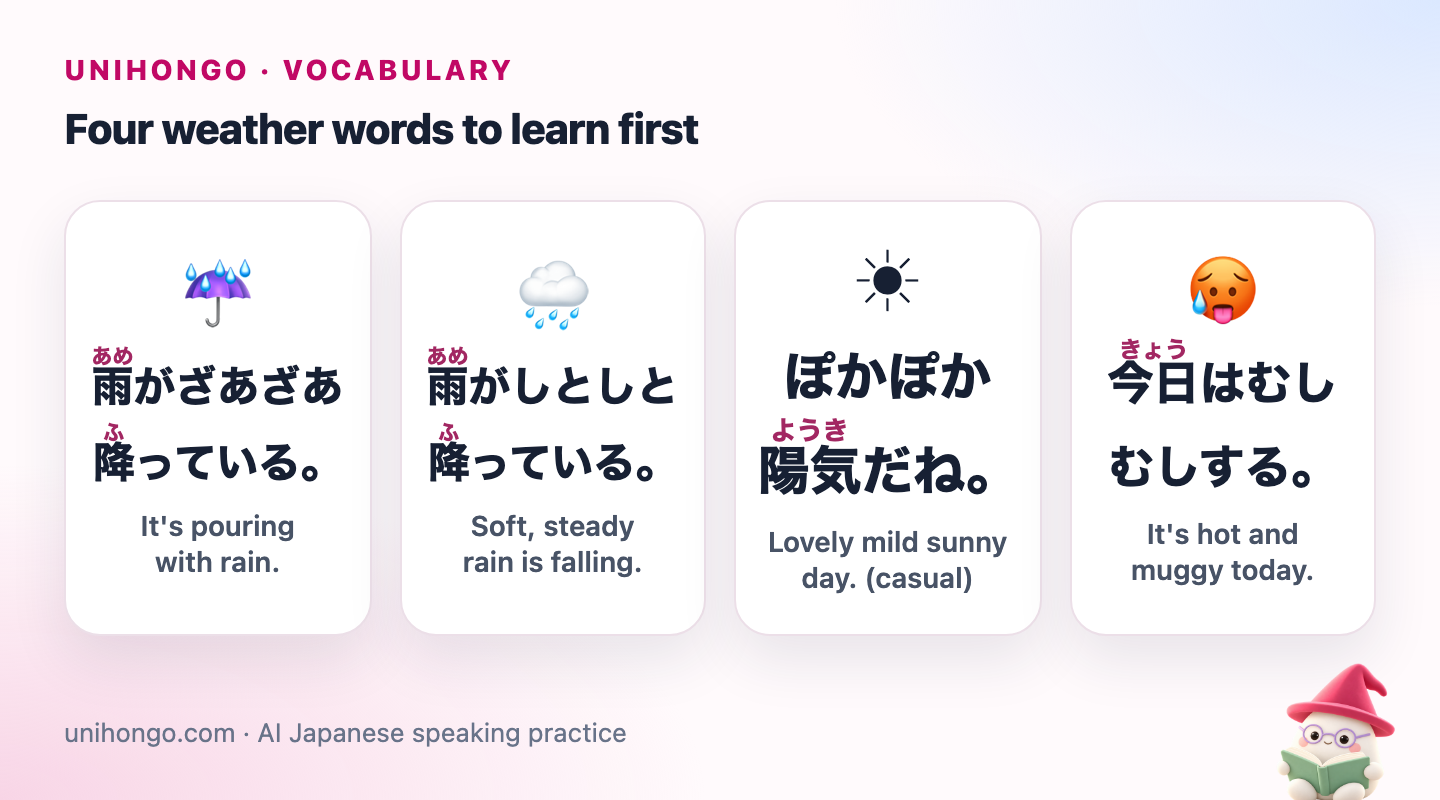
| Japanese | Romaji | Meaning |
|---|---|---|
| 雨がざあざあ降っている。 | Ame ga zāzā futte iru. | It's pouring with rain. |
| 雨がしとしと降っている。 | Ame ga shitoshito futte iru. | Soft, steady rain is falling. |
| ぽかぽか陽気だね。 | Pokapoka yōki da ne. | Lovely mild sunny day. (casual) |
| 今日はむしむしする。 | Kyō wa mushimushi suru. | It's hot and muggy today. |
Rain from the first drops to a downpour
Japanese has a whole ladder of rain words, and choosing the right step makes you sound observant. The ladder below runs from the first few drops to rain you cannot walk through without getting soaked.
| Japanese | Romaji | Meaning |
|---|---|---|
| あ、雨がぽつぽつ降ってきた。 | A, ame ga potsupotsu futte kita. | Oh, it's starting to spit with rain. |
| 小雨がぱらぱら降っている。 | Kosame ga parapara futte iru. | There's a light sprinkle of rain. |
| 梅雨の雨がしとしと続いている。 | Tsuyu no ame ga shitoshito tsuzuite iru. | The rainy-season drizzle keeps going. |
| 急にざあざあ降りになった。 | Kyū ni zāzā buri ni natta. | It suddenly turned into a downpour. |
| Word | Type | What it describes | Typical use |
|---|---|---|---|
| potsupotsu | Both | A few big drops, rain just starting | potsupotsu furidashita |
| parapara | Both | Light, scattered rain or a brief shower | parapara futte iru |
| shitoshito | Mostly gitaigo | Quiet, steady, gentle rain | shitoshito furu |
| zāzā | Giongo | Heavy, noisy rain | zāzā furi |
Zāzā furi, a downpour, works as a noun. So does dosha-buri, which is a regular word rather than a sound word but means the same thing and is very common. Potsupotsu and parapara also describe other things: parapara is the sound of pages flipping or rice that is loose and not sticky, so context matters.
Heat and humidity: mushimushi, jimejime, jirijiri
Japanese summers are humid, so people have several words for different kinds of discomfort. Mushimushi is hot and muggy, like being inside a steamer; the word is related to mushiatsui, sultry. Jimejime is damp and clammy, the feeling of the rainy season when laundry never quite dries; it is not necessarily hot. Jirijiri describes strong sun slowly burning down on you, and is often used for the summer sun on your skin.
On the pleasant side, pokapoka is gentle warmth you enjoy, and kankan describes blazing sun, mostly in the set phrase kankan-deri, scorching sunshine.
| Japanese | Romaji | Meaning |
|---|---|---|
| 朝からむしむししますね。 | Asa kara mushimushi shimasu ne. | It's been muggy since morning, hasn't it? (polite) |
| 梅雨は部屋がじめじめする。 | Tsuyu wa heya ga jimejime suru. | In the rainy season the room feels damp. |
| 太陽がじりじり照りつける。 | Taiyō ga jirijiri teritsukeru. | The sun is beating down. |
| 外はかんかん照りだよ。 | Soto wa kankan deri da yo. | It's scorching sunshine outside. (casual) |
| 窓際がぽかぽかして気持ちいい。 | Madogiwa ga pokapoka shite kimochi ii. | It's nice and warm by the window. |
Cold, wind, snow and thunder
The colder half of the year has its own words. Hin'yari is a refreshing or slightly chilly coolness, for example morning air or a stone floor. Byūbyū is the howl of strong wind; its softer cousin hyūhyū describes a thinner whistling wind. Snow that falls quietly and steadily is often described as shinshin, a slightly literary word you will meet in songs, novels and news reports rather than in casual chat.
Thunder rumbles gorogoro, which is pure giongo, and lightning flashes pikatto, or simply pika. Children often hear that the thunder god will take their belly button, which is why parents tell them to cover their stomach when it goes gorogoro; this is a playful folk saying, not a belief people hold.
| Japanese | Romaji | Meaning |
|---|---|---|
| 朝の空気がひんやりしている。 | Asa no kūki ga hin'yari shite iru. | The morning air is cool and crisp. |
| 風がびゅうびゅう吹いている。 | Kaze ga byūbyū fuite iru. | The wind is howling. |
| 雪がしんしんと降っている。 | Yuki ga shinshin to futte iru. | Snow is falling silently. (literary) |
| 雷がごろごろ鳴っている。 | Kaminari ga gorogoro natte iru. | Thunder is rumbling. |
| 空がぴかっと光った。 | Sora ga pikatto hikatta. | The sky flashed with lightning. |
Grammar: to, suru and no with weather words
Weather onomatopoeia attach to sentences in three main ways. The patterns are the same for most sound words, so learning them here helps everywhere.
| Japanese | Romaji | Meaning |
|---|---|---|
| ぽかぽかの日曜日でした。 | Pokapoka no nichiyōbi deshita. | It was a warm, sunny Sunday. (polite) |
| 今日はぽかぽかだね。 | Kyō wa pokapoka da ne. | It's nice and warm today. (casual) |
| 雨がざあざあと降り出した。 | Ame ga zāzā to furidashita. | Rain began to pour down. |
| Pattern | When to use it | Example |
|---|---|---|
| Word + (to) + verb | Describes how an action happens; to is optional with most doubled words | zāzā (to) furu |
| Word + suru | Describes a state you feel; the word becomes a verb | mushimushi suru |
| Word + no / da | Describes a noun or ends the sentence | pokapoka no hi, pokapoka da |
| Word + (ni) naru | Something changes into that state | zāzā buri ni naru |
Single-beat forms with a small tsu, such as pikatto, almost always need to before the verb: pikatto hikaru. Doubled words such as zāzā often drop it: zāzā furu sounds just as natural as zāzā to furu. Shinshin usually keeps to: shinshin to furu.
Small talk: chatting about the weather with a neighbour
The classic place to use these words is a short exchange at the entrance of your building, at the bus stop or with a shop clerk. Japanese weather talk usually starts with a comment and a ne, the other person agrees and adds something, and you finish with a small wish or a warning. Polite desu/masu is the safe register with neighbours you do not know well.
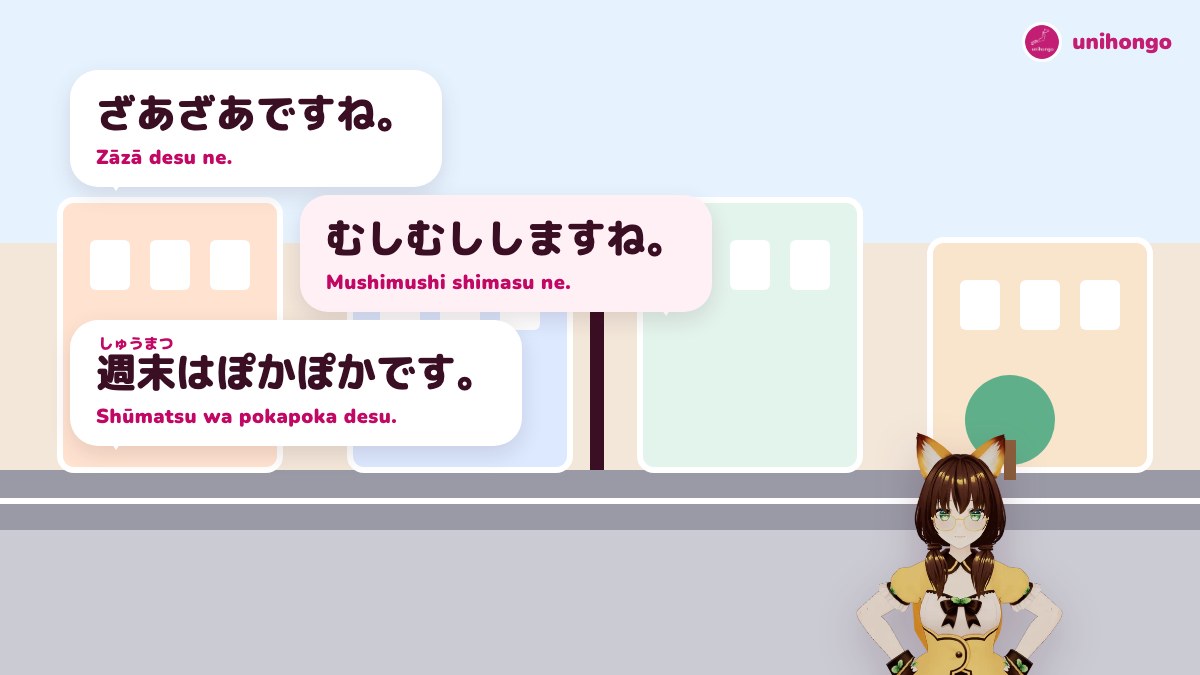
| Japanese | Romaji | Meaning |
|---|---|---|
| よく降りますね。ざあざあですね。 | Yoku furimasu ne. Zāzā desu ne. | You: It's really coming down, isn't it? |
| 本当に。朝からずっとですよ。 | Hontō ni. Asa kara zutto desu yo. | Neighbour: Really. It's been like this since morning. |
| それに、むしむししますね。 | Sore ni, mushimushi shimasu ne. | You: And it's so muggy. |
| 洗濯物が乾かなくて困ります。 | Sentakumono ga kawakanakute komarimasu. | Neighbour: My laundry won't dry, it's a nuisance. |
| 週末はぽかぽかになるそうですよ。 | Shūmatsu wa pokapoka ni naru sō desu yo. | You: Apparently it will be warm and sunny at the weekend. |
| それは楽しみですね。 | Sore wa tanoshimi desu ne. | Neighbour: That's something to look forward to. |
Common learner mistakes with weather words
- Using shitoshito for snow. Shitoshito is for rain; quiet snow is shinshin, and light flakes drifting down are often chirachira.
- Saying pokapoka for unpleasant heat. Pokapoka is gentle and enjoyable; for a hot, sticky day use mushimushi or simply atsui.
- Mixing up mushimushi and jimejime. Both mean humid, but mushimushi stresses heat, while jimejime stresses dampness and can be cool.
- Forgetting the verb. Ame ga zāzā alone sounds unfinished in most contexts; add furu, or use zāzā buri as a noun.
- Over-using katakana in your own writing. Hiragana is the normal choice in messages; katakana adds drama, like bold type.
Practise the weather words out loud
Ask Mocchi something like: /quiz me on ten Japanese weather onomatopoeia, show me a situation and let me pick the word. Mocchi gives you one situation at a time, explains why zāzā fits a downpour but shitoshito does not, and remembers the pairs you keep mixing up, so the next quiz returns to them.
Then take the words into speech. In AI Sensei, pick Sakura-sensei, choose the weather topic and ask Sakura-sensei to play a neighbour you meet at the bus stop on a rainy day. Keep the exchange polite, try at least three sound words, and read the corrections in the session report afterwards.