
The tasting words, sorted the Japanese way
The five tastes in Japanese tasting talk are nigami, bitterness; amami, sweetness; sanmi, acidity; shibumi, astringency, which is where tannin lives; and umami, which you already know. Around them sit the texture words: koku is body and depth, kire is a sharp, clean finish, nodogoshi is the feel of a beer going down the throat, and yoin is the lingering finish of a wine. Kaori is aroma, and the verb for a flavour coming through is kiku: hoppu ga kiite iru, the hops come through.
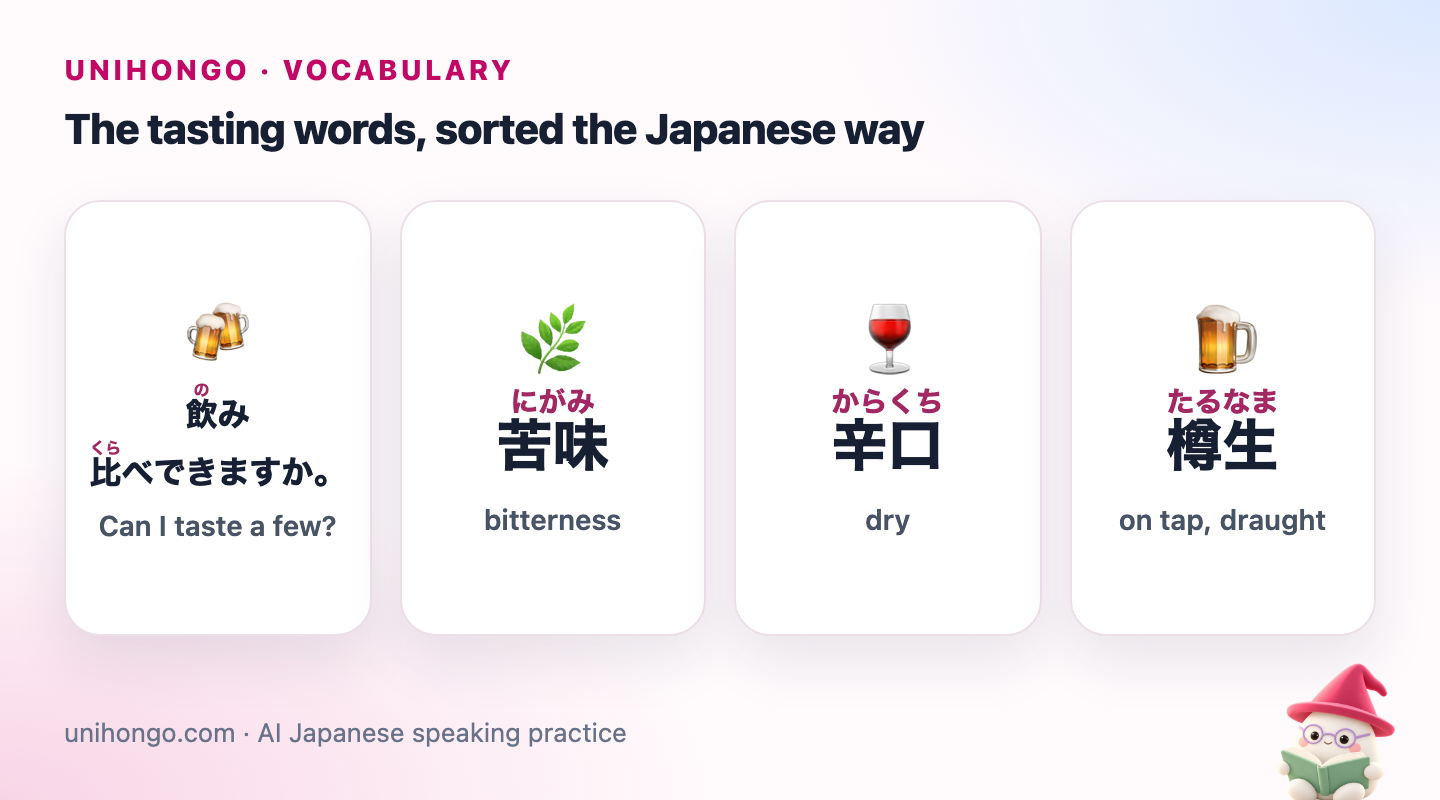
The first card is the question that opens every taproom visit. The next three are the words you will use to choose.
| Japanese | Romaji | Meaning |
|---|---|---|
| 飲み比べできますか。 | Nomikurabe dekimasu ka. | Can I taste a few? |
| 苦味 | nigami | bitterness |
| 辛口 | karakuchi | dry |
| 樽生 | taru nama | on tap, draught |
| 甘み | amami | sweetness |
| 酸味 | sanmi | acidity |
| 渋み | shibumi | astringency, tannin |
| コク | koku | body, depth |
| キレ | kire | a sharp, clean finish |
| のどごし | nodogoshi | the feel going down |
| 余韻 | yoin | lingering finish |
| ホップが効いていますね。 | Hoppu ga kiite imasu ne. | The hops really come through. |
Beer words and wine words
Most style names are katakana and sound like English said carefully: pēru ēru, sutauto, vaitsen, ragā. The native words are the ones around them. Nama is draught, and taru nama, from the keg, is the sign to look for. Jibīru, local beer, was the word of the first craft wave and still appears on labels; kurafuto bīru is the current word. For wine, aka and shiro are red and white, roze is rosé, supākuringu is sparkling, and gurasu de and botoru de are by the glass and by the bottle. Hinshu is the grape variety and sanchi the region. The table lines the two vocabularies up.
| Japanese | Romaji | Meaning |
|---|---|---|
| 今日の樽生は何がありますか。 | Kyō no taru nama wa nani ga arimasu ka. | What's on tap today? |
| 赤をグラスでお願いします。 | Aka o gurasu de onegai shimasu. | A glass of red, please. |
| 品種は何ですか。 | Hinshu wa nan desu ka. | What's the grape? |
| 度数はどのくらいですか。 | Dosu wa dono kurai desu ka. | How strong is it? |
| 日本ワインを飲んでみたいです。 | Nihon wain o nonde mitai desu. | I'd like to try a Japanese wine. |
| Beer | Wine | Shared |
|---|---|---|
| 樽生 taru nama, on tap | グラスで gurasu de, by the glass | 飲み比べ nomikurabe, a flight |
| ホップ hoppu, hops | 品種 hinshu, grape variety | 産地 sanchi, origin |
| 麦芽 bakuga, malt | ヴィンテージ vintēji, vintage | 度数 dosu, strength |
| 苦味 nigami, bitterness | 渋み shibumi, tannin | 香り kaori, aroma |
| のどごし nodogoshi, feel going down | 余韻 yoin, finish | コク koku, body |
| ペールエール pēru ēru, pale ale | 辛口 karakuchi, dry | おすすめ osusume, recommendation |
Nihon wain, Japanese wine, is a labelling term for wine made only from grapes grown in Japan; kokusan wain, domestic wine, has been used more loosely. If you want the local product, ask for Nihon wain and, in Yamanashi, for Kōshū, the white grape the region is known for.
Reading the label
Japanese labels put the useful facts in a small box on the back. Genzairyō is the ingredients line: for beer it reads bakuga, hoppu and sometimes kome, rice, or sutāchi, starch. Arukōru bun is alcohol content, printed as a percentage. Naiyōryō is the volume, shōmi kigen the best-before date, yōreizō the keep-refrigerated mark. On wine, the legal category printed is kajitsushu, fruit wine, and sankabōshizai is the sulfite line, often followed by muten'ka, none added, as a selling point. Beer has one more trap: happōshu and daisan no bīru are lower-malt products sold beside beer in every supermarket, and the label, not the shelf, tells you which is which.
| Japanese | Romaji | Meaning |
|---|---|---|
| 原材料:麦芽、ホップ | genzairyō: bakuga, hoppu | Label: ingredients: malt, hops |
| アルコール分 | arukōru bun | Label: alcohol content |
| 内容量 | naiyōryō | Label: volume |
| 賞味期限 | shōmi kigen | Label: best before |
| 要冷蔵 | yōreizō | Label: keep refrigerated |
| 果実酒 | kajitsushu | Label: fruit wine, the legal category |
| 酸化防止剤無添加 | sankabōshizai muten'ka | Label: no added sulfites |
| 発泡酒 | happōshu | low-malt beer, a separate category |
| 醸造元 | jōzōmoto | Label: brewed by |
Ordering a flight
The taproom exchange is simple and repeats everywhere: you ask for the flight, staff tell you how many glasses and ask you to choose, you say what you like, and they suggest. The particle de again does the work: nigame de, on the bitter side; karukute nomiyasui no de, something light and easy. If you cannot choose, Omakase de, I'll leave it to you, is welcome at a taproom and gets you the staff's favourites.
Register note: taprooms and wine bars are casual places, and plain polite forms are right. Staff will use shop keigo back at you; you do not need to match it.
| Japanese | Romaji | Meaning |
|---|---|---|
| 飲み比べセットをお願いします。 | Nomikurabe setto o onegai shimasu. | You: The tasting flight, please. |
| 四種類お選びください。 | Yonshurui oerabi kudasai. | Staff: Please choose four. |
| 苦めのが好きです。おすすめはありますか。 | Nigame no ga suki desu. Osusume wa arimasu ka. | You: I like them bitter. Any recommendation? |
| 軽くて飲みやすいのを一つ。 | Karukute nomiyasui no o hitotsu. | You: And one that's light and easy to drink. |
| あとはおまかせで。 | Ato wa omakase de. | You: The rest I'll leave to you. |
| 試飲できますか。 | Shiin dekimasu ka. | You: Can I have a taste? |
| 少しだけお出ししますね。 | Sukoshi dake odashi shimasu ne. | Staff: I'll pour you a small taste. |
Odashi shimasu is the humble form of dasu, to serve; staff use it, you do not. If a bartender offers a taste before you ask, Sumimasen, itadakimasu accepts it politely.
At the taproom: a conversation
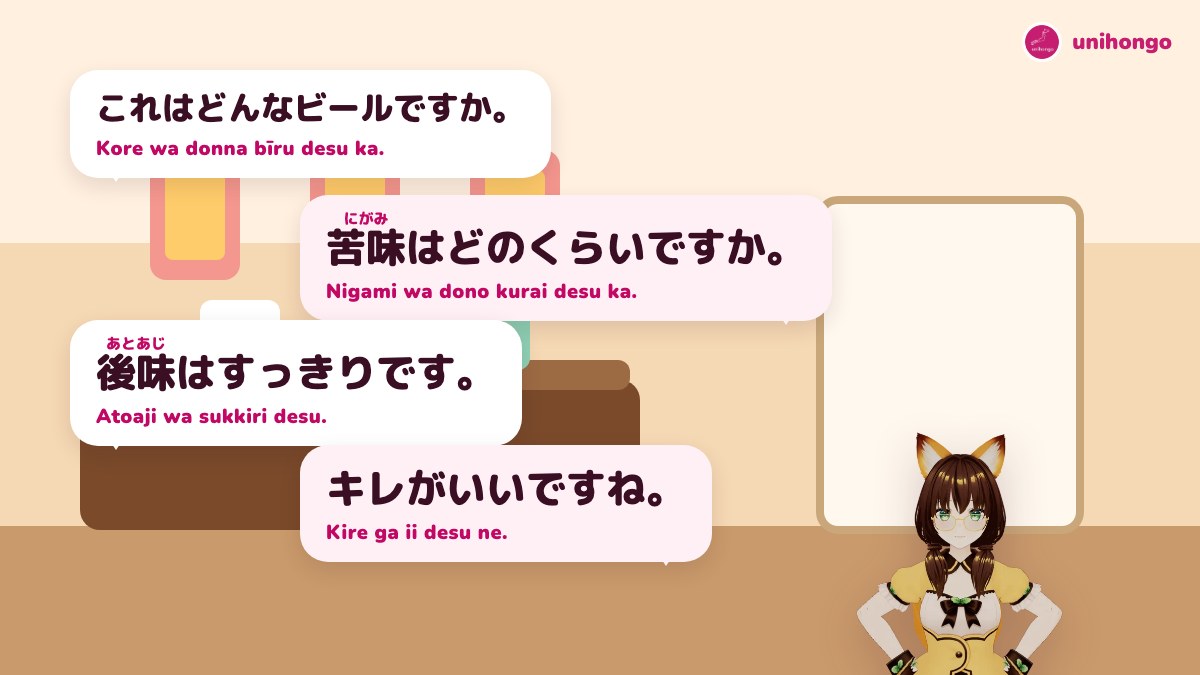
Once the flight is in front of you, the conversation is about what you taste, and brewery staff enjoy it. Ask what is in a beer and you will hear the hop names, the malt and sometimes the water; ask about a wine and you hear the grape, the vineyard and the year. Say one thing back about each glass. The dialogue below is the shape of it; the bartender's answers are the listening practice.
| Japanese | Romaji | Meaning |
|---|---|---|
| これはどんなビールですか。 | Kore wa donna bīru desu ka. | You: What kind of beer is this? |
| ペールエールです。柑橘系の香りが特徴です。 | Pēru ēru desu. Kankitsukei no kaori ga tokuchō desu. | Bartender: A pale ale. Citrus aroma is its character. |
| 苦味はどのくらいですか。 | Nigami wa dono kurai desu ka. | You: How bitter is it? |
| しっかりありますが、後味はすっきりです。 | Shikkari arimasu ga, atoaji wa sukkiri desu. | Bartender: Quite bitter, but the finish is clean. |
| 本当だ。キレがいいですね。 | Hontō da. Kire ga ii desu ne. | You: You're right. Nice clean finish. |
| 度数は六パーセントくらいです。 | Dosu wa roku pāsento kurai desu. | Bartender: It's about six percent. |
| これ、もう一杯ください。 | Kore, mō ippai kudasai. | You: I'll have another of this one. |
Saying what you taste
A tasting note in Japanese joins two qualities with the te form: furūtī de nomiyasui, fruity and easy to drink; nigami ga tsuyokute koku ga aru, strongly bitter with body. Add atoaji for the aftertaste or yoin for the finish of a wine, and mata nomitai, I'd drink it again, to close. Wine has a few extra words: omoi and karui for full and light bodied, shibui for tannic, and sanmi ga hakkiri shite iru for bright acidity. Avoid suppai, which means sour as a fault.
| Japanese | Romaji | Meaning |
|---|---|---|
| フルーティーで飲みやすいです。 | Furūtī de nomiyasui desu. | Fruity and easy to drink. |
| 苦味が強くて、コクがあります。 | Nigami ga tsuyokute, koku ga arimasu. | Strongly bitter, with real body. |
| この赤は渋みが少なくて軽いですね。 | Kono aka wa shibumi ga sukunakute karui desu ne. | This red is light, with little tannin. |
| 酸味がはっきりしていて、余韻が長いです。 | Sanmi ga hakkiri shite ite, yoin ga nagai desu. | Bright acidity and a long finish. |
| 麦の香りがしっかりします。 | Mugi no kaori ga shikkari shimasu. | A good strong malt aroma. |
| これはまた飲みたいです。 | Kore wa mata nomitai desu. | I'd drink this one again. |
| ちょっと私には重いかも。 | Chotto watashi ni wa omoi kamo. | Might be a bit heavy for me. (casual) |
Kamo at the end softens an opinion into a maybe, which is the polite way to say you did not love a glass the bartender chose. Watashi ni wa, for me, keeps it about your taste rather than their beer.
Mistakes and register notes
- Tsuyoi for a strong drink. Tsuyoi describes a flavour; for alcohol strength say dosu ga takai, high strength, or dosu ga tsuyoi, which is also heard.
- Suppai for acidity. As with coffee, suppai sounds like a complaint; sanmi ga aru or sanmi ga hakkiri shite iru is the tasting word.
- Karai for a dry wine. Karai alone means spicy hot; dry is karakuchi, with kuchi. Karakuchi no shiro, a dry white, is the phrase.
- Bīru for happōshu. Supermarket shelves mix beer with low-malt happōshu and daisan no bīru; if the label says happōshu, it is not legally beer, which matters if you came for the malt.
- Dorai with a capital D. Dorai on a Japanese beer label means a crisp, dry style and is a brand word more than a tasting term; karakuchi carries the same idea in conversation.
- Pouring your own glass at a formal table. At an izakaya table, people pour for each other; at a taproom counter, pour for yourself. The custom follows the setting, not the drink.
Turn a Friday glass into a Friday lesson
A tasting hobby comes with a built-in ritual, and a ritual is where language sticks. Say the note out loud before you write it down, read the label before you open the bottle, and ask for the flight in Japanese even when the menu is in English.
- Sign in to Unihongo and ask Mocchi, the study assistant, for /quiz on the tasting words in this post: nigami, amami, sanmi, shibumi, koku, kire, nodogoshi and yoin. Mocchi asks one at a time, explains the ones you miss, and keeps track of them so next Friday's quiz starts with those.
- When you confuse a pair, ask Mocchi directly: what is the difference between koku and kire, or when do Japanese drinkers say nodogoshi? One answer in your own words is worth a page of lists.
- For the counter itself, open AI Sensei, choose Sakura-sensei and ask Sakura-sensei to play the bartender at a brewery taproom. Order a flight, say what you like, react to each glass and ask for another; the session report afterwards shows the sentences she corrected.
- To start, a free account at unihongo.com/login is enough, and the first quiz fits between opening the bottle and the first sip.
Your turn
Say these out loud with a glass in your hand, before looking back at the phrase rows.
- Order a flight of four and tell the staff what you like and what to leave to them.
- Describe your current drink with two qualities joined by the te form.
- Read a label aloud: ingredients, strength, volume, best before.
- Ask the grape and the region of a wine, and whether it is a Japanese wine.
- Decline a second glass of something politely, and ask for another of something else.