
Four animal sounds every learner hears
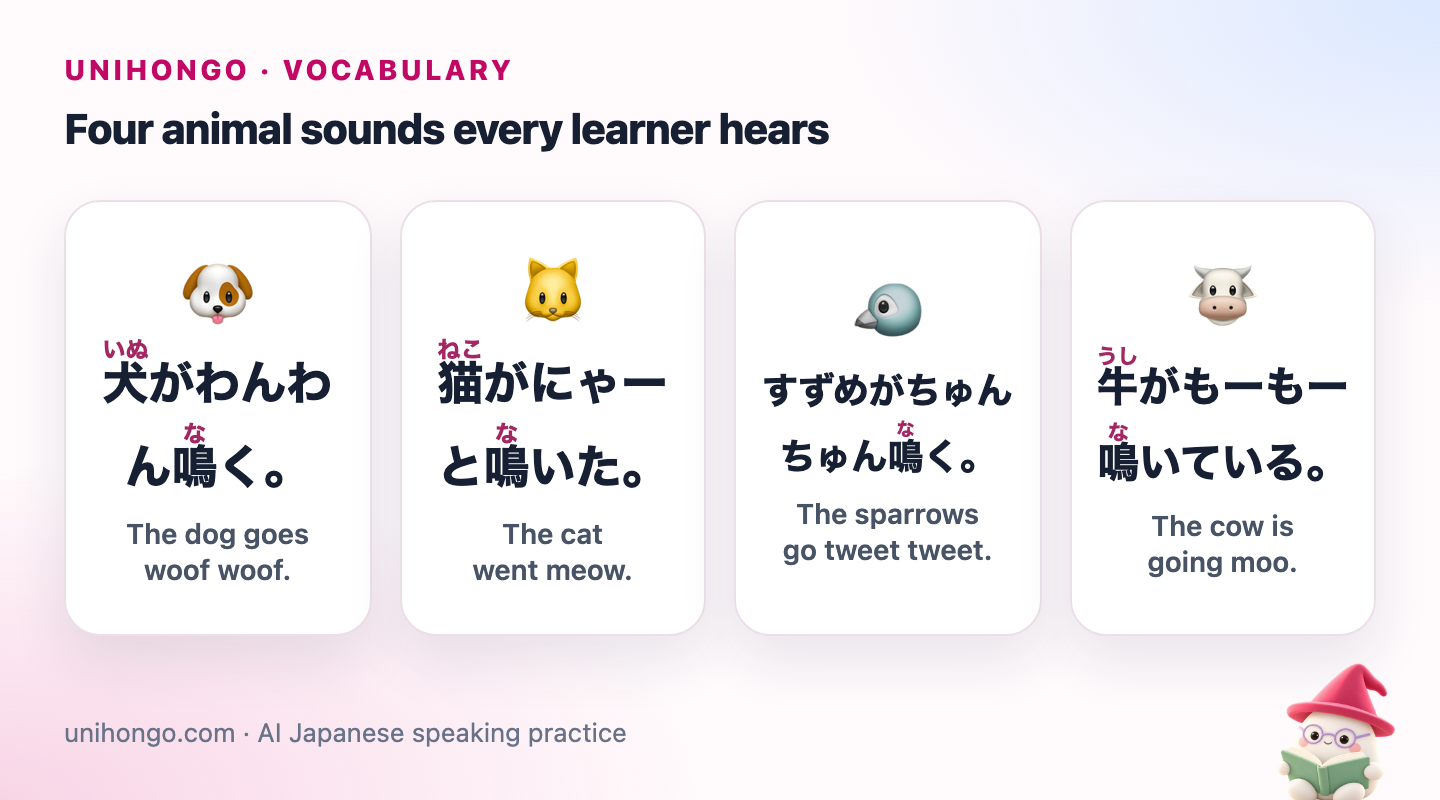
These are the four animal sounds you will hear most in Japan: the neighbourhood dog, a cat, the sparrows outside in the morning and the cows in picture books and farm parks. All four are giongo, and all four go with the verb naku.
| Japanese | Romaji | Meaning |
|---|---|---|
| 犬がわんわん鳴く。 | Inu ga wanwan naku. | The dog goes woof woof. |
| 猫がにゃーと鳴いた。 | Neko ga nyā to naita. | The cat went meow. |
| すずめがちゅんちゅん鳴く。 | Suzume ga chunchun naku. | The sparrows go tweet tweet. |
| 牛がもーもー鳴いている。 | Ushi ga mōmō naite iru. | The cow is going moo. |
Notice that nyā takes to before the verb. Single or stretched sounds such as nyā, kokekokkō or wan usually need to, the quoting particle, while doubled sounds such as wanwan can go straight before the verb. Morning sparrows are so familiar that chunchun appears in manga to show it is morning.
Farm animals, pets and wild animals
Here are the other common animal sounds. Most of them differ from English, so treat each one as a new word and learn it with its animal. Writers use katakana for a stronger, more sound-like feel and hiragana for a softer, picture-book feel.
| Japanese | Romaji | Meaning |
|---|---|---|
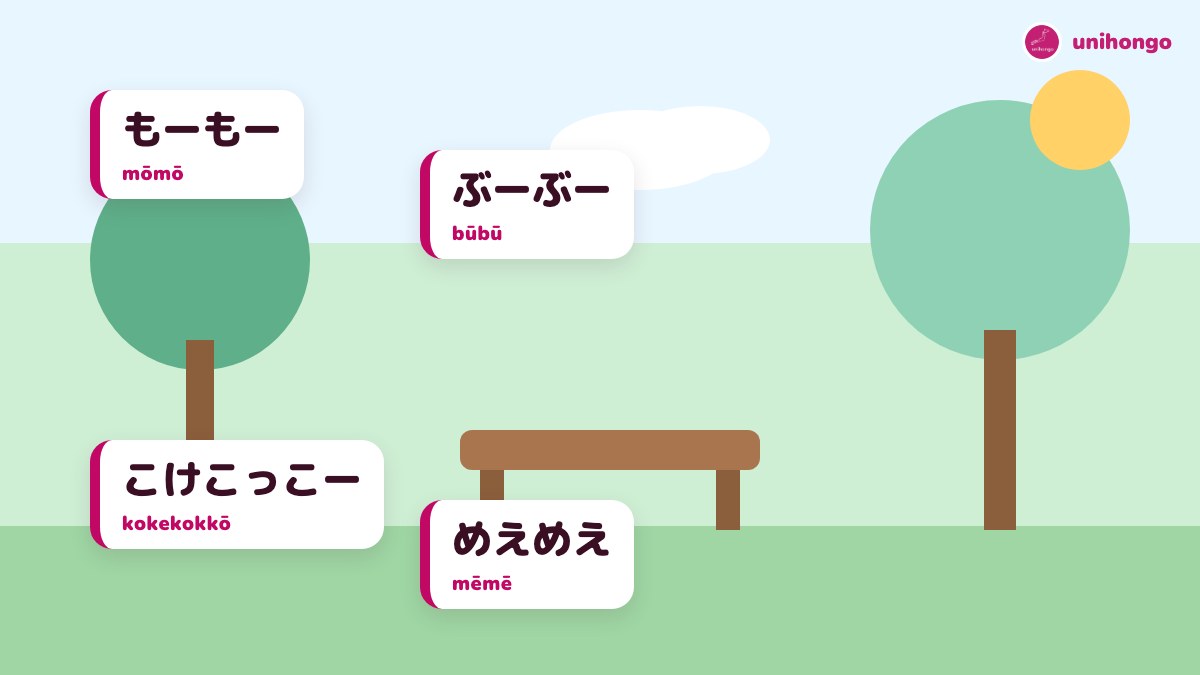
| にわとりがこけこっこーと鳴いた。 | Niwatori ga kokekokkō to naita. | The rooster crowed cock-a-doodle-doo. |
| 豚がぶーぶー鳴いている。 | Buta ga būbū naite iru. | The pig is oinking. |
| カラスがかあかあ鳴いている。 | Karasu ga kākā naite iru. | The crow is cawing. |
| ライオンだぞ。がおー! | Raion da zo. Gaō! | I'm a lion. Roar! (playing with a child) |
| Animal | Japanese word | Sound in romaji | Note |
|---|---|---|---|
| Rooster | niwatori | kokekokkō | Takes to: kokekokkō to naku |
| Pig | buta | būbū | Also a child's word for a car |
| Sheep, goat | hitsuji, yagi | mēmē | Both animals use the same sound |
| Horse | uma | hihīn | Galloping hooves go pakara pakara |
| Crow | karasu | kākā | Heard in every Japanese city |
| Mouse | nezumi | chūchū | Chū alone is also casual for a kiss |
| Frog | kaeru | kerokero, gekogeko | Kerokero is cute; gekogeko sounds louder |
| Lion, monster | raion, kaijū | gaō | Used by children pretending to roar |
The verbs: naku, hoeru and saezuru
Choosing the verb is as important as choosing the sound. Naku (鳴く) is the all-purpose verb for animals, birds and insects. Hoeru (吠える) is for barking and roaring, and it can sound aggressive. Saezuru (さえずる) is for birds singing prettily, and is a little literary. For a cat purring, people say nodo o narasu, to sound its throat, often with gorogoro.
| Japanese | Romaji | Meaning |
|---|---|---|
| 隣の犬が夜中に吠えている。 | Tonari no inu ga yonaka ni hoete iru. | The neighbour's dog is barking at night. |
| 小鳥がさえずっている。 | Kotori ga saezutte iru. | Little birds are singing. |
| 猫がのどをごろごろ鳴らしている。 | Neko ga nodo o gorogoro narashite iru. | The cat is purring. |
| 犬にほえられてびっくりした。 | Inu ni hoerarete bikkuri shita. | A dog barked at me and made me jump. |
Be careful with naku when you write it. 鳴く is for animal calls; 泣く is for people crying. In speech they sound the same, so context does the work.
Baby talk: when sounds become names
Japanese parents and small children often use animal sounds as names. A toddler points and says wanwan for a dog or nyannyan for a cat, and parents answer in the same words. Some families say mōmō or mōmō-san for a cow and būbū for a car, but habits vary by family. Adults use these words only when talking to children or when they are being deliberately cute.
Between adults, the warm but grown-up forms are wanchan for a dog and nekochan or nyanko for a cat. Pet shops, vets and dog owners use wanchan all the time, so it is worth recognising.
| Japanese | Romaji | Meaning |
|---|---|---|
| 見て、わんわんだよ。 | Mite, wanwan da yo. | Look, a doggy! (to a toddler) |
| にゃんにゃん、かわいいね。 | Nyannyan, kawaii ne. | The kitty is cute, isn't it? (to a toddler) |
| かわいいワンちゃんですね。 | Kawaii wanchan desu ne. | What a cute dog. (to an owner, polite) |
| うちのにゃんこは寝てばかりです。 | Uchi no nyanko wa nete bakari desu. | My kitty does nothing but sleep. |
Seasonal sounds: cicadas, frogs and the bush warbler
Some animal sounds belong to a season. In early spring, the uguisu, the Japanese bush warbler, sings hōhokekyo, and many people associate it with the coming of spring. In early summer, frogs call kerokero or gekogeko from the rice fields at night. In midsummer, cicadas are everywhere: the large minminzemi calls mīn mīn, and the higurashi, heard at dusk in late summer, calls kanakana. Many Japanese people find these sounds nostalgic, though how strongly depends on where they grew up.
| Japanese | Romaji | Meaning |
|---|---|---|
| うぐいすがホーホケキョと鳴いた。 | Uguisu ga hōhokekyo to naita. | The bush warbler sang hō-hokekyo. |
| セミがミーンミーン鳴いている。 | Semi ga mīn mīn naite iru. | The cicadas are buzzing. |
| 田んぼでカエルがけろけろ鳴いている。 | Tanbo de kaeru ga kerokero naite iru. | The frogs are croaking in the rice field. |
| ひぐらしがカナカナ鳴くと、夏も終わりだね。 | Higurashi ga kanakana naku to, natsu mo owari da ne. | When the evening cicadas call, summer's nearly over. |
At a petting zoo with a friend's child
Picture a weekend outing to a farm park with a friend and her four-year-old son. The adults speak casually to each other, and everyone uses child-friendly words with the boy. This is exactly the kind of conversation where animal sounds come up naturally.
| Japanese | Romaji | Meaning |
|---|---|---|
| ねえ、牛さんは何て鳴くかな? | Nē, ushi-san wa nan te naku kana? | You: Hey, what does the cow say? |
| もーもー! | Mōmō! | Boy: Moo moo! |
| 正解!じゃあ、豚さんは? | Seikai! Jā, buta-san wa? | You: Right! And the pig? |
| ぶーぶー! | Būbū! | Boy: Oink oink! |
| 英語だと、豚はオインクって鳴くんだよ。 | Eigo da to, buta wa oinku tte naku n da yo. | You: In English, pigs say oink. |
| えー、変なの! | Ē, hen na no! | Boy: What? That's weird! |
Common mistakes with animal sounds
- Translating English sounds directly. A Japanese listener may not recognise woof or oink; use wanwan and būbū.
- Forgetting to with single or long sounds. Say nyā to naku and kokekokkō to naku.
- Using wanwan for dog with adults. Say inu, or wanchan to a dog owner.
- Writing 泣く for animal calls. Animals, birds and insects take 鳴く.
- Using hoeru for every animal. It fits dogs, wolves and lions, not cats or birds.
Learn the sounds with the animals
Ask Mocchi for /vocab animals and their sounds in Japanese, eight at a time. Mocchi shows each animal word with its sound and verb, then mixes them into a quick quiz and keeps a note of the ones you miss, so the next review starts with those.
For a listening check, play Listen & Pick on the games page with your own animal flashcards or a starter word pack. It trains you to recognise words by ear, which is exactly what you need when a child shouts an animal name at you.