
The rainy season in four words
These four will get you through any rainy-season conversation. The first is the sentence people say when the season begins; the other three are the umbrella you carry, the feeling in the air and the problem waiting in the bathroom.
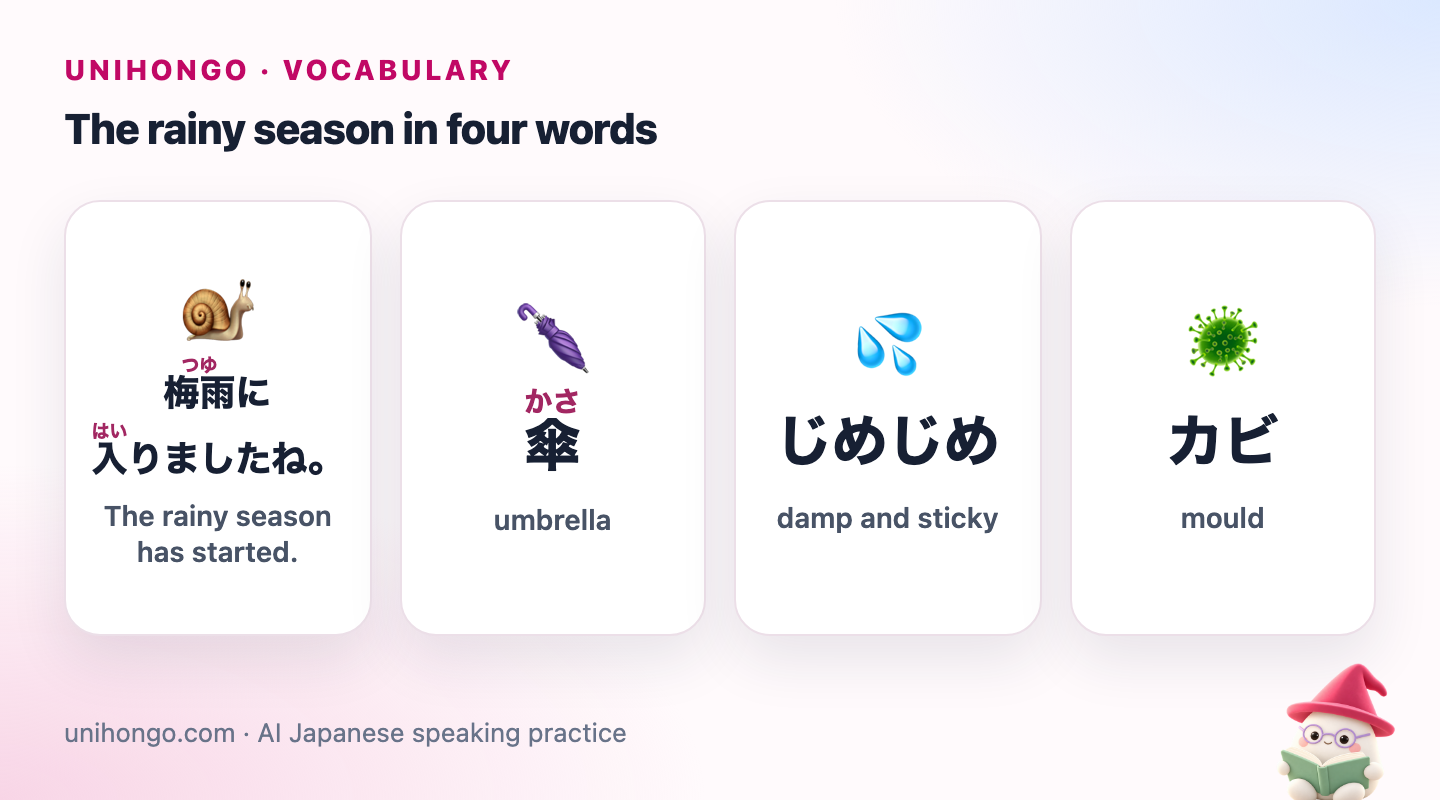
| Japanese | Romaji | Meaning |
|---|---|---|
| 梅雨に入りましたね。 | Tsuyu ni hairimashita ne. | The rainy season has started. |
| 傘 | kasa | umbrella |
| じめじめ | jimejime | damp and sticky |
| カビ | kabi | mould |
Tsuyu ni hairu, to enter the rainy season, is the everyday verb. The noun form, tsuyuiri, appears in forecasts and headlines, and tsuyuake, the end of the rainy season, is the word everyone waits to hear in July.
Start, end and the words in between
Every year the Japan Meteorological Agency announces that each region appears to have entered the rainy season, and later that it appears to have ended. The wording is cautious, and the dates are sometimes revised in autumn, so people talk about it as news rather than as a calendar date. A rainy season with very little rain has a name of its own, and so do the cool days and the sunny breaks it brings.
| Japanese | Romaji | Meaning |
|---|---|---|
| 関東も梅雨入りしたそうです。 | Kantō mo tsuyuiri shita sō desu. | They say Kanto has entered the rainy season too. |
| 梅雨明けはまだかな。 | Tsuyuake wa mada ka na. | I wonder when the rainy season will end. (casual) |
| 今年は空梅雨ですね。 | Kotoshi wa karatsuyu desu ne. | There's hardly been any rain this rainy season. |
| 梅雨の晴れ間に洗濯しよう。 | Tsuyu no harema ni sentaku shiyō. | Let's do the laundry while it's sunny. (casual) |
| Word | Reading | Meaning |
|---|---|---|
| 梅雨入り | tsuyuiri | The start of the rainy season |
| 梅雨明け | tsuyuake | The end of the rainy season |
| 梅雨前線 | baiu zensen | The seasonal rain front on weather maps |
| 空梅雨 | karatsuyu | A rainy season with little rain |
| 梅雨寒 | tsuyuzamu | Unseasonably cool days during the rainy season |
| 梅雨の晴れ間 | tsuyu no harema | A sunny break in the rainy season |
Kinds of rain and kinds of umbrella
Japanese is precise about rain. Kosame is light rain, ōame heavy rain, and doshaburi a downpour. A sudden shower is niwaka ame. During tsuyu the typical pattern is rain that stops and starts, furitari yandari.
Umbrellas have their own vocabulary too. Many people carry a folding umbrella every day in June. Convenience stores sell clear plastic umbrellas, and shops and offices often have an umbrella stand by the door or a machine that slips your wet umbrella into a thin plastic bag.
| Japanese | Romaji | Meaning |
|---|---|---|
| 小雨 | kosame | light rain, drizzle |
| 土砂降り | doshaburi | pouring rain |
| 雨が降ったりやんだりしています。 | Ame ga futtari yandari shite imasu. | The rain keeps stopping and starting. |
| 折りたたみ傘 | oritatami gasa | folding umbrella |
| ビニール傘 | binīru gasa | clear plastic umbrella |
| 傘立てはどこですか。 | Kasatate wa doko desu ka. | Where is the umbrella stand? |
| 傘をさしたほうがいいよ。 | Kasa o sashita hō ga ii yo. | You'd better put your umbrella up. (casual) |
Jimejime: talking about the damp
Jimejime is the signature feeling of the season: damp air, clothes that never quite feel dry, a faint musty smell in the cupboard. It belongs to the group of Japanese mimetic words, and it takes suru: jimejime suru, or jimejime shite iru. Mushimushi is close, but it adds heat, so it fits July better than early June. Humidity itself is shikke (湿気), and the fix is joshitsu (除湿), dehumidifying.
| Japanese | Romaji | Meaning |
|---|---|---|
| 今日はじめじめしますね。 | Kyō wa jimejime shimasu ne. | It's damp and sticky today. |
| 湿気がすごい。 | Shikke ga sugoi. | The humidity is awful. (casual) |
| むしむしして寝苦しい。 | Mushimushi shite negurushii. | It's so muggy I can't sleep well. (casual) |
| エアコンの除湿をつけましょうか。 | Eakon no joshitsu o tsukemashō ka. | Shall I turn on the air conditioner's dry mode? |
| 髪が広がって大変です。 | Kami ga hirogatte taihen desu. | My hair goes frizzy, it's a pain. |
Shikke is pronounced with a small tsu: shi-k-ke, with a short pause before the k. Say it too quickly and it sounds like shike, which is a different word.
Laundry and mould: the home checklist
Two household tasks take over the rainy season: drying laundry and fighting mould. Clothes are often dried indoors, heyaboshi, with a fan or a dehumidifier, and detergents for indoor drying are sold everywhere in June. Mould grows quickly in bathrooms, on window frames and in cupboards, so people air their rooms whenever the rain stops. If you rent, landlords may ask you to keep the place ventilated, and in some flats mould on walls is a common source of disputes when you move out.
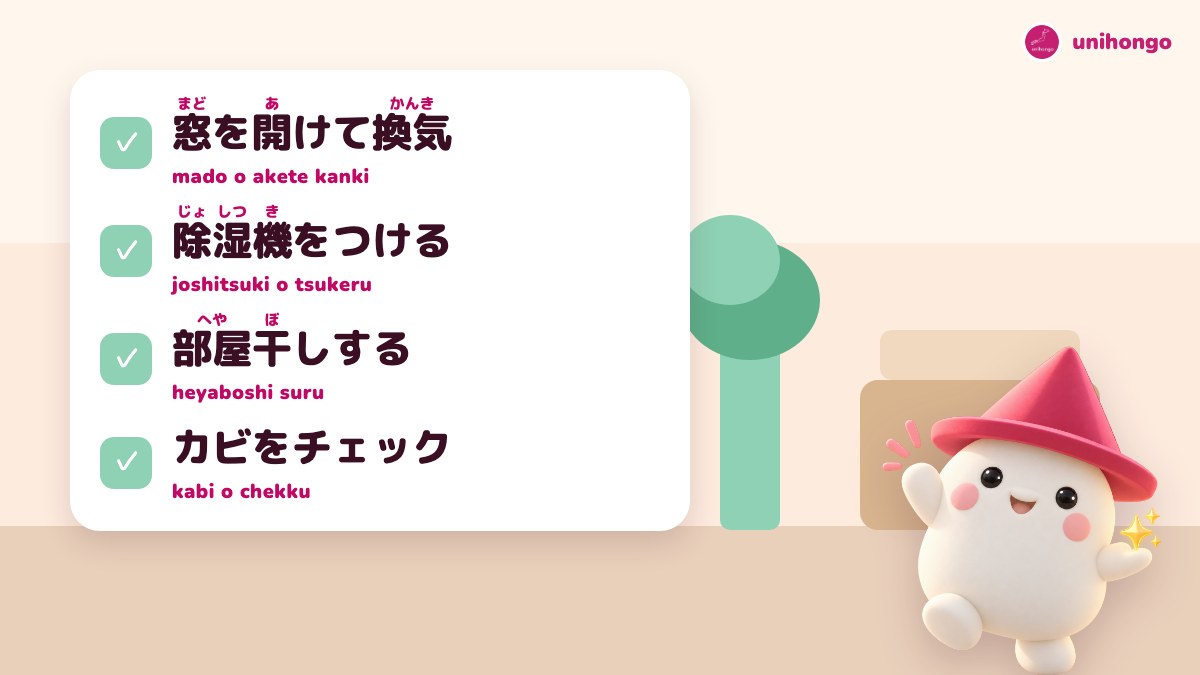
| Japanese | Romaji | Meaning |
|---|---|---|
| 洗濯物が全然乾かない。 | Sentakumono ga zenzen kawakanai. | The laundry won't dry at all. (casual) |
| 部屋干しにします。 | Heyaboshi ni shimasu. | I'll dry it indoors. |
| 除湿機 | joshitsuki | dehumidifier |
| 窓を開けて換気しよう。 | Mado o akete kanki shiyō. | Let's open the windows and air the room. (casual) |
| お風呂にカビが生えました。 | Ofuro ni kabi ga haemashita. | Mould has grown in the bathroom. |
| カビ取りスプレー | kabitori supurē | mould-removing spray |
The bright side: hydrangeas, snails and plums
The rainy season has its own beauty, and Japanese speakers often mention it to balance the complaints. Hydrangeas bloom in blue, purple and pink along streets and in temple gardens, and some places are known for them. Snails and frogs appear in children's pictures and June classroom decorations. In some households, June is also the time for ume shigoto, preparing plums for pickles or plum liqueur, a custom that varies from family to family.
| Japanese | Romaji | Meaning |
|---|---|---|
| 紫陽花がきれいに咲いていますね。 | Ajisai ga kirei ni saite imasu ne. | The hydrangeas are blooming beautifully. |
| かたつむり | katatsumuri | snail |
| カエルが鳴いていますね。 | Kaeru ga naite imasu ne. | The frogs are croaking. |
| 梅酒を作ります。 | Umeshu o tsukurimasu. | I'm making plum liqueur. |
Mini dialogue: caught without an umbrella
| Japanese | Romaji | Meaning |
|---|---|---|
| あれ、雨降ってきたね。 | Are, ame futte kita ne. | Coworker: Oh, it's started raining. (casual) |
| しまった、傘を忘れました。 | Shimatta, kasa o wasuremashita. | You: Oh no, I forgot my umbrella. |
| 折りたたみ傘、もう一本あるから貸すよ。 | Oritatami gasa, mō ippon aru kara kasu yo. | Coworker: I've got a spare folding umbrella, I'll lend it to you. |
| 助かります。明日返しますね。 | Tasukarimasu. Ashita kaeshimasu ne. | You: That's a lifesaver. I'll give it back tomorrow. |
| いつでもいいよ。梅雨はこれだから困るね。 | Itsu demo ii yo. Tsuyu wa kore da kara komaru ne. | Coworker: Whenever. This is the trouble with the rainy season. |
Umbrellas are counted with -hon, the counter for long objects: ippon, nihon, sanbon. Tasukarimasu, literally I am saved, is the natural thanks when someone gets you out of a small problem.
Common learner mistakes in the rainy season
- Saying uki (雨季) for Japan's rainy season. Uki exists, but for Japan people say tsuyu.
- Saying kasa o motsu for holding an umbrella open. Motsu is to carry; to have it up over your head is kasa o sasu.
- Saying ame ga kimashita for it started raining. Use ame ga futte kimashita or ame ga furidashimashita.
- Using jimejime for a pleasantly fresh rainy day. It is always negative; a soft spring rain is not jimejime.
- Taking a clear umbrella from a stand because they all look alike. People do notice, so mark yours with a sticker or a ribbon.
A rainy-day routine for these words
On wet mornings, type the weather to Mocchi in Japanese, for example ame ga futtari yandari shite imasu, and ask: is this natural, and how else could I say it? Mocchi corrects the line, offers two alternatives in different registers, and keeps notes on the rain words you have practised. A /kanji 雨 request is a good extra step, because the same kanji appears in many of the words here.
On the weekend, put your rainy-season flashcards into Kotoba Stack on the games page and play a few rounds. The game uses your own cards, so the words are exactly the ones you needed this month.