
Small apologies, big job
Most Japanese apologies you hear in a day are tiny. They last one second, come with a small nod and ask for nothing back. They do the work that please, excuse me and thank you do in English, all at once. Learning when to use them is less about feeling sorry and more about noticing other people.
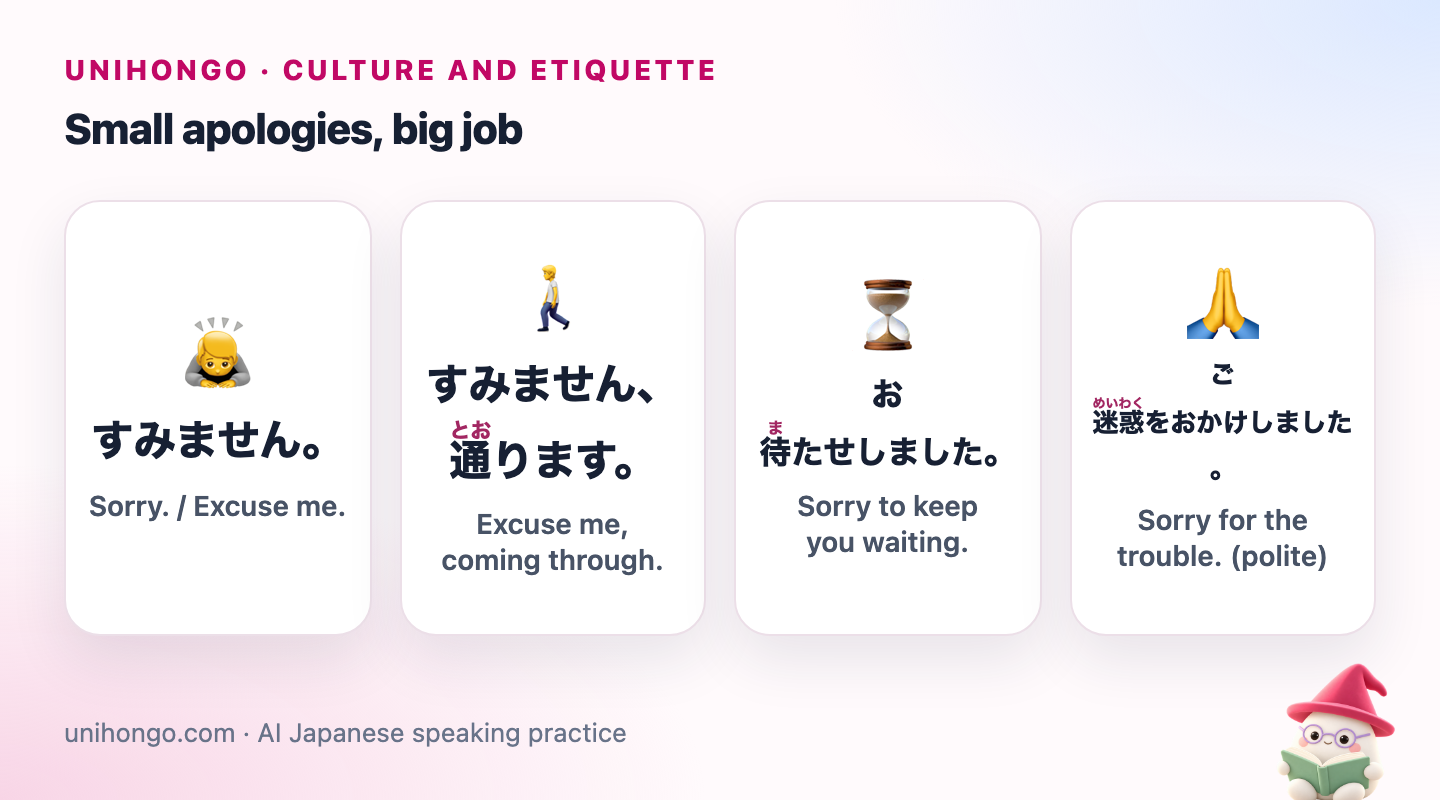
| Japanese | Romaji | Meaning |
|---|---|---|
| すみません。 | Sumimasen. | Sorry. / Excuse me. |
| すみません、通ります。 | Sumimasen, tōrimasu. | Excuse me, coming through. |
| お待たせしました。 | Omatase shimashita. | Sorry to keep you waiting. |
| ご迷惑をおかけしました。 | Gomeiwaku o okake shimashita. | Sorry for the trouble. (polite) |
Notice that omatase shimashita does not contain a word for sorry at all. It literally means I made you wait. Stating what you did to the other person is itself the apology, and the polite form makes it gentle.
Why it happens: meiwaku and the shared space
Many Japanese people grow up hearing hito ni meiwaku o kakenai, don't cause trouble for other people. Meiwaku (迷惑) means bother or inconvenience, and parents and teachers often present avoiding it as one of the most basic rules of life with others. When you cannot avoid causing a little meiwaku, such as taking up space on a crowded train or asking a busy clerk for help, an apology acknowledges it.
Other explanations people offer, all partly true and varying by person and region, include these:
| Japanese | Romaji | Meaning |
|---|---|---|
| 人に迷惑をかけない | hito ni meiwaku o kakenai | don't cause trouble for others |
| お忙しいところすみません。 | Oisogashii tokoro sumimasen. | Sorry to bother you when you're busy. |
| お手数をおかけします。 | Otesū o okake shimasu. | Sorry for the trouble I'm causing. (polite) |
- Dense cities and crowded transport mean people constantly share small spaces, so small signals keep things calm.
- Group harmony is valued, and a quick apology stops a small irritation from growing.
- Apologising first is seen as mature and polite, even when the other person is equally responsible.
- Hierarchy at work makes it natural to apologise upward for taking a senior's time.
What sumimasen literally means
Sumimasen is the polite negative of the verb sumu (済む), to be finished or settled. The common explanation is that it means it is not settled: you owe the other person something you have not yet repaid. That debt can be a burden you placed on them, a favour they did for you, or simply their attention. This is why the same word can apologise, get attention and thank.
In fast speech many people say suimasen, dropping the m. It is very common in casual speech and fine with friends and in shops, but in careful or formal speech the full sumimasen sounds better.
| Japanese | Romaji | Meaning |
|---|---|---|
| すいません、注文お願いします。 | Suimasen, chūmon onegai shimasu. | Excuse me, we'd like to order. (casual) |
| それでは気が済まない。 | Sore de wa ki ga sumanai. | That wouldn't settle it for me. |
| どうもすみません。 | Dōmo sumimasen. | I'm really sorry. / Thanks so much. |
Choosing the right weight of apology
Japanese apologies have clear levels. Using a heavy one for a tiny problem sounds dramatic, and a light one for a serious problem sounds careless. This table shows the common choices.
| Japanese | Romaji | Meaning |
|---|---|---|
| 遅れてごめん! | Okurete gomen! | Sorry I'm late! (casual) |
| 失礼しました。 | Shitsurei shimashita. | Excuse me, my mistake. (polite) |
| 大変申し訳ありません。 | Taihen mōshiwake arimasen. | I'm terribly sorry. (formal) |
| Expression | Weight and register | Typical moment |
|---|---|---|
| Sumimasen | Light, polite, works with anyone | Passing someone, small delays, calling staff |
| Gomen / gomen ne | Light, casual | Friends, family, partners |
| Gomen nasai | Medium, personal | A real but small mistake with someone close |
| Shitsurei shimashita | Polite, slightly formal | A small breach of manners at work or in a shop |
| Mōshiwake arimasen | Heavy, formal | Work mistakes, customers, keeping a manager waiting |
| Mōshiwake gozaimasen | Heaviest everyday level | Staff to customers, formal apologies |
Moments when a visitor should say sumimasen
You do not need to apologise all day, but a few moments almost always call for a quick sumimasen. Using it there makes you look considerate, and skipping it can come across as rude even if nobody says so.
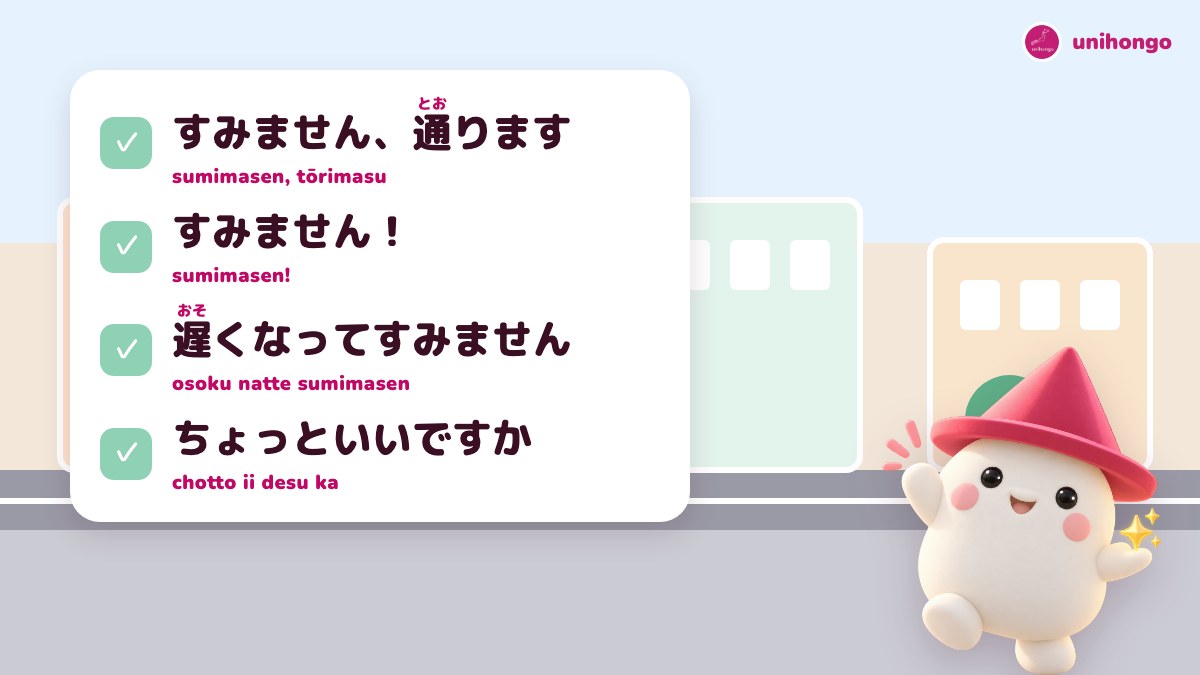
| Japanese | Romaji | Meaning |
|---|---|---|
| すみません、ちょっといいですか。 | Sumimasen, chotto ii desu ka. | Excuse me, do you have a moment? |
| 遅くなってすみません。 | Osoku natte sumimasen. | Sorry I'm late. |
| あ、すみません! | A, sumimasen! | Oh, sorry! (after a bump) |
- Squeezing past someone on a train, in a shop aisle or in a cinema row.
- Calling a server, a clerk or a stranger to ask something.
- Arriving even a few minutes late to meet someone.
- Asking for help, directions or a favour.
- Bumping into someone or stepping on a foot, however lightly.
How to answer an apology
Being apologised to is half of the exchange, and learners often freeze. Your job is to release the other person from the small debt quickly and kindly. A short ie ie or daijōbu desu yo, with a smile, is usually perfect. In more formal settings, add oki ni nasaranaide kudasai.
| Japanese | Romaji | Meaning |
|---|---|---|
| いえいえ。 | Ie ie. | Not at all. |
| いいえ、大丈夫ですよ。 | Iie, daijōbu desu yo. | No, it's fine. |
| お気になさらないでください。 | Oki ni nasaranaide kudasai. | Please don't worry about it. (polite) |
| こちらこそすみません。 | Kochira koso sumimasen. | No, I'm the one who's sorry. |
| 全然気にしてないよ。 | Zenzen ki ni shitenai yo. | I really don't mind. (casual) |
Apologies at work and in shops
Shops and offices are where you hear the most formal apologies. Staff apologise for waiting times, sold-out items and small delays as part of good service, and customers are not expected to answer at the same level. A nod, or ie ie, is enough.
At work, apologies often come before a request rather than after a mistake: mōshiwake nai n desu ga, I'm sorry but, softens asking a colleague for a favour or a deadline change. When you really have made a mistake, the usual pattern is short and clear: apologise, say what went wrong in a few words, and say what you will do next. Long self-criticism is not needed, and excuses placed before the apology tend to sound defensive.
| Japanese | Romaji | Meaning |
|---|---|---|
| 大変お待たせいたしました。 | Taihen omatase itashimashita. | Staff: Thank you for waiting so long. |
| 申し訳ないんですが、明日でもいいですか。 | Mōshiwake nai n desu ga, ashita demo ii desu ka. | Sorry, but would tomorrow be OK? |
| 私の確認不足でした。 | Watashi no kakunin busoku deshita. | It was my mistake; I didn't check. |
| 以後気をつけます。 | Igo ki o tsukemasu. | I'll be careful from now on. (formal) |
Mistakes learners make with apologies
- Apologising with a long English-style explanation. In Japanese, a short apology first and a short reason later sounds more sincere than a long excuse.
- Using gomen nasai with a boss or a customer. It is personal and can sound childish at work; use mōshiwake arimasen.
- Saying sumimasen when someone compliments you. A compliment calls for arigatō gozaimasu or a modest iie, sonna koto nai desu.
- Bowing deeply for a tiny bump. A small nod matches a small apology.
- Never apologising because it feels like admitting guilt. For small moments, it is simply courtesy.
Train your ear and your timing
The hard part of Japanese apologies is choosing the weight in a split second. Ask Mocchi to describe ten everyday situations one by one and pick the apology for each, then explain where you went too heavy or too light; Mocchi keeps track of the ones you get wrong and brings them back in a later /review.
To get the sound right, the pronunciation coach has drills on sentence intonation where you can listen to short polite lines at slower speed, record yourself and get a tip on rhythm and pitch, so your sumimasen sounds soft rather than sharp.