
Four health words to read first
If you learn only four items from this post, make them these. They cover where you go, what you get and the two things doctors ask about most: fever and pain.
Notice that two of the four are not single kanji but a kanji plus kana. 熱 is a noun, so you say 熱があります, there is a fever. 痛い is an adjective, so you put the body part first: 頭が痛い, my head hurts, お腹が痛い, my stomach hurts. This one pattern covers most of what you need to say at reception.
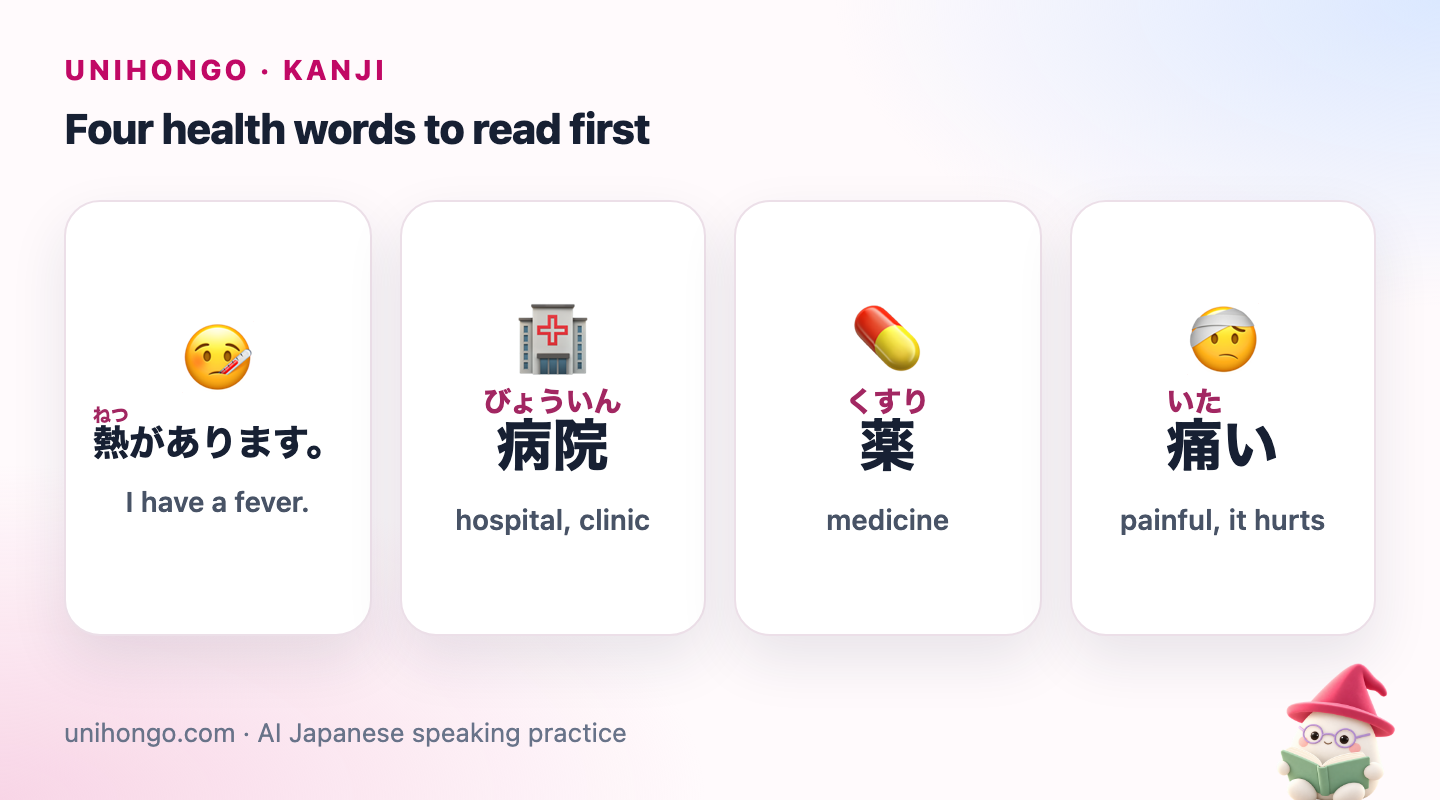
| Japanese | Romaji | Meaning |
|---|---|---|
| 熱があります。 | Netsu ga arimasu. | I have a fever. |
| 病院 | byōin | hospital, clinic |
| 薬 | kusuri | medicine |
| 痛い | itai | painful, it hurts |
Twelve health kanji as everyday words
Each word below uses one of the core kanji. Learn the word first; the single kanji will follow.
| Japanese | Romaji | Meaning |
|---|---|---|
| 病気 | byōki | illness, sick |
| 医者 | isha | doctor |
| 薬局 | yakkyoku | pharmacy |
| 体温 | taion | body temperature |
| 頭痛 | zutsū | headache |
| 体 | karada | body |
| 内科 | naika | internal medicine |
| 診察 | shinsatsu | medical examination |
| 歯医者 | haisha | dentist |
| 治る | naoru | to get better, heal |
| 入院 | nyūin | hospital admission |
| 保険証 | hokenshō | health insurance card |
Readings and the sickness radical
Many illness kanji share the radical 疒, called やまいだれ, yamaidare, the sickness roof. It looks like a hospital bed with a roof over it. When you see it, the kanji is almost certainly about illness or discomfort.
| Kanji | Main readings | Meaning | Common word |
|---|---|---|---|
| 病 | byō; yamai | Illness | 病気 byōki, illness |
| 痛 | tsū; ita(i) | Pain | 頭痛 zutsū, headache |
| 疲 | hi; tsuka(reru) | Tired | 疲れた tsukareta, I'm tired |
| 症 | shō | Symptom | 症状 shōjō, symptoms |
| 院 | in | Institution | 病院 byōin, hospital |
| 医 | i | Medicine, doctor | 医者 isha, doctor |
| 薬 | yaku; kusuri | Medicine, drug | 薬局 yakkyoku, pharmacy |
| 熱 | netsu; atsu(i) | Heat, fever | 熱 netsu, fever |
| 体 | tai; karada | Body | 体温 taion, body temperature |
| 科 | ka | Department | 外科 geka, surgery |
| 診 | shin; mi(ru) | Examine | 診察 shinsatsu, examination |
| 治 | chi, ji; nao(ru) | Cure, heal | 治療 chiryō, treatment |
薬 is read kusuri on its own and yaku in compounds, but notice 薬局 is yakkyoku with a doubled k. 熱 means fever as a noun, but as an adjective 熱い means hot to the touch, as in a hot drink.
Clinic departments on the sign board
Japanese clinics list their departments on the sign outside, each ending in 科, ka. If you are unsure where to go, 内科 is the usual first stop for colds, fevers and stomach trouble for adults.
Inside, the first stop is the 受付, uketsuke, reception desk. You hand over your 保険証 and usually fill in a 問診票, monshinhyō, a medical questionnaire. It asks for your symptoms, when they started, your temperature, any allergies (アレルギー) and any medicine you take. Many clinics in larger cities have an English version if you ask, but the questions are short and repeat the kanji in this post, so it is a good place to test yourself.
| Japanese | Romaji | Meaning |
|---|---|---|
| 内科 | naika | internal medicine (colds, fever) |
| 外科 | geka | surgery, injuries |
| 小児科 | shōnika | paediatrics |
| 皮膚科 | hifuka | dermatology |
| 耳鼻科 | jibika | ear, nose and throat |
| 歯科 | shika | dentistry |
| 整形外科 | seikei geka | orthopaedics (bones, joints) |
Reading a medicine bag
Prescription medicine in Japan usually comes in a paper bag, 薬袋, with the patient's name and the instructions printed or written on it. The pattern is predictable: how many times a day, when, and how much each time.
The counters are 錠, jō, for tablets, 包, hō, for powder sachets, and 回, kai, for times. 頓服, tonpuku, means take only when needed, such as for pain or fever. Always confirm with the pharmacist if anything is unclear.
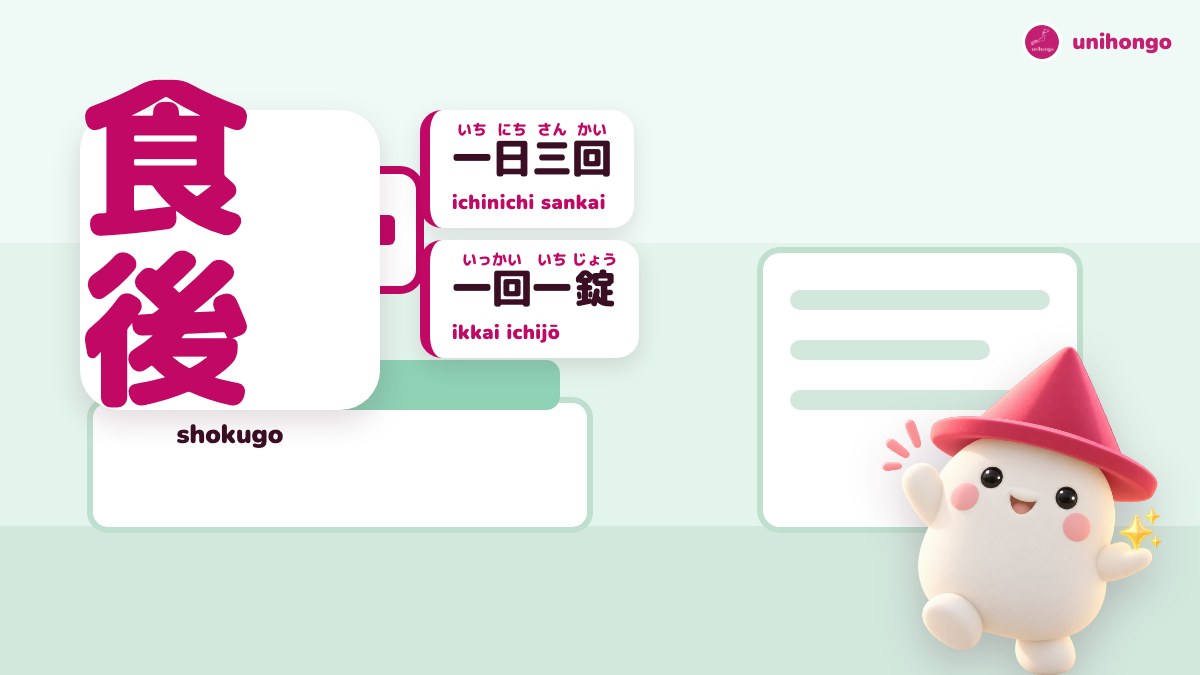
| Japanese | Romaji | Meaning |
|---|---|---|
| 一日三回 | ichinichi sankai | three times a day |
| 食後 | shokugo | after meals |
| 食前 | shokuzen | before meals |
| 食間 | shokkan | between meals (not during) |
| 寝る前 | neru mae | before bed |
| 一回一錠 | ikkai ichijō | one tablet each time |
| 頓服 | tonpuku | take when needed |
Mini dialogue: seeing the doctor
The doctor's questions follow a pattern: what the symptom is, since when, and whether you take any medicine. The doctor speaks politely; you answer in simple desu/masu.
| Japanese | Romaji | Meaning |
|---|---|---|
| 今日はどうされましたか。 | Kyō wa dō saremashita ka. | Doctor: What brings you here today? |
| 熱があって、のどが痛いです。 | Netsu ga atte, nodo ga itai desu. | You: I have a fever and a sore throat. |
| いつからですか。 | Itsu kara desu ka. | Doctor: Since when? |
| 昨日の夜からです。 | Kinō no yoru kara desu. | You: Since last night. |
| 今、飲んでいる薬はありますか。 | Ima, nonde iru kusuri wa arimasu ka. | Doctor: Are you taking any medicine now? |
| いいえ、ありません。 | Iie, arimasen. | You: No, I'm not. |
| お薬を三日分出しておきますね。 | Okusuri o mikkabun dashite okimasu ne. | Doctor: I'll prescribe three days of medicine. |
Doctors and nurses often say お薬, with the polite お, and お大事に, odaiji ni, take care, as you leave. The natural reply is ありがとうございました, said with a small bow. If you did not understand something, もう一度お願いします, once more please, or ゆっくりお願いします, slowly please, are always acceptable.
Look-alikes and learner mistakes
- 体 (body) vs 休 (rest): 体 has an extra short horizontal stroke under the tree 木. 休みます is I'll rest; 体 is your body.
- 薬 (medicine) vs 楽 (easy, fun): 薬 is 楽 with the grass radical 艹 on top. Plants were the first medicines.
- 医 (medicine) vs 区 (ward, district): 医 has 矢, an arrow, inside the box; 区 has a simple X shape.
- 病 vs 痛 vs 疲: all share 疒; read the part inside to tell illness, pain and tiredness apart.
- Saying 頭が痛くです: the adjective 痛い takes です directly, so it is 頭が痛いです.
- Reading 食間 as during meals: it means between meals.
Writing tip: the sickness roof
疒 is written in five strokes: a dot, a horizontal line, a long sweeping stroke down to the left, and two short strokes on the left side. Write the whole radical first, then the inside part. Keep the inside tucked under the roof; if it sticks out to the left, the character looks unbalanced.
Practise 病, 痛 and 疲 in a row. Seeing them side by side makes the shared roof obvious and fixes the inside parts in memory.
A clinic visit, rehearsed twice
First, rehearse with text. Copy a line from a real medicine bag or from this post into Mocchi with /explain, for example /explain 一日三回、食後に一錠. Mocchi breaks the line into its parts and gives the readings, and remembers which health words you already know.
Then rehearse with voice. In AI Sensei, ask Hana-sensei to play the clinic receptionist and then the doctor in the Describe Symptoms at a Clinic mission. Explain your fever, say since when, and ask how to take the medicine. Hana-sensei can slow down if you ask, and the session report lists the phrases worth repeating.