
Four place names everyone knows
Start with Japan's four best-known place names. You may already know how they sound; now attach the kanji. Each of them hides one of the prefecture endings: 都 in 京都, 道 in 北海道, and 東京 and 大阪 are also the names of their prefectures, 東京都 and 大阪府.
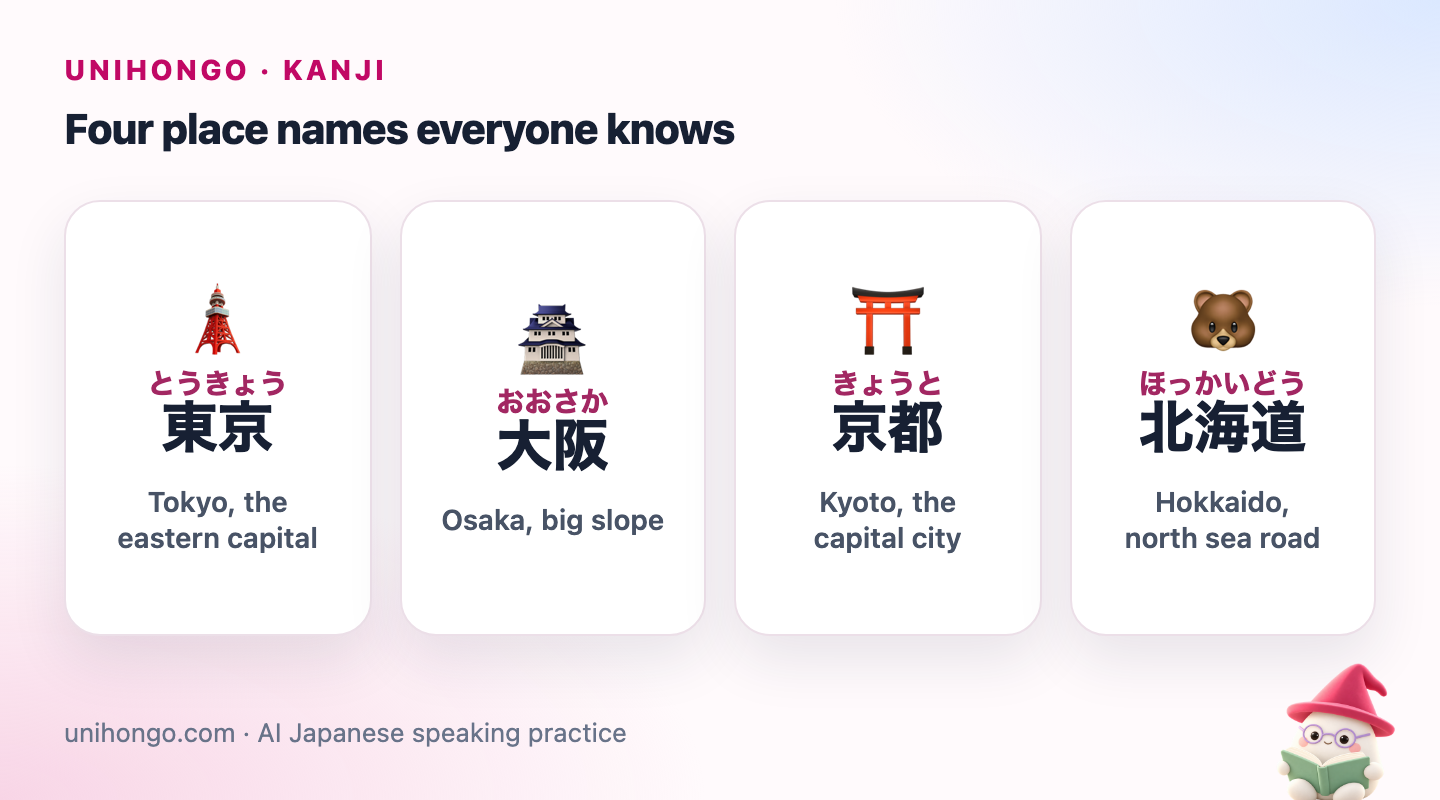
| Japanese | Romaji | Meaning |
|---|---|---|
| 東京 | Tōkyō | Tokyo, the eastern capital |
| 大阪 | Ōsaka | Osaka, big slope |
| 京都 | Kyōto | Kyoto, the capital city |
| 北海道 | Hokkaidō | Hokkaido, north sea road |
English spelling usually drops the long vowels, so Tōkyō becomes Tokyo and Ōsaka becomes Osaka. When you say them in Japanese, hold the long vowels: tō-kyō, ō-saka, kyō-to. Saying Kyoto with a long first vowel and a short second one is the most common learner slip.
The endings that tell you what a place is
Japanese place names end with a kanji that tells you the type of area. Learn these and you can tell at a glance whether a name on a sign is a prefecture, a city or a village.
Wards, 区, appear in two kinds of places. Central Tokyo is divided into 23 special wards, the 東京23区, such as 新宿区 and 渋谷区, each with its own office. Large cities such as Yokohama, Osaka and Sapporo are also split into wards, so an address there reads city first and ward second: 横浜市中区. In conversation, people usually drop the ending and just say the name: 新宿に住んでいます, I live in Shinjuku.
| Japanese | Romaji | Meaning |
|---|---|---|
| 都道府県 | todōfuken | the 47 prefectures |
| 東京都 | Tōkyō-to | Tokyo Metropolis |
| 大阪府 | Ōsaka-fu | Osaka Prefecture |
| 沖縄県 | Okinawa-ken | Okinawa Prefecture |
| 横浜市 | Yokohama-shi | Yokohama City |
| 新宿区 | Shinjuku-ku | Shinjuku Ward |
| 町 | machi | town |
| 村 | mura | village |
| 市役所 | shiyakusho | city hall |
| 区役所 | kuyakusho | ward office |
Readings of the place-name kanji
Most place names use on readings, but plenty use kun readings or special ones. The table shows the readings you will meet most.
| Kanji | Meaning | Readings | Example |
|---|---|---|---|
| 東 | East | tō; higashi | 東口 higashiguchi, east exit |
| 京 | Capital | kyō, kei | 京浜 Keihin, Tokyo-Yokohama area |
| 大 | Big | dai, tai; ō(kii) | 大阪 Ōsaka |
| 阪 | Slope (in names) | han; saka | 阪神 Hanshin, Osaka-Kobe area |
| 都 | Metropolis, capital | to, tsu; miyako | 都内 tonai, inside Tokyo |
| 北 | North | hoku; kita | 東北 Tōhoku, the northeast |
| 海 | Sea | kai; umi | 海外 kaigai, overseas |
| 道 | Road, way | dō; michi | 北海道 Hokkaidō |
| 府 | Urban prefecture | fu | 京都府 Kyōto-fu |
| 県 | Prefecture | ken | 県庁 kenchō, prefectural office |
| 市 | City; market | shi; ichi | 市場 ichiba, market |
| 区 | Ward | ku | 区役所 kuyakusho, ward office |
| 町 | Town | chō; machi | 町内 chōnai, the neighbourhood |
| 村 | Village | son; mura | 農村 nōson, farming village |
阪 is almost only used in place names: 大阪, 阪神 and 京阪, Keihan, the Kyoto-Osaka area. The everyday kanji for slope is 坂, saka, and Osaka itself was commonly written 大坂 in earlier centuries.
Reading a Japanese address
A Japanese address starts big and ends small. After the postal code, marked 〒, come the prefecture, the city or ward, the district name, and then the numbers: 丁目, chōme, a block area; 番, ban, or 番地, banchi, the lot; and 号, gō, the building. Last come the building name and room number. Online forms usually split this into separate boxes in the same order.
Many addresses skip the prefecture for big, well-known cities, and the numbers are often written with hyphens instead of the kanji: 1-2-3 for 一丁目2番3号. Both forms are correct.
| Japanese | Romaji | Meaning |
|---|---|---|
| 住所 | jūsho | address |
| 郵便番号 | yūbin bangō | postal code |
| 一丁目 | itchōme | block one |
| 二番地 | nibanchi | lot number two |
| 住所を教えてください。 | Jūsho o oshiete kudasai. | Please tell me your address. |
Big cities on the shinkansen board
Station boards and tickets show destinations in kanji, often with English underneath. These cities appear constantly. A few have readings you cannot guess: 神戸 is Kōbe, not Kamito, and 名古屋 is Nagoya.
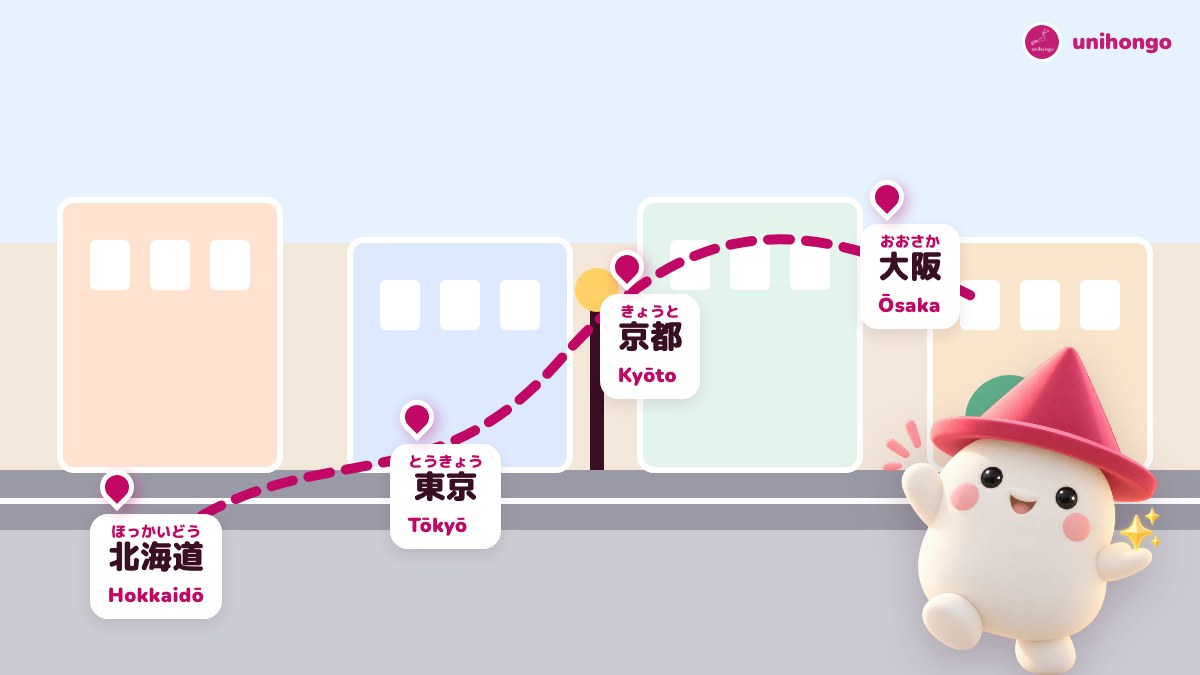
| Japanese | Romaji | Meaning |
|---|---|---|
| 札幌 | Sapporo | Sapporo (Hokkaido) |
| 仙台 | Sendai | Sendai (northeast) |
| 横浜 | Yokohama | Yokohama (near Tokyo) |
| 名古屋 | Nagoya | Nagoya (central Japan) |
| 神戸 | Kōbe | Kobe (near Osaka) |
| 広島 | Hiroshima | Hiroshima (west) |
| 福岡 | Fukuoka | Fukuoka (Kyushu) |
| 沖縄 | Okinawa | Okinawa (far south) |
Region names are worth knowing too: 関東, Kantō, the Tokyo area; 関西, Kansai, the Osaka, Kyoto and Kobe area; 東北, Tōhoku, the northeast; and 九州, Kyūshū, the southern island. Weather forecasts and train announcements use them all the time.
Mini dialogue: where are you from?
出身, shusshin, is where you come from. Japanese people often answer with a prefecture and then a city, and the question usually leads to food or sightseeing tips.
| Japanese | Romaji | Meaning |
|---|---|---|
| ご出身はどちらですか。 | Goshusshin wa dochira desu ka. | New colleague: Where are you from? |
| カナダです。佐藤さんは? | Kanada desu. Satō-san wa? | You: Canada. And you, Ms Satō? |
| 北海道です。札幌の近くです。 | Hokkaidō desu. Sapporo no chikaku desu. | Colleague: Hokkaido, near Sapporo. |
| いいですね。冬は寒いですか。 | Ii desu ne. Fuyu wa samui desu ka. | You: Nice. Is it cold in winter? |
| とても寒いです。でも雪まつりがきれいですよ。 | Totemo samui desu. Demo yuki matsuri ga kirei desu yo. | Colleague: Very. But the snow festival is beautiful. |
| 一度行ってみたいです。 | Ichido itte mitai desu. | You: I'd love to go some time. |
Look-alikes in place names
- 阪 (slope, in names) vs 坂 (slope): 阪 has the hill radical ⻖ on the left; 坂 has earth 土. Use 坂 for everyday slopes.
- 東 (east) vs 車 (car): 東 is a tree 木 with the sun 日 in it; 車 has no sweeping legs.
- 都 (capital) vs 部 (part): both have ⻏ on the right; the left parts differ.
- 市 (city) vs 布 (cloth): 市 has a dot on top; 布 starts with a cross-shaped part.
- 村 (village) vs 材 (material): 村 has 寸 on the right; 材 has 才.
- 海 (sea) vs 毎 (every): 海 adds the water radical 氵 to 毎.
Find your way, then ask for it
Begin with Mocchi: ask /kanji 阪, or type the names of the cities on your travel route and ask Mocchi to quiz you on their readings. Mocchi keeps a note of the places you care about and the readings you miss, such as 神戸, and folds them into your next review.
Then speak. In AI Sensei, try the Catch the Right Train mission with Sakura-sensei playing the station attendant: ask which platform goes to 京都 or 名古屋 and check the departure time. Ask Sakura-sensei to repeat a place name slowly if you miss it; the session report afterwards lists the station words you used.