
Clothes, shoes, hats and bags
Start with the phrase to put on clothes and three items that each use a different core kanji. 帽子 contains 子, child, which is read shi here and has nothing to do with children; it is a common suffix in object names.
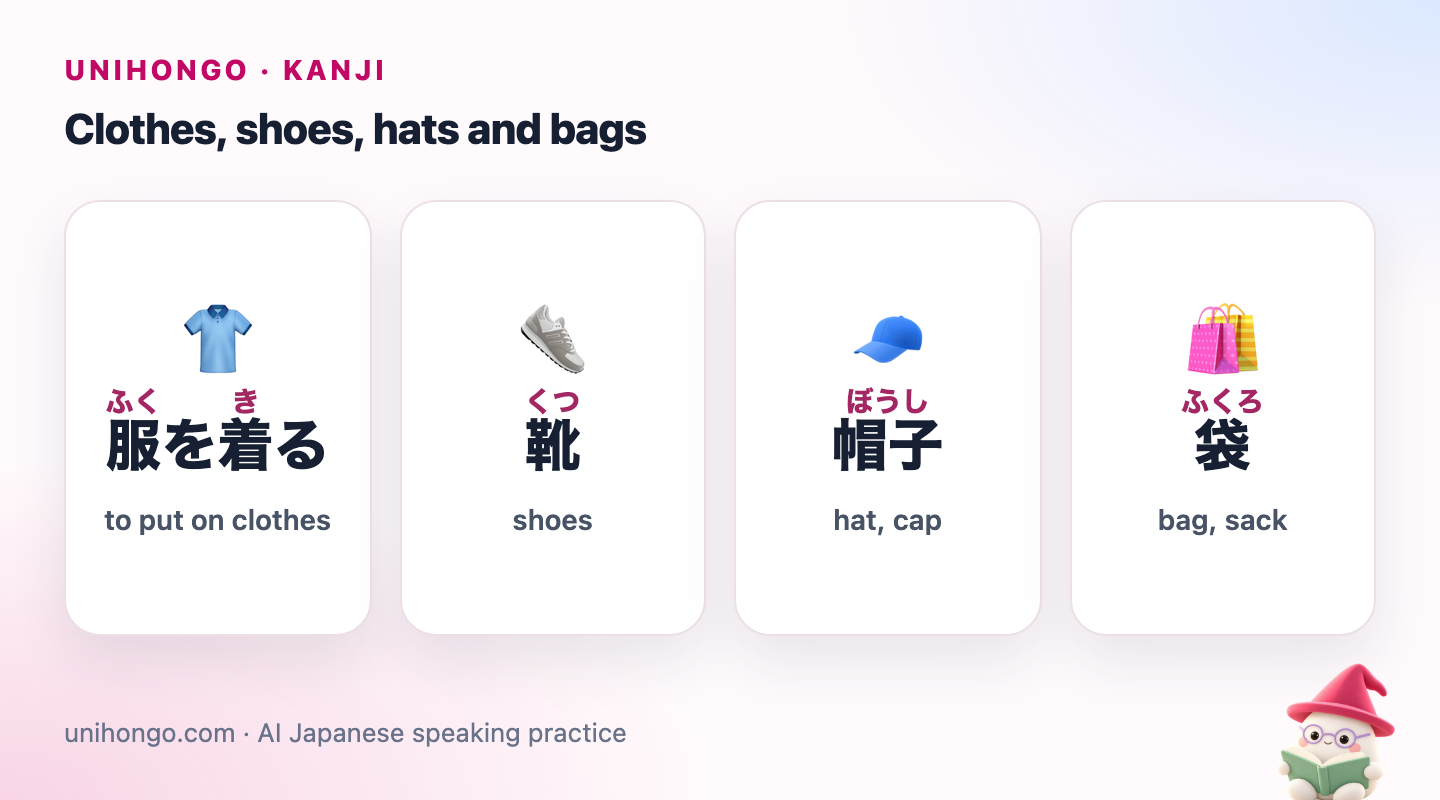
| Japanese | Romaji | Meaning |
|---|---|---|
| 服を着る | fuku o kiru | to put on clothes |
| 靴 | kutsu | shoes |
| 帽子 | bōshi | hat, cap |
| 袋 | fukuro | bag, sack |
袋 is a bag in the sense of a sack or pouch: a plastic bag at the till is レジ袋, rejibukuro, and a paper bag is 紙袋, kamibukuro. A handbag or school bag is usually かばん or バッグ, written in kana.
Fourteen clothes and accessory words
These words use the theme kanji and a few accessory kanji. Several are compounds of simple parts you know already, such as 上 and 下 or 手.
| Japanese | Romaji | Meaning |
|---|---|---|
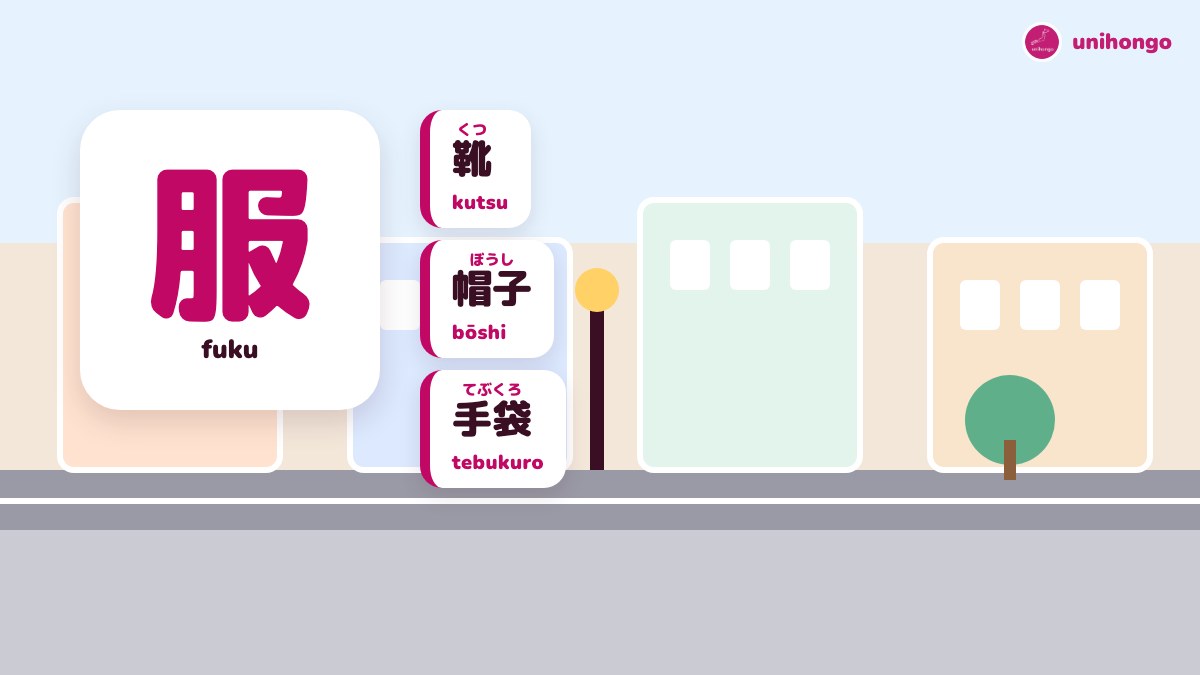
| 洋服 | yōfuku | clothes (Western-style) |
| 着物 | kimono | kimono |
| 制服 | seifuku | uniform |
| 上着 | uwagi | jacket, outer layer |
| 下着 | shitagi | underwear |
| 靴下 | kutsushita | socks |
| 長靴 | nagagutsu | rubber boots |
| 手袋 | tebukuro | gloves |
| 傘 | kasa | umbrella |
| 財布 | saifu | wallet, purse |
| 指輪 | yubiwa | ring |
| 眼鏡 | megane | glasses |
| 浴衣 | yukata | light summer kimono |
Readings and the many jobs of 着
Most of these kanji have one main reading in daily life, but 着 is the exception. It has three common readings and appears in clothing words, travel words and words for attaching things.
| Kanji | Readings | Meaning | Another word |
|---|---|---|---|
| 服 | fuku | Clothes; to obey | 服装 fukusō, dress, attire |
| 着 | chaku; ki(ru), tsu(ku) | Wear; arrive | 到着 tōchaku, arrival |
| 靴 | ka; kutsu | Shoes | 靴屋 kutsuya, shoe shop |
| 帽 | bō | Hat | 帽子 bōshi, hat |
| 子 | shi, su; ko | Child; object suffix | 椅子 isu, chair |
| 袋 | tai; fukuro | Bag, sack | 手袋 tebukuro, gloves |
| 傘 | san; kasa | Umbrella | 日傘 higasa, parasol |
| 財 | zai, sai | Wealth | 財布 saifu, wallet |
| 布 | fu; nuno | Cloth | 毛布 mōfu, blanket |
| 指 | shi; yubi | Finger | 指輪 yubiwa, ring |
| 輪 | rin; wa | Ring, wheel | 三輪車 sanrinsha, tricycle |
| 衣 | i; koromo | Garment | 衣料品 iryōhin, clothing goods |
| 洋 | yō | Western; ocean | 洋服 yōfuku, clothes |
| 和 | wa | Japanese; peace | 和服 wafuku, Japanese clothes |
Notice 子 in 帽子 and 椅子: in object names it is read shi or su, not ko. 財布 combines wealth 財 and cloth 布: a cloth for money.
The wearing verbs
English uses wear for everything; Japanese chooses the verb by where the item goes. This is one of the most common learner mistakes, and getting it right instantly makes your Japanese sound more natural. To say what someone is wearing now, use the ている form: 着ている, はいている.
The verbs themselves mean to put on, the action, so the ている form describes the result: the shirt is on. 赤いシャツを着ている人 is the person wearing a red shirt, a useful way to point someone out in a crowd. For the act of getting dressed in general, people say 着替える, kigaeru, to change clothes, and 服を着替えてから行きます means I'll change before I go.
| Japanese | Romaji | Meaning |
|---|---|---|
| シャツを着る | shatsu o kiru | to put on a shirt (upper body) |
| 靴をはく | kutsu o haku | to put on shoes (feet, legs) |
| 帽子をかぶる | bōshi o kaburu | to put on a hat (head) |
| 眼鏡をかける | megane o kakeru | to put on glasses |
| ネクタイをする | nekutai o suru | to put on a tie |
| 服を脱ぐ | fuku o nugu | to take off clothes |
Taking things off is simpler: most items use 脱ぐ, nugu, while glasses and hats use 外す, hazusu, or 取る, toru. If you are unsure about an accessory, する is a safe choice for watches, ties, scarves and rings, and many speakers also use つける for jewellery.
Shop floors, fitting rooms and laundry labels
Department store floor guides list clothing by who it is for. 紳士, gentleman, and 婦人, lady, sound old-fashioned in speech but are still standard on floor guides, alongside the katakana メンズ and レディース. Look for 試着室 for the fitting room and 衣料品 for clothing in supermarkets and discount stores.
On clothes labels, washing instructions use symbols plus a few kanji. 手洗い, tearai, means hand wash, and ドライ means dry cleaning. Tags also show the material, such as 綿, men, cotton, and 毛, ke, wool.
| Japanese | Romaji | Meaning |
|---|---|---|
| 紳士服 | shinshifuku | menswear |
| 婦人服 | fujinfuku | womenswear |
| 子供服 | kodomofuku | children's clothing |
| 試着室 | shichakushitsu | fitting room |
| 靴売り場 | kutsu uriba | shoe department |
| 手洗い | tearai | hand wash |
Mini dialogue: in the fitting room
Clothing staff use polite, often humble Japanese. Your lines can stay in simple desu/masu.
| Japanese | Romaji | Meaning |
|---|---|---|
| すみません、これ、試着してもいいですか。 | Sumimasen, kore, shichaku shite mo ii desu ka. | You: Excuse me, may I try this on? |
| はい、試着室はこちらです。 | Hai, shichakushitsu wa kochira desu. | Staff: Yes, the fitting room is this way. |
| 靴は脱いでお入りください。 | Kutsu wa nuide ohairi kudasai. | Staff: Please take your shoes off before you go in. |
| 少し小さいです。もう一つ大きいサイズはありますか。 | Sukoshi chiisai desu. Mō hitotsu ōkii saizu wa arimasu ka. | You: It's a bit small. Do you have one size up? |
| お持ちしますね。 | Omochi shimasu ne. | Staff: I'll bring it for you. |
| これにします。 | Kore ni shimasu. | You: I'll take this one. |
Look-alikes and writing tips
- 服 (clothes) vs 報 (report): both have 𠬝 on the right; 服 has the moon-like 月 on the left, 報 has 幸.
- 袋 (bag) vs 代 (generation, fee): 袋 is 代 over 衣, garment, a cloth that holds things.
- 着 (wear) vs 差 (difference): both start with the sheep-like top; 着 has 目, eye, at the bottom.
- 靴 is 革, leather, plus 化, change. Write the leather radical narrow so 化 fits.
- 帽 (hat) has the cloth radical 巾 on the left, like 帳 in 手帳, notebook.
- 傘 looks like an open umbrella: a roof, four small people underneath and a handle running down the middle. Keep the four people small and evenly spaced.
Dress up your Japanese
The wearing verbs are the part most worth practising. Type to Mocchi: /grammar the difference between 着る, はく and かぶる, then give me ten items to sort. Mocchi explains the rule, quizzes you on each item and remembers which verbs you mix up.
To use them in a real shop, ask Haru-sensei in AI Sensei to play a clothing shop assistant on the shopping topic. Ask to try something on, ask for another size and describe what you are looking for, then read the session report for any verb or counter you got wrong.