
Numbers you can read on a price tag
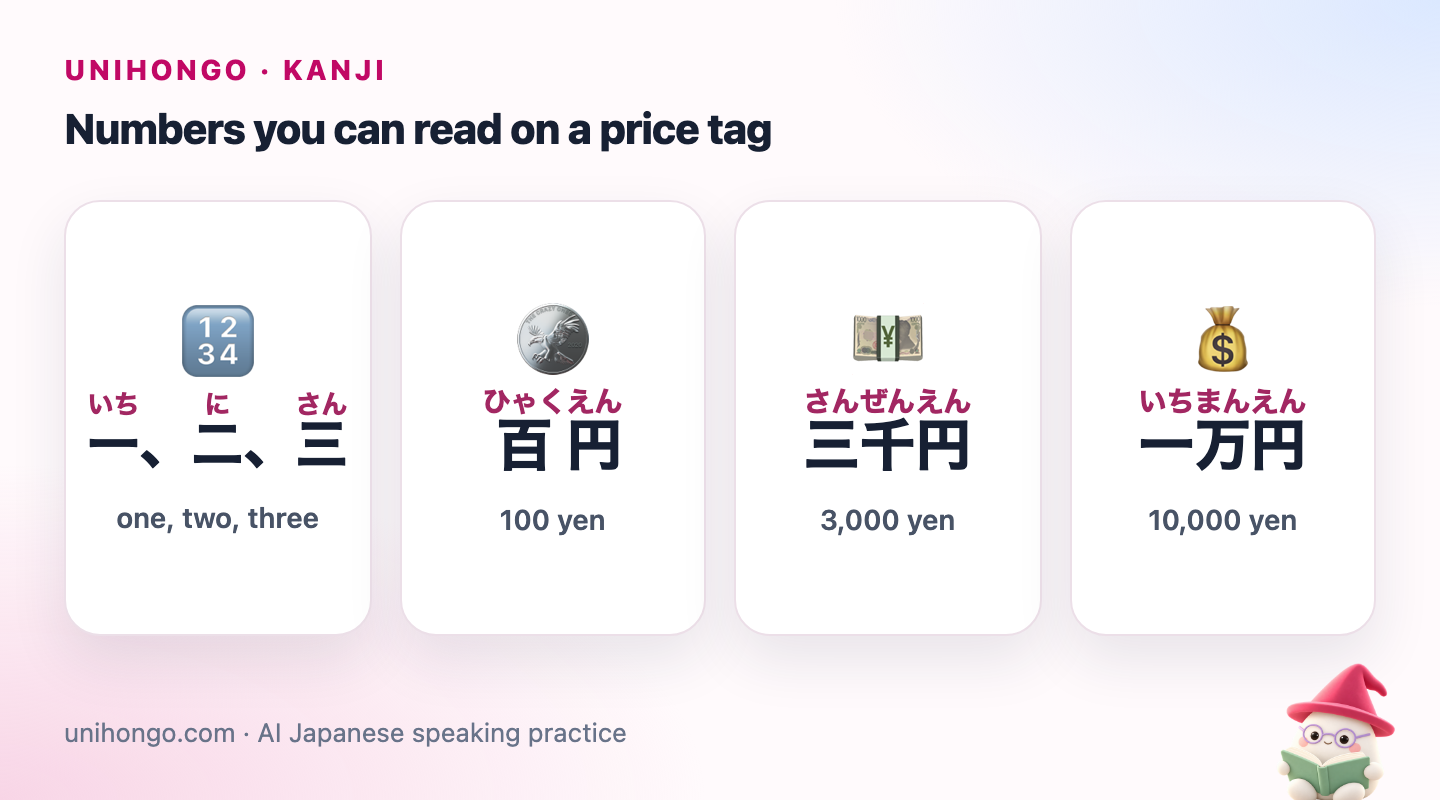
Start with the units, because they turn simple digits into real prices. The kanji 円, en, yen, follows the number, just like the counters you will meet later.
| Japanese | Romaji | Meaning |
|---|---|---|
| 一、二、三 | ichi, ni, san | one, two, three |
| 百円 | hyakuen | 100 yen |
| 三千円 | sanzen'en | 3,000 yen |
| 一万円 | ichiman'en | 10,000 yen |
Notice that 千 and 万 already mean one thousand and ten thousand; you add 一 in front of 万 (一万) but usually not in front of 百 or 千 (百, not 一百; 千, not 一千, except in some formal writing).
One to ten, each with an everyday word
Here are the ten digits with a common word for each. The words show the readings you actually hear, including the native ones such as hito, futa and nano.
| Japanese | Romaji | Meaning |
|---|---|---|
| 一人 | hitori | one person, alone |
| 二人 | futari | two people |
| 三月 | sangatsu | March |
| 四時 | yoji | four o'clock |
| 五円 | goen | five yen |
| 六本 | roppon | six long objects |
| 七日 | nanoka | the seventh day of the month |
| 八百屋 | yaoya | greengrocer |
| 九時 | kuji | nine o'clock |
| 十分 | juppun | ten minutes |
Readings of the number kanji
The on readings are what you use to count; the kun readings appear in native counting with つ and in a handful of fixed words.
| Kanji | On reading | Kun reading | Example |
|---|---|---|---|
| 一 | ichi, itsu | hito(tsu) | 一つ hitotsu, one thing |
| 二 | ni | futa(tsu) | 二つ futatsu, two things |
| 三 | san | mi(ttsu) | 三つ mittsu, three things |
| 四 | shi | yon, yo(ttsu) | 四人 yonin, four people |
| 五 | go | itsu(tsu) | 五つ itsutsu, five things |
| 六 | roku | mu(ttsu) | 六つ muttsu, six things |
| 七 | shichi | nana(tsu) | 七つ nanatsu, seven things |
| 八 | hachi | ya(ttsu) | 八つ yattsu, eight things |
| 九 | ku, kyū | kokono(tsu) | 九つ kokonotsu, nine things |
| 十 | jū | tō | 十 tō, ten things |
| 百 | hyaku | (none common) | 百円 hyakuen, 100 yen |
| 千 | sen | chi | 千円 sen'en, 1,000 yen |
| 万 | man, ban | (none common) | 一万 ichiman, 10,000 |
万 is read ban in 万歳, banzai, and 万一, man'ichi, means just in case. On formal documents and money envelopes you may see complex forms such as 壱 for one or 弐 for two; these daiji exist to stop people altering amounts, and you only need to recognise them.
Big numbers and the sound changes
Japanese builds numbers like a calculator: digit plus unit, from largest to smallest. 2,026 is 二千二十六, ni-sen ni-jū roku. The big difference from English is that the next unit after 千 is 万, ten thousand, so one million is 百万, a hundred ten-thousands.
A few combinations change their sound. These are worth memorising as whole words because you hear them every time you pay.
| Japanese | Romaji | Meaning |
|---|---|---|
| 三百 | sanbyaku | 300 |
| 六百 | roppyaku | 600 |
| 八百 | happyaku | 800 |
| 三千 | sanzen | 3,000 |
| 八千 | hassen | 8,000 |
| 十万 | jūman | 100,000 |
| 百万 | hyakuman | 1,000,000 |
| 二千二十六年 | nisen nijūroku nen | the year 2026 |
Counter kanji you will use every day
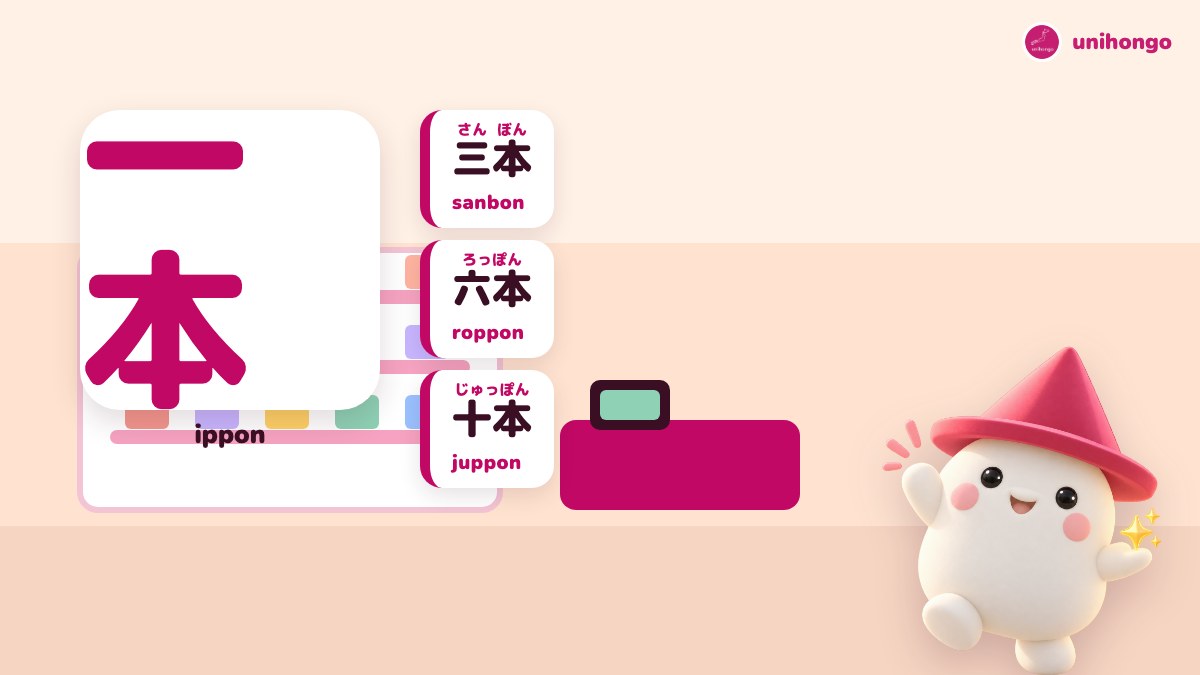
Japanese puts a counter after the number, chosen by the shape or type of the thing. The counter kanji are short and common, and the sound changes follow patterns: 1, 6, 8 and 10 often double the next consonant, and 3 often softens it.
| Counter | Used for | Examples |
|---|---|---|
| 本 hon | Long, thin things: bottles, pens, umbrellas | 一本 ippon, 三本 sanbon, 六本 roppon |
| 枚 mai | Flat things: paper, tickets, shirts | 一枚 ichimai, 二枚 nimai |
| 個 ko | Small, round or general objects | 一個 ikko, 八個 hakko or hachiko |
| 人 nin | People (but 一人 hitori, 二人 futari) | 三人 sannin, 四人 yonin |
| 回 kai | Times, occurrences | 一回 ikkai, 三回 sankai |
| 階 kai | Floors of a building | 一階 ikkai, 三階 sangai |
| 歳 sai | Age in years | 一歳 issai, 二十歳 hatachi |
| 匹 hiki | Small animals, fish, insects | 一匹 ippiki, 三匹 sanbiki |
二十歳 is read hatachi, a special word for twenty years old. You may also see 才 used for age on shop signs and in casual writing, as a simpler stand-in for 歳.
Counting at the shop
The convenience store is the easiest place to practise counters, because you buy bottles, rice balls and bags every day. Listen for the clerk's counters as well: many staff say 一点, itten, one item, when they scan.
| Japanese | Romaji | Meaning |
|---|---|---|
| お茶を二本ください。 | Ocha o nihon kudasai. | Two bottles of tea, please. |
| おにぎりを三個ください。 | Onigiri o sanko kudasai. | Three rice balls, please. |
| 袋は一枚でいいです。 | Fukuro wa ichimai de ii desu. | One bag is fine. |
| 全部で八百五十円です。 | Zenbu de happyaku gojū en desu. | Clerk: That's 850 yen altogether. |
| 千円でお願いします。 | Sen'en de onegai shimasu. | Here's 1,000 yen. |
Look-alikes and common mistakes
- 千 (thousand) vs 干 (dry) vs 午 (noon): 千 starts with a slanting stroke; 干 has two flat strokes; 午 has a slanting stroke and two flat ones.
- 万 (ten thousand) vs 方 (direction, way): 方 has a dot on top.
- 八 (eight) vs 人 (person) vs 入 (enter): look at which stroke is longer and where they meet.
- 四 (four) vs 西 (west): 西 has a flat line on top and the legs inside are straight.
- Saying 一千 for 1,000 in speech: Japanese says just sen. Saying 十千 for 10,000: the word is 一万.
- Saying ichinin for one person: it is hitori, and two people is futari.
Writing tips for the numbers
Number kanji are the first characters Japanese children write, and stroke order matters because it shapes the balance. 十 is written horizontal first, then vertical. 九 starts with the slanting stroke on the left, then the hooked stroke. 千 is written slanting stroke, horizontal, then vertical.
In vertical writing, numbers usually stay in kanji: 三月二十日 for 20 March. In horizontal writing Arabic numerals are more common. On forms, follow the example on the form itself.
Dates are where the native readings come back. The first ten days of the month use them: 一日 tsuitachi, 二日 futsuka, 三日 mikka, 四日 yokka, 五日 itsuka, up to 十日 tōka. After that, the on readings take over, with two exceptions worth knowing: 十四日 jūyokka and 二十日 hatsuka. Months are simple by comparison: number plus 月, gatsu, with 四月 shigatsu, 七月 shichigatsu and 九月 kugatsu as the fixed readings.
| Japanese | Romaji | Meaning |
|---|---|---|
| 三月二十日 | sangatsu hatsuka | 20 March |
| 二十歳 | hatachi | twenty years old |
Make counters automatic
Counters only become automatic when you hear and say them fast. Type to Mocchi: /quiz counters 本, 枚 and 個 with sound changes, ten questions. Mocchi asks one at a time, explains the change when you slip, for example why 六本 is roppon, and keeps a note of the ones you missed for next time.
For listening speed, play Listen & Pick in Unihongo's games with a set of number and counter words. Hearing happyaku or sanbon and picking the right answer in a second is exactly the skill you need at a busy till.