
Ask about hobbies, then read the answers
The question 趣味は何ですか opens most hobby conversations. The answers you hear most often contain one of a small set of kanji words, and three of them appear below.
In a self-introduction, people often mention a hobby right after their name and job, so expect the question early when you meet colleagues, classmates or a language partner. The answer can be a single noun, 野球です, or a full sentence, 野球をするのが好きです, I like playing baseball. Both are natural; the full sentence sounds a little warmer and gives the other person something to ask about.
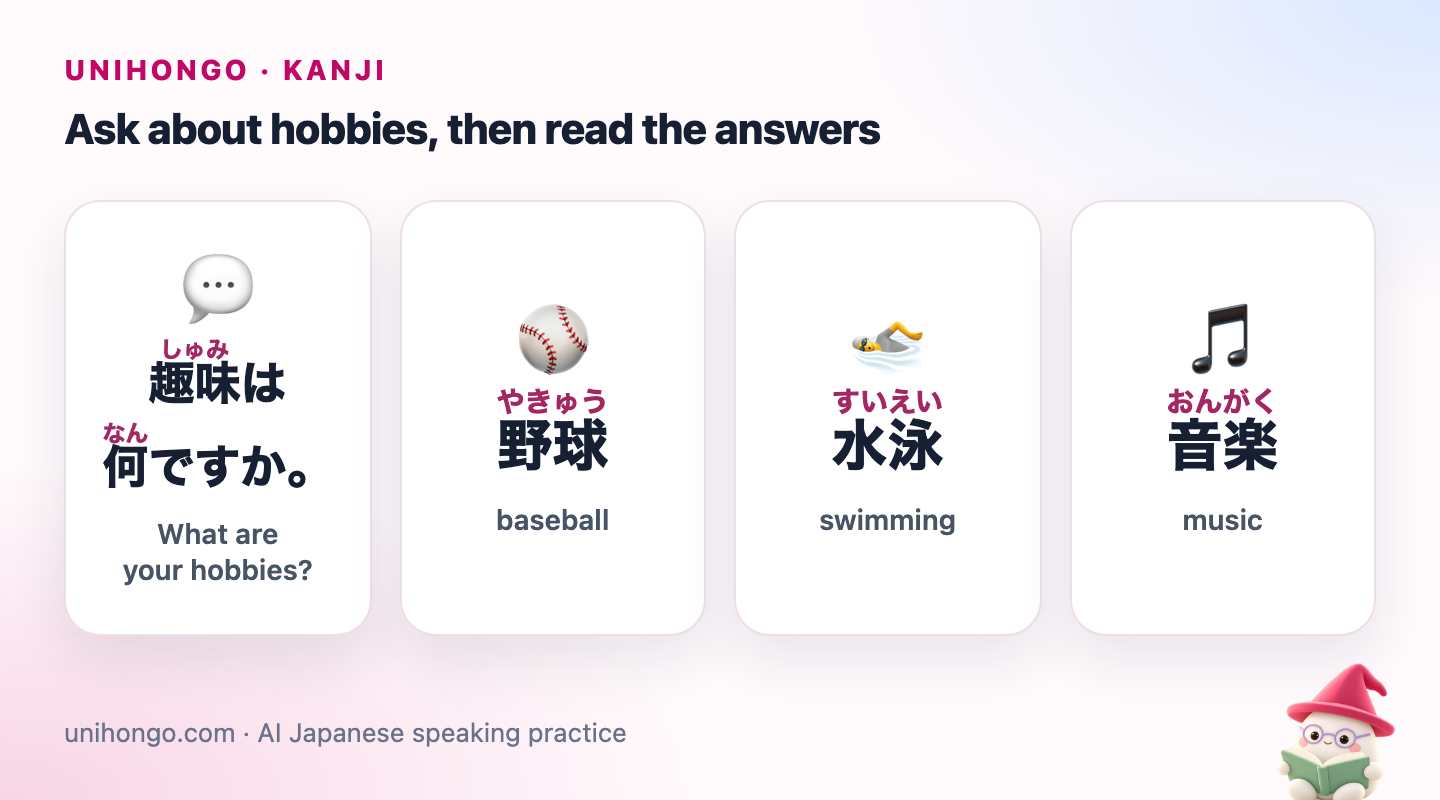
| Japanese | Romaji | Meaning |
|---|---|---|
| 趣味は何ですか。 | Shumi wa nan desu ka. | What are your hobbies? |
| 野球 | yakyū | baseball |
| 水泳 | suiei | swimming |
| 音楽 | ongaku | music |
Fourteen hobby kanji in common words
Each word uses one or two of the theme kanji. Several, such as 水, 音 and 絵, are taught in the first two years of Japanese primary school.
| Japanese | Romaji | Meaning |
|---|---|---|
| 運動 | undō | exercise, physical activity |
| 運動会 | undōkai | school sports day |
| 絵 | e | picture, painting |
| 映画 | eiga | film, movie |
| 歌 | uta | song |
| 読書 | dokusho | reading (as a hobby) |
| 楽しい | tanoshii | fun, enjoyable |
| 泳ぐ | oyogu | to swim |
| 音 | oto | sound |
| 卓球 | takkyū | table tennis |
| 味 | aji | taste, flavour |
Readings at a glance
The on reading usually appears in two-kanji words; the kun reading appears in verbs and adjectives. 楽 shows how one kanji can carry two meanings: fun in 楽しい and music in 音楽.
| Kanji | On reading | Kun reading | Example |
|---|---|---|---|
| 運 | un | hako(bu) | 運動 undō, exercise |
| 動 | dō | ugo(ku) | 動く ugoku, to move |
| 野 | ya | no | 野球 yakyū, baseball |
| 球 | kyū | tama | 地球 chikyū, the Earth |
| 水 | sui | mizu | 水泳 suiei, swimming |
| 泳 | ei | oyo(gu) | 泳ぐ oyogu, to swim |
| 音 | on, in | oto, ne | 音楽 ongaku, music |
| 楽 | gaku, raku | tano(shii) | 楽器 gakki, instrument |
| 絵 | kai, e | (none) | 絵本 ehon, picture book |
| 趣 | shu | omomuki | 趣味 shumi, hobby |
| 味 | mi | aji | 趣味 shumi, hobby |
| 映 | ei | utsu(ru) | 映画 eiga, film |
| 画 | ga, kaku | (none) | 漫画 manga, comics |
| 歌 | ka | uta, uta(u) | 歌手 kashu, singer |
運 also means luck: 運がいい, un ga ii, means lucky. 絵 is read e on its own, which is an on reading even though it sounds like a native word.
Sports with kanji names
These are the sports you will see in kanji on club lists, school notices and TV listings. Martial arts end in 道, dō, the way, which suggests a discipline rather than just a game.
School and university clubs are named with 部, bu: 野球部, yakyūbu, the baseball club; 水泳部, suieibu, the swimming club. A common question for students is 何部ですか, which club are you in.
| Japanese | Romaji | Meaning |
|---|---|---|
| 野球部 | yakyūbu | baseball club |
| 陸上 | rikujō | track and field |
| 柔道 | jūdō | judo |
| 剣道 | kendō | kendo |
| 空手 | karate | karate |
| 相撲 | sumō | sumo |
| 登山 | tozan | mountain climbing |
The right verb for each hobby
Hobby nouns are not all used with する. Japanese pairs many hobbies with their own verb, and using the right one sounds far more natural. Sports are usually する or やる; arts and media have specific verbs.
| Japanese | Romaji | Meaning |
|---|---|---|
| 野球をします。 | Yakyū o shimasu. | I play baseball. |
| 絵を描きます。 | E o kakimasu. | I draw or paint pictures. |
| 音楽を聴きます。 | Ongaku o kikimasu. | I listen to music. |
| 映画を見ます。 | Eiga o mimasu. | I watch films. |
| 歌を歌います。 | Uta o utaimasu. | I sing songs. |
| ギターを弾きます。 | Gitā o hikimasu. | I play the guitar. |
In casual speech, やる often replaces する for sports and games: サッカーやってる?, do you play football? It sounds relaxed and is very common among friends, but stick to します in polite conversation and in writing.
A frequent learner mistake is ギターをします or ピアノをプレーします. Instruments with strings or keys take 弾く, hiku; wind instruments take 吹く, fuku. 絵を描く uses 描, not 書, because it is drawing rather than writing words, though you will see both in casual text.
Where you meet hobby kanji
Community centres post timetables for classes such as 水泳教室, swimming lessons, and 絵画教室, painting classes. Gyms label their pools and studios. Cinemas print 映画 everywhere, and karaoke shops show 歌 on screens. School notices about 運動会 appear every autumn, and in many workplaces a self-introduction includes 趣味.
If you live in Japan, your local community centre, often called 公民館, kōminkan, or a similar name, can be an easy, low-cost way to join a hobby class and meet neighbours. The notices are written in plain Japanese with lots of these kanji, so reading one is real practice. Look for the day and time, the place, the fee, and whether you need to apply in advance, 事前申し込み, jizen mōshikomi.
| Japanese | Romaji | Meaning |
|---|---|---|
| 水泳教室 | suiei kyōshitsu | swimming lessons |
| 参加者募集 | sankasha boshū | participants wanted |
| 初心者歓迎 | shoshinsha kangei | beginners welcome |
| 雨天中止 | uten chūshi | cancelled if it rains |
Mini dialogue: small talk about hobbies
This is polite small talk between new acquaintances, the kind you have at work or a language exchange. Notice how both speakers add a follow-up question rather than stopping at one answer.
| Japanese | Romaji | Meaning |
|---|---|---|
| 趣味は何ですか。 | Shumi wa nan desu ka. | Coworker: What are your hobbies? |
| 水泳です。週に二回泳いでいます。 | Suiei desu. Shū ni nikai oyoide imasu. | You: Swimming. I swim twice a week. |
| すごいですね。どこで泳いでいますか。 | Sugoi desu ne. Doko de oyoide imasu ka. | Coworker: Impressive. Where do you swim? |
| 駅の近くのジムです。趣味は何ですか。 | Eki no chikaku no jimu desu. Shumi wa nan desu ka. | You: At a gym near the station. What about your hobbies? |
| 絵を描くことです。最近は水彩画です。 | E o kaku koto desu. Saikin wa suisaiga desu. | Coworker: Drawing. Lately, watercolours. |
| いいですね。今度見せてください。 | Ii desu ne. Kondo misete kudasai. | You: Lovely. Please show me sometime. |
Look-alikes and writing tips
- 泳 (swim) vs 永 (eternal) vs 氷 (ice): 泳 adds the water radical 氵 to 永; 永 has a dot on top, while 氷 has a dot on the left instead.
- 楽 (fun, music) vs 薬 (medicine): 薬 has the grass radical on top.
- 球 (ball) vs 求 (seek) vs 救 (rescue): 球 adds the king-like radical 王 on the left.
- 動 (move) vs 働 (work): 働 adds the person radical 亻; a person who moves is working.
- 絵 (picture) is 糸 (thread) plus 会 (meet); write the thread radical narrow so 会 has room.
- 味 (taste) vs 妹 (younger sister): both use 未 on the right; 味 has 口, mouth, and 妹 has 女, woman.
Talk about your hobbies, not just read them
Start with Mocchi: type /vocab hobbies and sports kanji, with example sentences about me, and tell Mocchi your actual hobbies. Mocchi builds a short word set around them, keeps track of what you like, and can reuse those hobbies in later quizzes and reading.
Then have the conversation. In AI Sensei, choose the hobbies topic and ask Ibuki-sensei to play a new coworker who asks about your weekend. Answer with the verbs from this post, ask a question back, and read the session report afterwards for the verb pairs you mixed up.