
Four office-mood words to learn first
These four describe the moods you notice in any workplace: tension before a deadline, a hectic rush, a calm afternoon and the exhaustion at the end of it all. You will hear them at the coffee machine, in the lift and in messages between coworkers.
All four are gitaigo: they describe a feeling or a state, not a sound. Piripiri, batabata and guttari are often used with suru or da; nonbiri works with suru and dekiru.
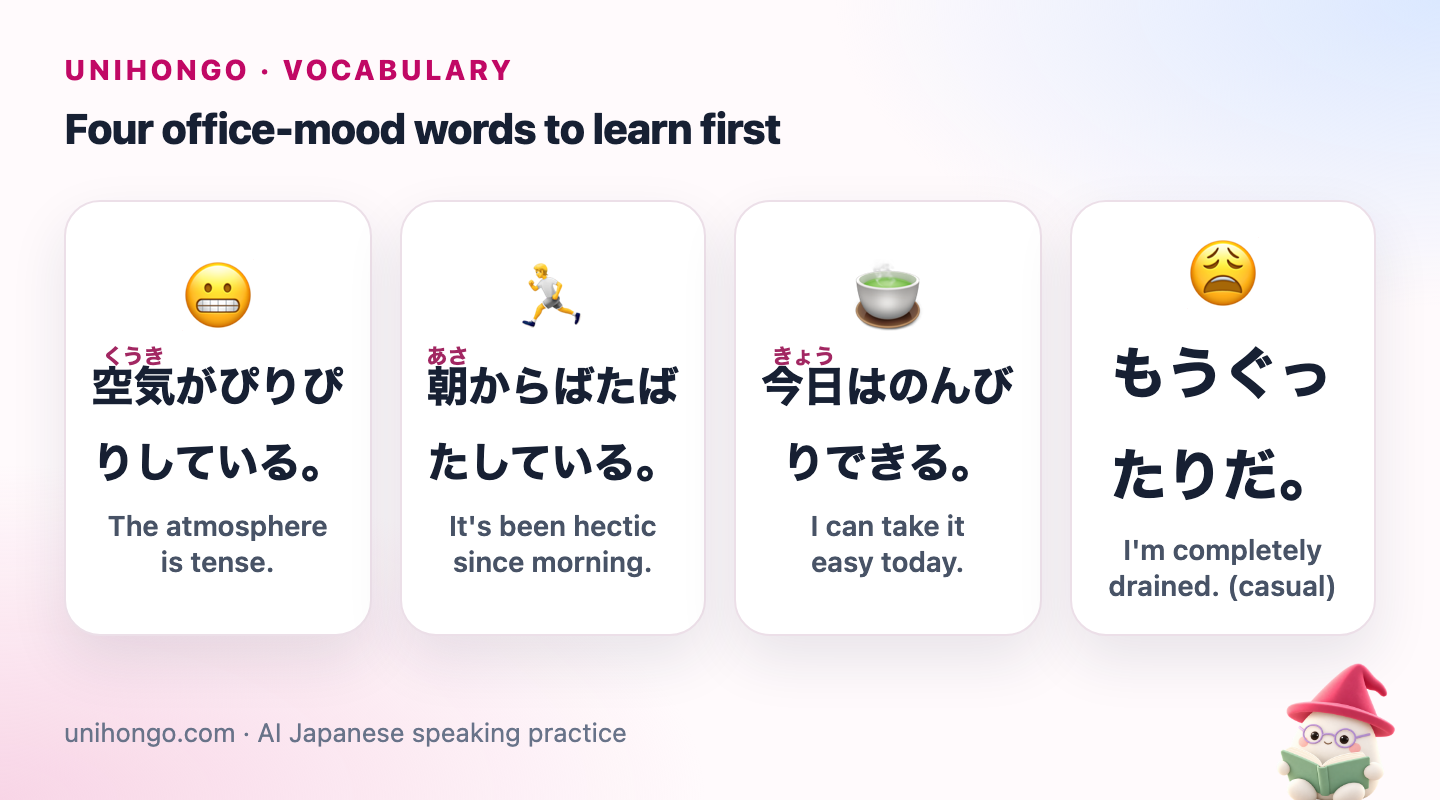
| Japanese | Romaji | Meaning |
|---|---|---|
| 空気がぴりぴりしている。 | Kūki ga piripiri shite iru. | The atmosphere is tense. |
| 朝からばたばたしている。 | Asa kara batabata shite iru. | It's been hectic since morning. |
| 今日はのんびりできる。 | Kyō wa nonbiri dekiru. | I can take it easy today. |
| もうぐったりだ。 | Mō guttari da. | I'm completely drained. (casual) |
Tension: piripiri, gisugisu, don'yori
Piripiri describes nervous, on-edge tension: before a deadline, during an audit, when a big client is visiting. It can describe the atmosphere or a person who is short-tempered and easily irritated. Gisugisu is different: it describes strained, unfriendly relationships, where people are cold or prickly with each other. Don'yori is heavy and gloomy, like a grey sky; it describes a dull, low-energy mood, often on a Monday morning or after bad news.
These words are useful for reading the room, but be careful who hears them. Telling a close coworker that the manager is piripiri today is a friendly warning; saying it to the manager is not.
| Japanese | Romaji | Meaning |
|---|---|---|
| 締め切り前で、部長がぴりぴりしている。 | Shimekiri mae de, buchō ga piripiri shite iru. | The manager is on edge before the deadline. |
| 最近、チームの雰囲気がぎすぎすしている。 | Saikin, chīmu no fun'iki ga gisugisu shite iru. | Lately, relations in the team are strained. |
| 月曜の朝はなんとなくどんよりしている。 | Getsuyō no asa wa nantonaku don'yori shite iru. | Monday mornings feel kind of gloomy. |
| 今日は課長に話しかけないほうがいいよ。 | Kyō wa kachō ni hanashikakenai hō ga ii yo. | Coworker: Better not talk to the section chief today. (casual) |
Busy and efficient: batabata and tekipaki
Batabata originally describes the noisy flapping and footsteps of people rushing about, and in the office it means hectic, rushed and short of time. It is one of the most useful words for working in Japan, because it gives a soft, face-saving reason for a delay without blaming anyone. Batabata shite orimashite, with the humble form of iru, appears in countless emails and phone calls.
Tekipaki is the positive side of being busy: quick, efficient and well organised. It is a compliment, often used about a new colleague who learns fast or someone who handles a crisis calmly.
| Japanese | Romaji | Meaning |
|---|---|---|
| 年度末でばたばたしています。 | Nendomatsu de batabata shite imasu. | It's hectic with the end of the fiscal year. (polite) |
| ばたばたしておりまして、ご連絡が遅くなり申し訳ありません。 | Batabata shite orimashite, gorenraku ga osoku nari mōshiwake arimasen. | Things have been hectic, and I apologise for my late reply. (business) |
| 田中さんはてきぱき仕事をするね。 | Tanaka-san wa tekipaki shigoto o suru ne. | Tanaka-san works so efficiently. (casual) |
| てきぱきと準備を進めてくれて助かりました。 | Tekipaki to junbi o susumete kurete tasukarimashita. | Thank you for getting things ready so efficiently. (polite) |
Relief and calm: hotto, nonbiri, mattari
Hotto is the feeling of relief when tension drops: a presentation is over, a client says yes, an error turns out to be nothing. Hotto suru is the verb, and hotto hitoiki tsuku, to take a breather, is a common set phrase. Nonbiri is unhurried and carefree, the standard word for a relaxed pace. Mattari is a casual cousin, popular with younger speakers, for lazing in a mellow, comfortable way.
Nonbiri can also be a gentle criticism: someone who is too nonbiri may be seen as slow or not taking things seriously. Context and tone decide.
| Japanese | Romaji | Meaning |
|---|---|---|
| 発表が終わってほっとした。 | Happyō ga owatte hotto shita. | I was relieved when the presentation was over. |
| ちょっとほっと一息つきましょう。 | Chotto hotto hitoiki tsukimashō. | Let's take a short breather. (polite) |
| 金曜の午後はのんびりした雰囲気だ。 | Kin'yō no gogo wa nonbiri shita fun'iki da. | Friday afternoons have a relaxed feel. |
| 昼休みは休憩室でまったりしている。 | Hiruyasumi wa kyūkeishitsu de mattari shite iru. | At lunch I chill out in the break room. (casual) |
The end of the day: guttari and waiwai
Guttari is limp, drained exhaustion, the state of sinking into a chair after a long day. It is more physical than tsukareta and more casual. Waiwai is the cheerful noise of a group having fun together: a team lunch, a nomikai, a celebration after a project ends. It is warm and positive.
Many workplaces end the day with otsukaresama desu, thank you for your hard work. It is a greeting, not a comment on tiredness, and you can say it to anyone, including people senior to you.
| Japanese | Romaji | Meaning |
|---|---|---|
| 残業続きでぐったりしている。 | Zangyō tsuzuki de guttari shite iru. | I'm worn out from all the overtime. |
| 飲み会でわいわい盛り上がった。 | Nomikai de waiwai moriagatta. | We had a lively time at the work party. |
| お疲れさまです。お先に失礼します。 | Otsukaresama desu. Osaki ni shitsurei shimasu. | Thanks for your hard work. I'll be leaving now. |
Who can you say it about?
The safest rule is that these words describe your own state or the general atmosphere. Describing a specific senior person's mood, especially to their face or in writing, can sound like gossip or criticism. The table shows where each word is comfortable.
| Japanese | Romaji | Meaning |
|---|---|---|
| 無事に終わって、ほっとしました。 | Buji ni owatte, hotto shimashita. | I'm relieved it went smoothly. (polite) |
| Word | About yourself | About a senior person | In a work email |
|---|---|---|---|
| piripiri | Fine, casual | Only in private with close coworkers | Avoid |
| gisugisu | Rare | Avoid | Avoid |
| batabata | Fine | Careful | Common in the humble form |
| tekipaki | Sounds boastful | Fine as praise | Fine as praise |
| hotto | Fine | Fine | Fine: hotto shimashita |
| nonbiri | Fine | Can sound critical | Rare |
| guttari | Casual | Avoid | Avoid |
A tense Monday and a relaxed Friday
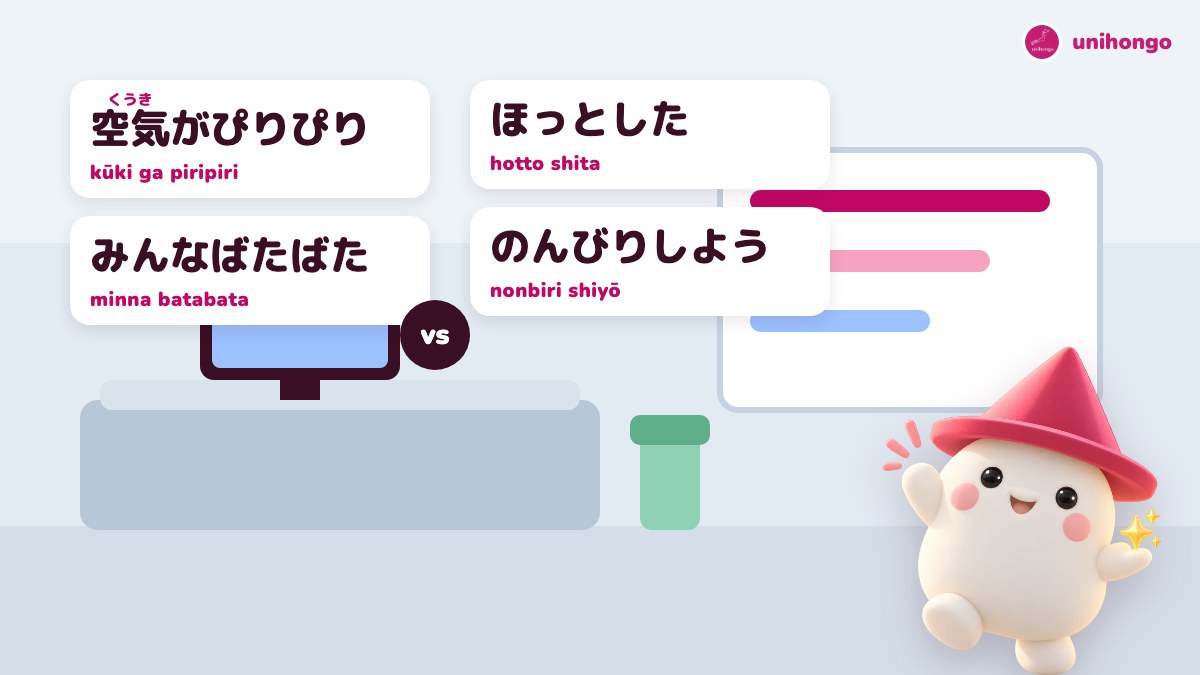
The same office can feel completely different on two days of the same week. On Monday, a deadline is looming and everyone is on edge; by Friday, the project is delivered and the mood is light. Here is a short coffee-break chat between two coworkers on each day.
| Japanese | Romaji | Meaning |
|---|---|---|
| 今日、なんかぴりぴりしてない? | Kyō, nanka piripiri shitenai? | Coworker (Monday): Isn't it kind of tense today? |
| 締め切りが水曜だからね。みんなばたばたしてる。 | Shimekiri ga suiyō dakara ne. Minna batabata shiteru. | You: The deadline's Wednesday. Everyone's rushing. |
| 無事に納品できて、ほっとしたね。 | Buji ni nōhin dekite, hotto shita ne. | Coworker (Friday): What a relief we delivered it. |
| うん。今日はのんびりしようか。 | Un. Kyō wa nonbiri shiyō ka. | You: Yeah. Shall we take it easy today? |
| 月曜はぐったりだったけどね。 | Getsuyō wa guttari datta kedo ne. | Coworker: Though I was wiped out on Monday. |
Common learner mistakes
- Telling your boss they seem piripiri. Even if true, it sounds like criticism; ask Oisogashii desu ka, are you busy?, instead.
- Writing guttari or mattari in a client email. Both are casual; use tsukaremashita or simply leave the feeling out.
- Using batabata as a full excuse. In an email, follow it with an apology: batabata shite orimashite, mōshiwake arimasen.
- Praising yourself as tekipaki. It sounds boastful; let others say it about you.
- Mistaking otsukaresama desu for a comment on tiredness. It is a routine greeting, used whether or not anyone is tired.
Read the room, then say it right
The hard part with these words is register, so practise both sides. Write a three-line message to a coworker about your week using batabata and hotto, and a two-line email to a client apologising for a late reply. Send both to Mocchi with /correct; Mocchi fixes the grammar, points out any word that is too casual for the client, and keeps a note of the register slips so a later review can check them again.
Then try it in conversation. Ask Ibuki-sensei in AI Sensei to play a coworker at the coffee machine on a stressful Monday, and to switch to a polite manager role halfway through. Describe the mood, explain a delay and accept praise modestly, and use the session report to see where your register drifted.