
Time, change and impermanence in four kanji
Idioms about time fall into two moods. Some celebrate movement: progress, variety, learning. Others reflect on loss: nothing lasts, glory fades, a meeting will not return. Recognising the mood tells you where an idiom belongs, from a cheerful product launch to a farewell letter.
The most famous of all is a phrase many visitors see on calligraphy and souvenirs. It works as a whole sentence, and it is the line that opens this set.
| Japanese | Romaji | Meaning |
|---|---|---|
| 一期一会を大切に。 | Ichigo ichie o taisetsu ni. | Treasure each once-in-a-lifetime meeting. |
| 今日の出会いも一期一会ですね。 | Kyō no deai mo ichigo ichie desu ne. | Today's meeting is a once-in-a-lifetime one too. (polite) |
The four headline idioms
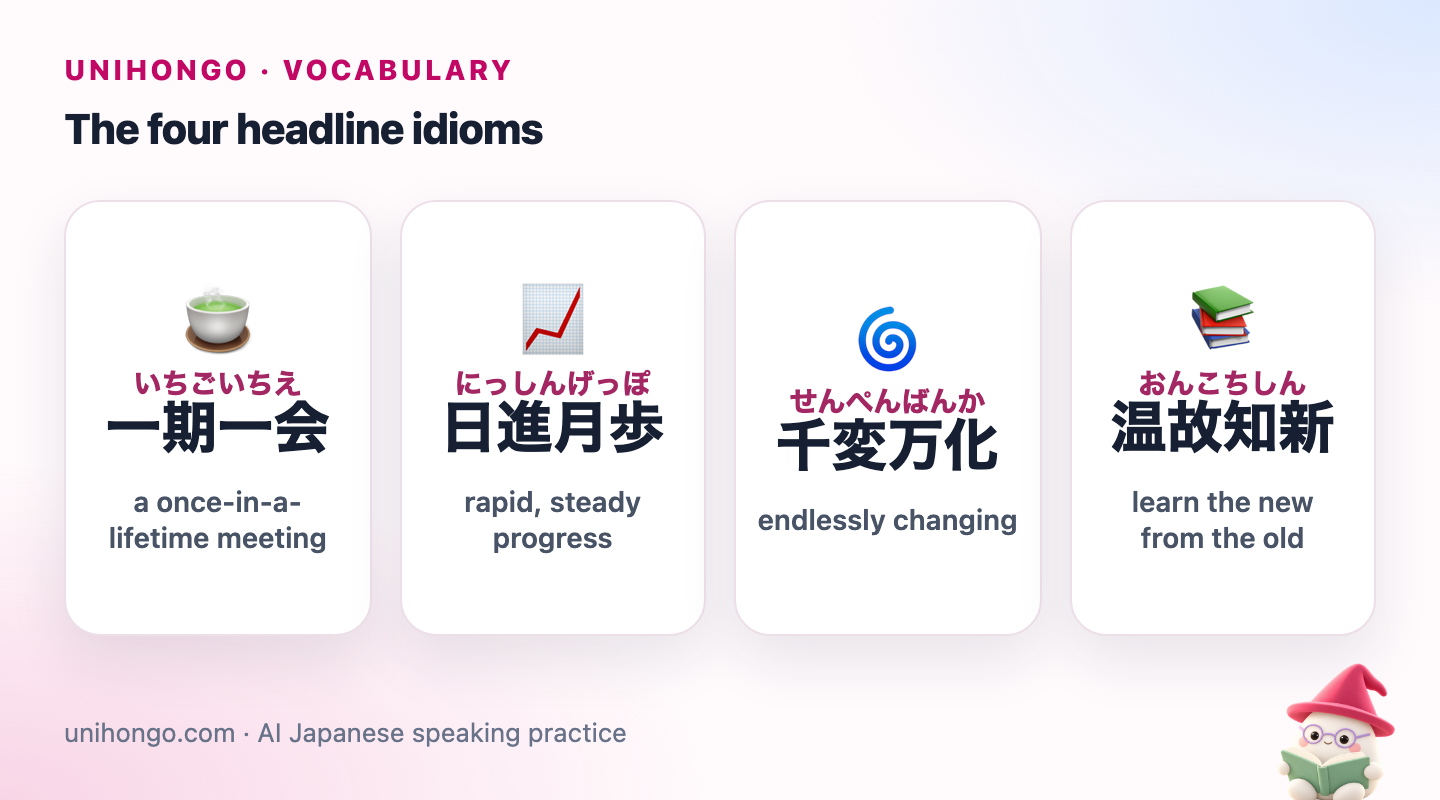
| Japanese | Romaji | Meaning |
|---|---|---|
| 一期一会 | ichigo ichie | a once-in-a-lifetime meeting |
| 日進月歩 | nisshin geppo | rapid, steady progress |
| 千変万化 | senpen banka | endlessly changing |
| 温故知新 | onko chishin | learn the new from the old |
Watch the sound changes in the readings. 日進 is read nisshin, not nichishin, and 月歩 is geppo, not getsuho: the small tsu and the p sound appear where two kanji meet. 一期 is read ichigo here, not ikki, which is a special reading used mainly in this idiom.
Literal picture and real meaning
| Idiom | Literal picture | Real meaning | Where you meet it |
|---|---|---|---|
| 一期一会 | One lifetime, one meeting | Treasure each encounter | Speeches, tea ceremony, calligraphy |
| 日進月歩 | Advance by the day, step by the month | Constant rapid progress | News about technology and medicine |
| 千変万化 | A thousand changes, ten thousand transformations | Changing in endless ways | Descriptions of nature, weather, art |
| 温故知新 | Warm up the old, know the new | Learn from the past to understand now | School mottos, essays, business talks |
| 朝令暮改 | Order in the morning, change by evening | Rules that keep changing | Complaints about policy or bosses |
| 栄枯盛衰 | Flourish and wither, rise and fall | The rise and fall of fortunes | History, business news |
温故知新 comes from the Analects of Confucius. 温 here means to review or revisit, not warm, which surprises many learners who know the kanji from 温かい. The idea is that revisiting what you already learned helps you see something new, a nice motto for reviewing old flashcards.
Five more idioms about time
| Japanese | Romaji | Meaning |
|---|---|---|
| 諸行無常 | shogyō mujō | all things are impermanent |
| あの店もなくなった。諸行無常だね。 | Ano mise mo nakunatta. Shogyō mujō da ne. | That shop's gone too. Nothing lasts, huh. (casual, wry) |
| 一日千秋 | ichijitsu senshū | a day feels like a thousand autumns |
| 一日千秋の思いで返事を待っています。 | Ichijitsu senshū no omoi de henji o matte imasu. | I'm waiting for the reply with great impatience. (poetic) |
| 朝令暮改 | chōrei bokai | rules changed morning and evening |
| ルールが朝令暮改で困る。 | Rūru ga chōrei bokai de komaru. | The rules keep changing, it's a pain. |
| 栄枯盛衰 | eiko seisui | rise and fall |
| 一進一退 | isshin ittai | one step forward, one step back |
| 病状は一進一退です。 | Byōjō wa isshin ittai desu. | The patient's condition goes up and down. |
Using them in sentences
These idioms are nouns, so they connect with だ/です, の or で. A few patterns cover nearly every use you will need.
| Japanese | Romaji | Meaning |
|---|---|---|
| 医療の技術は日進月歩です。 | Iryō no gijutsu wa nisshin geppo desu. | Medical technology advances every day. |
| 夕方の空は千変万化する。 | Yūgata no sora wa senpen banka suru. | The evening sky keeps changing. |
| 温故知新の気持ちで古典を読む。 | Onko chishin no kimochi de koten o yomu. | I read the classics to learn something new from the old. |
| Pattern | Example | Meaning |
|---|---|---|
| Noun + だ / です | 技術は日進月歩だ | Technology advances constantly |
| Noun + の + noun | 一期一会の出会い | A once-in-a-lifetime encounter |
| Noun + する | 空の色が千変万化する | The sky changes colour endlessly |
| Noun + を繰り返す | 一進一退を繰り返す | To go back and forth repeatedly |
Notice that 日進月歩 and 千変万化 describe things, not people. The subject is usually a field, a technology, a landscape or the weather. 一期一会 and 温故知新 are more often used as a principle you follow, which is why they appear with を大切にする (to value) or の精神で (in the spirit of).
When you write an essay or a speech, a simple and effective structure is to put the idiom at the start of a sentence, followed by a comma, then explain what it means for you: 温故知新、昔の教科書を読み直すと新しい発見があります, reviewing my old textbooks always teaches me something new. The comma creates the same small pause a speaker would make.
Breaking down 温故知新
This idiom rewards a kanji-by-kanji reading, because each character is common on its own. Once you see the structure, two verbs and two objects, you can read similar classical patterns more easily.
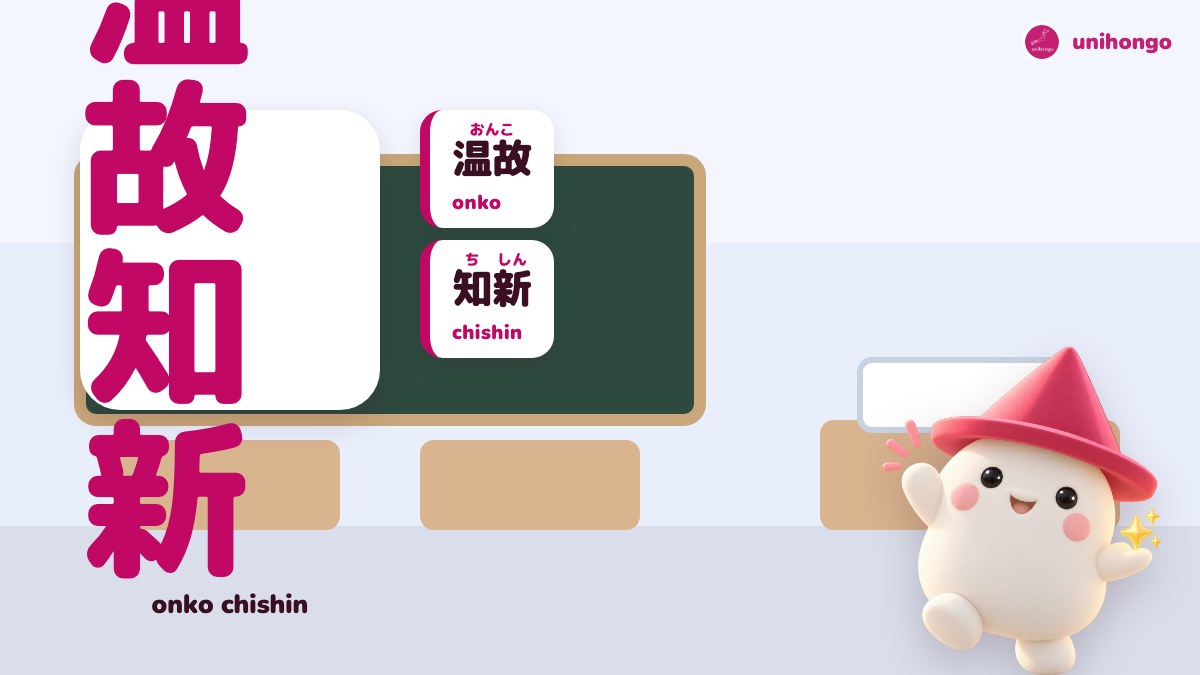
| Japanese | Romaji | Meaning |
|---|---|---|
| 温 | on | to revisit, review (here) |
| 故 | ko | old things, the past |
| 知 | chi | to know |
| 新 | shin | new things |
| 故きを温ねて新しきを知る。 | Furuki o tazunete atarashiki o shiru. | Revisit the old and learn the new. (classical reading) |
The last row is the traditional Japanese reading of the original Chinese line. You will rarely say it, but you may see it in a school or a museum, and it shows how a yojijukugo compresses a whole sentence.
Mistakes and register traps
A final point about register: these idioms are all fine in writing, but in conversation most people use only a few of them regularly. 一期一会, 日進月歩 and 一進一退 come up often enough in speech and the news. 朝令暮改 is common in complaints. The others you will mostly read rather than hear, so concentrate on recognising them first and producing them later.
- Using 一期一会 for any ordinary meeting. It suggests a special, probably unrepeatable encounter, so it sounds heavy for a weekly team chat.
- Reading 一期 as ikki. In this idiom it is ichigo; ikki appears in other words.
- Using 日進月歩 about your own Japanese. It is possible as a joke, but it normally describes a field, not one person.
- Using 諸行無常 at a real funeral as small talk. Its tone is solemn and literary; leave it to the speaker or the priest.
- Confusing 朝令暮改 with 臨機応変. Both involve change, but 朝令暮改 is a criticism (unstable rules) and 臨機応変 is praise (adapting well).
Impermanence and the classics
Several idioms in this set come from a Buddhist view of time in which nothing stays the same. The most famous expression of this idea in Japanese literature is the opening of the Tale of the Heike, a medieval war story about the rise and fall of a powerful clan. Many students in Japan learn its first lines at school, and two of this post's idioms appear in them: 諸行無常 in the first sentence, and the theme of 栄枯盛衰 throughout.
You do not need to read classical Japanese to enjoy the opening. Its first line says that the sound of the temple bell carries the echo of impermanence. If you mention it to Japanese friends, many will be able to continue the passage from memory, and it often leads to a good conversation about school days.
一期一会 belongs to a gentler side of the same idea. Because each moment passes, each meeting deserves full attention. It is closely associated with the tea ceremony, where a host prepares even a routine gathering as if it could never be repeated. Some people find the idea moving, others find it a little grand for daily use, which is why the idiom feels best on special occasions.
| Japanese | Romaji | Meaning |
|---|---|---|
| 祇園精舎の鐘の声、諸行無常の響きあり。 | Gion shōja no kane no koe, shogyō mujō no hibiki ari. | The bell of the Gion temple echoes the impermanence of all things. (classical) |
| 学校で暗記させられたんだよ。 | Gakkō de anki saseraretan da yo. | Friend: We had to memorise it at school. (casual) |
| 今を大切にしたいですね。 | Ima o taisetsu ni shitai desu ne. | I want to cherish the present. (polite) |
A short routine for these idioms
Start with Mocchi: paste a sentence such as AIの技術は日進月歩です and type /explain in front of it. Mocchi breaks it into parts, explains the idiom and the particles, and keeps a note of the idioms you studied so a later /review includes them.
Then play Vocabulary Dash on the games page with a set of flashcards for these nine idioms. Matching the idiom to its meaning at speed is good training for reading them in articles, where they appear without furigana.