
Why effort idioms are everywhere in Japan
Walk into a Japanese school gym and you will probably see a banner with four large kanji. Many of them are about effort, team spirit or not giving up. The same idioms reappear in graduation speeches, in the first-day greeting of a new employee and in a baseball player's interview after a win. Effort is a socially safe thing to talk about: you can praise it without boasting about talent.
Most of these idioms came from Chinese classics or Buddhist texts, which is why their kanji can look strange. You do not need the full history to use them, but a quick breakdown of the four characters makes them much easier to remember, and it tells you why some feel heavier than others.
| Japanese | Romaji | Meaning |
|---|---|---|
| 一生懸命がんばります。 | Isshōkenmei ganbarimasu. | I'll do my very best. (polite) |
| 一生懸命やったから悔いはない。 | Isshōkenmei yatta kara kui wa nai. | I gave it everything, so I have no regrets. (casual) |
The four headline idioms
These four are the core of the set. 一生懸命 is the one you can use today in any conversation. The other three are understood by almost every adult, but people mostly say them in speeches, write them in essays or read them in headlines.
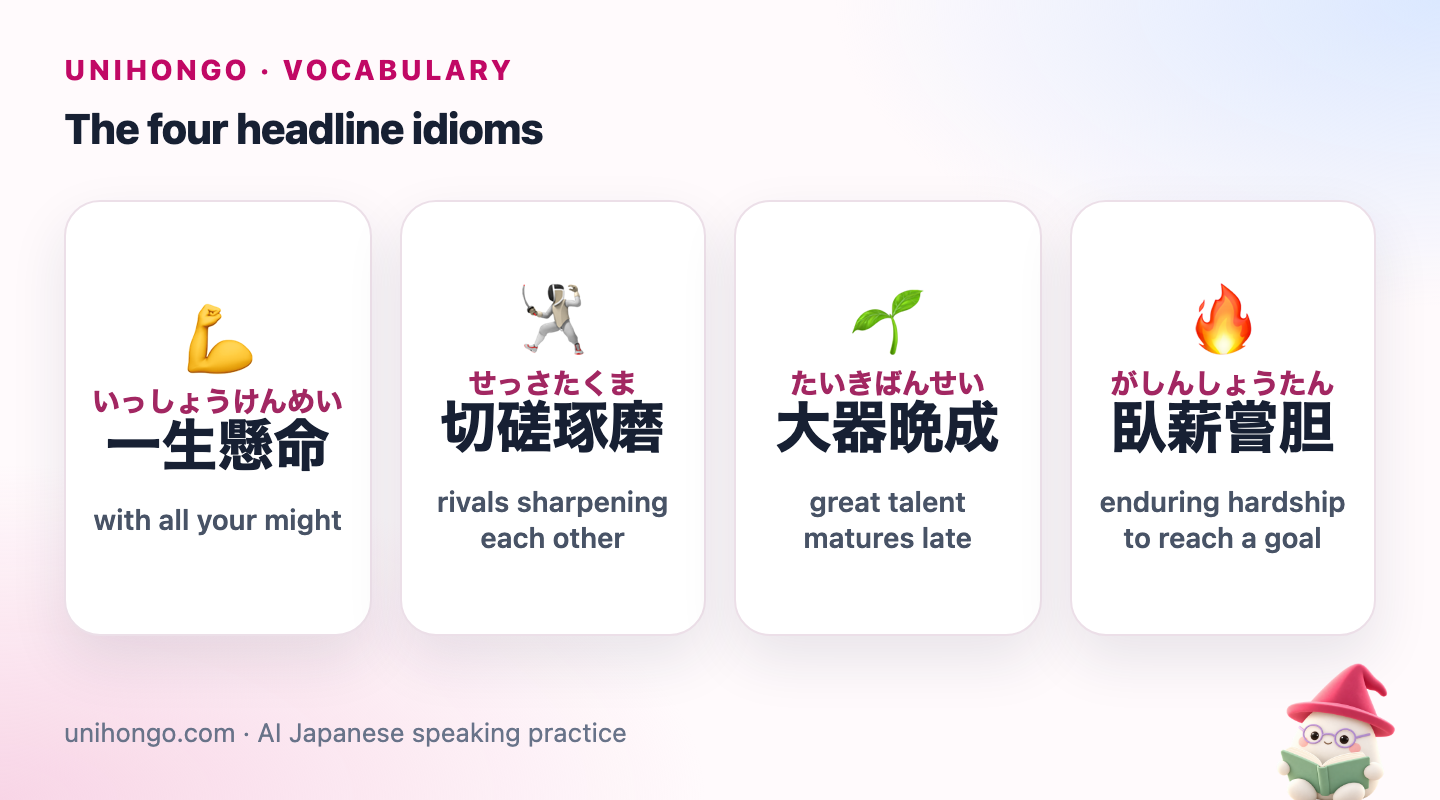
| Japanese | Romaji | Meaning |
|---|---|---|
| 一生懸命 | isshōkenmei | with all your might |
| 切磋琢磨 | sessa takuma | rivals sharpening each other |
| 大器晩成 | taiki bansei | great talent matures late |
| 臥薪嘗胆 | gashin shōtan | enduring hardship to reach a goal |
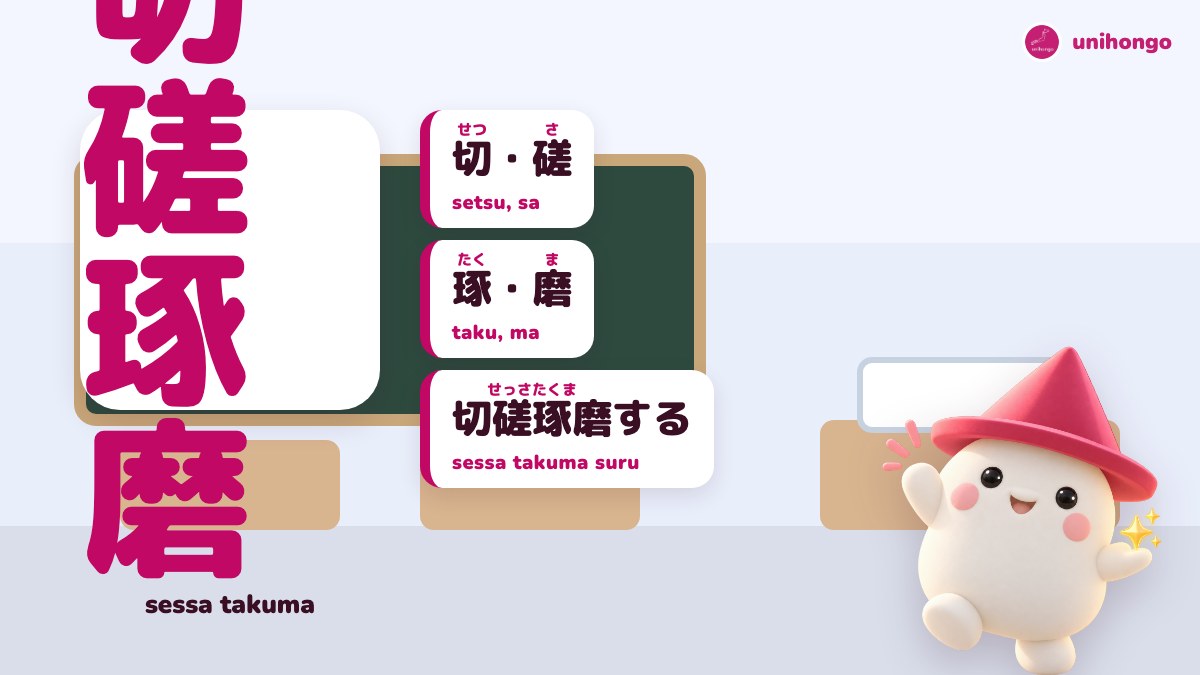
Notice the rhythm: most yojijukugo split into two halves of two kanji, and Japanese speakers pause very slightly between them. Saying sessa / takuma or taiki / bansei in two beats makes you sound natural and helps you remember the meaning of each half.
Kanji breakdown: literal meaning and real meaning
The literal meaning is often a picture, and the real meaning is what that picture stands for. Knowing the picture helps you guess when the idiom fits.
| Idiom | Literal picture | Real meaning | Closest English |
|---|---|---|---|
| 一生懸命 | Staking your whole life | Doing your utmost | Giving it your all |
| 切磋琢磨 | Cutting, filing, carving and polishing jade or stone | Improving together through rivalry | Iron sharpens iron |
| 大器晩成 | A great vessel takes long to finish | Big talent shows itself late | A late bloomer |
| 臥薪嘗胆 | Sleeping on firewood and tasting bitter gall | Enduring hardship to get revenge or reach a goal | Biding your time |
| 一念発起 | One thought sets you off | Making up your mind to change | Turning over a new leaf |
| 試行錯誤 | Trying and making errors | Learning by trial and error | Trial and error |
臥薪嘗胆 comes from a story about two rival kings in ancient China: one slept on firewood and the other licked a bitter gall bladder every day so that they would never forget their humiliation. That is why the idiom carries a sense of grim determination, often with an old defeat behind it. Use it for a team that lost the final last year and trained all winter, not for revising for a weekly quiz.
Five more effort idioms worth knowing
These complete the set. 試行錯誤 and 一念発起 are common in everyday adult conversation and in the news; 有言実行 is popular with politicians and athletes; 粉骨砕身 and 七転八起 belong mainly to formal speeches and written resolutions.
| Japanese | Romaji | Meaning |
|---|---|---|
| 一念発起 | ichinen hokki | resolving to make a fresh start |
| 一念発起して日本語を始めました。 | Ichinen hokki shite nihongo o hajimemashita. | I made up my mind and started Japanese. |
| 試行錯誤 | shikō sakugo | trial and error |
| 試行錯誤を重ねて、やっと完成した。 | Shikō sakugo o kasanete, yatto kansei shita. | After lots of trial and error, it's finally done. |
| 有言実行 | yūgen jikkō | doing what you said you would do |
| 今年は有言実行でいきます。 | Kotoshi wa yūgen jikkō de ikimasu. | This year I'll do exactly what I promise. |
| 粉骨砕身 | funkotsu saishin | working yourself to the bone |
| 粉骨砕身、努力いたします。 | Funkotsu saishin, doryoku itashimasu. | I will spare no effort. (very formal, humble) |
| 七転八起 | shichiten hakki | falling seven times, rising eight |
How they fit into a sentence
A yojijukugo behaves like an ordinary word, so the key question is which grammar slot it takes. Getting the slot wrong is the most common learner error with these idioms.
| Japanese | Romaji | Meaning |
|---|---|---|
| 弟は何でも一生懸命な人だ。 | Otōto wa nan demo isshōkenmei na hito da. | My younger brother puts his all into everything. |
| 同期と切磋琢磨しています。 | Dōki to sessa takuma shite imasu. | I'm pushing myself alongside the colleagues who joined with me. |
| 彼は大器晩成型だね。 | Kare wa taiki bansei gata da ne. | He's the late-bloomer type, isn't he? (casual) |
| 臥薪嘗胆の三年間でした。 | Gashin shōtan no sannenkan deshita. | It was three years of enduring and waiting. |
| Idiom | Typical pattern | Type |
|---|---|---|
| 一生懸命 | 一生懸命に働く / 一生懸命な人 | Adverb and na-adjective |
| 切磋琢磨 | 仲間と切磋琢磨する | Suru verb |
| 大器晩成 | 大器晩成型の人 / 大器晩成だ | Noun |
| 臥薪嘗胆 | 臥薪嘗胆の日々 | Noun, used with の |
| 一念発起 | 一念発起して〜する | Suru verb, usually in the te-form |
| 試行錯誤 | 試行錯誤を重ねる / 試行錯誤する | Noun and suru verb |
Mini dialogue: after the club tournament
Two university friends talk after a judo tournament. One finally won after losing to the same rival twice. Notice how the idioms sit inside casual speech without making it stiff: the speakers use them almost like quotations, then go back to plain talk.
| Japanese | Romaji | Meaning |
|---|---|---|
| 優勝おめでとう! | Yūshō omedetō! | Friend: Congratulations on winning! |
| ありがとう。去年からずっと臥薪嘗胆だったよ。 | Arigatō. Kyonen kara zutto gashin shōtan datta yo. | Winner: Thanks. I've been gritting my teeth since last year. |
| 田中さんとはライバルだもんね。 | Tanaka san to wa raibaru da mon ne. | Friend: You and Tanaka are rivals, after all. |
| うん、お互い切磋琢磨してきたから。 | Un, otagai sessa takuma shite kita kara. | Winner: Yeah, we've been pushing each other all along. |
| 次は全国大会だね。 | Tsugi wa zenkoku taikai da ne. | Friend: Next is the national championship. |
| 一生懸命がんばるよ。 | Isshōkenmei ganbaru yo. | Winner: I'll give it everything. |
Common mistakes and when not to use them
- Writing 一生懸命 as 一生県命 or 一所懸命 by accident. 県 is prefecture; the correct kanji is 懸, to hang or stake. 一所懸命 is not wrong, but it looks old-fashioned in modern writing.
- Using 切磋琢磨 for studying alone. It needs a partner, a rival or a group, even if you only mention them with と or お互い.
- Calling your manager or teacher 大器晩成. It implies they have not reached their peak yet, which can sound rude to someone senior.
- Using 臥薪嘗胆 for small, short goals. It suggests years of hardship and often a past defeat, so it sounds comic for a one-week diet.
- Overusing 粉骨砕身 in conversation. It belongs to formal pledges, such as a new manager's greeting, and sounds theatrical over lunch.
- Adding に after 切磋琢磨 or 大器晩成. They are not adverbs; use する or の instead.
Make these nine idioms your own
Open the chat with Mocchi after you sign in and type: /quiz nine effort yojijukugo, give me the English and let me type the idiom. Mocchi asks one at a time, explains the kanji of any you miss and notes which ones you confuse, so your next review starts with those. If one kanji keeps slipping, /kanji 磨 gives you its readings and other common words that use it.
To lock in the reading, turn the nine idioms into cards with /create-flashcards and play them in Kotoba Stack on the games page, which can run on your own flashcards instead of a starter list.