
One idiom, one theme
Japanese speeches at parties are often short and follow a pattern. A popular approach is to choose one idiom as the theme, explain what it means, connect it to the person, and finish with good wishes. The idiom gives the speech structure and makes it easy for listeners to remember.
This is a line you will hear at farewell parties and graduations all over Japan.
| Japanese | Romaji | Meaning |
|---|---|---|
| 前途洋々ですね。 | Zento yōyō desu ne. | A bright future lies ahead of you. (polite) |
| 新天地でのご活躍をお祈りしています。 | Shintenchi de no gokatsuyaku o oinori shite imasu. | I wish you every success in your new place. (polite) |
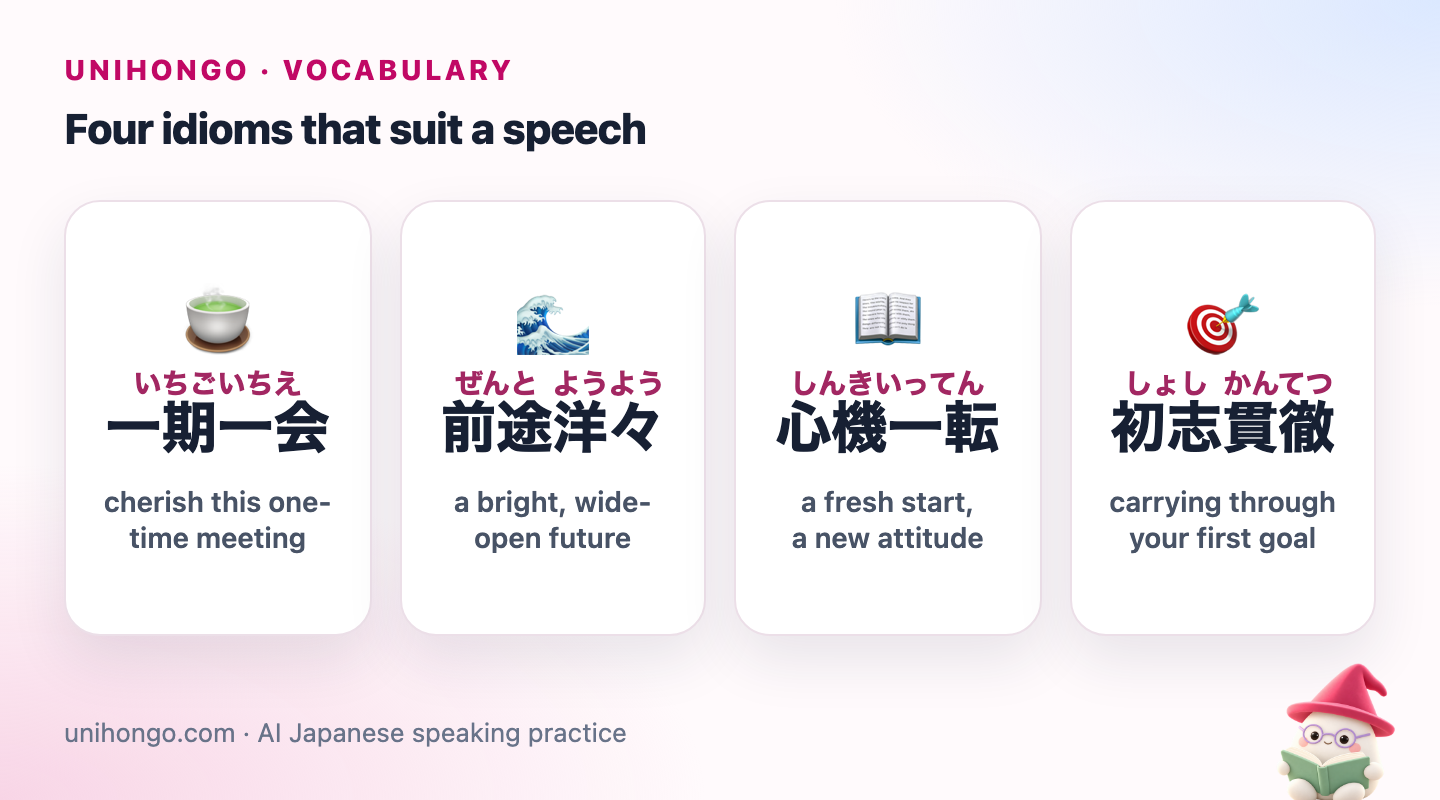
Four idioms that suit a speech
| Japanese | Romaji | Meaning |
|---|---|---|
| 一期一会 | ichigo ichie | cherish this one-time meeting |
| 前途洋々 | zento yōyō | a bright, wide-open future |
| 心機一転 | shinki itten | a fresh start, a new attitude |
| 初志貫徹 | shoshi kantetsu | carrying through your first goal |
洋々 means vast like the ocean, so 前途洋々 pictures the road ahead as wide open water. It is often written 前途洋洋 too. 貫徹 in 初志貫徹 means to carry through to the end, the same 貫 as in 貫く (to pierce through).
Each of these idioms suggests a different direction for a speech. 一期一会 looks back with gratitude. 前途洋々 looks forward with optimism. 心機一転 marks a turning point. 初志貫徹 praises persistence. Choosing the idiom is really choosing the message, so think first about what you want the person to remember.
Which idiom for which occasion
| Occasion | Good idiom | Why it fits |
|---|---|---|
| Farewell party for a coworker | 一期一会 / 前途洋々 | Thanks for the time together; bright future |
| Graduation | 初志貫徹 / 前途洋々 | Keep your goals; the future is open |
| Someone moving or changing jobs | 心機一転 | Celebrates a fresh start |
| Wedding reception | 順風満帆 / 夫婦円満 | Smooth sailing; a happy marriage |
| Year-end or New Year party | 一意専心 / 一致団結 | Focus and team spirit for next year |
| Thanking guests at your own party | 感謝感激 | Warm, slightly playful thanks |
This is a guide, not a rule. What matters is that the idiom matches the person: 初志貫徹 is perfect for a colleague who studied for years to pass an exam, less so for someone who changed career halfway.
Five more idioms for celebrations
| Japanese | Romaji | Meaning |
|---|---|---|
| 順風満帆 | junpū manpan | smooth sailing |
| お二人の人生が順風満帆でありますように。 | Ofutari no jinsei ga junpū manpan de arimasu yō ni. | May your life together be smooth sailing. (wedding) |
| 夫婦円満 | fūfu enman | a happy, harmonious marriage |
| 感謝感激 | kansha kangeki | deeply grateful and moved |
| こんなに集まっていただき、感謝感激です。 | Konna ni atsumatte itadaki, kansha kangeki desu. | I'm so grateful and touched that so many of you came. |
| 一意専心 | ichii senshin | wholehearted focus on one goal |
| 来年も一意専心で取り組みます。 | Rainen mo ichii senshin de torikumimasu. | Next year I'll stay focused on my goal. |
| 大願成就 | taigan jōju | a great wish fulfilled |
| 大願成就を心よりお祈りいたします。 | Taigan jōju o kokoro yori oinori itashimasu. | I sincerely pray that your great wish comes true. (formal) |
Words wedding speakers avoid
At weddings, many speakers follow the tradition of 忌み言葉, words with unlucky associations. Not everyone cares, but older guests may notice, so most speech guides suggest avoiding them.
| Japanese | Romaji | Meaning |
|---|---|---|
| お二人の末永いお幸せをお祈りいたします。 | Ofutari no suenagai oshiawase o oinori itashimasu. | I wish you both a long and happy life together. (formal) |
- Separation and cutting: 別れる, 離れる, 切れる, 割れる.
- Endings: 終わる, 最後. Many speakers close with お開き (opening up) instead of 終わり.
- Repeated words, which can suggest remarrying: 重ね重ね, 再び, 度々, いろいろ. Choose 心から or 本当に instead.
A model farewell speech around 一期一会
Here is a short speech for a coworker's farewell party, with the toast at the end. It takes under a minute at a relaxed pace. Replace the name and the story with your own.
| Japanese | Romaji | Meaning |
|---|---|---|
| 鈴木さん、三年間本当にお疲れさまでした。 | Suzuki san, sannenkan hontō ni otsukaresama deshita. | Speaker: Suzuki-san, thank you so much for your hard work these three years. |
| 私の好きな言葉に一期一会があります。 | Watashi no suki na kotoba ni ichigo ichie ga arimasu. | Speaker: One of my favourite words is ichigo ichie. |
| 一度きりの出会いを大切にする、という意味です。 | Ichido kiri no deai o taisetsu ni suru, to iu imi desu. | Speaker: It means treasuring each meeting, because it happens only once. |
| 鈴木さんと働けたことは、まさに一期一会でした。 | Suzuki san to hataraketa koto wa, masani ichigo ichie deshita. | Speaker: Working with you was truly one of those meetings. |
| 新しい職場でも前途洋々のご活躍を。 | Atarashii shokuba demo zento yōyō no gokatsuyaku o. | Speaker: We wish you a bright future at your new workplace. |
| それでは、乾杯! | Soredewa, kanpai! | Speaker: And now, cheers! |
Mistakes that weaken a speech
Another common problem is length. Many Japanese party speeches are expected to be short, especially the toast, when everyone is standing with a glass in hand. A one-minute speech built around one idiom is usually far more welcome than a five-minute story. If you are given more time, use it for a personal story rather than more idioms.
Finally, practise the idiom's reading until it comes out smoothly. Stumbling on 前途洋々 or 初志貫徹 in front of an audience undermines the effect, while a clear, confident reading followed by a short pause gives the room a moment to enjoy it.
- Stacking several idioms. One theme idiom, plus at most one in the closing wish, is plenty.
- Using an idiom without explaining it. Not every guest knows 一意専心; a plain-language sentence after it helps.
- Writing 心気一転. The correct kanji is 機, as in 機会 (chance): 心機一転.
- Using 一期一会 for someone you will see next week. It works best for a real parting or a special occasion.
- Reading too fast. Pause after the idiom and before the toast; Japanese audiences expect a calm pace.
How a Japanese party flows
Speeches at Japanese company parties and receptions often follow a familiar order, although every company and family has its own habits. Someone gives an opening greeting, a senior person or a guest leads the toast, and near the end another person gives the closing words. Each speaker uses set phrases that signal their role, and an idiom often appears in the main speech.
If you are asked to lead the toast, a classic humble opening is 僭越ながら, which means roughly I am not really worthy, but. Keep the toast speech short, ask everyone to hold their glasses, and say 乾杯 clearly. The closing speaker often begins with 宴もたけなわではございますが, which politely signals that the party is at its peak but must come to an end.
At many company events, the closing is followed by a group hand-clapping ritual called 一本締め or 三本締め. Its exact form varies, so follow the leader. If you are giving the closing words, your idiom from this post can serve as the final wish just before the clap: for example, wishing everyone 一致団結 for the coming year.
| Japanese | Romaji | Meaning |
|---|---|---|
| 僭越ながら乾杯の音頭を取らせていただきます。 | Sen'etsu nagara kanpai no ondo o torasete itadakimasu. | If I may, I will lead the toast. (humble) |
| 皆様、グラスをお持ちください。 | Minasama, gurasu o omochi kudasai. | Everyone, please raise your glasses. |
| 宴もたけなわではございますが、そろそろお開きにしたいと思います。 | Utage mo takenawa de wa gozaimasu ga, sorosoro ohiraki ni shitai to omoimasu. | The party is in full swing, but it is nearly time to close. (formal) |
Rehearse your speech with an audience
Write your draft and send it to Mocchi with /correct. Mocchi checks the keigo, points out any 忌み言葉 for a wedding, and can shorten the speech to a one-minute version if you ask.
Then deliver it aloud. AI Sensei has a farewell speech roleplay mission: choose Haru-sensei, give your speech to the room, and answer the Sensei's follow-up questions as a guest might ask them. The session report afterwards notes your strengths and anything to polish before the real party.