
Before you start: four N3 words
The quiz has fifteen questions with four options each. Many ask you to place a word in a sentence, because at N3 knowing the English meaning is not enough; you need to know how the word behaves.
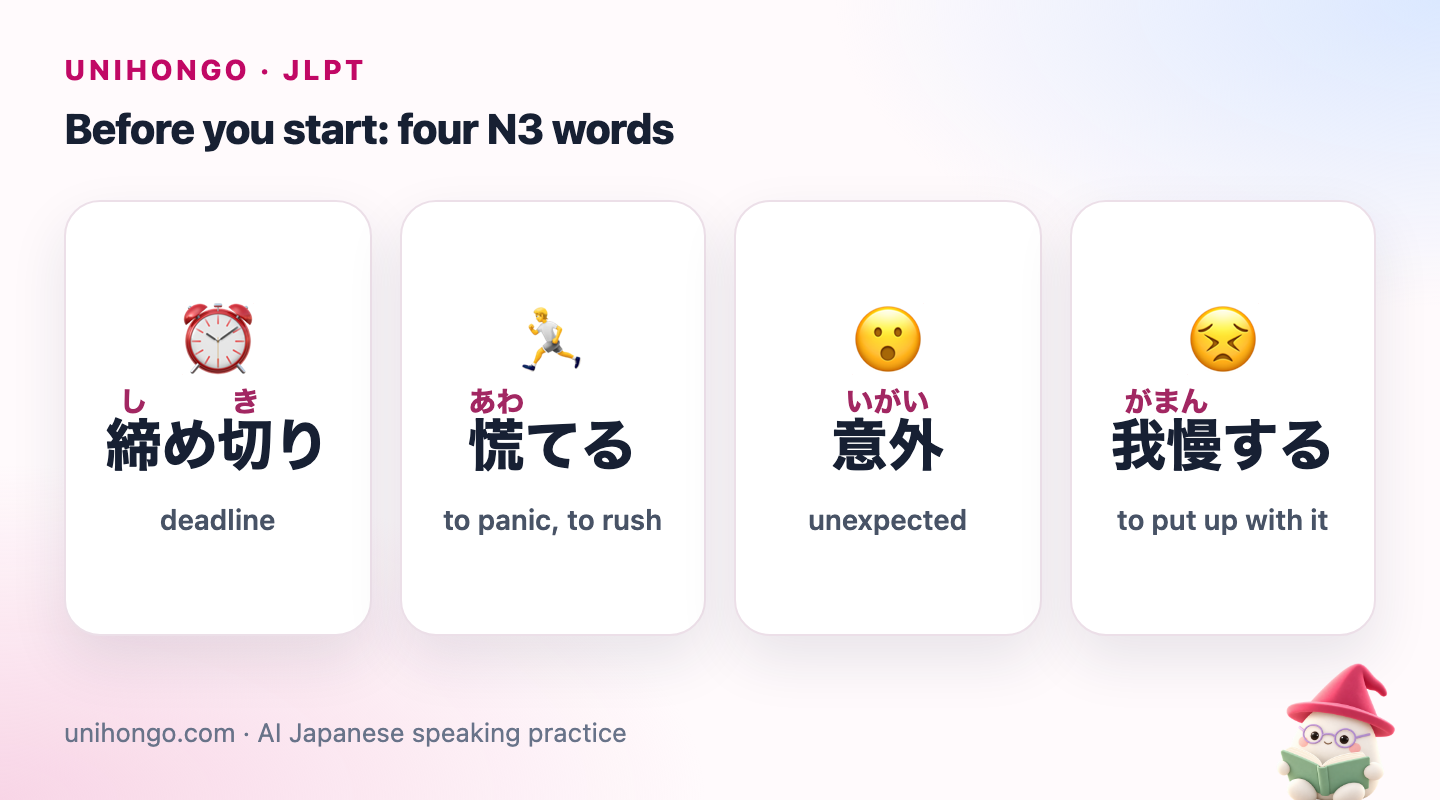
These four words appear in the quiz. They are everyday words in work and school life, which is exactly the world the N3 paper draws from.
| Japanese | Romaji | Meaning |
|---|---|---|
| 締め切り | shimekiri | deadline |
| 慌てる | awateru | to panic, to rush |
| 意外 | igai | unexpected |
| 我慢する | gaman suru | to put up with it |
| 締め切りは金曜日です。 | Shimekiri wa kin'yōbi desu. | The deadline is Friday. |
Questions 1-5
The first set mixes readings with words in context. In questions 2 to 4 the clue is in the first half of the sentence: oversleeping, an easy test you expected, a week of pain.
- 1. How do you read 締め切り? (a) しめきり (b) しめぎり (c) ていきり (d) しめぎれ
- 2. 「寝坊して、 ___ 家を 出た。」 (a) 落ち着いて (b) 迷って (c) 比べて (d) 慌てて
- 3. 「テストは 簡単だと 思っていたが、 ___ 難しかった。」 (a) 必ず (b) 意外に (c) 決して (d) たとえ
- 4. 「歯が 痛いのを 一週間も ___ していた。」 (a) 我慢 (b) 遠慮 (c) 注意 (d) 反対
- 5. What does ぎりぎり 間に合った mean? (a) made it easily (b) was too late (c) arrived early (d) just barely made it
Questions 6-10
- 6. 「この 薬は 風邪に よく ___ 。」 (a) 治る (b) 直る (c) 効く (d) 助かる
- 7. 「会議の 時間を 三時から 四時に ___ した。」 (a) 交換 (b) 交代 (c) 変化 (d) 変更
- 8. How do you read 往復? (a) おうふく (b) おうぶく (c) おうふっく (d) ゆうふく
- 9. 「彼女は いつも ___ 笑って いる。」 (a) いらいら (b) にこにこ (c) ぺこぺこ (d) ばらばら
- 10. 「新しい 仕事には もう ___ ?」 (a) 似た (b) 慣れた (c) 届いた (d) 決まった
Questions 11-15
The last set tests words that share a kanji or a root. Question 11 uses four expressions with ki, and question 12 four nouns beginning with 人.
- 11. 「駅で 財布を 落とした ことに ___ 。」 (a) 気にした (b) 気をつけた (c) 気に入った (d) 気づいた
- 12. 「この 店は 若者に ___ が ある。」 (a) 人気 (b) 人口 (c) 人間 (d) 人生
- 13. What does たまに 外食する mean? (a) always eat out (b) never eat out (c) eat out now and then (d) eat out every day
- 14. 「電車が 遅れたため、会議に ___ してしまった。」 (a) 早退 (b) 遅刻 (c) 出席 (d) 到着
- 15. 「部長の 意見に ___ です。」 (a) 成功 (b) 完成 (c) 賛成 (d) 発明
Answer key and explanations
One point per correct answer. Read the reason even when you were right; it often shows why the other options were tempting.
| Japanese | Romaji | Meaning |
|---|---|---|
| 締め切り | shimekiri | 1 (a) deadline: shimeru (close) + kiru (cut off) |
| 慌てて家を出た。 | Awatete ie o deta. | 2 (d) I overslept and rushed out of the house |
| 意外に難しかった。 | Igai ni muzukashikatta. | 3 (b) unexpectedly hard; kesshite needs a negative |
| 痛いのを我慢していた。 | Itai no o gaman shite ita. | 4 (a) I put up with the pain; enryo is holding back |
| ぎりぎり間に合った。 | Girigiri maniatta. | 5 (d) I made it with no time to spare |
| この薬は風邪によく効く。 | Kono kusuri wa kaze ni yoku kiku. | 6 (c) kiku: a medicine works; naoru is to recover |
| 時間を変更した。 | Jikan o henkō shita. | 7 (d) henkō: change a plan or schedule |
| 往復 | ōfuku | 8 (a) round trip; katamichi is one way |
| いつもにこにこ笑っている。 | Itsumo niko niko waratte iru. | 9 (b) niko niko: a warm, constant smile |
| 新しい仕事にはもう慣れた? | Atarashii shigoto ni wa mō nareta? | 10 (b) used to it yet? (casual) |
| 財布を落としたことに気づいた。 | Saifu o otoshita koto ni kizuita. | 11 (d) kizuku: I noticed I had dropped it |
| 若者に人気がある。 | Wakamono ni ninki ga aru. | 12 (a) ninki: popular with young people |
| たまに外食する。 | Tama ni gaishoku suru. | 13 (c) tama ni: once in a while |
| 会議に遅刻してしまった。 | Kaigi ni chikoku shite shimatta. | 14 (b) chikoku: arrive late; sōtai is leave early |
| 部長の意見に賛成です。 | Buchō no iken ni sansei desu. | 15 (c) sansei: agree with an opinion |
Question 6 is a classic trap for English speakers, because work and recover both feel possible. Kiku describes the medicine doing its job (kusuri ga kiku), while naoru describes the person or illness getting better (kaze ga naoru). The medicine cannot naoru.
Question 7 deserves extra attention. 変更 is changing a plan, 交換 is exchanging one thing for another, 交代 is people taking turns, and 変化 is something changing by itself. All four contain 変 or 交, and the test knows it.
One word, four meanings: the ki expressions
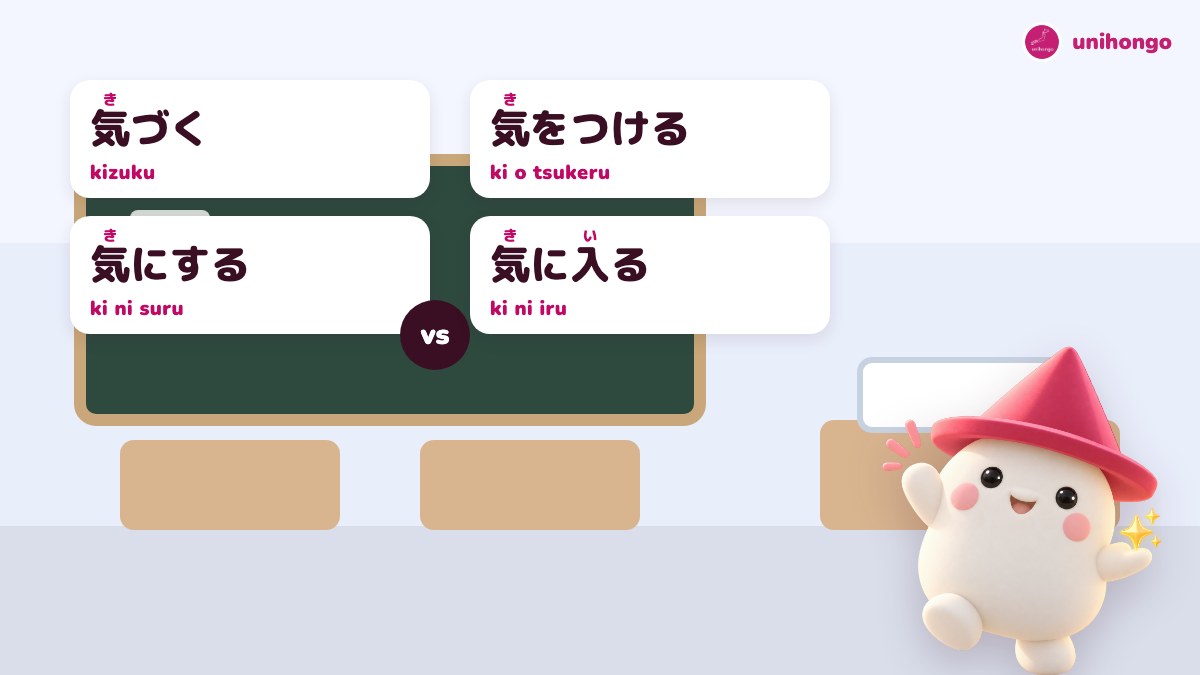
気 (ki) means something like spirit, mind or attention, and it builds a family of common expressions. Learners who memorise each one in isolation often mix them under exam pressure. Learn them together, each with an example from daily life.
| Japanese | Romaji | Meaning |
|---|---|---|
| 間違いに気づいた。 | Machigai ni kizuita. | I noticed the mistake. |
| 人の目を気にする。 | Hito no me o ki ni suru. | I worry about what people think. |
| 車に気をつけてね。 | Kuruma ni ki o tsukete ne. | Watch out for cars. (casual) |
| このかばん、気に入った。 | Kono kaban, ki ni itta. | I really like this bag. (casual) |
Reading your score
| Score | What it suggests | Next step |
|---|---|---|
| 13-15 | N3 vocabulary is a strength | Move time to reading speed and listening |
| 9-12 | Good range, look-alikes still slip | Study compounds in pairs that share a kanji |
| 5-8 | Many N3 words are only half known | Learn words in sentences, 15 a day |
| 0-4 | N3 vocabulary is mostly new | Secure N4 first, then build N3 by theme |
Onomatopoeia worth knowing for N3
Question 9 used niko niko, and it was not a random choice. Japanese uses sound and manner words in everyday adult speech, on signs and in news, and N3 vocabulary and reading questions include the common ones. Most of them are doubled forms, and many combine with suru to describe a state or feeling.
Learn each with an example sentence and the feeling it carries, because several of them sound alike but mean very different things. Ira ira is annoyance, while niko niko is warmth; doki doki is a racing heart, from nerves or excitement.
| Japanese | Romaji | Meaning |
|---|---|---|
| 待たされて、いらいらした。 | Matasarete, ira ira shita. | I was kept waiting and got irritated. |
| 発表の前は、どきどきする。 | Happyō no mae wa, doki doki suru. | My heart races before a presentation. |
| おなかがぺこぺこだ。 | Onaka ga peko peko da. | I'm starving. (casual) |
| 日本語がぺらぺらですね。 | Nihongo ga pera pera desu ne. | Your Japanese is so fluent. |
| 雨がざあざあ降っている。 | Ame ga zā zā futte iru. | It's pouring with rain. |
From missed words to remembered words
Tell Mocchi which words you missed, for example "I missed henkō, kiku and kizuku. Make flashcards with example sentences." With /create-flashcards Mocchi builds the cards, and /review-flashcards brings each one back just before you would forget it. Because Mocchi notes your weak words, later /vocab sessions can test them next to their look-alikes.
Every week or two, measure the whole picture with the N3 paper at unihongo.com/jlpt-mock-test. Vocabulary on the real exam shares a section with grammar and reading, and the mock test's time limits show whether you know the words fast enough, not only whether you know them.