
Four N2 patterns from the quiz
The cards below show four patterns you will meet in the questions. They come from written and formal Japanese, so you will see them more in news, notices and essays than in casual chat.
Before you start, try to say what each one does. Ni mo kakawarazu concedes, no wari ni compares with what you expected, made mo nai dismisses something as obvious, and zaru o enai admits there is no other choice.
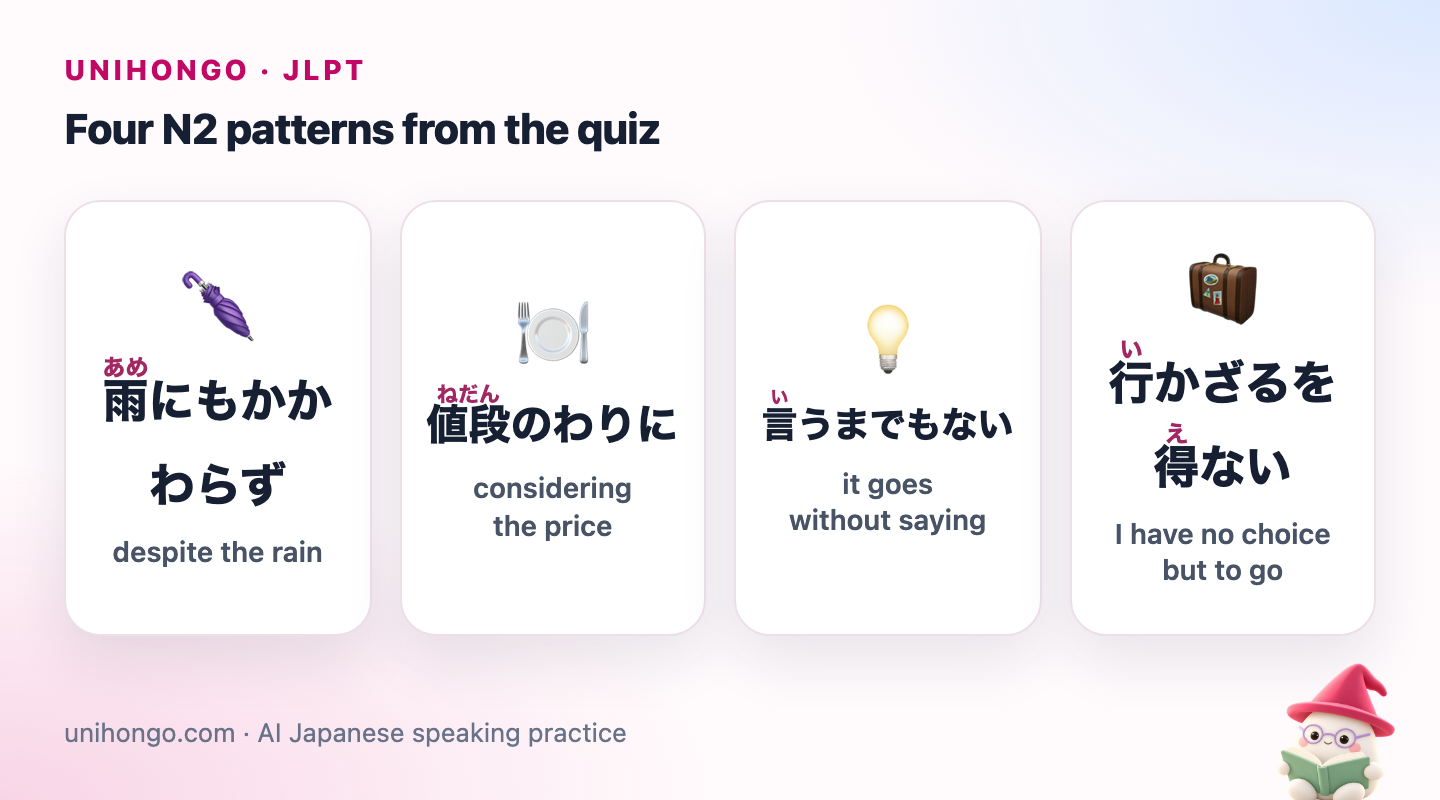
| Japanese | Romaji | Meaning |
|---|---|---|
| 雨にもかかわらず | ame ni mo kakawarazu | despite the rain |
| 値段のわりに | nedan no wari ni | considering the price |
| 言うまでもない | iu made mo nai | it goes without saying |
| 行かざるを得ない | ikazaru o enai | I have no choice but to go |
Questions 1-5
- 1. 「大雨 ___ 、試合は 予定通り 行われた。」 (a) によって (b) にもかかわらず (c) に対して (d) にとって
- 2. 「この レストランは 値段の ___ 、量が 多い。」 (a) わりに (b) うえに (c) とおりに (d) たびに
- 3. 「上司の 命令なので、行か ___ 。」 (a) ずにはいられない (b) ないではいられない (c) かねない (d) ざるを得ない
- 4. 「健康の ことを 考えると、たばこは やめる ___ 。」 (a) わけだ (b) ものか (c) べきだ (d) ことか
- 5. 「年齢 ___ 、誰でも 参加できます。」 (a) に限って (b) に沿って (c) につれて (d) を問わず
Questions 6-10
Three of these questions use nouns that work like grammar: ijō, shidai and sue. They all link two events, but the logic is different: since this is true, as soon as this happens, after a long process. Read what comes after the blank before choosing.
- 6. 「日本に 住んで いる ___ 、敬語は 必要だ。」 (a) 以上 (b) 一方 (c) 末 (d) 次第
- 7. 「彼は 医者 ___ 、作家としても 有名だ。」 (a) にしては (b) であると同時に (c) に反して (d) をめぐって
- 8. 「年を とる ___ 、体力が 落ちて きた。」 (a) にとって (b) につれて (c) に対して (d) に関して
- 9. 「準備が でき ___ 、出発します。」 (a) 以上 (b) 一方 (c) 末 (d) 次第
- 10. 「長い 話し合いの ___ 、計画は 中止に なった。」 (a) 末 (b) 次第 (c) 以上 (d) 際
Questions 11-15
Questions 11 and 12 use two patterns from the same family. Look at how each sentence ends; a negative ending is a strong clue.
- 11. 「あなたの ことを 思う ___ 、厳しく 言うのです。」 (a) からといって (b) からには (c) からこそ (d) からして
- 12. 「お金が ある ___ 、幸せだとは 限らない。」 (a) からこそ (b) からといって (c) からには (d) からして
- 13. 「このまま 放っておくと、大きな 事故に なり ___ 。」 (a) かねる (b) ようがない (c) かねない (d) っこない
- 14. 「彼の 話は 聞けば 聞く ___ 、わからなく なる。」 (a) ほど (b) まで (c) うちに (d) ばかり
- 15. 「今日中に 全部 終わらせる なんて、無理に ___ 。」 (a) すぎない (b) 限らない (c) 違わない (d) 決まっている
Answer key: what each pattern does
Give yourself a point for each correct answer, then read every reason. At N2 the reason is the lesson.
| Japanese | Romaji | Meaning |
|---|---|---|
| 大雨にもかかわらず | ōame ni mo kakawarazu | 1 (b) despite the heavy rain, it went ahead |
| 値段のわりに量が多い。 | Nedan no wari ni ryō ga ōi. | 2 (a) big portions for the price |
| 行かざるを得ない。 | Ikazaru o enai. | 3 (d) I have no choice but to go |
| やめるべきだ。 | Yameru beki da. | 4 (c) beki da: you should quit |
| 年齢を問わず | nenrei o towazu | 5 (d) regardless of age |
| 日本に住んでいる以上 | Nihon ni sunde iru ijō | 6 (a) ijō: since you live in Japan |
| 医者であると同時に | isha de aru to dōji ni | 7 (b) a doctor and at the same time a writer |
| 年をとるにつれて | toshi o toru ni tsurete | 8 (b) ni tsurete: as one change follows another |
| 準備ができ次第、出発します。 | Junbi ga deki shidai, shuppatsu shimasu. | 9 (d) shidai: as soon as we are ready |
| 話し合いの末 | hanashiai no sue | 10 (a) sue: after a long process |
| 思うからこそ | omou kara koso | 11 (c) precisely because I care |
| お金があるからといって | okane ga aru kara to itte | 12 (b) just because you have money |
| 事故になりかねない。 | Jiko ni nari kanenai. | 13 (c) kanenai: it could well lead to an accident |
| 聞けば聞くほど | kikeba kiku hodo | 14 (a) ba ... hodo: the more I listen |
| 無理に決まっている。 | Muri ni kimatte iru. | 15 (d) ni kimatte iru: obviously impossible |
Two answers hide a classic trap. In question 3, ikazu ni wa irarenai and ikanai de wa irarenai are real grammar, but they mean I cannot help going, an inner urge, not an order from a boss. In question 13, kaneru without nai means find it hard to do and is used politely to refuse, as in wakari kanemasu, I'm afraid I can't say.
The kara family, side by side
Questions 11 and 12 come from a group of patterns that all start with kara. They look like a set, but each does a different job, and the exam often puts three of them in the same question.
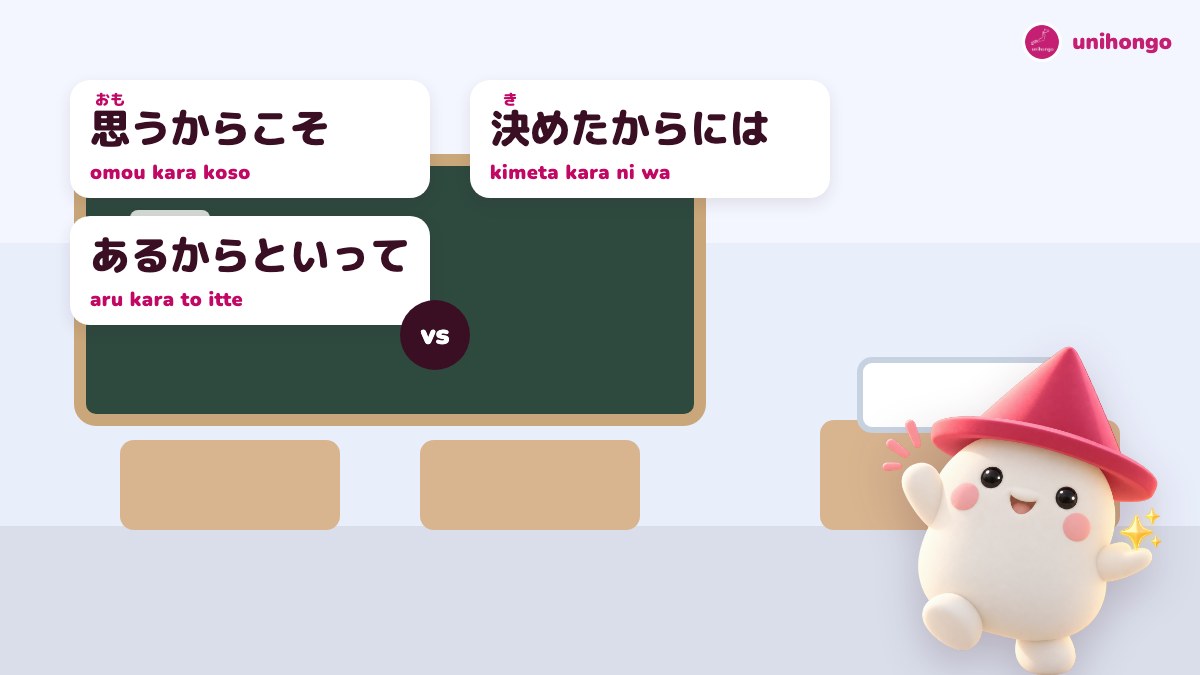
| Japanese | Romaji | Meaning |
|---|---|---|
| やると決めたからには、最後までやる。 | Yaru to kimeta kara ni wa, saigo made yaru. | Now that I've decided, I'll see it through. |
| 日本人だからといって、敬語が得意とは限らない。 | Nihonjin da kara to itte, keigo ga tokui to wa kagiranai. | Being Japanese doesn't mean you're good at keigo. |
| 好きだからこそ、続けられる。 | Suki da kara koso, tsuzukerareru. | I can keep going precisely because I love it. |
- Kara koso insists that this reason, and no other, is why something happens. It often sounds warm or determined.
- Kara to itte warns against a quick conclusion and is followed by a negative idea such as to wa kagiranai or wake de wa nai.
- Kara ni wa means now that or since: having made a decision, you must follow it through. The second half often has beki da, tsumori da or a strong intention.
- Kara shite means even judging from one detail, usually to criticise: taido kara shite yaru ki ga nai, even his attitude shows he does not care.
What your score suggests
| Score | What it suggests | Next step |
|---|---|---|
| 13-15 | N2 grammar is a strength | Long reading passages under time pressure |
| 9-12 | Good base, some look-alikes slip | Study patterns in families: kara, ni, shidai |
| 5-8 | Many N2 patterns are only recognised | Three patterns a day, found in real articles |
| 0-4 | N2 grammar is mostly new | Secure N3 nuance first, then start N2 slowly |
At N2, grammar questions are only part of the language knowledge section, and reading carries a lot of weight. If you scored well here but still struggle with long passages, the gap is often reading speed, not grammar.
A useful habit is to keep a page for each family of patterns, such as the kara family, the ni tsuite family and the time patterns shidai and sue, and add a real sentence every time you meet one in an article. After a few weeks the families feel like groups of choices rather than a long list.
Keep N2 grammar active until test day
N2 patterns fade if you only meet them in a book. Try asking Mocchi: "Give me a short news-style paragraph that uses ni mo kakawarazu, shidai and kanenai, then /explain each sentence." Mocchi writes the paragraph, breaks each sentence down, and can quiz you on the same patterns later because it keeps track of what you found hard.
Then test everything together on the N2 paper at unihongo.com/jlpt-mock-test. It has the real sections and time limits plus listening, and the estimated score shows whether grammar is still your weak section or whether time now belongs to reading and listening.