
Four N3 patterns to warm up
Each card shows one pattern from the quiz in a short casual sentence. N3 sentences are often in plain form, because the exam uses written Japanese and casual conversation as well as polite speech.
Read each card aloud and try to say what it adds to the plain sentence: a decision, a rumour, a time window or a feeling that very little time has passed.
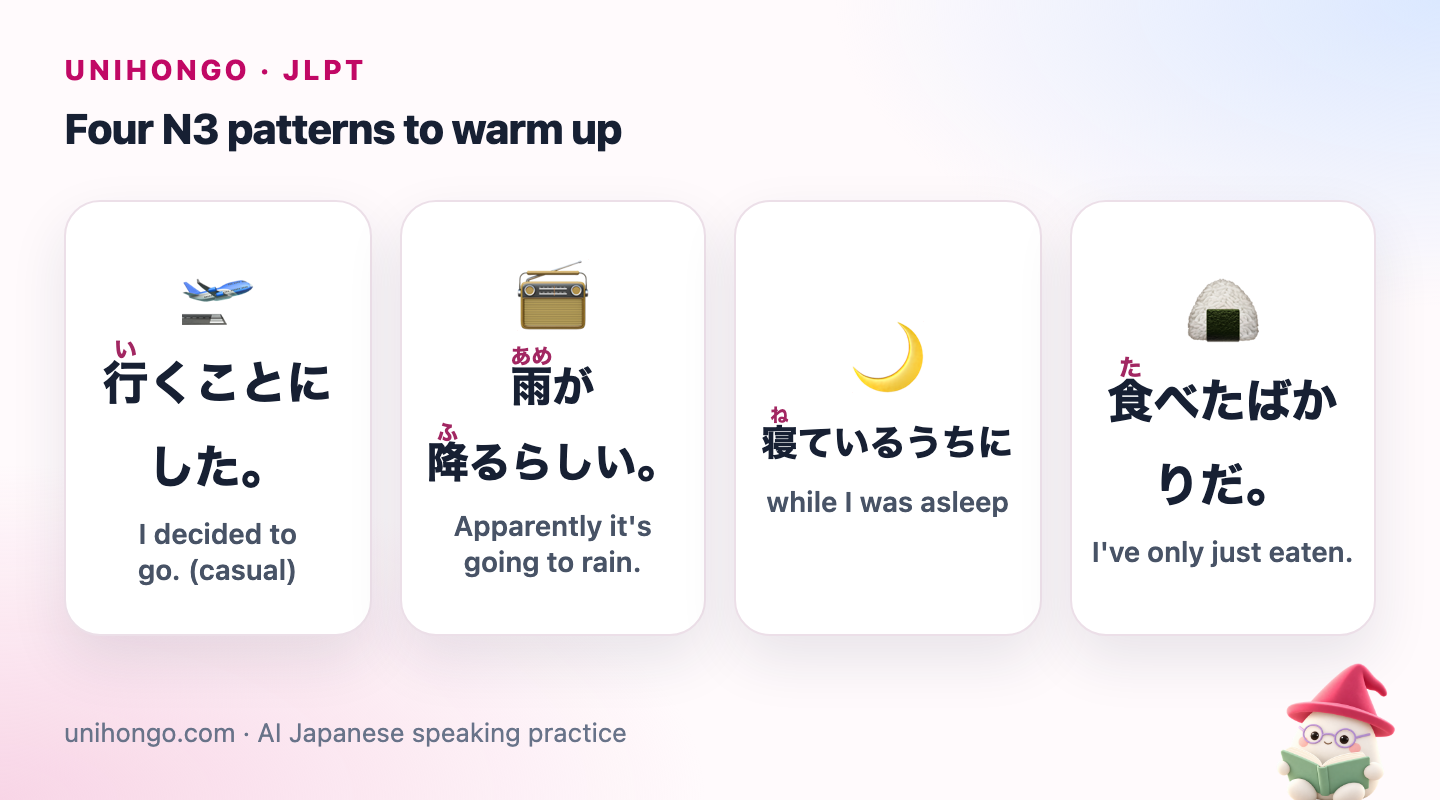
| Japanese | Romaji | Meaning |
|---|---|---|
| 行くことにした。 | Iku koto ni shita. | I decided to go. (casual) |
| 雨が降るらしい。 | Ame ga furu rashii. | Apparently it's going to rain. |
| 寝ているうちに | nete iru uchi ni | while I was asleep |
| 食べたばかりだ。 | Tabeta bakari da. | I've only just eaten. |
Questions 1-5
Choose the best option. Some questions ask about meaning rather than form, so read the instructions in each one.
- 1. Which option shows that YOU made the decision? 「いろいろ 考えて、来年 日本に 留学する ___ 。」 (a) ことになった (b) ようになった (c) はずだ (d) ことにした
- 2. 「天気予報に よると、明日は 雪が 降る ___ 。」 (a) そうに (b) そうだ (c) みたいな (d) ように
- 3. 「若い ___ に、いろいろな 国へ 行きたい。」 (a) うち (b) まま (c) ほど (d) ため
- 4. 「さっき 昼ご飯を 食べた ___ なのに、もう おなかが すいた。」 (a) まま (b) うち (c) ほど (d) ばかり
- 5. 「この 仕事は 明日 ___ 終わらせなければ ならない。」 (a) まで (b) から (c) までに (d) までで
Questions 6-10
Three of these five questions hinge on contrast and reason words. Before choosing, ask whether the second half is what you would expect after the first half, or a surprise.
- 6. 「彼は 忙しい ___ 、毎日 ジムに 通って いる。」 (a) ので (b) から (c) ため (d) のに
- 7. 「子どもの ___ 、よく この 公園で 遊んだ。」 (a) ころ (b) うち (c) あいだ (d) まで
- 8. 「この 道は 夜に なる ___ 、暗くて 危ない。」 (a) なら (b) と (c) ても (d) のに
- 9. 「傘を 持って いった ___ 、雨は 降らなかった。」 (a) ので (b) のに (c) ため (d) ように
- 10. 「大事な 会議が あるので、休む ___ 。」 (a) わけがない (b) はずがない (c) ことはない (d) わけにはいかない
Questions 11-15
- 11. 「あんなに 練習したのだから、失敗する ___ 。」 (a) はずがない (b) わけにはいかない (c) ことにする (d) ようにする
- 12. 「部長に よると、会議は 中止に なった ___ 。」 (a) ようにした (b) ばかりだ (c) そうだ (d) ことにした
- 13. 「この ゲームは 子ども ___ 大人も 楽しめる。」 (a) ばかりで (b) だけでなく (c) しか (d) さえ
- 14. 「彼の 話し方は まるで 先生の ___ 。」 (a) らしい (b) そうだ (c) ようだ (d) はずだ
- 15. 「寝不足の ___ 、今日は 頭が 痛い。」 (a) せいか (b) おかげで (c) くせに (d) わりに
Answer key with one-line reasons
Score one point per question. The reason in each gloss is the rule the question was built to test.
| Japanese | Romaji | Meaning |
|---|---|---|
| 留学することにした。 | Ryūgaku suru koto ni shita. | 1 (d) koto ni shita: my own decision |
| 雪が降るそうだ。 | Yuki ga furu sō da. | 2 (b) plain form + sō da: I hear that |
| 若いうちに | wakai uchi ni | 3 (a) uchi ni: while I still can |
| 食べたばかりなのに | tabeta bakari na noni | 4 (d) ta + bakari: only just ate |
| 明日までに終わらせる | ashita made ni owaraseru | 5 (c) made ni: a deadline, by tomorrow |
| 忙しいのに、ジムに通っている。 | Isogashii noni, jimu ni kayotte iru. | 6 (d) noni: even though he is busy |
| 子どものころ | kodomo no koro | 7 (a) koro: when I was a child |
| 夜になると暗くて危ない。 | Yoru ni naru to kurakute abunai. | 8 (b) to: whenever it gets dark, every time |
| 傘を持っていったのに | kasa o motte itta noni | 9 (b) noni: I took it, but no rain came |
| 休むわけにはいかない。 | Yasumu wake ni wa ikanai. | 10 (d) I can't very well take the day off |
| 失敗するはずがない。 | Shippai suru hazu ga nai. | 11 (a) hazu ga nai: there's no way it fails |
| 中止になったそうだ。 | Chūshi ni natta sō da. | 12 (c) sō da: reporting what the boss said |
| 子どもだけでなく大人も | kodomo dake de naku otona mo | 13 (b) not only children but adults too |
| まるで先生のようだ。 | Marude sensei no yō da. | 14 (c) marude pairs with yō da: just like |
| 寝不足のせいか、頭が痛い。 | Nebusoku no sei ka, atama ga itai. | 15 (a) sei ka: maybe because of a bad cause |
Near twins: the pairs behind the traps
Most of the wrong options in this quiz are correct Japanese in another sentence. That is how N3 works. When you get one wrong, do not just note the right answer; write down what the wrong option would have meant.
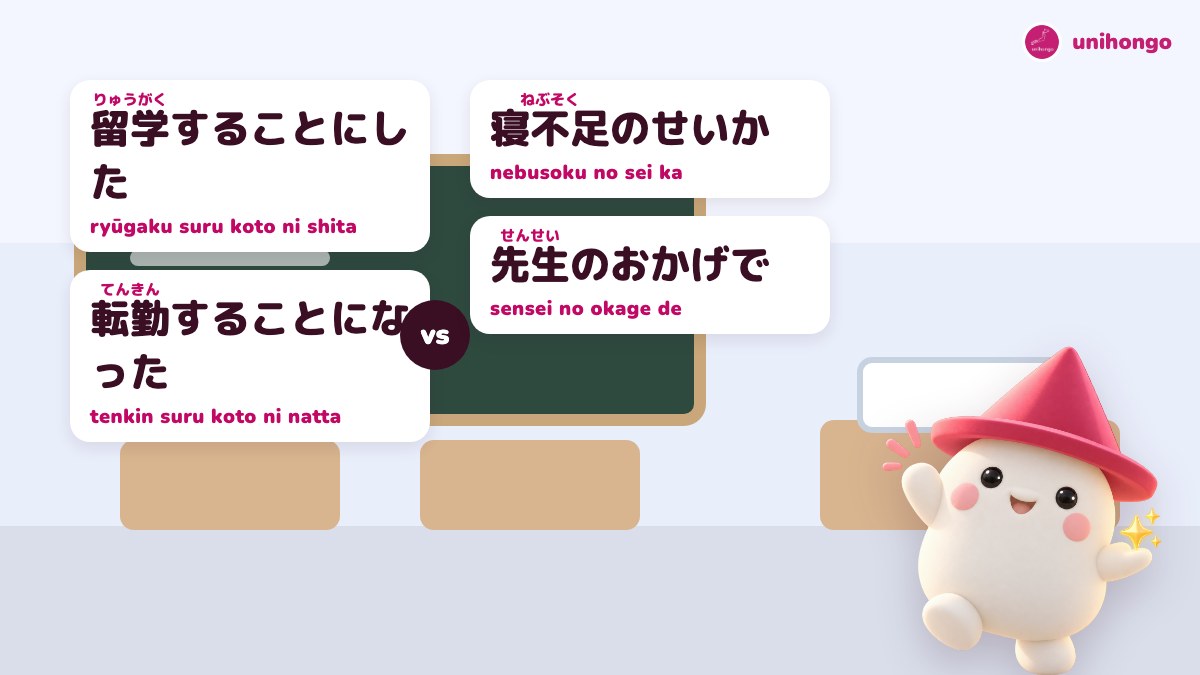
Here are four pairs that cause most N3 grammar errors. In each pair, the grammar is equally correct, but the speaker's view is different.
| Japanese | Romaji | Meaning |
|---|---|---|
| 来月から大阪に転勤することになった。 | Raigetsu kara Ōsaka ni tenkin suru koto ni natta. | I'm being transferred to Osaka from next month. |
| 先生のおかげで合格できた。 | Sensei no okage de gōkaku dekita. | Thanks to my teacher, I passed. |
| 彼が知らないはずがない。 | Kare ga shiranai hazu ga nai. | There's no way he doesn't know. |
- Koto ni suru vs koto ni naru: your choice versus a decision made by others or by circumstances. People sometimes use koto ni naru about their own plans to sound modest, for example when announcing a wedding.
- Sei vs okage: sei blames a cause for a bad result; okage thanks a cause for a good one. Okage de with a bad result sounds sarcastic.
- Hazu ga nai vs wake ni wa ikanai: hazu ga nai is a logical conclusion (it can't be); wake ni wa ikanai is a social or moral obstacle (I can't very well).
- Noni vs node: both connect a reason and a result, but noni adds surprise or disappointment because the result is not what you expected.
Score bands
| Score | What it suggests | Spend your time on |
|---|---|---|
| 13-15 | N3 grammar nuance is under control | Reading speed and listening sections |
| 9-12 | Forms are fine, nuance still slips | The near-twin pairs, with your own sentences |
| 5-8 | Many N3 patterns are half known | Two patterns a day, each in a short dialogue |
| 0-4 | N3 grammar is still new territory | Review N4 first, then a structured N3 book |
Notice where your mistakes sit. Errors on questions 1, 10, 11 and 15 suggest you know the forms but not the attitude behind them. Errors on 3, 4, 5 and 7 point to time expressions, which are quicker to fix with a table of examples.
Grammar on the real test is split between three question types: choosing a form for a blank, putting words in the right order around a star, and choosing grammar inside a short passage. This quiz covers the first type. If you score well here, the word-order and passage questions are the next thing to practise.
A week of N3 grammar review
Begin by asking Mocchi for the pairs you missed: "/grammar explain sei ka and okage de with three examples each, then give me a five-question quiz." Mocchi explains the difference in plain English, quizzes you, and remembers which pair caused the trouble, so the next session starts from your weak point rather than from the beginning.
Repeat that for a different pair each day. At the end of the week, sit the N3 mock test at unihongo.com/jlpt-mock-test. It follows the real sections and time limits, includes listening, and gives you an estimated score, which is the clearest way to see whether better grammar is lifting your reading and listening too.