

Before you read: four key words
The story is called 面接の日, Interview Day. It follows one person through the morning of their first interview at a Japanese company: the nerves, the advice from a senior, the questions in the room and the long wait for the result. Learn these four words first and the rest of the text will be much easier to follow.
The text is original and written for this page. It is in plain form, the normal style for a personal story, with polite speech only inside the quotation marks.
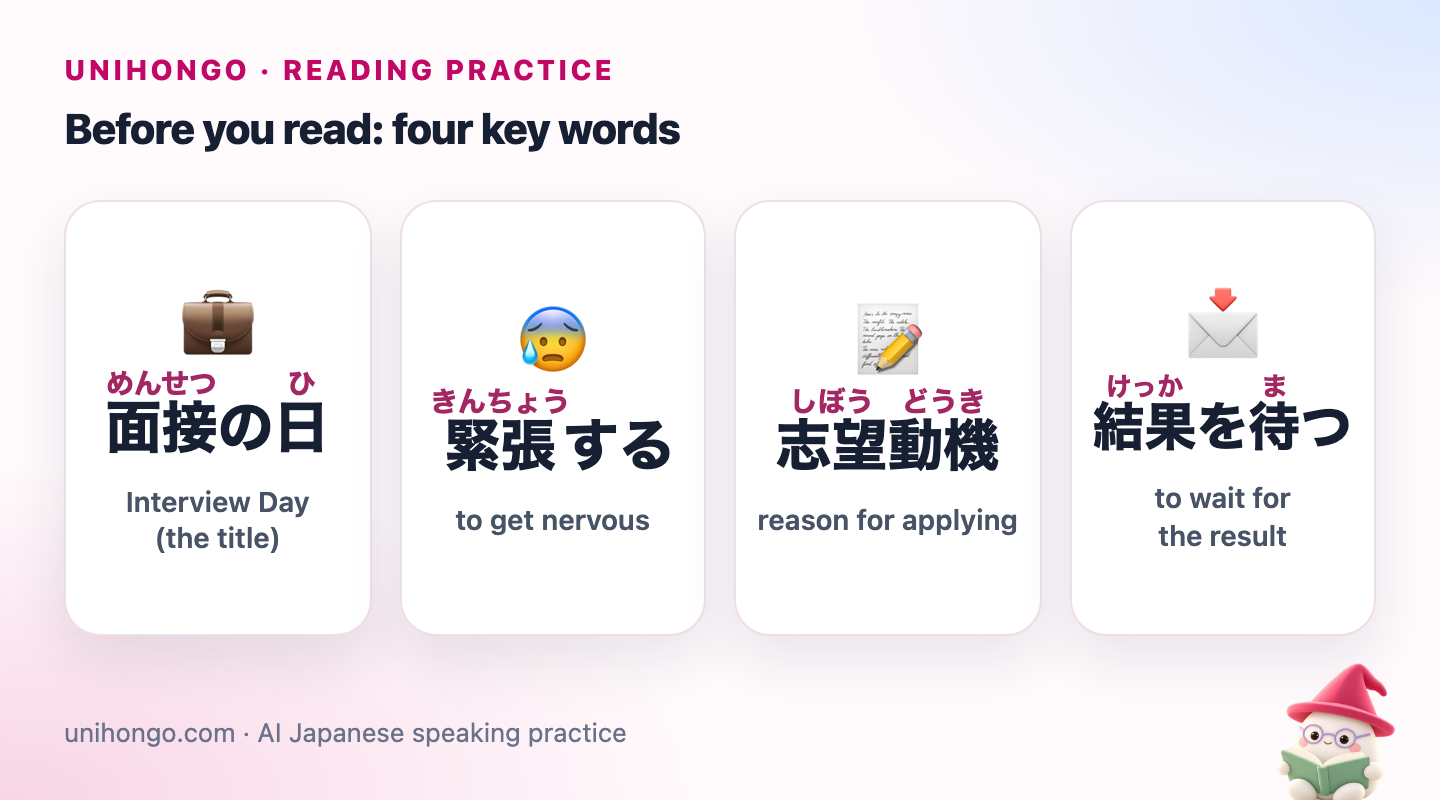
| Japanese | Romaji | Meaning |
|---|---|---|
| 面接の日 | Mensetsu no hi | Interview Day (the title) |
| 緊張する | kinchō suru | to get nervous |
| 志望動機 | shibō dōki | reason for applying |
| 結果を待つ | kekka o matsu | to wait for the result |
The text, part 1: getting ready and arriving
Read the Japanese column first. Cover the translation with your hand or a piece of paper and only check it after each sentence.
| Japanese | Romaji | Meaning |
|---|---|---|
| 先週の木曜日、私は初めて日本の会社の面接を受けた。 | Senshū no mokuyōbi, watashi wa hajimete Nihon no kaisha no mensetsu o uketa. | Last Thursday I had my first interview at a Japanese company. |
| 前の晩はあまり眠れなかったので、朝から少し頭が重かった。 | Mae no ban wa amari nemurenakatta node, asa kara sukoshi atama ga omokatta. | I hardly slept the night before, so my head felt heavy all morning. |
| 大学の先輩によると、面接では最初の挨拶がいちばん大切らしい。 | Daigaku no senpai ni yoru to, mensetsu de wa saisho no aisatsu ga ichiban taisetsu rashii. | According to a senior from my university, the first greeting is the most important part of an interview. |
| そこで、ドアをノックする練習を家で何回もしておいた。 | Soko de, doa o nokku suru renshū o ie de nankai mo shite oita. | So I had practised knocking on the door at home many times. |
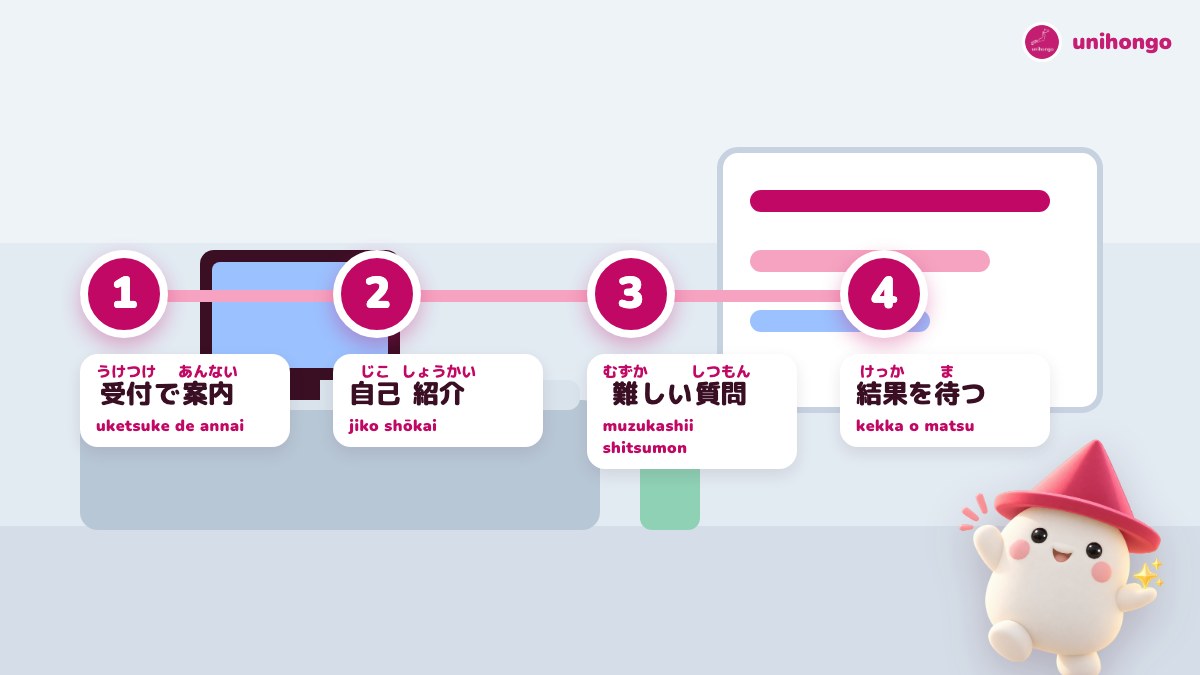
| 会社に着くと、受付の人に小さな会議室へ案内された。 | Kaisha ni tsuku to, uketsuke no hito ni chiisana kaigishitsu e annai sareta. | When I arrived, the receptionist showed me to a small meeting room. |
| 面接官は二人で、思ったより優しそうな人たちだった。 | Mensetsukan wa futari de, omotta yori yasashisō na hitotachi datta. | There were two interviewers, and they seemed kinder than I had expected. |
| まず、自己紹介と志望動機を聞かれた。 | Mazu, jiko shōkai to shibō dōki o kikareta. | First, they asked me to introduce myself and explain why I had applied. |
| 準備しておいた答えだったので、落ち着いて話すことができた。 | Junbi shite oita kotae datta node, ochitsuite hanasu koto ga dekita. | I had prepared those answers, so I was able to speak calmly. |
The text, part 2: the hard question and the way home
The second half is where the interview stops going to plan. Notice how the narrator reports what was said with 〜と聞かれた and 〜と答えた, and how the feelings come through in short endings such as 安心した.
| Japanese | Romaji | Meaning |
|---|---|---|
| しかし、五年後に何をしていたいかと聞かれたとき、言葉が出てこなかった。 | Shikashi, gonengo ni nani o shite itai ka to kikareta toki, kotoba ga dete konakatta. | But when they asked what I wanted to be doing in five years, the words would not come. |
| 少し考えてから、「もっと日本語が上手になれば、お客様と直接話せる仕事がしたいです」と答えた。 | Sukoshi kangaete kara, motto Nihongo ga jōzu ni nareba, okyakusama to chokusetsu hanaseru shigoto ga shitai desu to kotaeta. | After thinking for a moment, I answered: If my Japanese gets better, I'd like a job where I can talk to customers directly. |
| 面接官の一人がにっこり笑ったので、少し安心した。 | Mensetsukan no hitori ga nikkori waratta node, sukoshi anshin shita. | One of the interviewers gave a big smile, and I felt a little relieved. |
| 最後に「何か質問はありますか」と言われ、研修について質問した。 | Saigo ni nanika shitsumon wa arimasu ka to iware, kenshū ni tsuite shitsumon shita. | At the end they asked if I had any questions, so I asked about the training. |
| 面接は三十分ほどで終わった。 | Mensetsu wa sanjuppun hodo de owatta. | The interview was over in about thirty minutes. |
| 帰りの電車で、もっとこう言えばよかったと何度も考えた。 | Kaeri no densha de, motto kō ieba yokatta to nando mo kangaeta. | On the train home I kept thinking about how I should have answered. |
| 人事の方の話では、結果は一週間以内にメールで届くらしい。 | Jinji no kata no hanashi de wa, kekka wa isshūkan inai ni mēru de todoku rashii. | From what the HR person said, the result should arrive by email within a week. |
| 今はただ、いい知らせを待っている。 | Ima wa tada, ii shirase o matte iru. | For now, I'm just waiting for good news. |
Vocabulary notes
These are the words most learners stop at. The interview words are worth learning as a set, because they come up together in job adverts, emails from companies and the interviews themselves.
| Japanese | Romaji | Meaning |
|---|---|---|
| 面接を受ける | mensetsu o ukeru | to have (take) an interview, as the candidate |
| 面接官 | mensetsukan | interviewer |
| 受付 | uketsuke | reception, receptionist |
| 案内する | annai suru | to show someone the way, to guide |
| 自己紹介 | jiko shōkai | self-introduction |
| 落ち着いて | ochitsuite | calmly, keeping your composure |
| 言葉が出てこない | kotoba ga dete konai | the words won't come out |
| 研修 | kenshū | (company) training |
| 人事 | jinji | human resources, HR |
| 以内 | inai | within (a time or amount) |
| 知らせ | shirase | news, notice |
Two small points. 面接を受ける is what the candidate does; the company 面接をする. And 人事の方 uses 方, the polite word for person, because the narrator is talking about someone at a company they hope to join.
Grammar notes: four N3 patterns in the story
1. 〜によると…らしい: reporting what you heard. によると names the source and らしい at the end marks the information as hearsay. In sentence 3 the source is a senior from university. In sentence 15 the narrator uses a close cousin, 〜の話では, which means from what someone said. らしい sounds a little casual and uncertain, so in business emails people prefer 〜そうです.
2. The passive 〜られる: things done to the narrator. 案内された (was shown), 聞かれた (was asked), 言われ (was told) all describe actions by the interviewers. Japanese uses the passive far more often than English in this kind of story, because the narrator stays the subject of every sentence. The person who acts is marked with に, as in 受付の人に案内された.
3. 〜ば: if, and if only. In sentence 10, 上手になれば means if I become good. In sentence 14, 言えばよかった turns the same form into a regret: I should have said. For verbs, change the final -u to -eba: なる becomes なれば, 言う becomes 言えば, ある becomes あれば.
4. 〜ておく: doing something in advance. 練習をしておいた means I had practised in preparation, and 準備しておいた答え means an answer prepared beforehand. In casual speech it often shrinks to 〜とく, as in 練習しとく.
| Japanese | Romaji | Meaning |
|---|---|---|
| 天気予報によると、明日は雨らしい。 | Tenki yohō ni yoru to, ashita wa ame rashii. | Pattern 1: According to the forecast, it's going to rain tomorrow. |
| 先生に名前を呼ばれた。 | Sensei ni namae o yobareta. | Pattern 2: My name was called by the teacher. |
| 時間があれば、手伝います。 | Jikan ga areba, tetsudaimasu. | Pattern 3: If I have time, I'll help. |
| 昨日、早く寝ればよかった。 | Kinō, hayaku nereba yokatta. | Pattern 3: I should have gone to bed early last night. |
| 会議の前に資料を読んでおきます。 | Kaigi no mae ni shiryō o yonde okimasu. | Pattern 4: I'll read the documents before the meeting (in advance). |
Behind the story: the shape of a Japanese interview
The narrator's advice about the first greeting and the knock reflects real interview guides in Japan, which often spend pages on manners: arriving a few minutes early, knocking before entering, bowing, waiting to sit until you are invited, and thanking the interviewers at the end. Companies differ, and many modern or international firms are more relaxed, but knowing the standard sequence makes the first minute much less stressful.
These are the set lines that frame the interview. You will not see them all in the story, but they are what the narrator practised at home.
| Japanese | Romaji | Meaning |
|---|---|---|
| 失礼いたします。 | Shitsurei itashimasu. | Excuse me. (said when entering, very polite) |
| どうぞおかけください。 | Dōzo okake kudasai. | Interviewer: Please have a seat. |
| 本日はよろしくお願いいたします。 | Honjitsu wa yoroshiku onegai itashimasu. | Thank you for seeing me today. (before starting) |
| 本日はありがとうございました。 | Honjitsu wa arigatō gozaimashita. | Thank you very much for today. (at the end) |
- Do not sit down before you hear どうぞおかけください or a similar invitation.
- Answer with です and ます, and use 御社 (onsha) when you mention the company in speech.
- Prepare one question for the end. Saying 特にありません (nothing in particular) can sound like a lack of interest.
Comprehension questions
Answer in Japanese if you can, then compare with the model answers below. A short answer that ends in から or です is fine.
- Question 1: Why did the narrator's head feel heavy in the morning?
- Question 2: Which interview question was hard to answer?
- Question 3: How and when will the result arrive?
| Japanese | Romaji | Meaning |
|---|---|---|
| 前の晩にあまり眠れなかったからです。 | Mae no ban ni amari nemurenakatta kara desu. | Answer 1: Because they hardly slept the night before. |
| 五年後に何をしていたいかという質問です。 | Gonengo ni nani o shite itai ka to iu shitsumon desu. | Answer 2: The question about what they want to be doing in five years. |
| 一週間以内にメールで届くらしいです。 | Isshūkan inai ni mēru de todoku rashii desu. | Answer 3: Apparently by email within a week. |
Notice that answer 3 keeps らしい. The narrator has not received the email yet and is only repeating what HR said, so the hearsay ending stays in the answer.
Read it aloud: a five-step routine
Reading aloud, ondoku, forces you to process every word instead of skimming, and it trains the rhythm you will need in a real interview. Give this routine ten to fifteen minutes.
- Read the whole text silently once, marking any word you cannot pronounce.
- Read part 1 aloud slowly, pausing at every comma. Pay attention to long vowels such as 先週 (senshū) and 紹介 (shōkai).
- Read part 2 aloud at a natural speed. Change your voice slightly for the lines in quotation marks, as if you were really answering the interviewer.
- Record yourself reading sentences 9 to 12 and listen back once. Check that 聞かれた and 言われ come out clearly.
- Close the text and say the narrator's answer, もっと日本語が上手になれば…, from memory. Then replace the second half with your own wish.
From reading to your own interview answers
Paste sentence 10 into Mocchi with /explain and ask why the narrator uses なれば rather than なったら. Mocchi breaks the sentence into parts, explains the difference in nuance, and keeps a note of the patterns you ask about, so a later /quiz can bring them back. You can also type /read and ask for another N3 text about work to read next.
Then open AI Sensei, pick Yamada-sensei and ask Yamada-sensei to play the interviewer from this story. Retell the interview day in your own words first, then let him ask you the same three questions. Ask him to keep it polite, and read the corrections in the session report afterwards.