
Eight food proverbs and idioms
Some of these are full proverbs, others are short idioms used just as often in conversation. All of them come from the table or the kitchen.
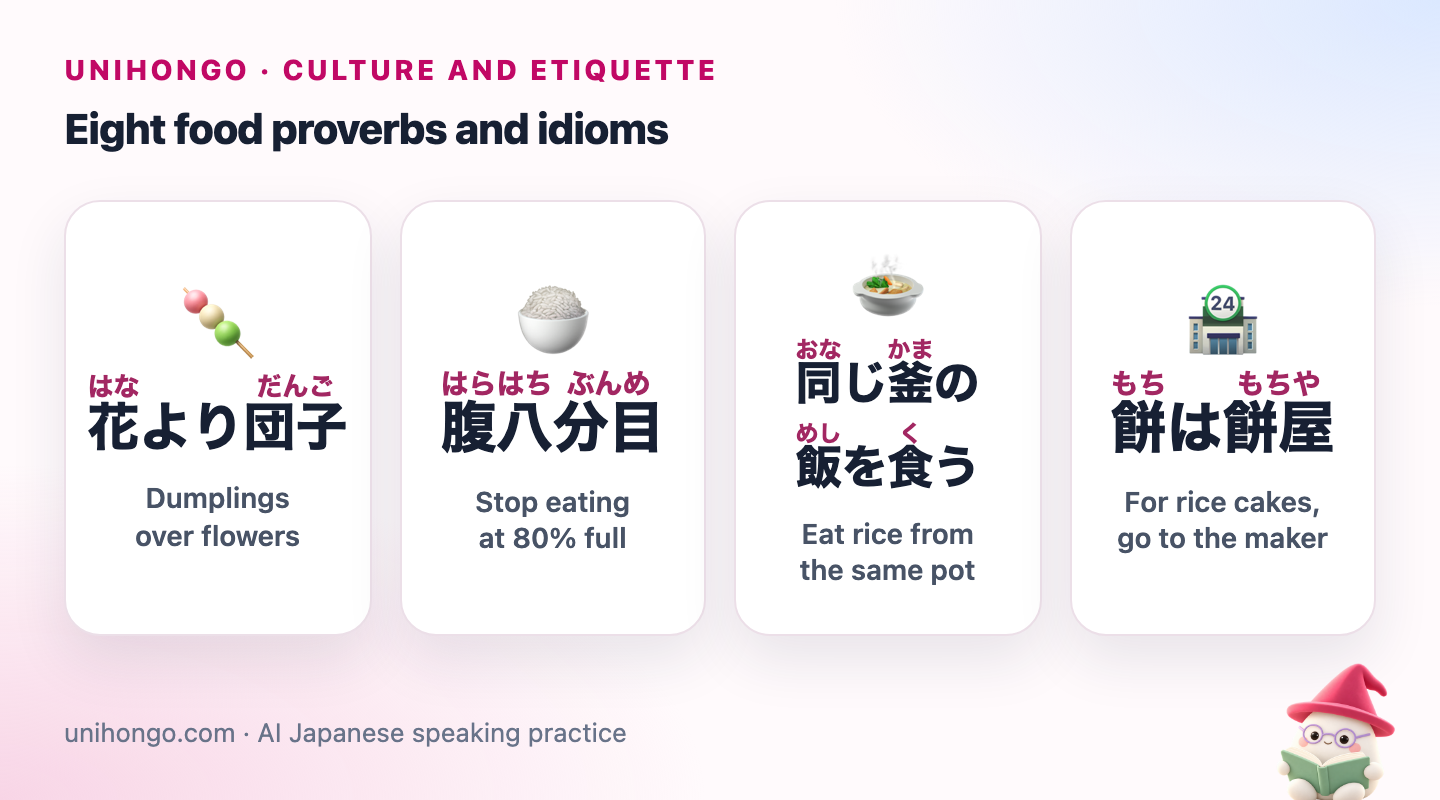
| Japanese | Romaji | Meaning |
|---|---|---|
| 花より団子 | Hana yori dango | Dumplings over flowers |
| 腹八分目 | hara hachibunme | Stop eating at 80% full |
| 同じ釜の飯を食う | Onaji kama no meshi o kuu | Eat rice from the same pot |
| 餅は餅屋 | Mochi wa mochiya | For rice cakes, go to the maker |
| 絵に描いた餅 | e ni kaita mochi | A painted rice cake: an empty plan |
| 朝飯前 | asameshi mae | Before breakfast: very easy |
| 鴨がネギを背負ってくる | Kamo ga negi o shotte kuru | A duck arrives carrying leeks |
| 秋茄子は嫁に食わすな | Akinasu wa yome ni kuwasu na | Don't feed autumn aubergine to a bride |
花より団子: the cherry-blossom classic
At hanami, the spring cherry-blossom parties, people spread blue sheets under the trees and bring food and drinks. 花より団子 jokes that many of them are there for the dango and the beer, not the flowers. Beyond spring, it means choosing what is useful or tasty over what is merely beautiful: a cheap but filling lunch over a fancy café, a practical gift over a decorative one.
It is a friendly, self-mocking proverb. Saying 私は花より団子です about yourself is charming. Said about someone else, it teases them for being greedy or unromantic, which is fine among friends. There is also a playful reversal, 団子より花, but the original is far more common.
| Japanese | Romaji | Meaning |
|---|---|---|
| 私は完全に花より団子です。 | Watashi wa kanzen ni hana yori dango desu. | I'm totally there for the food, not the flowers. |
| お花見、桜より屋台が楽しみ! | Ohanami, sakura yori yatai ga tanoshimi! | I'm more excited about the food stalls than the blossoms! |
| 花より団子だね。 | Hana yori dango da ne. | Food over flowers, huh. |
腹八分目 and 朝飯前: sayings people use daily
腹八分目 is both a saying and a real habit that many people in Japan grew up hearing from parents and grandparents: stop eating when you are about 80 percent full. The full proverb adds に医者いらず, and you will not need a doctor. It comes up when someone declines a second helping, in talks about health and in articles about long life. You can use it politely to refuse more food: 腹八分目にしておきます, I'll stop at 80 percent.
朝飯前 means before breakfast, and anything you can do before breakfast must be easy. It is the casual Japanese for a piece of cake. It sounds confident, sometimes boastful, so people often say it jokingly or about simple tasks. With superiors, a modest いえいえ、簡単でした, oh, it was easy, is safer.
| Japanese | Romaji | Meaning |
|---|---|---|
| もう結構です。腹八分目にしておきます。 | Mō kekkō desu. Hara hachibunme ni shite okimasu. | I'm fine, thanks. I'll stop before I'm full. |
| そんなの朝飯前だよ。 | Sonna no asameshi mae da yo. | That's a piece of cake. (casual) |
Bonds and experts: 同じ釜の飯を食う and 餅は餅屋
同じ釜の飯を食う, eating rice from the same pot, describes people who have shared daily life: dorm mates, a sports team on training camp, colleagues who joined the same year and survived the first hard months together. As a noun phrase, 同じ釜の飯を食った仲間, it means comrades with a deep bond. It comes up at reunions, farewell parties and in speeches.
餅は餅屋, for rice cakes, go to the rice-cake maker, means leave a job to the specialist. Someone trying to fix their own computer for hours might finally say 餅は餅屋だ and call a technician. It is modest and practical, and can also be a polite way to defer to an expert colleague.
| Japanese | Romaji | Meaning |
|---|---|---|
| 彼とは同じ釜の飯を食った仲間です。 | Kare to wa onaji kama no meshi o kutta nakama desu. | We're comrades who shared everything. |
| やっぱり餅は餅屋ですね。お願いします。 | Yappari mochi wa mochiya desu ne. Onegai shimasu. | Best left to the expert. Please go ahead. |
Empty plans, easy targets and a debated aubergine
絵に描いた餅, a rice cake in a painting, looks delicious but you cannot eat it. It means a plan or idea that is impressive on paper but impossible in practice, and it is very common in business and politics: その計画は絵に描いた餅だ. It is a criticism, so use it carefully about a colleague's proposal.
鴨がネギを背負ってくる, a duck arrives carrying the leeks for its own hot pot, describes an easy target who brings everything needed to be taken advantage of, such as a tourist who walks into an overpriced shop holding cash. The short form is 鴨ネギ. Never say it to someone's face.
秋茄子は嫁に食わすな, do not let your daughter-in-law eat autumn aubergines, is famous for having two readings. One says the aubergines are too delicious to waste on a daughter-in-law, a picture of a mean mother-in-law. The other says aubergines are believed to cool the body, so they are kept from her out of care. Which reading is original is debated, so it is best enjoyed as a piece of culture rather than used.
| Japanese | Romaji | Meaning |
|---|---|---|
| その計画は絵に描いた餅だ。 | Sono keikaku wa e ni kaita mochi da. | That plan is pie in the sky. |
| 観光客が鴨ネギ扱いされている。 | Kankōkyaku ga kamonegi atsukai sarete iru. | Tourists are being treated as easy targets. |
Mini dialogue: food proverbs at an izakaya
After work, a learner and a colleague who joined the company the same year share dishes at an izakaya. The proverbs appear naturally around the food.
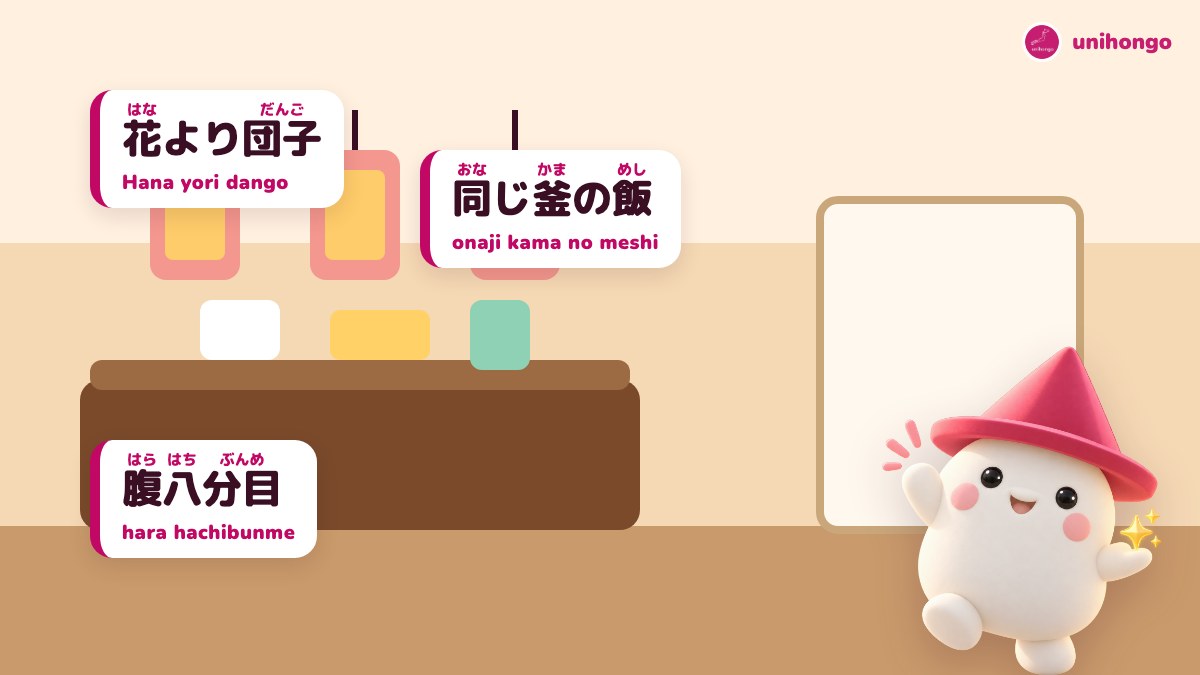
| Japanese | Romaji | Meaning |
|---|---|---|
| もう一品頼む? | Mō hitoshina tanomu? | Colleague: Shall we order one more dish? |
| うーん、今日は腹八分目にしておく。 | Ūn, kyō wa hara hachibunme ni shite oku. | You: Hmm, I'll stop at 80 percent today. |
| 偉いね。でも、この唐揚げは最高だよ。 | Erai ne. Demo, kono karaage wa saikō da yo. | Colleague: Good for you. But this fried chicken is amazing. |
| じゃあ一個だけ。同期とご飯は楽しいね。 | Jā ikko dake. Dōki to gohan wa tanoshii ne. | You: Just one, then. Eating with my intake buddy is fun. |
| 同じ釜の飯を食った仲だからね。 | Onaji kama no meshi o kutta naka da kara ne. | Colleague: We've been through it all together, after all. |
同期 (dōki) means someone who joined the company, school or team in the same year. In many Japanese workplaces this group stays close for years, which is exactly what 同じ釜の飯を食う describes.
Common mistakes with food proverbs
- Saying 花より団子 to a host who decorated beautifully. It suggests the decorations did not matter.
- Calling a customer or client 鴨ネギ, even jokingly. It means an easy mark.
- Reading 腹八分目 as hara hachibun moku. It is hachibunme.
- Using 朝飯前 about a task your boss found hard. It can sound like you are showing off.
- Calling a colleague's plan 絵に描いた餅 in a meeting. Say 実現は難しそうです, it seems hard to achieve, instead.
Kitchen idioms that are not about food
Japanese also has short food idioms that have lost their link to eating. They are very common in everyday speech, and they are worth knowing so you are not puzzled when a colleague talks about selling oil.
ごまをする, to grind sesame, means to flatter someone to win favour, and a ごますり is a flatterer. 油を売る, to sell oil, means to idle away time chatting when you should be working; it is said to come from oil sellers who chatted with customers while the oil slowly dripped. 手前味噌, my own homemade miso, is praising something of your own, and people often apologise for it in advance: 手前味噌ですが, it may sound like boasting, but. 味をしめる, to get a taste for something, means to want more after one success, often a slightly negative habit.
手前味噌ですが is especially useful: it lets you mention your own achievement politely, which fits the Japanese preference for modesty.
| Japanese | Romaji | Meaning |
|---|---|---|
| 上司にごまをするのは苦手です。 | Jōshi ni goma o suru no wa nigate desu. | I'm no good at flattering my boss. |
| どこで油を売ってたの? | Doko de abura o utteta no? | Where have you been slacking off? |
| 手前味噌ですが、このケーキは自信作です。 | Temae miso desu ga, kono kēki wa jishinsaku desu. | If I may say so myself, I'm proud of this cake. |
| 一度勝って味をしめたらしい。 | Ichido katte aji o shimeta rashii. | Apparently one win gave him a taste for it. |
Order, chat and use one proverb
Food proverbs are easiest to remember when you say them over food. Ask Mocchi on Unihongo to suggest three izakaya situations where 腹八分目, 朝飯前 or 同じ釜の飯を食う would fit, then answer each one aloud. Mocchi corrects your lines and remembers which proverbs you still mix up.
For a fuller rehearsal, try the First Round at an Izakaya mission in AI Sensei, or choose Haru-sensei and ask Haru-sensei to play a colleague at an izakaya after work. Order a few dishes, refuse a second helping politely and see where a food proverb fits.