
Nine animal proverbs at a glance
Learn the picture first, then the meaning. Each gloss gives the image and the point in a few words.
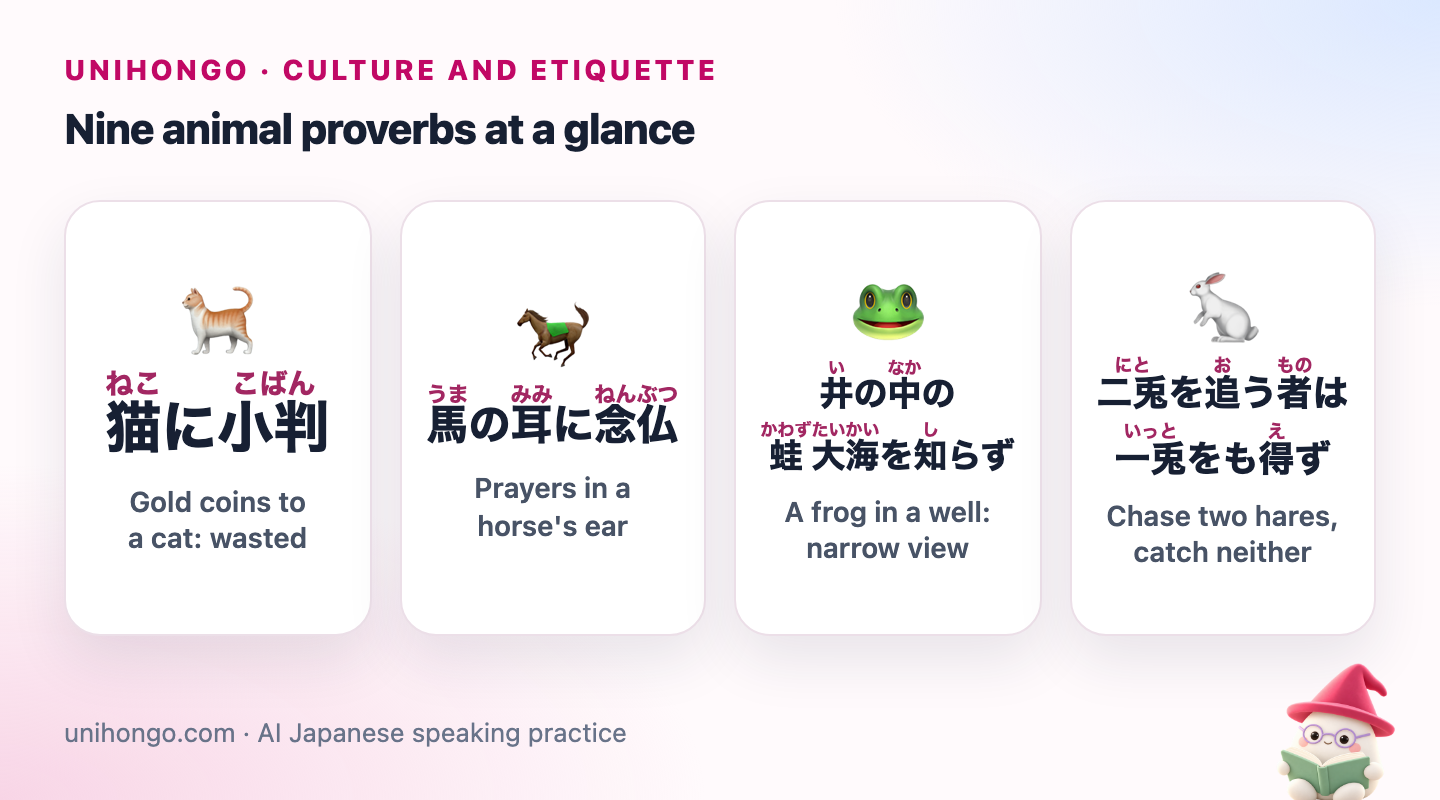
| Japanese | Romaji | Meaning |
|---|---|---|
| 猫に小判 | Neko ni koban | Gold coins to a cat: wasted |
| 馬の耳に念仏 | Uma no mimi ni nenbutsu | Prayers in a horse's ear |
| 井の中の蛙大海を知らず | I no naka no kawazu taikai o shirazu | A frog in a well: narrow view |
| 二兎を追う者は一兎をも得ず | Nito o ou mono wa itto o mo ezu | Chase two hares, catch neither |
| 豚に真珠 | Buta ni shinju | Pearls to a pig |
| 能ある鷹は爪を隠す | Nō aru taka wa tsume o kakusu | A clever hawk hides its talons |
| 虎の威を借る狐 | Tora no i o karu kitsune | A fox borrowing a tiger's power |
| 蛙の子は蛙 | Kaeru no ko wa kaeru | A frog's child is a frog |
| 犬猿の仲 | ken'en no naka | Like dogs and monkeys: enemies |
Wasted value: 猫に小判, 豚に真珠 and 馬の耳に念仏
猫に小判 is the most common of these. A 小判 was an oval gold coin of the Edo period; to a cat it is just a shiny thing. People use it about expensive gifts that are not appreciated, good advice given to someone who will not use it, or high-end equipment bought by a beginner, often about themselves: a professional camera for me is 猫に小判. 豚に真珠, pearls to a pig, came into Japanese from the Bible and means the same thing; it is a little blunter.
馬の耳に念仏, Buddhist prayers chanted into a horse's ear, is about words rather than things. No matter how good the advice, the listener does not take it in. It describes a teenager ignoring a parent, or a colleague who never follows feedback. The English in one ear and out the other is close. Because it compares a person to a horse, it is usually said about someone who is not present.
| Japanese | Romaji | Meaning |
|---|---|---|
| 私に高いカメラは猫に小判だよ。 | Watashi ni takai kamera wa neko ni koban da yo. | An expensive camera would be wasted on me. |
| 何度言っても馬の耳に念仏だ。 | Nando itte mo uma no mimi ni nenbutsu da. | However often I say it, it goes in one ear and out. |
Narrow views and two goals: 井の中の蛙 and 二兎
井の中の蛙大海を知らず, a frog in a well does not know the great ocean, comes from a story in the Chinese classic Zhuangzi. It describes someone whose world is so small they think it is everything. In conversation it is often cut to 井の中の蛙, and it is most comfortable used about yourself, looking back: before I studied abroad, I was a frog in a well. Aimed at someone else, it is a sharp criticism. Some people add a modern, positive second line about the frog knowing the depth of the sky, but this addition is not part of the classic proverb.
二兎を追う者は一兎をも得ず comes from a Western saying about chasing two hares, and it means that chasing two goals at once can leave you with neither. Students hear it when they try to prepare for two exams at the same time; workers hear it when they take on two big projects. It is the natural opposite of 一石二鳥, killing two birds with one stone.
| Japanese | Romaji | Meaning |
|---|---|---|
| 留学する前は、井の中の蛙でした。 | Ryūgaku suru mae wa, i no naka no kawazu deshita. | Before studying abroad, I was a frog in a well. |
| 二つの試験を同時に?二兎を追う者は一兎をも得ずだよ。 | Futatsu no shiken o dōji ni? Nito o ou mono wa itto o mo ezu da yo. | Two exams at once? Chase two hares, catch none. |
Hawks, foxes and frogs: talent, borrowed power and family
能ある鷹は爪を隠す, a capable hawk hides its talons, is genuine praise: truly skilled people do not show off. It is said about a quiet colleague who turns out to be brilliant, or a friend who never mentioned they speak four languages. 虎の威を借る狐, a fox borrowing the tiger's authority, is the opposite: someone who acts important by using a powerful person's name, like a junior who says the director wants this when the director said nothing of the sort.
蛙の子は蛙, a frog's child is a frog, means children turn out like their parents. It can be neutral or slightly dismissive, because it sometimes implies that a child cannot rise above the family. It is safest about yourself or your own family. 犬猿の仲, the relationship between dog and monkey, describes two people who cannot stand each other, and is common in conversation and gossip.
| Japanese | Romaji | Meaning |
|---|---|---|
| 能ある鷹は爪を隠すって、彼のことだね。 | Nō aru taka wa tsume o kakusu tte, kare no koto da ne. | He's the clever hawk that hides its talons. |
| 部長の名前を出すなんて、虎の威を借る狐だ。 | Buchō no namae o dasu nante, tora no i o karu kitsune da. | Using the manager's name? A fox borrowing power. |
| あの二人は犬猿の仲だ。 | Ano futari wa ken'en no naka da. | Those two are like cats and dogs. |
Two proverbs for wasted value, side by side
Learners often ask whether 猫に小判 and 豚に真珠 are interchangeable. In meaning, nearly. In feel, 猫に小判 is softer and more native, and works well about yourself; 豚に真珠 sounds harsher because of the pig. 馬の耳に念仏 is about ignored words, not wasted objects.
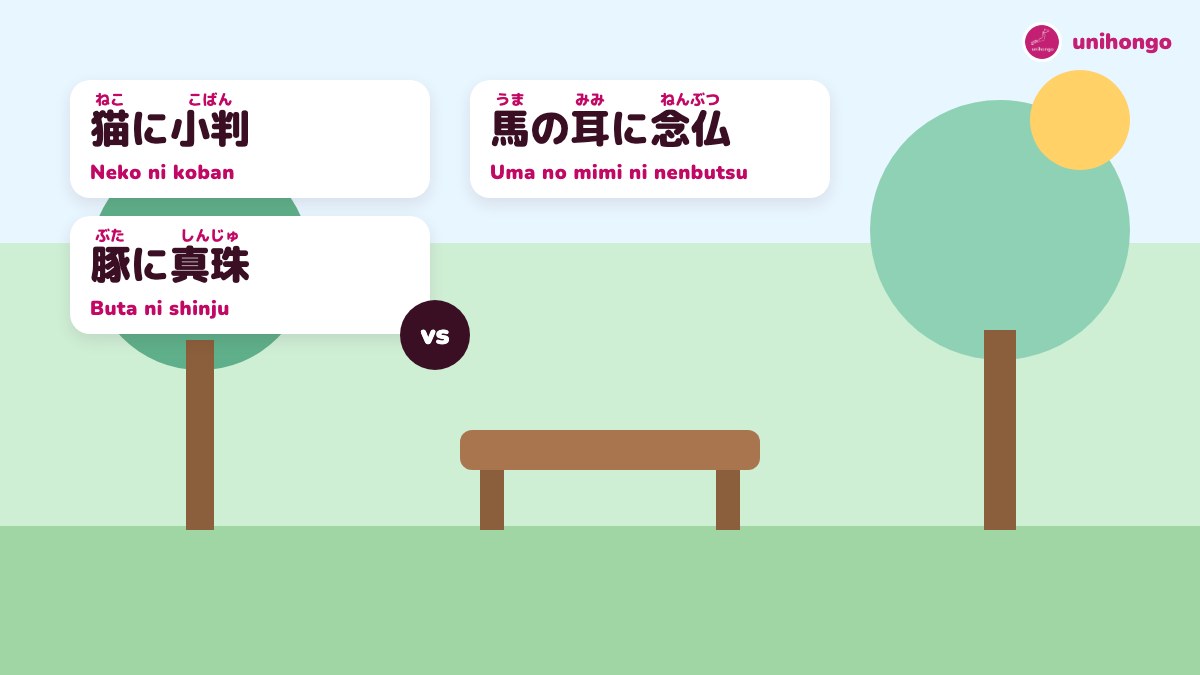
| Proverb | What is wasted | Tone |
|---|---|---|
| 猫に小判 | A valuable thing | Mild, often about yourself |
| 豚に真珠 | A valuable thing | Blunter |
| 馬の耳に念仏 | Advice or words | Exasperated |
Mini dialogue: a gift that missed the mark
| Japanese | Romaji | Meaning |
|---|---|---|
| 父の誕生日に、高いワインをあげたんだ。 | Chichi no tanjōbi ni, takai wain o ageta n da. | You: I gave my dad expensive wine for his birthday. |
| いいね。喜んでた? | Ii ne. Yorokondeta? | Friend: Nice. Was he happy? |
| それが、コーラで割って飲んでた。 | Sore ga, kōra de watte nondeta. | You: Well, he mixed it with cola. |
| あはは、猫に小判だね。 | Ahaha, neko ni koban da ne. | Friend: Ha, gold coins to a cat. |
| まあ、楽しそうだったからいいか。 | Mā, tanoshisō datta kara ii ka. | You: Well, he looked happy, so fine. |
Insults in disguise: a quick checklist
- 馬の耳に念仏, 豚に真珠, 井の中の蛙 and 虎の威を借る狐 all compare a person to an animal in an unflattering way. Use them about yourself, fictional characters or people who are not present.
- 能ある鷹は爪を隠す is safe to say to someone's face; it is a compliment.
- 蛙の子は蛙 can sound like a comment on someone's family background. Keep it for your own family.
- Remember the readings: kawazu in 井の中の蛙, itto in 一兎 and ken'en in 犬猿.
Short animal idioms you will hear every day
Beyond full proverbs, Japanese is full of short animal idioms that come up constantly in conversation. They are shorter, more casual and often more useful than the proverbs above.
猫の手も借りたい, I would even borrow a cat's paws, means you are so busy you would take help from anyone; shops and offices say it in their busiest season. 猫舌, a cat's tongue, describes someone who cannot handle hot food or drinks. 猫の額, a cat's forehead, is a tiny space, usually a humble way to describe your own garden or flat. 鶴の一声, a single cry of the crane, is a decision by someone with authority that ends all discussion, such as the company president settling a debate in one sentence. 狸寝入り, a raccoon dog's sleep, is pretending to be asleep, often to avoid a chore.
Most of these are safe to use about yourself or a situation, which makes them easier than the proverbs that compare people to animals.
| Japanese | Romaji | Meaning |
|---|---|---|
| 年末は猫の手も借りたいほど忙しい。 | Nenmatsu wa neko no te mo karitai hodo isogashii. | The year end is so busy I'd take help from anyone. |
| 猫舌なので、少し冷ましてから飲みます。 | Nekojita na node, sukoshi samashite kara nomimasu. | I can't take hot drinks, so I'll let it cool first. |
| 猫の額ほどの庭ですが、花を育てています。 | Neko no hitai hodo no niwa desu ga, hana o sodatete imasu. | My garden is tiny, but I grow flowers. |
| 社長の鶴の一声で決まった。 | Shachō no tsuru no hitokoe de kimatta. | The president's word settled it. |
| 弟は狸寝入りをしている。 | Otōto wa tanuki neiri o shite iru. | My brother is pretending to be asleep. |
Make the animals do the remembering
Animal proverbs stick best as pictures. Ask Mocchi on Unihongo to /create-flashcards for the nine proverbs; you pick a photo for each card, ideally the animal itself, and then /review-flashcards brings them back on a spaced schedule. Mocchi also keeps track of which readings you miss, so 蛙 and 一兎 will come round again until they stick.
Once the deck exists, load it into Kotoba Tank on the games page and play a few rounds with your own cards. It is a quick way to test whether you can recognise each proverb at speed, not just in a quiet review.