
Four effects, four jobs on the page
Start with four effects, one for each of the main jobs. If you can recognise these, you can guess the job of most unfamiliar effects from where they appear in the panel and how they are drawn.
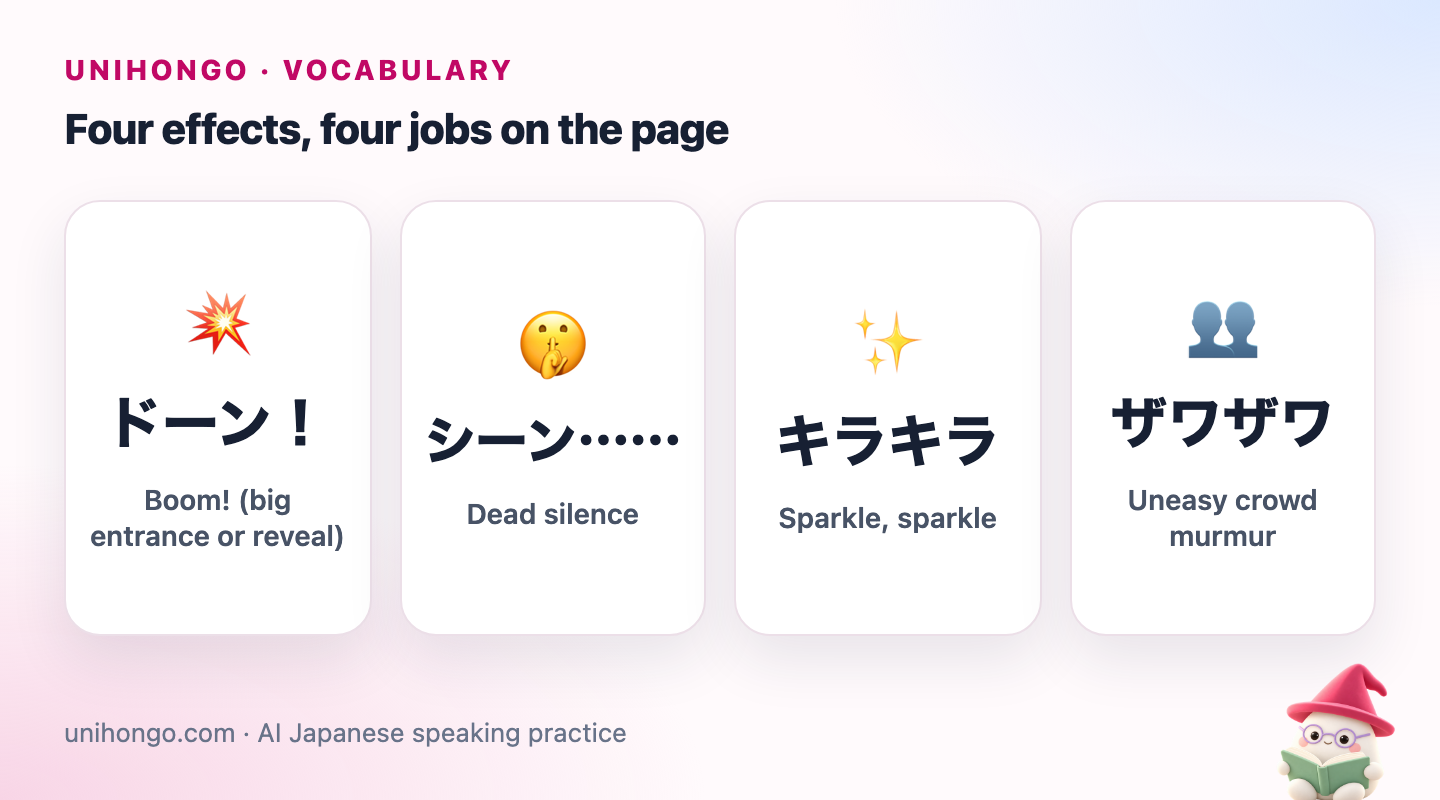
| Japanese | Romaji | Meaning |
|---|---|---|
| ドーン! | Dōn! | Boom! (big entrance or reveal) |
| シーン…… | Shīn... | Dead silence |
| キラキラ | kirakira | Sparkle, sparkle |
| ザワザワ | zawazawa | Uneasy crowd murmur |
Notice that only dōn and zawazawa can be real sounds. Shīn and kirakira are gitaigo: they show something you would see or feel, not hear. Manga uses both kinds in the same way, which is why reading effects teaches you so much about Japanese mimetic words.
Impact and entrances: dōn, bān, dodododo
Impact effects are the loudest on the page. Dōn and bān mark a big moment: a character appearing in a doorway, a title card, a confident announcement. Bān is sharper, like a door flung open or a hand slammed on a desk. Dodododo is a rumbling rush, such as a stampede or someone charging in. Gogogo, a low menacing rumble, appears when tension or a threat fills the air. Writers often stretch these with long bars and exclamation marks to make them bigger.
| Japanese | Romaji | Meaning |
|---|---|---|
| ドアをバーンと開けた。 | Doa o bān to aketa. | He flung the door open. |
| 主人公、ドーンと登場! | Shujinkō, dōn to tōjō! | The hero makes a grand entrance! |
| みんながドドドドと走ってきた。 | Minna ga dodododo to hashitte kita. | Everyone came charging over. |
| ドンと胸をたたいた。 | Don to mune o tataita. | She thumped her chest confidently. |
Silence and stillness: shīn, jī, pita
Silence effects are where manga feels most Japanese. Shīn fills a panel where nobody speaks: after a bad joke, a shocking statement or in a deserted hallway. Jī, often written じーっ, is a long stare. Pita, or pitatto, is something stopping dead, such as a character freezing mid-step. Hyū, a thin wind sound, is sometimes added to make the awkward silence feel even colder.
| Japanese | Romaji | Meaning |
|---|---|---|
| 教室がシーンとなった。 | Kyōshitsu ga shīn to natta. | The classroom went silent. |
| 猫がじーっとこっちを見ている。 | Neko ga jītto kotchi o mite iru. | The cat is staring at me. |
| 足がピタッと止まった。 | Ashi ga pitatto tomatta. | His feet stopped dead. |
In everyday speech, shīn to naru and jitto miru are completely normal. You can use them in a story about your day without sounding like a comic.
Sparkle and beauty: kirakira, kiran, pā
Sparkle effects make things look beautiful, cute or impressive. Kirakira surrounds a handsome character, shining eyes or a new object. Kiran or kirari is a single glint, such as light catching glasses or a tooth in a confident smile. Pā, often written パァァ with small vowels, shows a face lighting up with joy; it is related to the everyday word pātto, brightly or all at once. Flower or bubble backgrounds often do the same job with no word at all.
| Japanese | Romaji | Meaning |
|---|---|---|
| 目がキラキラしている。 | Me ga kirakira shite iru. | Her eyes are sparkling. |
| メガネがキランと光った。 | Megane ga kiran to hikatta. | His glasses glinted. |
| 顔がパアッと明るくなった。 | Kao ga pātto akaruku natta. | Her face lit up. |
Crowds and unease: zawazawa, hisohiso, zawa
Background effects tell you how a crowd feels. Zawazawa is a murmur with unease, often after a shocking event. Gayagaya is lively, noisy chatter with no tension. Hisohiso is whispering, often gossip. A single zawa, repeated across the panel in heavy letters, has become famous from gambling manga as a sign of creeping dread; fans sometimes quote it as a joke.
| Japanese | Romaji | Meaning |
|---|---|---|
| 会場がざわざわし始めた。 | Kaijō ga zawazawa shihajimeta. | The audience began to murmur. |
| なんだか胸がざわざわする。 | Nandaka mune ga zawazawa suru. | I have a bad feeling about this. |
| Effect | Type | Mood | Also used in speech? |
|---|---|---|---|
| zawazawa | Giongo | Uneasy murmur | Yes, common |
| gayagaya | Giongo | Lively chatter | Yes, common |
| hisohiso | Giongo | Whispering, gossip | Yes, common |
| zawa | Mostly visual | Creeping dread | Only as a joke |
Faces and reactions: niyari, hatto, gakkuri, pō
Small effects next to a face tell you what a character is thinking. Niyari is a sly grin and niyaniya a lasting smirk. Hatto, often just ハッ, is a sudden realisation. Gakkuri or gakutto is slumping in disappointment. Pō, written ポッ, is a quiet blush. Zūn is a heavy, gloomy mood dropping onto someone. Reading these is one of the best ways to understand reactions in Japanese, because the same words appear in conversation.
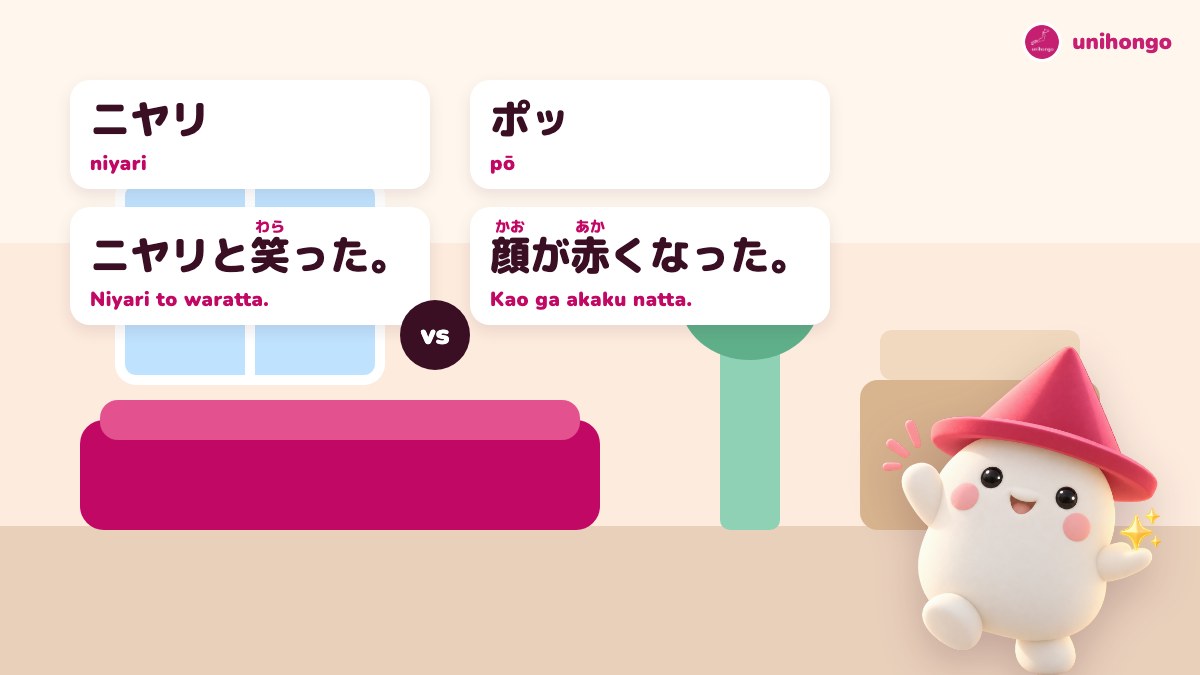
| Japanese | Romaji | Meaning |
|---|---|---|
| 彼はニヤリと笑った。 | Kare wa niyari to waratta. | He grinned slyly. |
| ハッと気がついた。 | Hatto ki ga tsuita. | I suddenly realised. |
| 負けてガクッとした。 | Makete gakutto shita. | I slumped after losing. |
| 何ニヤニヤしてるの? | Nani niyaniya shiteru no? | Why are you smirking? (casual) |
Decoding the spelling tricks
- Long bar ー: a stretched sound. ドン is a thump; ドーン is a long, echoing boom.
- Small tsu ッ at the end: a sudden stop. ハッ is a quick gasp; キラッ is one quick flash.
- Voiced marks ゛: heavier and rougher. キラキラ is pretty; ギラギラ is harsh and glaring.
- Repetition: an ongoing action or state. ドキ is one beat; ドキドキ is a racing heart.
- Hiragana instead of katakana: softer, quieter, or a feeling rather than a sound. Many artists use hiragana for gentle effects.
Turn a chapter into a reading lesson
When you meet an effect you cannot find, describe the panel to Mocchi and ask /explain with the effect, for example: a character stands in a doorway and the letters say バーン, what does it mean here? Mocchi explains the job of the effect and gives you a plain sentence that says the same thing, so you learn the everyday Japanese behind it.
Then keep the new words moving. Add your ten favourite effects as flashcards and play Vocabulary Dash with them on the games page; recognising zawazawa or niyari at speed makes the next chapter much faster to read.