
Four kitchen sounds to learn first
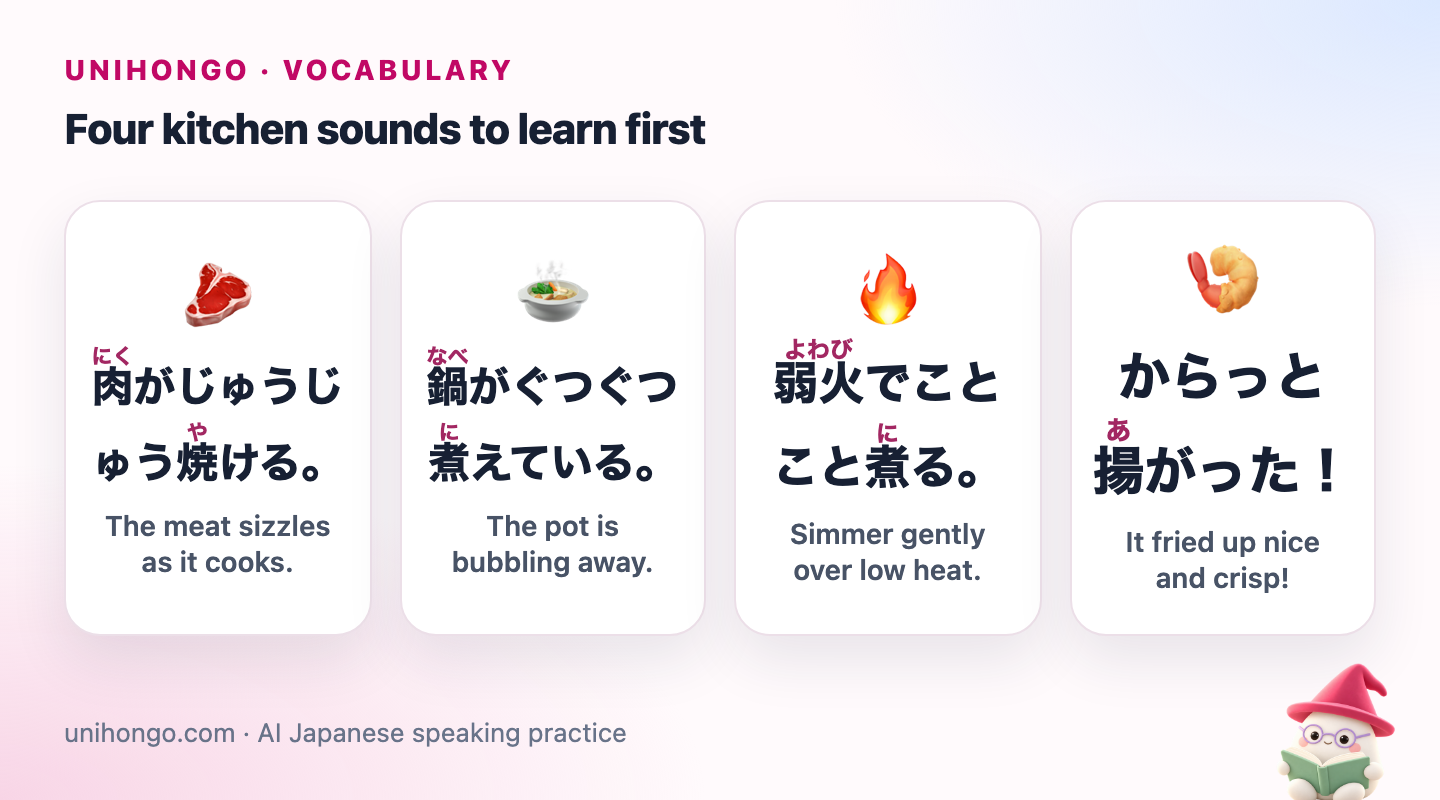
If you learn only four cooking words, make them these. Together they cover the hot pan, the busy pot, the slow pot and the deep fryer, and you will hear all four in any Japanese kitchen, on television and in recipe videos.
Jūjū is clear giongo: it copies the hiss of meat or fish meeting a hot surface. Gutsugutsu and kotokoto sit between sound and sight, describing both the noise and the look of bubbles. Karatto is gitaigo: it describes a dry, crisp finish rather than a sound.
| Japanese | Romaji | Meaning |
|---|---|---|
| 肉がじゅうじゅう焼ける。 | Niku ga jūjū yakeru. | The meat sizzles as it cooks. |
| 鍋がぐつぐつ煮えている。 | Nabe ga gutsugutsu niete iru. | The pot is bubbling away. |
| 弱火でことこと煮る。 | Yowabi de kotokoto niru. | Simmer gently over low heat. |
| からっと揚がった! | Karatto agatta! | It fried up nice and crisp! |
From a gentle simmer to a rolling boil
Japanese has a small ladder of words for liquid on the stove, and choosing the right step tells the listener how strong the heat is. The table runs from the first small bubbles to a full boil.
| Japanese | Romaji | Meaning |
|---|---|---|
| スープがふつふつしてきた。 | Sūpu ga futsufutsu shite kita. | The soup is starting to bubble. |
| カレーをことこと煮込む。 | Karē o kotokoto nikomu. | Let the curry simmer slowly. |
| おでんがぐつぐつ煮えている。 | Oden ga gutsugutsu niete iru. | The oden is bubbling in the pot. |
| お湯がぐらぐら沸いている。 | Oyu ga guragura waite iru. | The water is at a rolling boil. |
| 沸騰したら弱火にしてください。 | Futtō shitara yowabi ni shite kudasai. | Once it boils, please turn the heat down. |
| Word | Type | What you see or hear | Typical verb |
|---|---|---|---|
| futsufutsu | Mostly gitaigo | Small bubbles starting to rise | futsufutsu to waku, futsufutsu suru |
| kotokoto | Both | Quiet simmer on low heat, lid softly rattling | kotokoto niru, kotokoto nikomu |
| gutsugutsu | Both | Thick food bubbling hard: stew, curry, oden, hot pot | gutsugutsu nieru, gutsugutsu iu |
| guragura | Both | Plain water at a full rolling boil | guragura waku |
The difference between gutsugutsu and guragura trips up many learners. Gutsugutsu suggests something thick and full of ingredients, so it suits curry, oden or a hot pot on the table. For a pan of pasta water or water for noodles, Japanese speakers usually say guragura. Futsufutsu also has a figurative use: anger or an idea slowly building inside someone, futsufutsu to waite kuru.
Frying and grilling: jūjū, pachipachi, kongari, karatto
Frying words describe two things: the noise in the pan and the colour or texture of the result. Jūjū is the sizzle itself, and you will hear it at yakiniku restaurants, okonomiyaki counters and teppanyaki grills, where the sound is part of the meal. Pachipachi is the sharper pop of oil spitting out of the pan, and it often comes with a warning. Kongari is a gitaigo for a good golden brown, the colour of toast or grilled fish skin done just right.
Karatto is the word for fried food that is crisp, light and not greasy. Japanese home cooks often fry karaage twice, nidoage, to get this result, and you will see karatto on many recipe titles. The opposite, food that has gone soggy, is shinnari or betabeta, depending on the dish.
| Japanese | Romaji | Meaning |
|---|---|---|
| フライパンで肉をじゅうじゅう焼く。 | Furaipan de niku o jūjū yaku. | Sizzle the meat in a frying pan. |
| 鉄板の上でじゅうじゅういっている。 | Teppan no ue de jūjū itte iru. | It's sizzling on the hot plate. |
| 油がぱちぱち跳ねるから気をつけて。 | Abura ga pachipachi haneru kara ki o tsukete. | Careful, the oil is spitting. (casual) |
| パンをこんがり焼く。 | Pan o kongari yaku. | Toast the bread golden brown. |
| 唐揚げがからっと揚がった。 | Karaage ga karatto agatta. | The fried chicken came out crisp. |
| 二度揚げするとからっとする。 | Nidoage suru to karatto suru. | Frying twice makes it crisp. |
Karatto has two common meanings outside the kitchen. It describes weather that clears up dry and bright, and a personality that is open and does not hold grudges. Both are positive, like the crisp fried food.
Prep work: tonton, satto, shinnari
Before anything goes on the heat, you chop, rinse and blanch, and Japanese has a sound word for each. Tonton is the steady tap of a knife on a cutting board, a sound many people associate with a home kitchen in the morning. Satto means quickly or briefly; in recipes it tells you not to overdo something, such as blanching spinach for a few seconds. Shinnari describes vegetables that have gone soft and limp, either from heat or from being rubbed with salt.
Shinnari is useful because recipes use it as a target: fry the onion until it is shinnari, rub the cucumber with salt until it is shinnari. It is a state you see and feel, so it is gitaigo.
| Japanese | Romaji | Meaning |
|---|---|---|
| 包丁でとんとん切る。 | Hōchō de tonton kiru. | Chop with a steady tap of the knife. |
| ねぎをとんとん刻む。 | Negi o tonton kizamu. | Chop the green onion finely. |
| ほうれん草をさっと茹でる。 | Hōrensō o satto yuderu. | Blanch the spinach quickly. |
| さっと炒めてください。 | Satto itamete kudasai. | Stir-fry it briefly. (recipe style) |
| 玉ねぎがしんなりするまで炒める。 | Tamanegi ga shinnari suru made itameru. | Fry the onion until soft. |
| 塩もみするときゅうりがしんなりする。 | Shiomomi suru to kyūri ga shinnari suru. | Rubbing cucumber with salt softens it. |
Grammar: how cooking words attach to verbs
Cooking words follow the same patterns as other Japanese sound words. Repeated words such as jūjū or kotokoto can go straight before a verb, with or without to. Words that end in a small tsu, such as karatto and satto, already contain the to and go straight before the verb. Many words also combine with suru to become a verb of their own, and the past form shita lets them describe a noun.
When the sound itself is the point, Japanese adds iu, to say or make a sound: jūjū iu, gutsugutsu iu. In speech the to before iu is often dropped.
| Japanese | Romaji | Meaning |
|---|---|---|
| じゅうじゅういう音がする。 | Jūjū iu oto ga suru. | You can hear a sizzling sound. |
| からっとした天ぷらが好き。 | Karatto shita tenpura ga suki. | I like crisp tempura. (casual) |
| こんがりしたトースト | kongari shita tōsuto | nicely browned toast |
| しんなりした白菜 | shinnari shita hakusai | softened napa cabbage |
| Word | Common patterns | Meaning in the kitchen |
|---|---|---|
| jūjū | jūjū yaku, jūjū iu | Sizzle on a hot surface |
| gutsugutsu | gutsugutsu nieru, gutsugutsu suru | Bubble hard in a pot |
| kotokoto | kotokoto niru, kotokoto nikomu | Simmer gently for a long time |
| karatto | karatto ageru, karatto shita + noun | Fry until crisp and light |
| kongari | kongari yaku, kongari shita + noun | Brown nicely |
| shinnari | shinnari suru made, shinnari shita + noun | Soften, wilt |
Cooking along with a recipe
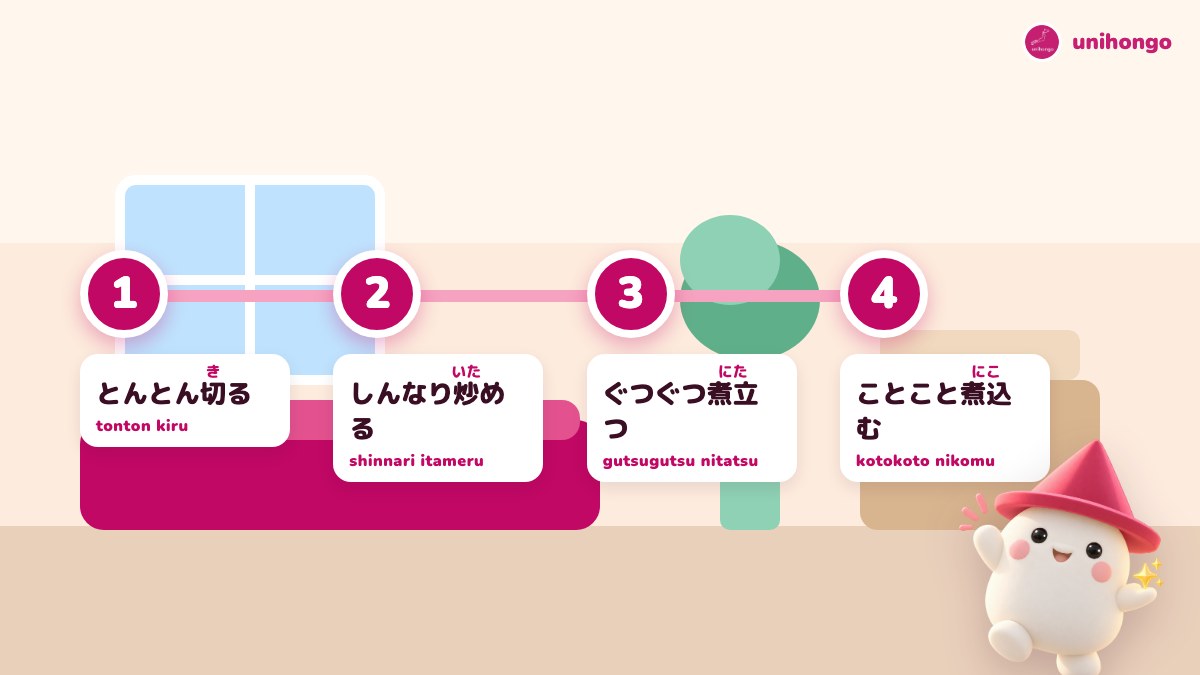
Here is how the words work together in a real recipe. Nikujaga, a home-style stew of meat and potatoes, is a classic first Japanese dish, and its steps use almost every word in this guide. Recipes are written in plain form or in polite masu form; video instructions and cooking teachers usually use the polite form.
Notice how each sound word tells you when to move to the next step: you chop to a rhythm, fry until the onion looks a certain way, and change the heat when the pot sounds a certain way.
| Japanese | Romaji | Meaning |
|---|---|---|
| まず、玉ねぎをとんとん切ります。 | Mazu, tamanegi o tonton kirimasu. | Step 1: First, chop the onion. |
| しんなりするまで炒めます。 | Shinnari suru made itamemasu. | Step 2: Fry until soft. |
| ぐつぐつしてきたら弱火にします。 | Gutsugutsu shite kitara yowabi ni shimasu. | Step 3: When it starts bubbling, turn the heat down. |
| ふたをして、ことこと二十分煮ます。 | Futa o shite, kotokoto nijuppun nimasu. | Step 4: Cover and simmer gently for 20 minutes. |
Mini dialogue: in a friend's kitchen
In casual kitchen talk, sound words come up all the time, often with iu and the casual endings ne and yo. This exchange is between two friends making dinner together.
| Japanese | Romaji | Meaning |
|---|---|---|
| いい匂い!何作ってるの? | Ii nioi! Nani tsukutteru no? | Friend: Smells good! What are you making? |
| カレー。今、ことこと煮込んでるところ。 | Karē. Ima, kotokoto nikonderu tokoro. | You: Curry. I'm letting it simmer right now. |
| 火、強くない?ぐつぐついってるよ。 | Hi, tsuyokunai? Gutsugutsu itteru yo. | Friend: Isn't the heat too high? It's bubbling hard. |
| あ、本当だ。弱火にするね。 | A, hontō da. Yowabi ni suru ne. | You: Oh, you're right. I'll turn it down. |
| 唐揚げも作るの? | Karaage mo tsukuru no? | Friend: Are you making karaage too? |
| うん。二度揚げするとからっと揚がるんだって。 | Un. Nidoage suru to karatto agaru n datte. | You: Yes. They say frying twice makes it crisp. |
| じゅうじゅういう音、たまらないね。 | Jūjū iu oto, tamaranai ne. | Friend: That sizzling sound is irresistible. |
Common learner mistakes
- Using gutsugutsu for a pan of plain water. It is understood, but guragura sounds more natural for water at a full boil.
- Saying kotokoto for food on high heat. Kotokoto always suggests low heat and patience; if the pot is bubbling hard, it is gutsugutsu.
- Using karatto for anything crunchy. Karatto is about a dry, crisp finish from frying or drying. For crunchy vegetables or crackers, words like shakishaki or paripari fit better.
- Forgetting that shinnari can be good or bad. In a stir-fry recipe it is the goal; for tempura or salad leaves that should be crisp, it means they have gone limp.
- Leaving out the verb. In a recipe, kotokoto on its own is incomplete; say kotokoto niru or kotokoto nikomu.
Cook along out loud
Sound words stick best when you say them while doing the thing they describe. Before you cook, ask Mocchi in the chat for a short recipe: for example, Write a simple nikujaga recipe in polite Japanese using five cooking sound words. Mocchi writes it at your level, and you can follow up with /explain and any line you are unsure of, such as the step about frying the onion until shinnari, to see how each part of the sentence works. Mocchi keeps notes on the words you find tricky, so a later quiz can bring back gutsugutsu and guragura until you stop mixing them up.
Then practise the spoken side. In AI Sensei, ask Hana-sensei to play the instructor at a Japanese cooking class and to give you steps with sound words while you repeat them and ask questions such as Kono kurai de ii desu ka, is this about right? Ask the Sensei to speak more slowly at first, and check the session report afterwards for the words you hesitated over.