
Four words for a cleaning day
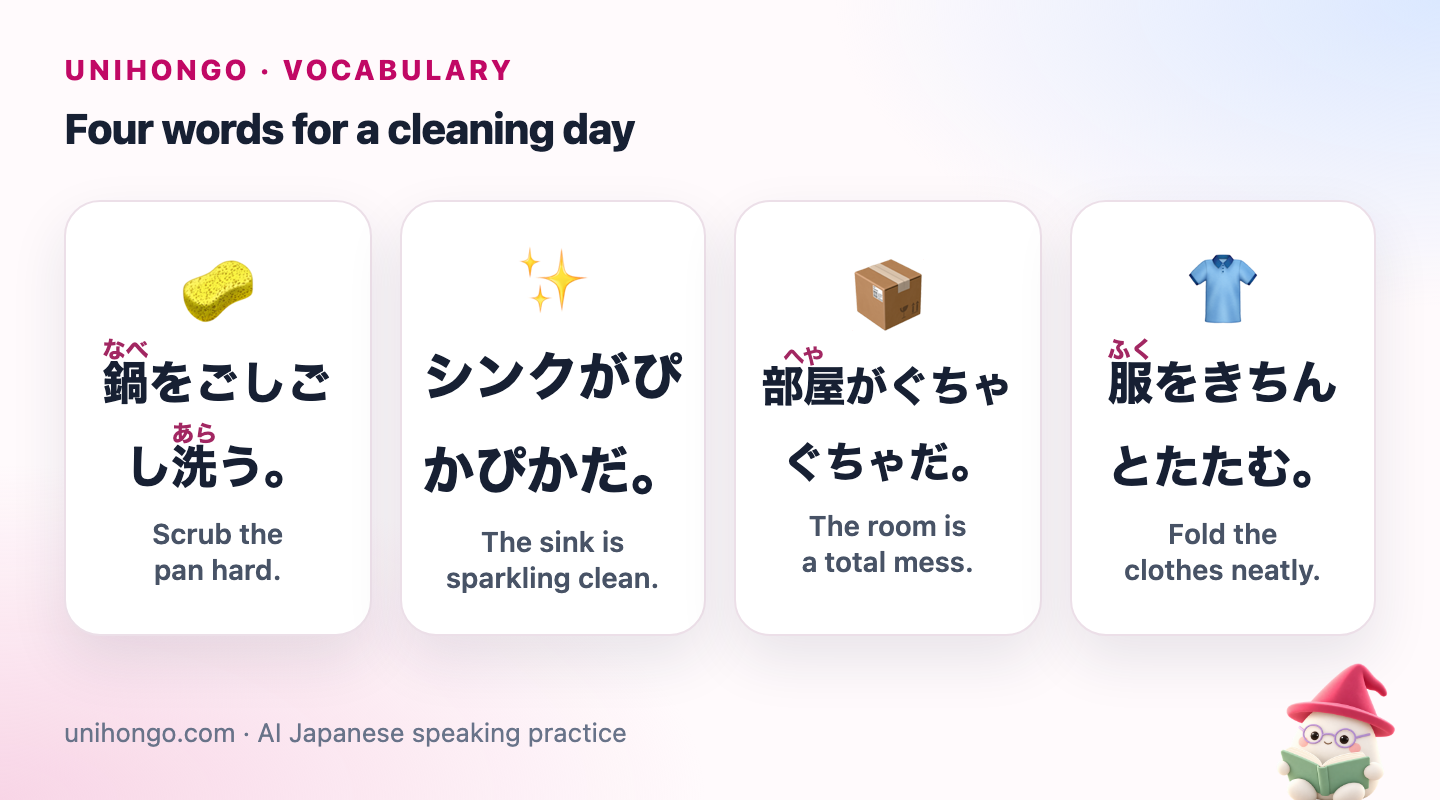
These four words take you from the work to the result. Goshigoshi is the action, pikapika is the clean result, guchagucha is the mess you start with and kichinto is how a tidy home looks. All four are everyday words; none of them is slang.
| Japanese | Romaji | Meaning |
|---|---|---|
| 鍋をごしごし洗う。 | Nabe o goshigoshi arau. | Scrub the pan hard. |
| シンクがぴかぴかだ。 | Shinku ga pikapika da. | The sink is sparkling clean. |
| 部屋がぐちゃぐちゃだ。 | Heya ga guchagucha da. | The room is a total mess. |
| 服をきちんとたたむ。 | Fuku o kichinto tatamu. | Fold the clothes neatly. |
Goshigoshi is partly giongo, because scrubbing makes a sound, and partly gitaigo, because it shows the motion. Pikapika, guchagucha and kichinto are gitaigo. Kichinto is a little different from the others: it is not a doubled word, and it is used with its to.
Scrubbing, wiping and shaking out
Each cleaning action has its own sound. Goshigoshi is hard scrubbing. Kyukkyu is the squeak of something so clean it squeaks, as with freshly washed dishes or a polished window. Fukifuki is a gentle wiping motion and sounds cute; parents use it with children. Panpan is patting or beating, such as shaking dust out of a futon or a rug; futon tataki, beating the futon, used to be a common sight on balconies. Sassa to is quickly, as in giving the floor a quick sweep.
| Japanese | Romaji | Meaning |
|---|---|---|
| 床をごしごしこすった。 | Yuka o goshigoshi kosutta. | I scrubbed the floor hard. |
| お皿がきゅっきゅっと鳴るまで洗う。 | Osara ga kyukkyutto naru made arau. | Wash the plates until they squeak. |
| テーブル、ふきふきしようね。 | Tēburu, fukifuki shiyō ne. | Let's wipe the table. (to a child) |
| 布団をぱんぱんとたたいた。 | Futon o panpan to tataita. | I beat the futon to get the dust out. |
| 床をさっと掃いておいて。 | Yuka o satto haite oite. | Give the floor a quick sweep. (casual) |
Dirt and textures: betabeta, zarazara, nurunuru
Before you clean, you notice how things feel. Betabeta is sticky, such as a kitchen counter after cooking or a hand covered in syrup. Zarazara is rough and gritty, like sand or dust on a floor. Nurunuru is slimy and slippery, like a drain or the inside of a vase. Hokorippoi, dusty, is a regular adjective rather than a sound word.
| Japanese | Romaji | Meaning |
|---|---|---|
| 換気扇が油でぎとぎとだ。 | Kankisen ga abura de gitogito da. | The kitchen fan is caked with grease. |
| 床がざらざらしている。 | Yuka ga zarazara shite iru. | The floor feels gritty. |
| 排水口がぬるぬるする。 | Haisuikō ga nurunuru suru. | The drain is slimy. |
| Word | Feel | Typical place | Pattern |
|---|---|---|---|
| betabeta | Sticky | Kitchen counter, door handle | betabeta suru, betabeta da |
| zarazara | Gritty, rough | Floor, entrance hall | zarazara shite iru |
| nurunuru | Slimy, slippery | Drain, bath, vase | nurunuru suru |
| gitogito | Thick with grease | Range hood, frying pan | gitogito da |
Messy and cluttered: guchagucha, gochagocha, chirakatte iru
Mess comes in degrees. Gochagocha is cluttered: too many things packed into one place without order. Guchagucha is chaotic or wrecked, things thrown around and mixed up. Barabara means scattered or in separate pieces. The plain verb chirakaru, to be messy, is also very common: heya ga chirakatte iru, the room is messy. When guests arrive, many Japanese hosts say chirakatte imasu kedo, sorry about the mess, even if the room looks tidy; it is a polite set phrase.
| Japanese | Romaji | Meaning |
|---|---|---|
| 引き出しの中がごちゃごちゃしている。 | Hikidashi no naka ga gochagocha shite iru. | The drawer is cluttered. |
| 子どもがおもちゃをばらばらにした。 | Kodomo ga omocha o barabara ni shita. | The kids scattered their toys everywhere. |
| 散らかっていますけど、どうぞ。 | Chirakatte imasu kedo, dōzo. | Sorry about the mess, come in. (polite) |
| みんなの意見がばらばらだ。 | Minna no iken ga barabara da. | Everyone's opinions are all over the place. |
Barabara is not only about mess. It also means scattered or separate in a wider sense: everyone's opinions are barabara when nobody agrees, and a family goes home barabara when each person leaves at a different time. Recognising this second meaning helps at work and school.
Tidy results: kichinto, sukkiri, sappari, pishitto
After cleaning, you want words for the result. Kichinto is neat and orderly. Sukkiri is the clear, refreshed feeling of a room with less stuff, or the relief of having finished. Sappari is fresh and clean, often about yourself after a bath or about a clean, simple taste. Pishitto describes something crisp and sharp, such as an ironed shirt or a properly made bed.
| Japanese | Romaji | Meaning |
|---|---|---|
| いらない物を捨てて、すっきりした。 | Iranai mono o sutete, sukkiri shita. | I threw out what I didn't need and it feels great. |
| お風呂に入って、さっぱりした。 | Ofuro ni haitte, sappari shita. | I had a bath and feel fresh. |
| シャツにぴしっとアイロンをかけた。 | Shatsu ni pishitto airon o kaketa. | I ironed the shirt crisp. |
| 靴をきちんとそろえてください。 | Kutsu o kichinto soroete kudasai. | Please line your shoes up neatly. |
Cleaning day with a flatmate
Two flatmates plan a weekend clean. They are friends, so they speak casually, with the tone of a gentle request rather than an order. With a host family, you would switch to desu and masu.
| Japanese | Romaji | Meaning |
|---|---|---|
| 今日、部屋の掃除しない? | Kyō, heya no sōji shinai? | Rin: Shall we clean the flat today? |
| いいよ。台所がぎとぎとだしね。 | Ii yo. Daidokoro ga gitogito da shi ne. | You: Sure. The kitchen's all greasy anyway. |
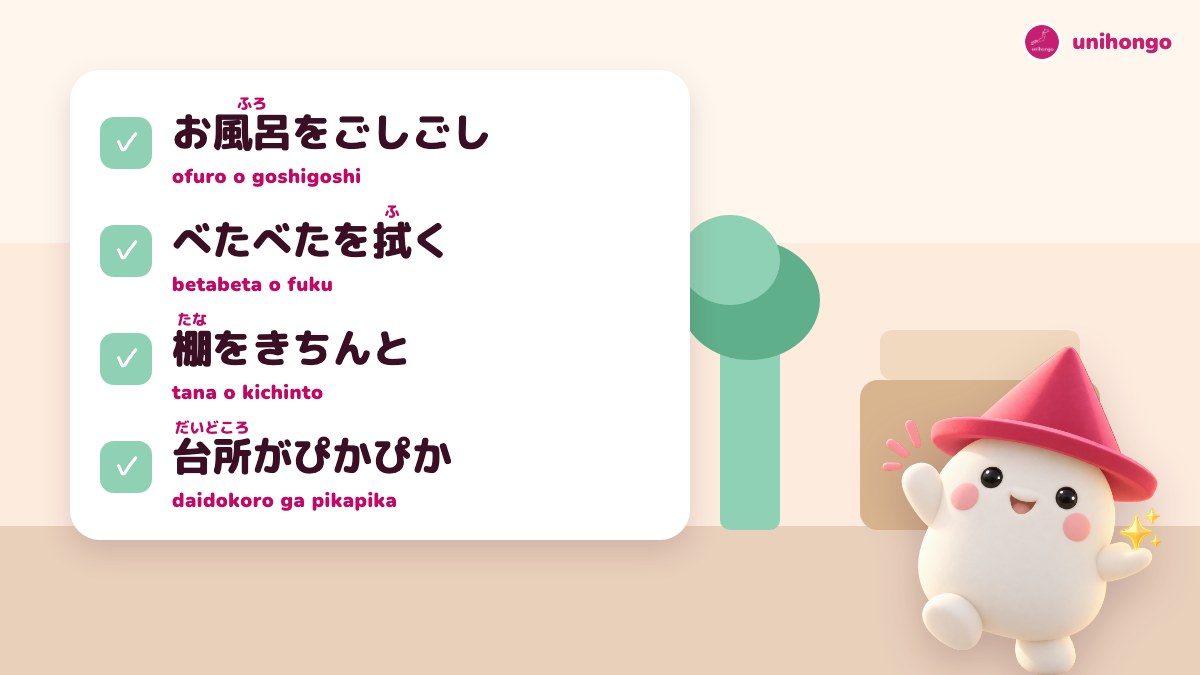
| じゃあ、私はお風呂をごしごしやるね。 | Jā, watashi wa ofuro o goshigoshi yaru ne. | Rin: Then I'll give the bath a good scrub. |
| 私は本棚を片付ける。ごちゃごちゃだから。 | Watashi wa hondana o katazukeru. Gochagocha da kara. | You: I'll tidy the bookshelf. It's so cluttered. |
| 終わったら、全部ぴかぴかだね。 | Owattara, zenbu pikapika da ne. | Rin: When we're done, everything will sparkle. |
| うん、すっきりするね。 | Un, sukkiri suru ne. | You: Yeah, it'll feel so good. |
Common mistakes with home words
- Saying pikapika for a tidy room. Pikapika is about shine; a tidy room is kirei or kichinto shite iru.
- Using goshigoshi for delicate things. It means hard scrubbing; for a screen or glasses, say sotto fuku, wipe gently.
- Mixing up sukkiri and sappari. Sukkiri is about space and clarity; sappari is about freshness and cleanliness.
- Using guchagucha for a few things out of place. It sounds dramatic; chotto chirakatte iru is milder.
- Saying sappari for a tidy room. Sappari fits a fresh feeling or a simple taste; for a cleared-out room, sukkiri is the usual choice.
- Taking chirakatte imasu kedo literally. A host who says it does not want you to notice mess; just say ojama shimasu and go in.
Before-and-after drills
Ask Mocchi: /quiz me on Japanese cleaning onomatopoeia, show a before or after situation and let me choose. Mocchi gives you a sticky table, a squeaky clean plate or a cluttered drawer, asks for the word and explains every answer, then picks up next time with the pairs you got wrong.
For the spoken side, try AI Sensei with Ibuki-sensei and the housework topic. Ask her to play a flatmate dividing up the chores with you, and practise making requests in casual and then polite Japanese.