
Shaken in four words
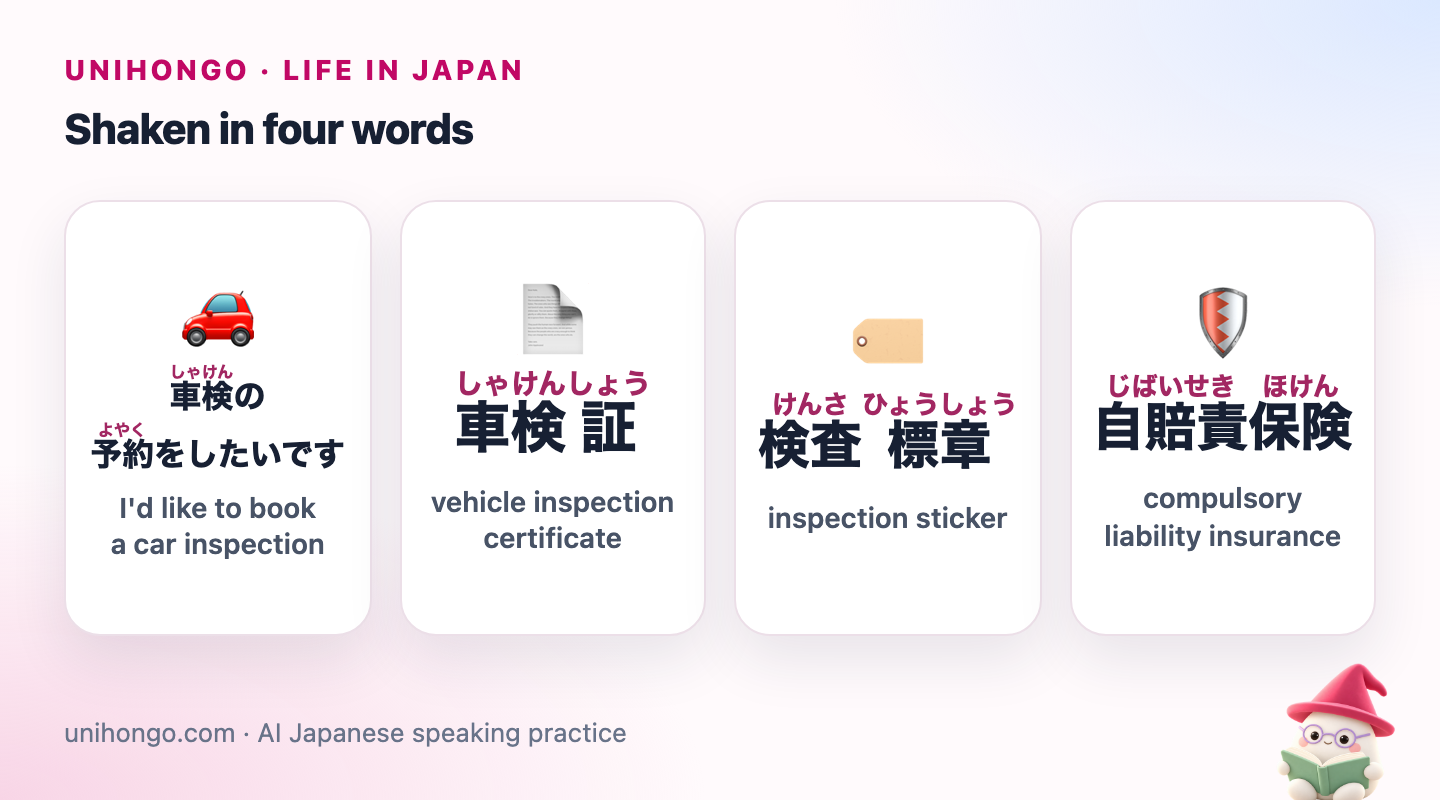
The word shaken is short for jidōsha kensa, motor vehicle inspection. Four items go with it: the inspection itself, the certificate that records the result, the sticker on the windscreen and the compulsory insurance renewed at the same time.
| Japanese | Romaji | Meaning |
|---|---|---|
| 車検の予約をしたいです | Shaken no yoyaku o shitai desu | I'd like to book a car inspection |
| 車検証 | shakenshō | vehicle inspection certificate |
| 検査標章 | kensa hyōshō | inspection sticker |
| 自賠責保険 | jibaiseki hoken | compulsory liability insurance |
When your car is due
For an ordinary private car or a kei car, the first shaken comes three years after first registration and then every two years. Your expiry date is recorded on the inspection certificate. Since 2023 most certificates are a small card with an IC chip, and the expiry date may not be printed on the card face; it is on the record sheet issued with it and can be read with an app. The sticker also shows the month and year.
Since April 2025 you can be inspected from two months before the expiry date without losing any time. Garages send reminder postcards, and booking about two months ahead is common, especially in March, the busiest month.
| Japanese | Romaji | Meaning |
|---|---|---|
| 有効期間の満了する日 | yūkō kikan no manryō suru hi | the day the validity ends |
| 車検が切れる | shaken ga kireru | the inspection expires |
| 車検はいつまでですか。 | Shaken wa itsu made desu ka. | Until when is the inspection valid? |
| 来月、車検です。 | Raigetsu, shaken desu. | My car's inspection is next month. |
| 来月の土曜日は空いていますか。 | Raigetsu no doyōbi wa aite imasu ka. | Do you have a slot on a Saturday next month? |
| 引き取りと納車はできますか。 | Hikitori to nōsha wa dekimasu ka. | Can you collect and return the car? |
The sticker on the windscreen
When the car passes, you receive a new sticker, the kensa hyōshō, showing the month and year of the next expiry in large numbers. Since July 2023 it goes at the top of the windscreen on the driver's side, as far from the centre as practical, so that the driver can see it; garages usually place it for you. Kei cars have their own sticker but the same rules.
| Japanese | Romaji | Meaning |
|---|---|---|
| ステッカーを貼り替えておきました。 | Sutekkā o harikaete okimashita. | Mechanic: I've replaced the sticker. |
| 次の車検は二年後です。 | Tsugi no shaken wa ninengo desu. | Your next inspection is in two years. |
Where to get it done
All routes lead to the same official inspection. The differences are in price, convenience and how much maintenance is included. Ask two places for estimates if you are unsure.
| Where | What it is like | Fits when |
|---|---|---|
| Car dealer | Thorough, uses maker parts, often with a loan car | You want everything checked and recorded by the maker's network |
| Inspection chain | Fast, sometimes same day, clear menus | The car is in good condition and you want speed |
| Petrol station or car shop | Convenient, prices vary | You already use them for oil and tyres |
| Local garage | Flexible, can explain repairs | You want a mechanic who knows your car |
| User shaken at the inspection office | You drive the car through the line yourself | You maintain the car and want to save the garage fee |
Ordinary cars are inspected at the regional transport office, unyu shikyoku, or at certified garages; kei cars go through the Light Motor Vehicle Inspection Organization. If you do user shaken, book online in advance.
Whichever route you choose, the inspection itself checks the same things: that the car matches its registration, and that the brakes, lights, steering, tyres, exhaust emissions, noise, windows and other safety items meet the standards. Modifications such as very dark window film, loud exhausts or lowered suspension are common reasons for failing, and so are worn tyres and dead bulbs. A garage fixes these before the test; with user shaken, a failed item means fixing it and coming back.
Most garages ask you to bring the inspection certificate, the compulsory insurance certificate, your automobile tax payment proof if they ask for it, and your personal seal or signature. Many offer to collect and return the car. Ask how long it will take: from a couple of hours at a fast chain to several days at a dealer if parts must be ordered.
Reading the estimate
An estimate has two halves. The legal costs, hōtei hiyō, are the same wherever you go for the same car. The garage costs, for inspection, maintenance and parts, are where prices differ.
| Japanese | Romaji | Meaning |
|---|---|---|
| 法定費用 | hōtei hiyō | legal costs (fixed) |
| 自動車重量税 | jidōsha jūryōzei | vehicle weight tax |
| 印紙代 | inshi dai | inspection fee stamps |
| 車検基本料 | shaken kihonryō | garage's basic inspection fee |
| 部品交換 | buhin kōkan | parts replacement |
| 代車 | daisha | loan car |
The weight tax depends on the car's weight and age, and older cars pay more. Ask what each repair is for and whether it is required to pass or only recommended. Garages expect the question.
At the garage: the conversation
| Japanese | Romaji | Meaning |
|---|---|---|
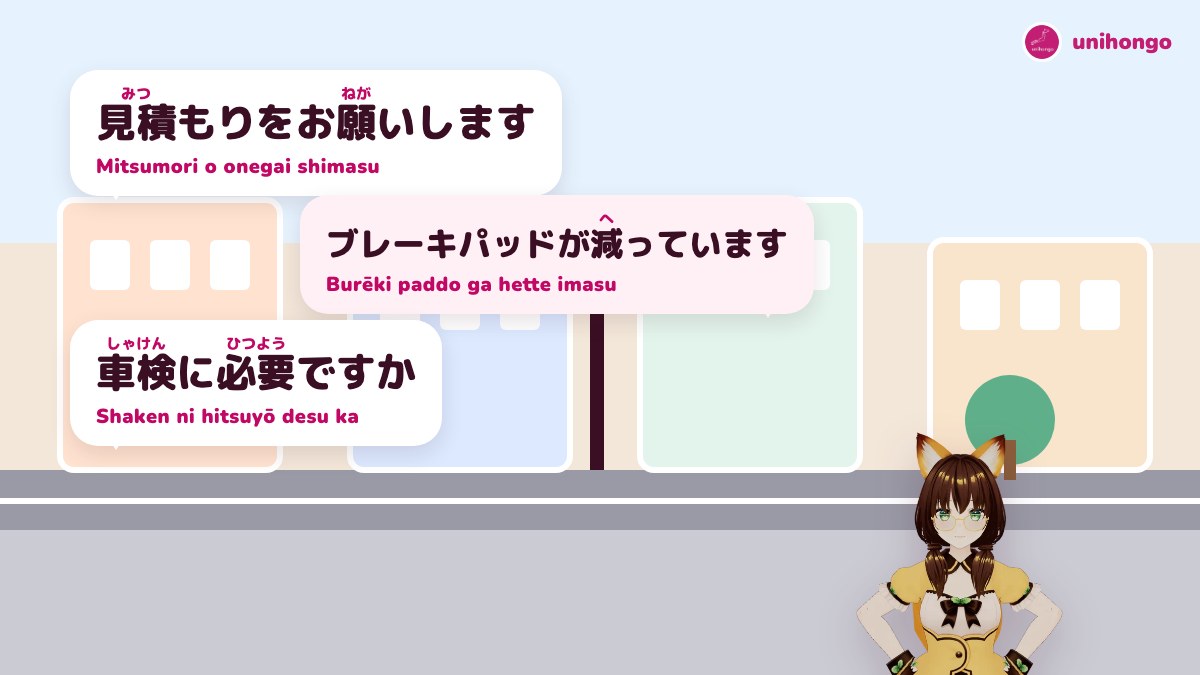
| 車検の見積もりをお願いします。 | Shaken no mitsumori o onegai shimasu. | You: An estimate for the inspection, please. |
| ブレーキパッドが減っていますね。 | Burēki paddo ga hette imasu ne. | Mechanic: The brake pads are worn. |
| 車検に通すために必要ですか。 | Shaken ni tōsu tame ni hitsuyō desu ka. | You: Is that needed to pass? |
| 今回は必要です。 | Konkai wa hitsuyō desu. | Mechanic: This time, yes. |
| 代車はありますか。 | Daisha wa arimasu ka. | You: Do you have a loan car? |
| いつ仕上がりますか。 | Itsu shiagarimasu ka. | You: When will it be ready? |
Related tax and insurance words
| Japanese | Romaji | Meaning |
|---|---|---|
| 自動車税の納税通知書 | jidōshazei no nōzei tsūchisho | automobile tax payment notice |
| 任意保険 | nin'i hoken | voluntary car insurance |
| 保険の更新を忘れないで。 | Hoken no kōshin o wasurenaide. | Don't forget to renew the insurance. |
- Automobile tax, jidōshazei: an annual tax for the owner registered on 1 April. The notice usually arrives in May with a payment slip. Kei cars pay keijidōshazei to the municipality. Paying it on time avoids problems when the next shaken comes.
- Compulsory insurance, jibaiseki: required by law, renewed with shaken, and covers only injury to other people up to a limit.
- Voluntary insurance, nin'i hoken: the policy most drivers add for property damage, their own car and higher injury cover. It is a separate contract with an insurer and does not renew with shaken.
- Twelve-month check, jūnikagetsu tenken: a periodic maintenance check owners are expected to have done, separate from shaken.
Mistakes that turn into real trouble
- Driving a day after the expiry. Driving without a valid inspection, and usually without compulsory insurance, is a serious offence.
- Assuming voluntary insurance covers you when jibaiseki has lapsed. Check both dates.
- Accepting every recommended repair without asking. Ask what is needed to pass and what can wait.
- Buying a used car without checking the remaining shaken. A listing with shaken nashi needs inspection before you can drive it.
Learn the estimate before the garage
Ask Mocchi: Make flashcards for Japanese car inspection words like shakenshō, jibaiseki hoken, hōtei hiyō and daisha. Mocchi creates the cards with images you choose, reviews them with spaced repetition and quizzes you with /quiz before your booking. You can also paste the lines of a real estimate and ask Mocchi to explain each one.
To keep the words fresh, load those flashcards into Flashcard Flip in Unihongo's games and play a round while you wait for the car.