
Four lines that open a parents' chat
Most playground conversations in Japan start sideways: a comment about the place or the children, not a direct introduction. The four lines below work with almost any parent you see more than once, and none of them demands a long answer.
Notice the register. All four are polite but light. They end in desu ka, n desu ka or ne, which invite the other person to talk without putting them on the spot.
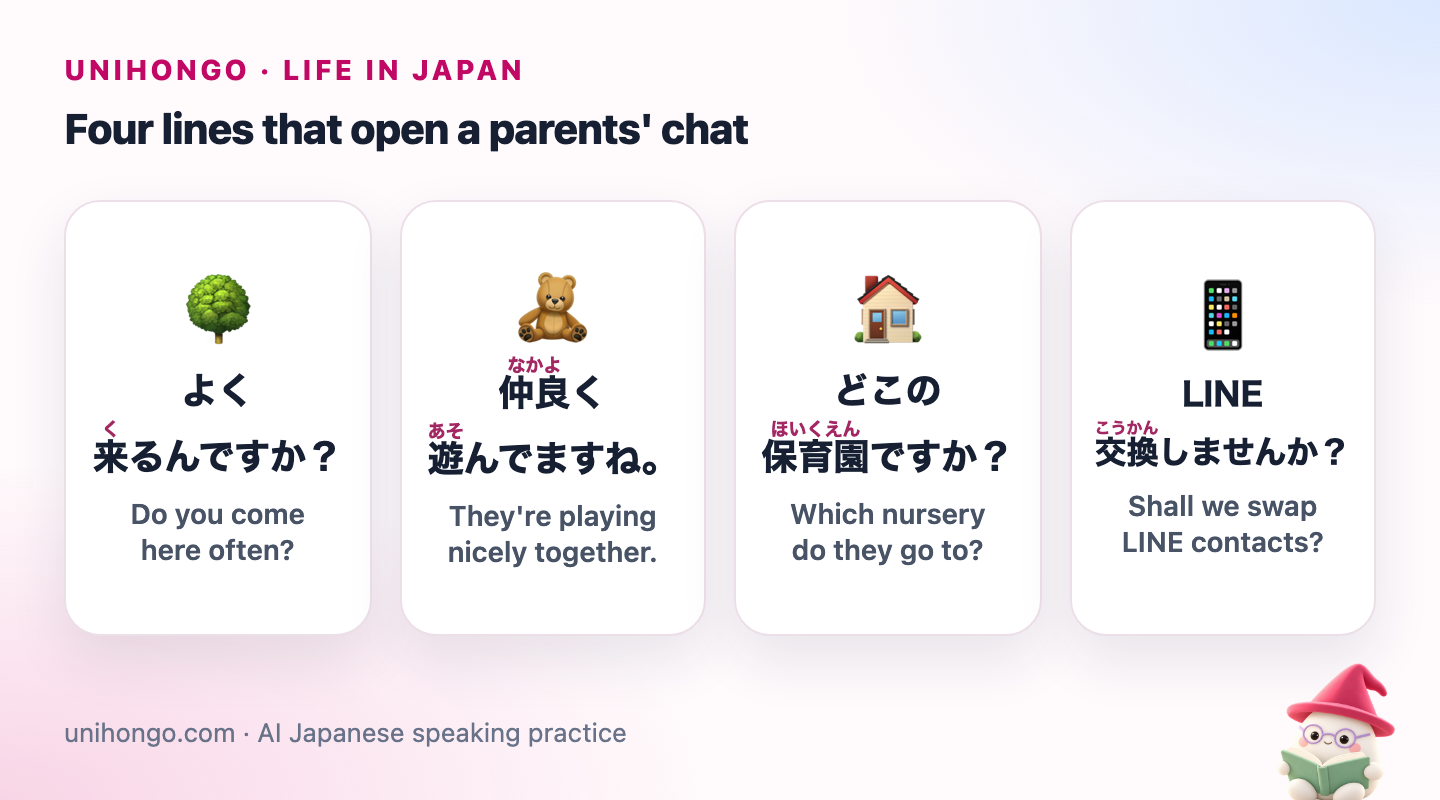
| Japanese | Romaji | Meaning |
|---|---|---|
| よく来るんですか? | Yoku kuru n desu ka? | Do you come here often? |
| 仲良く遊んでますね。 | Nakayoku asonde masu ne. | They're playing nicely together. |
| どこの保育園ですか? | Doko no hoikuen desu ka? | Which nursery do they go to? |
| LINE交換しませんか? | Rain kōkan shimasen ka? | Shall we swap LINE contacts? |
The register parents use with each other
Parents in Japan meet as equals, but they are also strangers, so the starting point is polite speech without stiff keigo. You will hear desu and masu sentences softened by sentence endings like ne and yo, and short casual reactions slipped in between: kawaii, sugoi, wakaru, sō sō.
The switch to casual speech usually comes from the other side, often after a few meetings or once you discover you are the same age. If someone starts speaking casually to you, it is fine to follow a little later. Staying polite with an older parent or a parent you met through school committees is never wrong.
| Japanese | Romaji | Meaning |
|---|---|---|
| お名前、聞いてもいいですか? | Onamae, kiite mo ii desu ka? | May I ask your name? |
| ハナちゃんのママですよね? | Hana-chan no mama desu yo ne? | You're Hana's mum, aren't you? |
| タロウくんのパパです。 | Tarō-kun no papa desu. | I'm Taro's dad. |
| Stage | Typical speech | Example ending |
|---|---|---|
| First meetings | Polite desu and masu | …desu ne |
| After a few chats | Polite with casual reactions | …desu yo ne, sugoi! |
| Friends | Mostly casual | …da yo ne |
Many parents never learn each other's own names and use the child's name instead: Hana-chan no mama, Tarō-kun no papa. It can feel odd at first, but it is friendly and normal. If you would like to be called by your own name, you can say so with a smile once you know someone a little.
Safe topics, and the ones to leave alone
The safest topics are the children (ages, sleep, food, favourite play), the local area (parks, clinics, shops, events), the season and the weather, and upcoming nursery or school events. Questions that compare children's abilities, or that touch on money, work status or marriage, can make people uncomfortable early on, even if they are common small talk in your own culture.
| Japanese | Romaji | Meaning |
|---|---|---|
| 何が好きなんですか? | Nani ga suki nan desu ka? | What does he like? (about the child) |
| もうすぐ運動会ですね。 | Mōsugu undōkai desu ne. | Sports day is coming up soon. |
| 最近、急に寒くなりましたね。 | Saikin, kyū ni samuku narimashita ne. | It's suddenly got cold recently. |
- Good: the child's age and what they like, nap and meal routines, which parks have shade or toilets, nursery events, seasonal plans.
- Careful: whether the other parent works, where they live exactly, how many children they plan to have.
- Avoid early on: income, rent, house prices, comparing a child's development, criticising teachers or other families.
Follow-up questions and listening responses
Japanese small talk relies on aizuchi, the short listening responses that show you are following. Silence while the other person speaks can sound like disagreement or confusion, so add a soft response every sentence or two. Then ask a follow-up question that picks up a word they just used: the n desu ka ending signals interest in their situation.
Do not overdo hē and sugoi. Vary your responses and repeat a key word from what you heard, which proves you understood.
| Japanese | Romaji | Meaning |
|---|---|---|
| そうなんですね。 | Sō nan desu ne. | Oh, I see. |
| わかります! | Wakarimasu! | I know what you mean! |
| いいですね。 | Ii desu ne. | That sounds nice. |
| 夜、寝てくれないんですか? | Yoru, nete kurenai n desu ka? | She won't sleep at night? |
| それは大変ですね。 | Sore wa taihen desu ne. | That must be hard. |
| うちもそうでした。 | Uchi mo sō deshita. | Ours was the same. |
Asking for local tips
Other parents know things no website tells you: which pediatrician has short waits, where the free indoor play space is, which swimming school has spaces. Asking for advice is also one of the best ways to start a friendship, because it is a compliment. Use osusume (recommendation) and the soft ending n desu kedo to explain why you are asking.
| Japanese | Romaji | Meaning |
|---|---|---|
| この辺で、いい小児科ありますか? | Kono hen de, ii shōnika arimasu ka? | Is there a good pediatrician around here? |
| 雨の日はどこで遊んでますか? | Ame no hi wa doko de asonde masu ka? | Where do you go to play on rainy days? |
| おすすめの習い事、ありますか? | Osusume no naraigoto, arimasu ka? | Any lessons you'd recommend? |
| 引っ越してきたばかりなんです。 | Hikkoshite kita bakari nan desu. | We've only just moved here. |
| 教えてくれてありがとうございます。 | Oshiete kurete arigatō gozaimasu. | Thanks for telling me. |
Mini dialogue: the third meeting at the park
Here you have seen the same parent twice before. The conversation moves from the children to a tip, a little about yourself, and an offer to stay in touch.
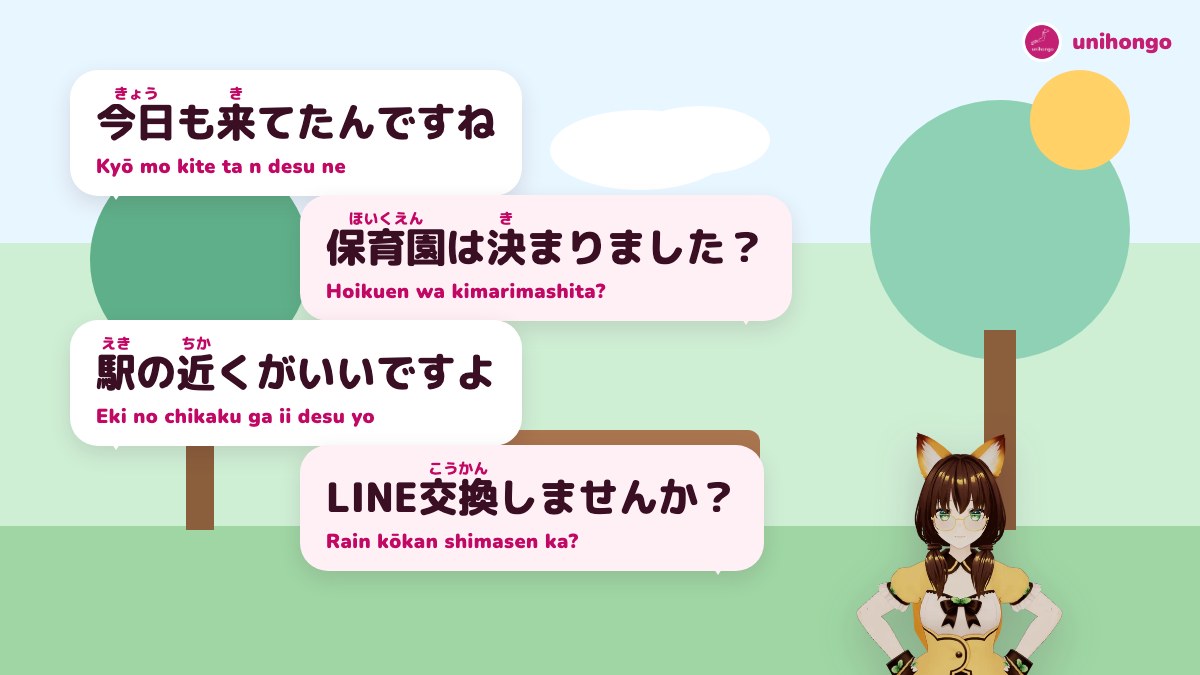
| Japanese | Romaji | Meaning |
|---|---|---|
| あ、こんにちは。今日も来てたんですね。 | A, konnichiwa. Kyō mo kite ta n desu ne. | You: Oh, hello. You're here again today. |
| そうなんです。家にいると暴れちゃって。 | Sō nan desu. Ie ni iru to abarechatte. | Parent: Yes. If we stay home, he goes wild. |
| わかります。うちも同じです。 | Wakarimasu. Uchi mo onaji desu. | You: I know. Ours is the same. |
| 保育園はもう決まりました? | Hoikuen wa mō kimarimashita? | Parent: Have you found a nursery yet? |
| まだなんです。どこかいいところありますか? | Mada nan desu. Dokoka ii tokoro arimasu ka? | You: Not yet. Do you know any good ones? |
| 駅の近くのところ、先生が優しいですよ。 | Eki no chikaku no tokoro, sensei ga yasashii desu yo. | Parent: The one near the station has kind teachers. |
| ありがとうございます。よかったらLINE交換しませんか? | Arigatō gozaimasu. Yokattara rain kōkan shimasen ka? | You: Thank you. Would you like to swap LINE contacts? |
| ぜひぜひ。 | Zehi zehi. | Parent: Sure, I'd love to. |
Abarechatte is the casual contraction of abarete shimatte: he ends up running wild. The chau and chatte forms are everywhere in parents' talk, usually for small, slightly embarrassing things the child does.
Invitations: saying yes and saying no
Once you have each other's contacts, invitations follow: a play date, a picnic, lunch while the children nap. Accepting is easy. Declining is where learners often sound too blunt. The usual shape is thanks, a short reason or simply chotto, a hope for next time. You do not need to give a detailed excuse.
| Japanese | Romaji | Meaning |
|---|---|---|
| 今度、一緒に公園行きませんか? | Kondo, issho ni kōen ikimasen ka? | Shall we go to the park together sometime? |
| いいですね、ぜひ! | Ii desu ne, zehi! | Sounds great, I'd love to! |
| 土曜日はちょっと用事があって… | Doyōbi wa chotto yōji ga atte... | Saturday's a bit difficult, I have something on... |
| また誘ってください。 | Mata sasotte kudasai. | Please ask me again. |
Rehearse the second minute
The opener is rarely the problem; the follow-up is. Type one opener into the chat with Mocchi and ask for five realistic replies and a follow-up question for each. Mocchi explains any form you do not know, such as chatte or n desu ka, and can make a short /quiz of the listening responses so you stop reaching for hē every time.
Then practise the real thing out loud. In AI Sensei, ask Sakura-sensei to play a parent you are meeting at the park for the third time, speaking politely at first and switching to casual speech halfway. Your job is to keep the chat going for three minutes and end with a LINE swap or an invitation.