
The trip in four counters
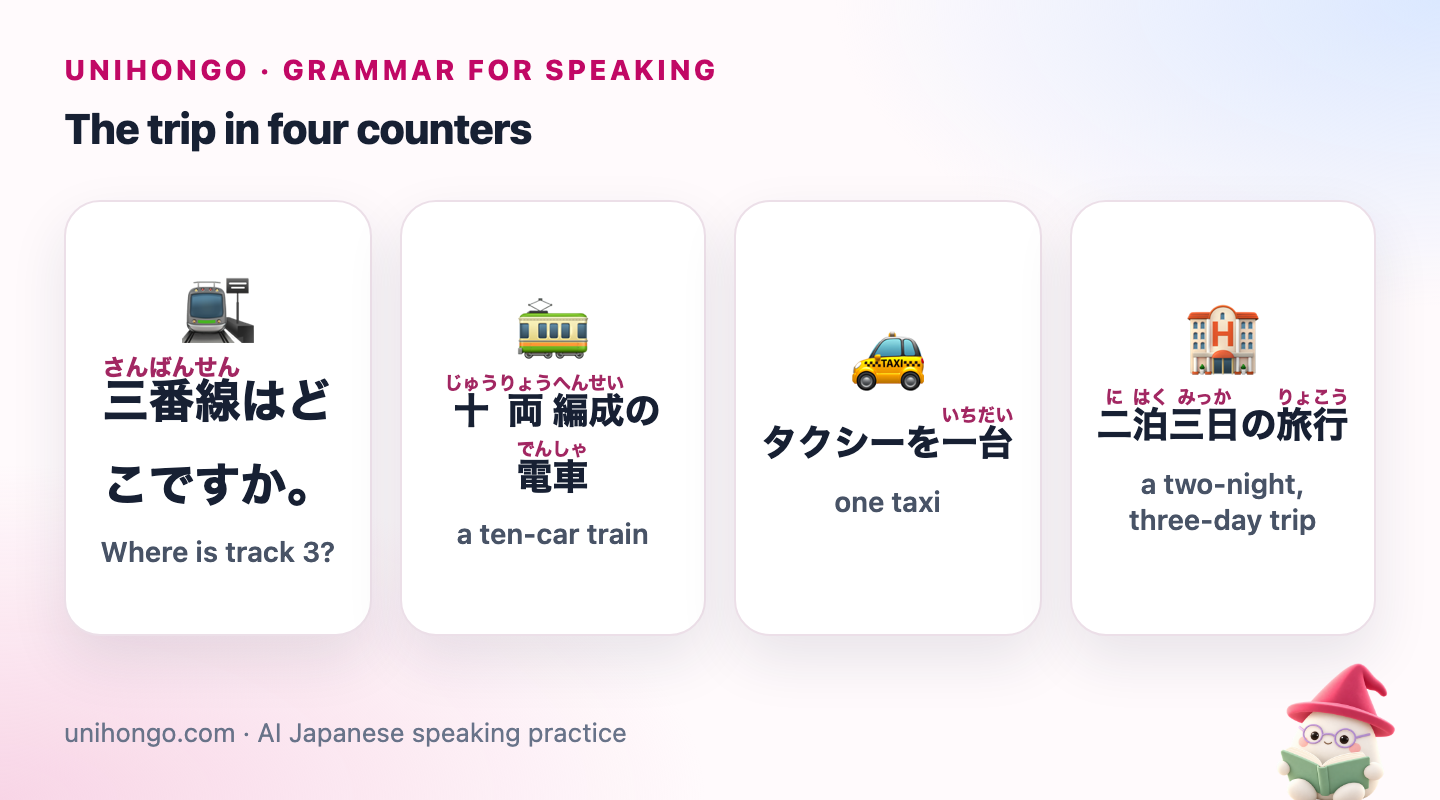
A typical trip in Japan has four checkpoints: the platform, the train, the hotel and the flight home. Each has its counter, and each appears on the signs and tickets you hold. Learn these four lines first, then the forms below.
| Japanese | Romaji | Meaning |
|---|---|---|
| 三番線はどこですか。 | Sanbansen wa doko desu ka. | Where is track 3? |
| 十両編成の電車 | jūryō hensei no densha | a ten-car train |
| タクシーを一台 | takushī o ichidai | one taxi |
| 二泊三日の旅行 | nihaku mikka no ryokō | a two-night, three-day trip |
On the platform: 番線, 両 and 号車
番線 (bansen) is made of 番, number, and 線, line or track. It is regular: ichibansen, nibansen, sanbansen. Bus stops use a related word, noriba, as in goban noriba, bus stop number 5. Station staff and announcements use polite forms such as mairimasu, is arriving, and gochūi kudasai, please be careful.
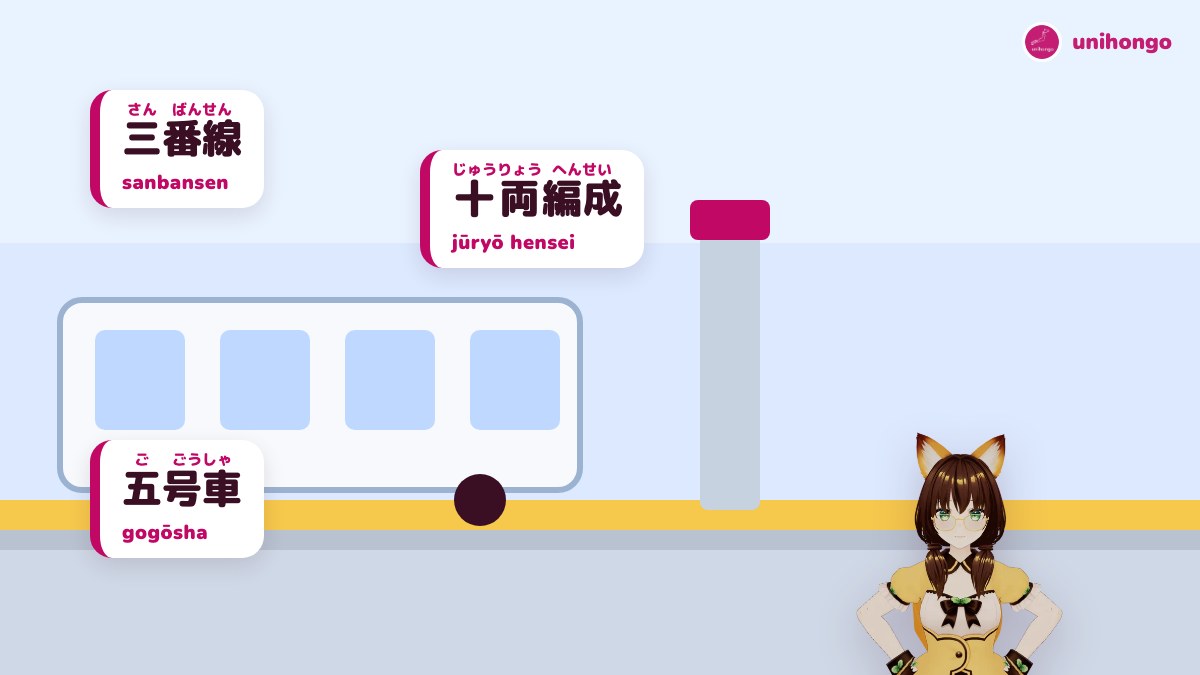
両 (ryō) counts the cars of a train, and you hear it in the phrase ○ ryō hensei, a train made up of so many cars. It matters because short trains stop at only part of the platform. 号車 (gōsha) is the car number: ichigōsha, gogōsha, jūnigōsha. Reserved-seat tickets show the car number and seat, and marks on the platform floor show where each car stops.
| Japanese | Romaji | Meaning |
|---|---|---|
| 何番線ですか。 | Nanbansen desu ka. | Which track is it? |
| まもなく三番線に電車が参ります。 | Mamonaku sanbansen ni densha ga mairimasu. | Announcement: A train will soon arrive at track 3. |
| この電車は八両編成です。 | Kono densha wa hachiryō hensei desu. | This train has eight cars. |
| 五号車はどの辺に止まりますか。 | Gogōsha wa dono hen ni tomarimasu ka. | Where does car number 5 stop? |
| 前の四両は大阪行きです。 | Mae no yonryō wa Ōsaka yuki desu. | The front four cars go to Osaka. |
Taxis, buses and rental cars: 台
台 (dai) counts vehicles and machines: taxis, buses, cars, bicycles and ticket machines. It is regular and easy: ichidai, nidai, sandai. At a taxi stand you usually just get in, but if you call a taxi company or ask hotel staff, the counter appears. When a group is too big for one taxi, you will need nidai.
| Japanese | Romaji | Meaning |
|---|---|---|
| タクシーを一台呼んでいただけますか。 | Takushī o ichidai yonde itadakemasu ka. | Could you call a taxi for me? |
| 五人なので、二台お願いします。 | Gonin na node, nidai onegai shimasu. | We're five, so two taxis, please. |
| バスは一時間に三本です。 | Basu wa ichijikan ni sanbon desu. | There are three buses an hour. |
| 車を一台借りたいです。 | Kuruma o ichidai karitai desu. | I'd like to rent a car. |
Notice the bus sentence: when you talk about services on a timetable, buses and trains are counted with 本, as runs. Ichijikan ni sanbon means three departures an hour. Use 台 for the vehicles themselves and 本 for scheduled runs.
At the hotel: 泊 and its sound changes
泊 (haku) counts nights of a stay. It has the same h to p and b pattern as 本 and 杯: ippaku, nihaku, sanpaku, yonpaku, gohaku, roppaku, nanahaku, happaku, kyūhaku, juppaku. The question is nanpaku. A trip is usually described with nights and days, nihaku mikka, which also uses the day counter from the time counters.
Japanese inns often price by person per night with meals, ippaku nishoku tsuki, one night with two meals, so you will see 泊 on booking sites and at the front desk.
| Japanese | Romaji | Meaning |
|---|---|---|
| 今日から二泊です。 | Kyō kara nihaku desu. | Two nights from today. |
| 一泊二食付きでお願いします。 | Ippaku nishoku tsuki de onegai shimasu. | One night with dinner and breakfast, please. |
| もう一泊できますか。 | Mō ippaku dekimasu ka. | Can I stay one more night? |
| 三泊四日で北海道に行きます。 | Sanpaku yokka de Hokkaidō ni ikimasu. | I'm going to Hokkaido for four days and three nights. |
| 何泊のご予定ですか。 | Nanpaku no goyotei desu ka. | Staff: How many nights will you be staying? |
At the airport: 便
便 (bin) means a scheduled service, and at the airport it marks a flight. You will hear it with a time, jūji no bin, the ten o'clock flight; with a flight number, as in hyaku nijūsan bin; and in words like tsugi no bin, the next flight, and saishūbin, the last flight of the day. Counting flights is less common, but you may read ichinichi sanbin, three flights a day.
| Japanese | Romaji | Meaning |
|---|---|---|
| 次の便は何時ですか。 | Tsugi no bin wa nanji desu ka. | What time is the next flight? |
| 十時の便を予約しています。 | Jūji no bin o yoyaku shite imasu. | I'm booked on the ten o'clock flight. |
| 最終便に間に合いますか。 | Saishūbin ni maniaimasu ka. | Will I make the last flight? |
| 一日三便あります。 | Ichinichi sanbin arimasu. | There are three flights a day. |
Mini dialogue: finding your car on the platform
You have a reserved seat on a limited express and ask a station attendant for help. The attendant speaks polite service Japanese.
| Japanese | Romaji | Meaning |
|---|---|---|
| すみません、この特急は何番線ですか。 | Sumimasen, kono tokkyū wa nanbansen desu ka. | You: Excuse me, which track is this limited express? |
| 三番線です。 | Sanbansen desu. | Attendant: Track 3. |
| 五号車に乗りたいんですが。 | Gogōsha ni noritai n desu ga. | You: I'd like to get on car number 5. |
| 今日は十両編成なので、五号車は真ん中あたりです。 | Kyō wa jūryō hensei na node, gogōsha wa mannaka atari desu. | Attendant: It's a ten-car train today, so car 5 is around the middle. |
| 床の番号を見ればいいですか。 | Yuka no bangō o mireba ii desu ka. | You: Should I look at the numbers on the floor? |
| はい、五号車の表示の前でお待ちください。 | Hai, gogōsha no hyōji no mae de omachi kudasai. | Attendant: Yes, please wait by the car 5 sign. |
Tickets and seats: 枚 and 席
Tickets are paper, so they take 枚: ichimai, nimai, sanmai. At a ticket office you often say the types and numbers together: otona nimai, kodomo ichimai, two adults and one child. Seats take 席 (seki): isseki, niseki, sanseki, and the useful phrase niseki narabi asks for two seats side by side.
On long-distance trains, cars are divided into reserved cars, shiteiseki, and unreserved cars, jiyūseki, and some trains have no unreserved cars at all. The car numbers for each type are shown on platform signs and electronic boards, so it helps to know the question nangōsha desu ka before you start walking along the platform.
| Japanese | Romaji | Meaning |
|---|---|---|
| 指定席を二枚お願いします。 | Shiteiseki o nimai onegai shimasu. | Two reserved-seat tickets, please. |
| 二席並びで取れますか。 | Niseki narabi de toremasu ka. | Can we get two seats together? |
| 大人二枚、子ども一枚です。 | Otona nimai, kodomo ichimai desu. | Two adults and one child. |
| 自由席は何号車ですか。 | Jiyūseki wa nangōsha desu ka. | Which cars are unreserved? |
Mistakes that cost you a train
- Mixing up 両 and 号車. Jūryō is ten cars; jūgōsha is car number 10. One tells you the length of the train, the other where to stand.
- Saying sanhaku or rokuhaku. Three and six nights are sanpaku and roppaku.
- Using 台 for timetable runs. For how often buses or trains go, use 本: ichijikan ni yonhon.
- Assuming every train uses the full platform. Check the number of cars, because a short train stops at only part of it.
- Hearing ichibansen as ichiban, number one or best. On a platform, listen for sen at the end.
Rehearse a whole journey
Ask Mocchi something like: give me a travel plan in English with tracks, cars, nights and flights, and let me say each line in Japanese. Mocchi corrects the readings and explains the difference when you confuse 両 and 号車.
For the spoken part, the Catch the Right Train mission in AI Sensei puts you on a busy platform with Haru-sensei as a station attendant. Ask Haru-sensei to speak at the speed of a real announcement once you are ready, and read the session report afterwards for the counters you missed.