
The four numbers of any match report
When someone tells you about a match, the facts come in a set order: the score, the points someone scored, the team's record and the moment it was decided. Each has its counter. These four lines are a full match report in miniature.
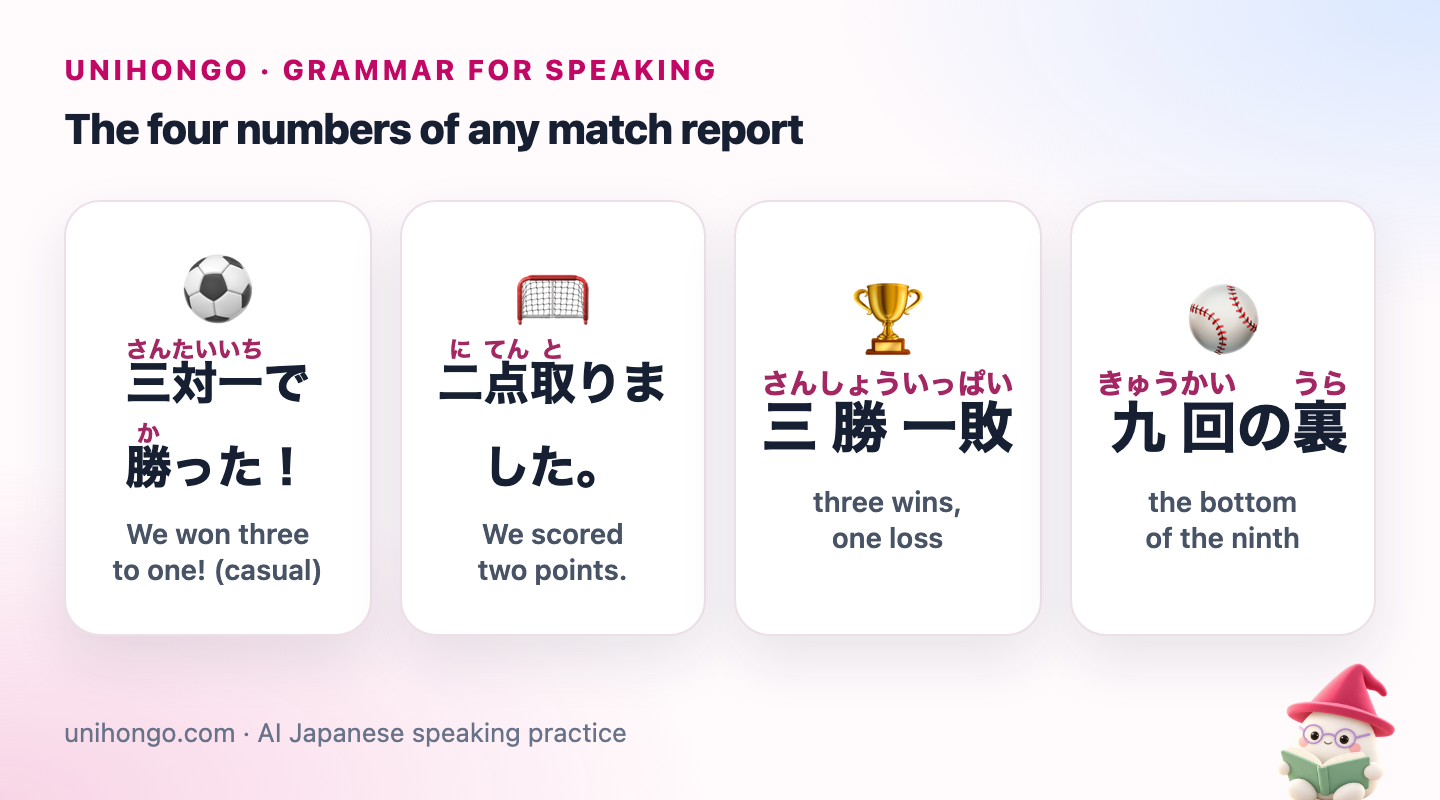
| Japanese | Romaji | Meaning |
|---|---|---|
| 三対一で勝った! | San tai ichi de katta! | We won three to one! (casual) |
| 二点取りました。 | Niten torimashita. | We scored two points. |
| 三勝一敗 | sanshō ippai | three wins, one loss |
| 九回の裏 | kyūkai no ura | the bottom of the ninth |
点 and tai: scores and points
点 (ten) counts points, goals and runs. Its sound changes are on 1, 8 and 10: itten, hatten, jutten. Ten is also the word for a score on a test, so the same counter works for exams and sports. The verb that goes with it is toru, to take: santen totta, we scored three. Scoring is also ten o ireru, to put a point in, and conceding is ten o torareru, to have points taken.
A score is said with tai, against: ni tai ichi. Zero is usually rei or zero; in baseball broadcasts you may hear it in either form. Dōten means level or tied, and hikiwake is a draw at the end.
| Japanese | Romaji | Meaning |
|---|---|---|
| 今、何対何? | Ima, nan tai nan? | What's the score now? (casual) |
| 二対二の同点です。 | Ni tai ni no dōten desu. | It's level at two all. |
| 最後に一点取られました。 | Saigo ni itten toraremashita. | They scored one at the very end. |
| 引き分けでした。 | Hikiwake deshita. | It was a draw. |
| テストで八十点でした。 | Tesuto de hachijutten deshita. | I got 80 points on the test. |
勝 and 敗: records and results
勝 (shō) counts wins and 敗 (hai) counts losses, and they are almost always said together as a record: nishō ippai, two wins and one loss. 勝 takes a small tsu on 1, 8 and 10: isshō, hasshō, jusshō. 敗 changes like 杯: ippai, nihai, sanpai, yonhai, gohai, roppai, nanahai, happai, kyūhai, juppai. So ippai is both one loss and one glass, which is a small joke you may hear after a defeat.
Records also use some useful words: zenshō, winning every match; renshō, consecutive wins; and renpai, consecutive losses. Sanrenshō is three wins in a row.
| Japanese | Romaji | Meaning |
|---|---|---|
| 今シーズンは何勝何敗ですか。 | Kon shīzun wa nanshō nanpai desu ka. | What's the record this season? |
| 五勝二敗です。 | Goshō nihai desu. | Five wins and two losses. |
| 三連勝しました。 | Sanrenshō shimashita. | We won three in a row. |
| 全勝で優勝しました。 | Zenshō de yūshō shimashita. | They won the title without losing a match. |
| Number | 勝 (wins) | 敗 (losses) |
|---|---|---|
| 1 | isshō | ippai |
| 2 | nishō | nihai |
| 3 | sanshō | sanpai |
| 4 | yonshō | yonhai |
| 6 | rokushō | roppai |
| 8 | hasshō | happai |
| 10 | jusshō | juppai |
| How many? | nanshō | nanpai |
試合 and 回戦: matches and rounds
試合 (shiai) means a match or game, and it also works as a counter: nishiai, sanshiai, yonshiai. The question is nanshiai. In a tournament, 回戦 (kaisen) names the round: ikkaisen, the first round; nikaisen, the second round; and kesshō, the final. Junkesshō is the semi-final.
School tournaments in Japan, such as the national high school baseball championship, are followed closely in the news, and phrases like nikaisen de maketa, lost in the second round, are part of everyday sports talk.
| Japanese | Romaji | Meaning |
|---|---|---|
| 今週は三試合あります。 | Konshū wa sanshiai arimasu. | There are three matches this week. |
| あと何試合残っていますか。 | Ato nanshiai nokotte imasu ka. | How many matches are left? |
| 一回戦で負けました。 | Ikkaisen de makemashita. | We lost in the first round. |
| 決勝まで行きました。 | Kesshō made ikimashita. | We made it to the final. |
回 for innings, rounds and turns
回 (kai) counts innings in baseball, rounds in boxing and turns in a game. Its forms are ikkai, nikai, sankai, yonkai, gokai, rokkai, nanakai, hakkai or hachikai, kyūkai and jukkai. In baseball, each inning has a top, omote, when the visiting team bats, and a bottom, ura, when the home team bats.
In games with friends, 回 is the counter for turns and rematches: mō ikkai, one more round, is what everyone says after losing. Sankai shōbu means best of three.
| Japanese | Romaji | Meaning |
|---|---|---|
| 九回の表、ツーアウトです。 | Kyūkai no omote, tsū auto desu. | Top of the ninth, two outs. |
| もう一回やろう! | Mō ikkai yarō! | Let's play one more round! (casual) |
| 三回勝負にしよう。 | Sankai shōbu ni shiyō. | Let's make it best of three. (casual) |
| 次は誰の番? | Tsugi wa dare no ban? | Whose turn is it next? (casual) |
Mini dialogue: after the match
Two friends talk on the way home from watching their local football team. The language is casual, and the counters carry the story.
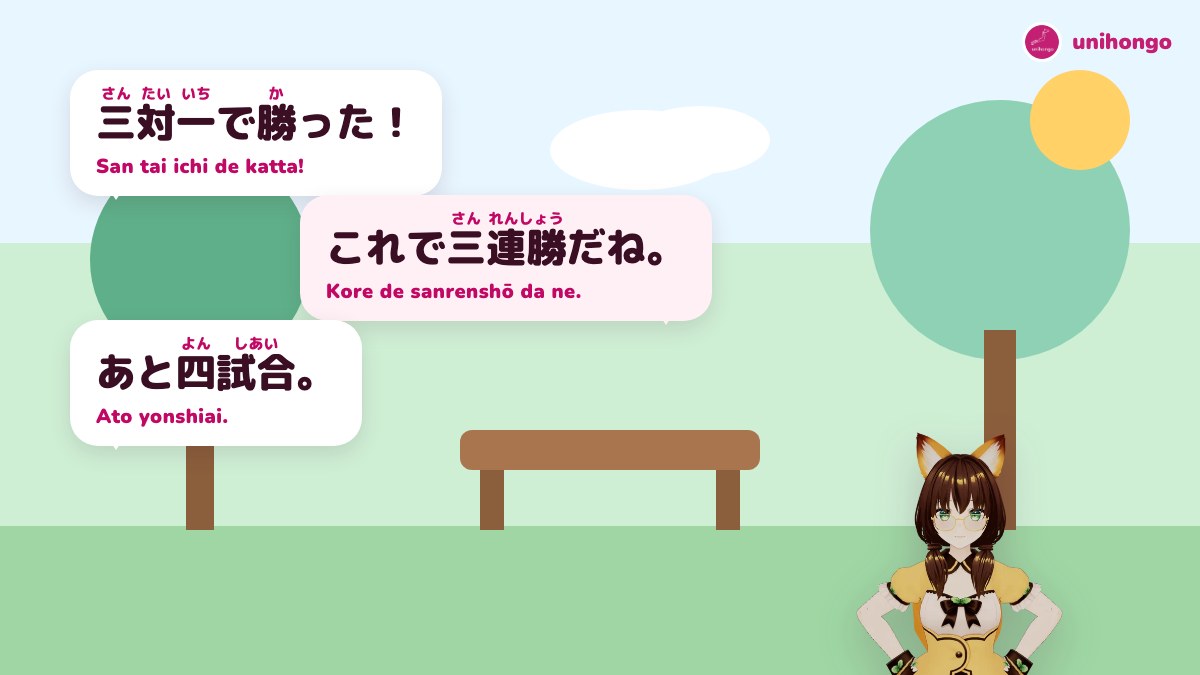
| Japanese | Romaji | Meaning |
|---|---|---|
| 勝ったね!三対一! | Katta ne! San tai ichi! | Friend: We won! Three to one! |
| 後半に二点も取ったね。 | Kōhan ni niten mo totta ne. | You: They scored two in the second half. |
| これで三連勝だよ。 | Kore de sanrenshō da yo. | Friend: That makes three wins in a row. |
| 今シーズン、何勝何敗? | Kon shīzun, nanshō nanpai? | You: What's the record this season? |
| 六勝二敗。あと四試合。 | Rokushō nihai. Ato yonshiai. | Friend: Six wins, two losses. Four matches left. |
| 次の試合も見に行こう。 | Tsugi no shiai mo mi ni ikō. | You: Let's go and watch the next match too. |
Niten mo, as many as two points, adds a sense of surprise or emphasis. Mo after a number means as many as, and it is common in excited sports talk.
Rankings, places and shirt numbers
Results are often given as a ranking. 位 (i) counts places: ichii, nii, san'i, yon'i, and the question is nan'i. It appears in league tables, races and quiz shows. 番 (ban) is a number in a series, so a player's shirt number is sebangō jūban, and your turn in a queue is junban.
Yūshō means winning a tournament or a league, and is more common in speech than saying ichii for a title. Jun'yūshō is runner-up. These words come up in conversations about high school sports, sumo and professional leagues alike.
| Japanese | Romaji | Meaning |
|---|---|---|
| リーグで二位です。 | Rīgu de nii desu. | They're second in the league. |
| マラソンで何位でしたか。 | Marason de nan'i deshita ka. | What place did you finish in the marathon? |
| 背番号は十番です。 | Sebangō wa jūban desu. | The shirt number is 10. |
| 一位になりたい! | Ichii ni naritai! | I want to come first! (casual) |
Common mistakes with sports counters
- Saying ichiten or hachiten. One and eight points are itten and hatten.
- Saying sanhai for three losses. It is sanpai, and the question is nanpai.
- Reading a score as san ichi without tai. Fans in a hurry do this, but san tai ichi is clearer and is what broadcasters say.
- Using 回 for the round of a tournament. That is 回戦: nikaisen, not nikai.
- Confusing ura and omote in baseball. Ura is the bottom, when the home team bats.
Keep the score in your head
Ask Mocchi for a match quiz: give me match results in English, such as a 2-1 win and a season record, and let me say them in Japanese. Mocchi corrects the counters, explains why one loss is ippai and keeps track of the forms you miss, so your next quiz includes them.
For quick vocabulary practice, add the sports words from this guide to your own flashcards and use them in Kotoba Tank at unihongo.com/games; seeing sanshō and sanpai under time pressure helps the sound changes stick.