
Your week in four lines
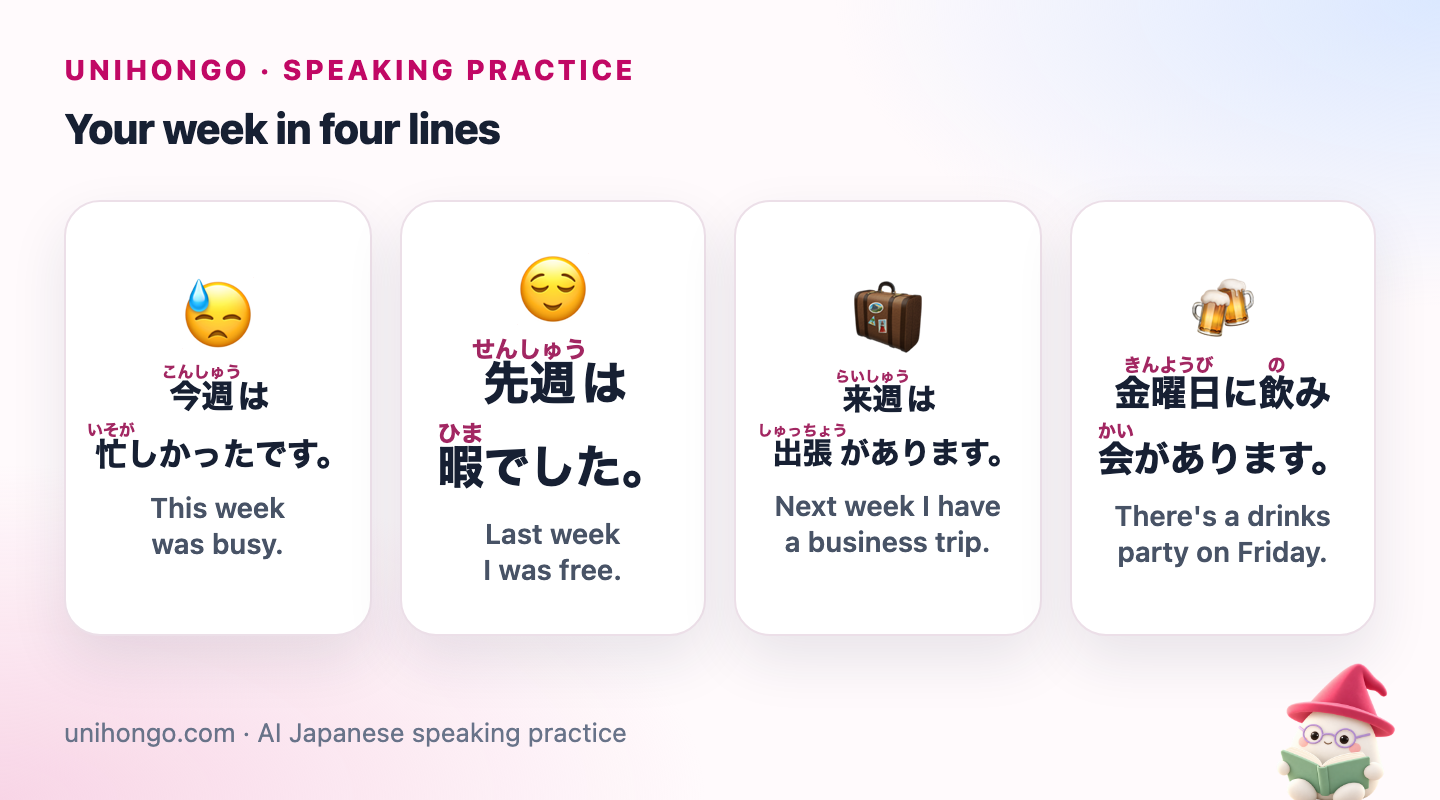
The four cards cover the whole range: a busy week behind you, a quiet one, a trip ahead, and a specific day with a specific event. Hima, free with nothing on, is the opposite of isogashii. Shutchō is a business trip, and nomikai is an after-work drinks gathering; both are everyday words in a Japanese workplace, and both take ga arimasu, there is, rather than a verb of doing.
| Japanese | Romaji | Meaning |
|---|---|---|
| 今週は忙しかったです。 | Konshū wa isogashikatta desu. | This week was busy. |
| 先週は暇でした。 | Senshū wa hima deshita. | Last week I was free. |
| 来週は出張があります。 | Raishū wa shutchō ga arimasu. | Next week I have a business trip. |
| 金曜日に飲み会があります。 | Kin'yōbi ni nomikai ga arimasu. | There's a drinks party on Friday. |
The question you'll hear
The polite question is konshū wa dō deshita ka; the casual one drops everything but the core. Senshū nani shiteta, what were you doing last week, invites a story, while raishū no yotei wa, next week's plans, with a rising tone, is how friends start arranging to meet. Saikin dō is broader than a week and expects a one-line mood report.
| Japanese | Romaji | Meaning |
|---|---|---|
| 今週はどうでしたか。 | Konshū wa dō deshita ka. | How was your week? |
| 先週、何してた? | Senshū, nani shiteta? | Friend: What were you up to last week? |
| 来週の予定は? | Raishū no yotei wa? | Friend: Any plans for next week? |
| 最近どう? | Saikin dō? | Friend: How've you been lately? |
| 週末は何か予定がありますか。 | Shūmatsu wa nanika yotei ga arimasu ka. | Do you have any plans for the weekend? |
Three model answers
The beginner answer gives one line about last week and one about next. The intermediate answer names days, uses kara and made for a span, and de to join two clauses. The upper answer adds feeling with shōjiki, honestly, and kanari, pretty, and ends with tsumori for the plan.
| Japanese | Romaji | Meaning |
|---|---|---|
| 今週は仕事が忙しかったです。 | Konshū wa shigoto ga isogashikatta desu. | Beginner: Work was busy this week. |
| 来週は友達に会います。 | Raishū wa tomodachi ni aimasu. | Beginner: Next week I'm meeting a friend. |
| 先週は月曜から木曜まで出張で、金曜はずっと会議でした。 | Senshū wa getsuyō kara mokuyō made shutchō de, kin'yō wa zutto kaigi deshita. | Intermediate: Last week I was away Monday to Thursday, and Friday was meetings all day. |
| 今週は少し落ち着いたので、水曜日にジムに行けました。 | Konshū wa sukoshi ochitsuita node, suiyōbi ni jimu ni ikemashita. | Intermediate: This week calmed down a bit, so I managed to get to the gym on Wednesday. |
| 今週は締め切りが二つ重なって、正直かなり大変でした。 | Konshū wa shimekiri ga futatsu kasanatte, shōjiki kanari taihen deshita. | Upper: Two deadlines overlapped this week and honestly it was pretty rough. |
| 来週は特に予定がないので、ゆっくり休むつもりです。 | Raishū wa toku ni yotei ga nai node, yukkuri yasumu tsumori desu. | Upper: Next week I've nothing in particular on, so I plan to rest properly. |
In speech the bi of yōbi often drops: getsuyō, kin'yō. Both forms are correct; the short ones sound a little more fluent and are common at work.
Week words, days and busy or free
The week words follow the same pattern as months and years: sen, kon, rai. Days end in yōbi. The table gives the full set; the phrase rows after it show the three ways to say busy on a day and the one way to say free that works with anyone.
| Japanese | Romaji | Meaning |
|---|---|---|
| 火曜日は一日中会議でした。 | Kayōbi wa ichinichijū kaigi deshita. | Tuesday was meetings all day. |
| 木曜日は空いています。 | Mokuyōbi wa aite imasu. | I'm free on Thursday. |
| 土曜日は予定が入っています。 | Doyōbi wa yotei ga haitte imasu. | I've got something on Saturday. |
| 今週はずっと雨でしたね。 | Konshū wa zutto ame deshita ne. | It's rained all week, hasn't it? |
| 週の後半は楽になります。 | Shū no kōhan wa raku ni narimasu. | The second half of the week gets easier. |
| Japanese | Romaji | Meaning |
|---|---|---|
| 先々週 / 先週 | sensenshū / senshū | the week before last / last week |
| 今週 / 来週 / 再来週 | konshū / raishū / saraishū | this week / next week / the week after next |
| 平日 / 週末 | heijitsu / shūmatsu | weekdays / weekend |
| 月・火・水曜日 | getsu, ka, suiyōbi | Monday, Tuesday, Wednesday |
| 木・金・土・日曜日 | moku, kin, do, nichiyōbi | Thursday, Friday, Saturday, Sunday |
| 週の前半 / 後半 | shū no zenhan / kōhan | first half / second half of the week |
Aite imasu, is open, is the safe way to say you are free, because hima can sound as if you have nothing in your life. Yotei ga haitte imasu, a plan has gone in, says busy on that day without any drama.
The week ahead: yotei, tsumori and maybe
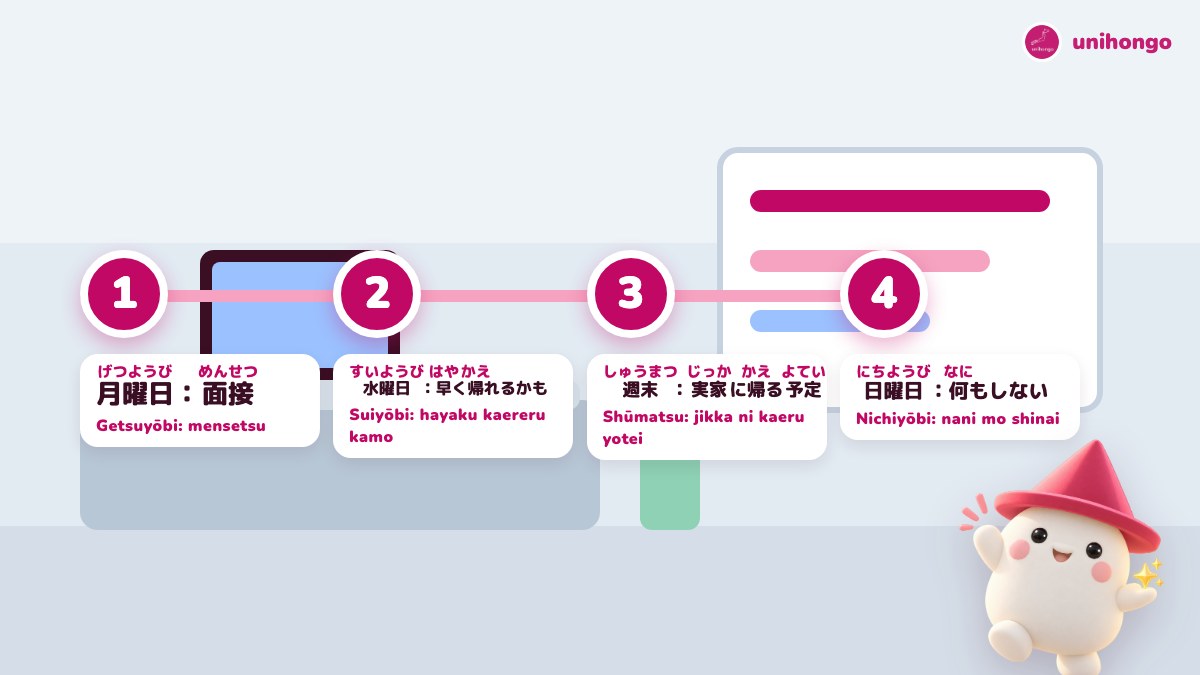
Next week has three levels of certainty. Ga arimasu or yotei desu for things on the calendar; tsumori desu for intentions; kamo shiremasen for maybes. Putting a day of the week before each one is what makes the answer sound planned rather than vague, and it gives the listener a hook to ask about.
| Japanese | Romaji | Meaning |
|---|---|---|
| 来週の月曜日に面接があります。 | Raishū no getsuyōbi ni mensetsu ga arimasu. | I have an interview next Monday. |
| 水曜日は早く帰れるかもしれません。 | Suiyōbi wa hayaku kaereru kamo shiremasen. | I might be able to leave early on Wednesday. |
| 週末は実家に帰る予定です。 | Shūmatsu wa jikka ni kaeru yotei desu. | I'm planning to go to my parents' at the weekend. |
| 日曜日は何もしないつもりです。 | Nichiyōbi wa nani mo shinai tsumori desu. | On Sunday I intend to do nothing at all. |
| 再来週から少し楽になりそうです。 | Saraishū kara sukoshi raku ni narisō desu. | It looks like things ease off from the week after next. |
Reactions and follow-ups
When the other person describes a hard week, the right reaction is sympathy plus the work phrase otsukaresama deshita, which recognises effort. For a good week, ii desu ne and a question. Then move to arranging: raishū jikan arimasu ka, do you have time next week, and a day with nara, if it is, to propose a slot.
| Japanese | Romaji | Meaning |
|---|---|---|
| 大変でしたね。 | Taihen deshita ne. | That sounds tough. |
| お疲れさまでした。 | Otsukaresama deshita. | Well done getting through it. |
| いいですね。どこに行くんですか。 | Ii desu ne. Doko ni iku n desu ka. | Nice. Where are you going? |
| 忙しそうですね。 | Isogashisō desu ne. | You sound busy. |
| 来週、時間ありますか。 | Raishū, jikan arimasu ka. | Do you have time next week? |
| 木曜日なら大丈夫です。 | Mokuyōbi nara daijōbu desu. | Thursday would work. |
| じゃあ、木曜日に。 | Jā, mokuyōbi ni. | Friend: Thursday it is, then. |
Mini dialogue: Monday at the coffee machine
| Japanese | Romaji | Meaning |
|---|---|---|
| おはようございます。先週はどうでしたか。 | Ohayō gozaimasu. Senshū wa dō deshita ka. | Coworker: Morning. How was last week? |
| 水曜日まで出張で、ちょっと疲れました。 | Suiyōbi made shutchō de, chotto tsukaremashita. | You: I was away until Wednesday, so I'm a bit tired. |
| お疲れさまでした。今週は? | Otsukaresama deshita. Konshū wa? | Coworker: Well done. And this week? |
| 今週は落ち着いています。金曜日は空いていますよ。 | Konshū wa ochitsuite imasu. Kin'yōbi wa aite imasu yo. | You: This week is calm. I'm free on Friday. |
| じゃあ、金曜日にランチに行きませんか。 | Jā, kin'yōbi ni ranchi ni ikimasen ka. | Coworker: Then shall we go for lunch on Friday? |
| いいですね。ぜひ。 | Ii desu ne. Zehi. | You: Great. I'd love to. |
Mistakes and register notes
- Isogashii deshita. An i-adjective carries its own past: isogashikatta desu.
- Hima desu to a manager. It can sound idle; say jikan ga arimasu or aite imasu.
- Tsugi no shū for next week. Understood, but raishū is the word; tsugi no shūmatsu, next weekend, is natural though.
- Forgetting ni after a day: kin'yōbi ni nomikai ga arimasu. With wa as the topic, no ni: kin'yōbi wa nomikai desu.
- Listing all seven days. Pick the two or three that matter; nobody wants the full calendar.
- Register: deshita and arimasu with coworkers; datta and aru with friends, and nani shiteta instead of nani o shite imashita ka.
A Monday habit that teaches the week
Every Monday, before you open your calendar, tell Mocchi about last week and the week ahead in Japanese, three lines each, and ask it with /correct to fix the tense and particles. Mocchi keeps track of the mistakes you repeat, such as isogashii deshita, so the next Monday's /quiz starts with those. Then take the corrected lines into AI Sensei with Ibuki-sensei playing a coworker at the coffee machine; ask Ibuki-sensei to react, ask follow-ups and try to fix a lunch date, and check the session report for the day names you fumbled.
You can start the habit this Monday with a free account at unihongo.com/login.