
Four frames you will hear on every journey
Station and train announcements are built on a small set of frames. These four cover the moment the train arrives, where to stand, the next stop and which doors open. Learn the frames and your ear only has to catch the changing part.
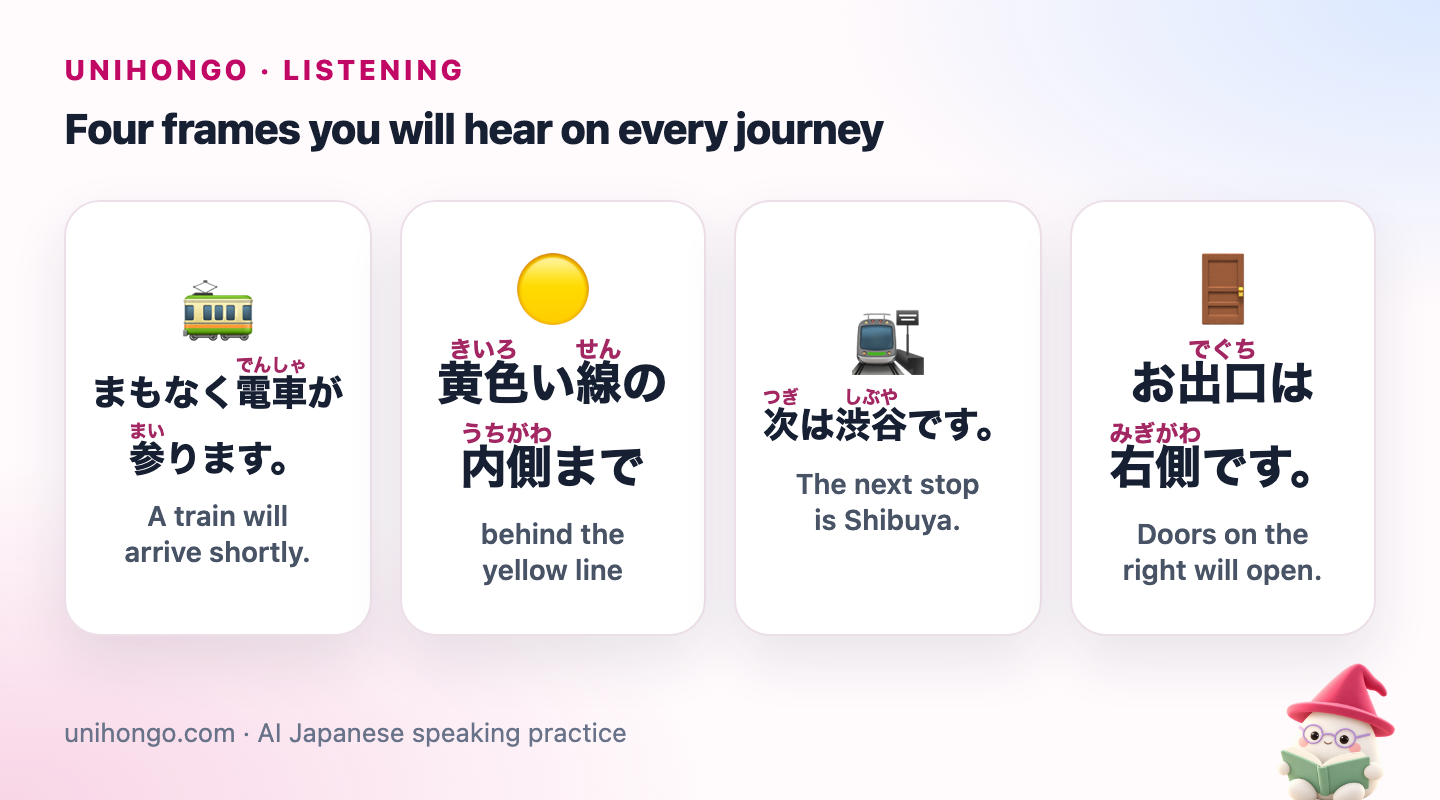
| Japanese | Romaji | Meaning |
|---|---|---|
| まもなく電車が参ります。 | Mamonaku densha ga mairimasu. | A train will arrive shortly. |
| 黄色い線の内側まで | kiiroi sen no uchigawa made | behind the yellow line |
| 次は渋谷です。 | Tsugi wa Shibuya desu. | The next stop is Shibuya. |
| お出口は右側です。 | Odeguchi wa migigawa desu. | Doors on the right will open. |
The script: a local train to Shinjuku
Here is a sequence of announcements on a local train bound for Shinjuku, from the platform to the next station, with a short stop for train spacing and a delay notice. The wording is typical but invented; each railway company has its own exact phrasing. The last two lines are a question to station staff.
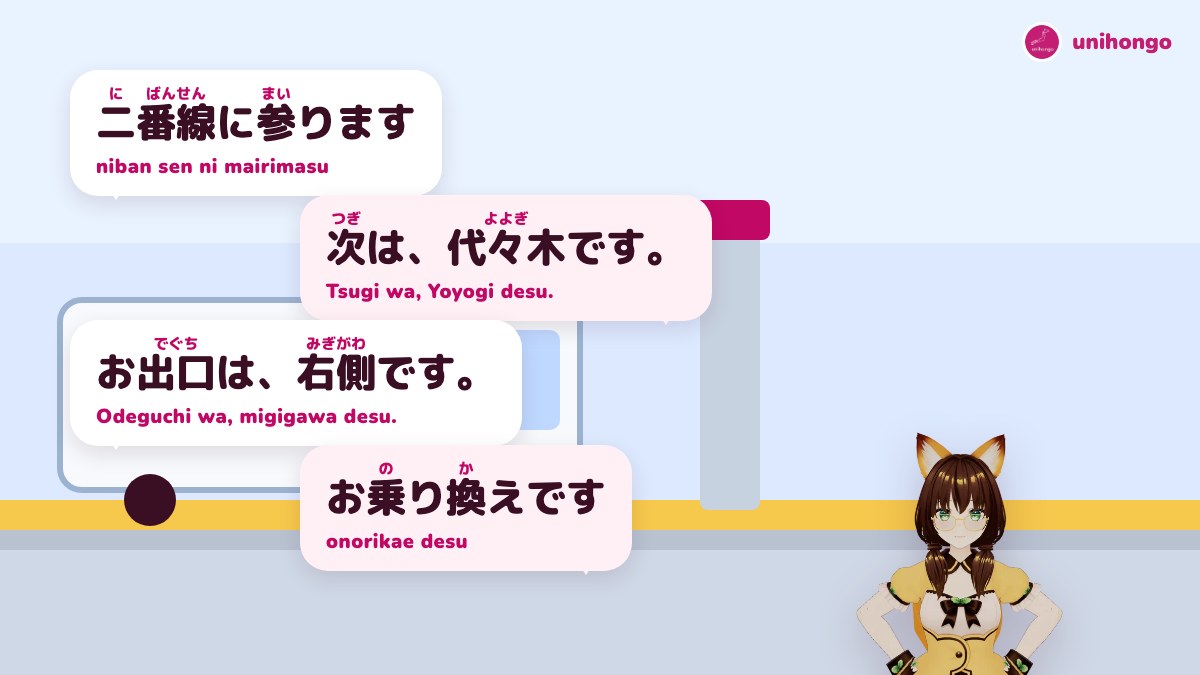
| Japanese | Romaji | Meaning |
|---|---|---|
| まもなく、二番線に、各駅停車、新宿行きが参ります。 | Mamonaku, niban sen ni, kakueki teisha, Shinjuku yuki ga mairimasu. | Platform: A local train bound for Shinjuku will soon arrive at platform 2. |
| 危ないですから、黄色い線の内側までお下がりください。 | Abunai desu kara, kiiroi sen no uchigawa made osagari kudasai. | Platform: For your safety, please stand behind the yellow line. |
| ドアが閉まります。ご注意ください。 | Doa ga shimarimasu. Gochūi kudasai. | Platform: The doors are closing. Please be careful. |
| 駆け込み乗車はおやめください。 | Kakekomi jōsha wa oyame kudasai. | Platform: Please do not rush onto the train. |
| 本日も、ご利用いただきまして、ありがとうございます。 | Honjitsu mo, goriyō itadakimashite, arigatō gozaimasu. | Train: Thank you for travelling with us today. |
| この電車は、各駅停車、新宿行きです。 | Kono densha wa, kakueki teisha, Shinjuku yuki desu. | Train: This is a local train bound for Shinjuku. |
| 次は、代々木、代々木です。 | Tsugi wa, Yoyogi, Yoyogi desu. | Train: The next stop is Yoyogi, Yoyogi. |
| お出口は、右側です。 | Odeguchi wa, migigawa desu. | Train: The doors on the right side will open. |
| 山手線、大江戸線は、お乗り換えです。 | Yamanote sen, Ōedo sen wa, onorikae desu. | Train: Change here for the Yamanote Line and the Oedo Line. |
| 車内では、携帯電話をマナーモードに設定の上、通話はお控えください。 | Shanai de wa, keitai denwa o manā mōdo ni settei no ue, tsūwa wa ohikae kudasai. | Train: Please set your phone to silent mode and refrain from calls on the train. |
| ただいま、前の電車との間隔調整のため、少々停車いたします。 | Tadaima, mae no densha to no kankaku chōsei no tame, shōshō teisha itashimasu. | Conductor: We are stopping briefly to adjust the spacing with the train ahead. |
| お急ぎのところ、ご迷惑をおかけしております。 | Oisogi no tokoro, gomeiwaku o okake shite orimasu. | Conductor: We apologise for the inconvenience while you are in a hurry. |
| 発車まで、今しばらくお待ちください。 | Hassha made, ima shibaraku omachi kudasai. | Conductor: Please wait a little longer until we depart. |
| ただいま、信号トラブルの影響で、ダイヤが乱れております。 | Tadaima, shingō toraburu no eikyō de, daiya ga midarete orimasu. | Platform: Due to a signal problem, trains are not running on schedule. |
| すみません、この電車は新宿に止まりますか。 | Sumimasen, kono densha wa Shinjuku ni tomarimasu ka. | You: Excuse me, does this train stop at Shinjuku? |
| はい、止まりますよ。終点です。 | Hai, tomarimasu yo. Shūten desu. | Staff: Yes, it does. It's the last stop. |
What to listen for
Every announcement has one or two slots that change: the platform number, the train type, the destination, the next station, the door side. Everything else is a frame you can learn by heart. Train your ear to wait for the slot.
The pace is slow and even, but the audio is often unclear, and station names repeat. The repetition is deliberate: 次は、代々木、代々木です gives you two chances to catch the name. The train type comes before the destination, so listen for 各駅停車, 快速 or 急行 before you hear 新宿行き.
| Key word | Reading | What it tells you |
|---|---|---|
| 〜番線 | -ban sen | Platform number |
| 〜行き | -yuki | Destination of the train |
| 各駅停車 / 快速 / 急行 | kakueki teisha / kaisoku / kyūkō | Train type: local, rapid, express |
| お出口 | odeguchi | Which side the doors open |
| お乗り換え | onorikae | Lines you can change to |
| 終点 | shūten | Last stop |
| 見合わせ | miawase | Service is suspended |
- 参ります is humble for 来ます, and お下がりください is honorific for 下がってください. Staff speak to passengers as customers.
- 〜行き is read yuki in announcements. You may also hear iki in everyday speech; both mean bound for.
- Many lines also play the announcements in English, but platform changes, delays and staff announcements are often in Japanese only.
Delay announcements
When something goes wrong, the frames change, and these are the announcements visitors most need to understand. The structure is usually the reason, then the effect, then the apology, and sometimes advice on other routes.
| Japanese | Romaji | Meaning |
|---|---|---|
| 人身事故の影響で、運転を見合わせております。 | Jinshin jiko no eikyō de, unten o miawasete orimasu. | Platform: Service is suspended due to an accident involving a person. |
| 運転再開は、十時ごろを見込んでおります。 | Unten saikai wa, jūji goro o mikonde orimasu. | Platform: Service is expected to resume around ten o'clock. |
| 振替輸送を実施しております。 | Furikae yusō o jisshi shite orimasu. | Platform: Alternative transport is available on other lines. |
| 遅延証明書をお配りしております。 | Chien shōmeisho o okubari shite orimasu. | Platform: We are handing out delay certificates. |
A three-pass listening routine
- Pass 1, the slots: listen without the text and write only the changing information: platform, train type, destination, next stop, door side, transfer lines.
- Pass 2, the frames: listen again and say each frame along with the speaker, leaving the slot empty: まもなく、□番線に…
- Pass 3, the delay lines: read along with the text and make sure you can explain each delay announcement in English: reason, effect, what to do.
- Real-world pass: on a train or a video of a Japanese line, write down the next station and the door side before the English version plays.
Real station audio is easy to find in travel vlogs and train-ride videos, but quality varies; choose clips where you can see the line and station names, so you can check what you heard.
If you live in Japan, use your commute. Pick one announcement a week, such as the transfer line or the door side, and listen only for that on every journey. Small, focused goals build the habit far better than trying to understand everything at once.
Shadowing announcements
Shadowing announcements is a little unusual, because you will never make them. It is still worth doing for a week, for two reasons. The formal frames become automatic, so your ear stops working on them, and the slow, even delivery is a good model for clear long vowels and small tsu.
Copy the steady rhythm and the pauses after each comma. Notice the long vowels in 停車, 終点 and 乗車, and the run of them in 間隔調整, kankaku chōsei. Many learners shorten long vowels when they read fast, and announcements are a calm model for keeping them.
A good way to start is with the station names on your own regular line. Shadow the next-station announcement for each stop, then try to say the next one before the recording does. Once you can anticipate the station names, the rest of each announcement becomes background, and your attention is free for the unusual announcements, such as delays or platform changes, which are the ones that really matter.
Variations you will hear on other lines
Each railway has its own style, and long-distance trains add more. These lines are common variations of the frames above.
| Japanese | Romaji | Meaning |
|---|---|---|
| この電車は、快速、東京行きです。 | Kono densha wa, kaisoku, Tōkyō yuki desu. | Train: This is a rapid service bound for Tokyo. |
| 次の停車駅は、横浜です。 | Tsugi no teishaeki wa, Yokohama desu. | Train: The next stop is Yokohama. |
| お忘れ物のないよう、ご注意ください。 | Owasuremono no nai yō, gochūi kudasai. | Train: Please make sure you have all your belongings. |
| この電車は、この駅止まりです。 | Kono densha wa, kono eki domari desu. | Train: This train terminates at this station. |
Learn the frames before your next ride
Type /quiz train announcements into the Mocchi chat and ask for the key word to be blanked out. Mocchi checks your answers, explains the keigo in each frame, and keeps a note of the ones you miss so a later /review brings them back.
Then train your ear with sound: Listen & Pick, one of the quick games on Unihongo's games page, is a short listening drill, and it can use your own flashcards, so a deck of station words and delay terms becomes a two-minute warm-up before you travel.