
Four lines for running late
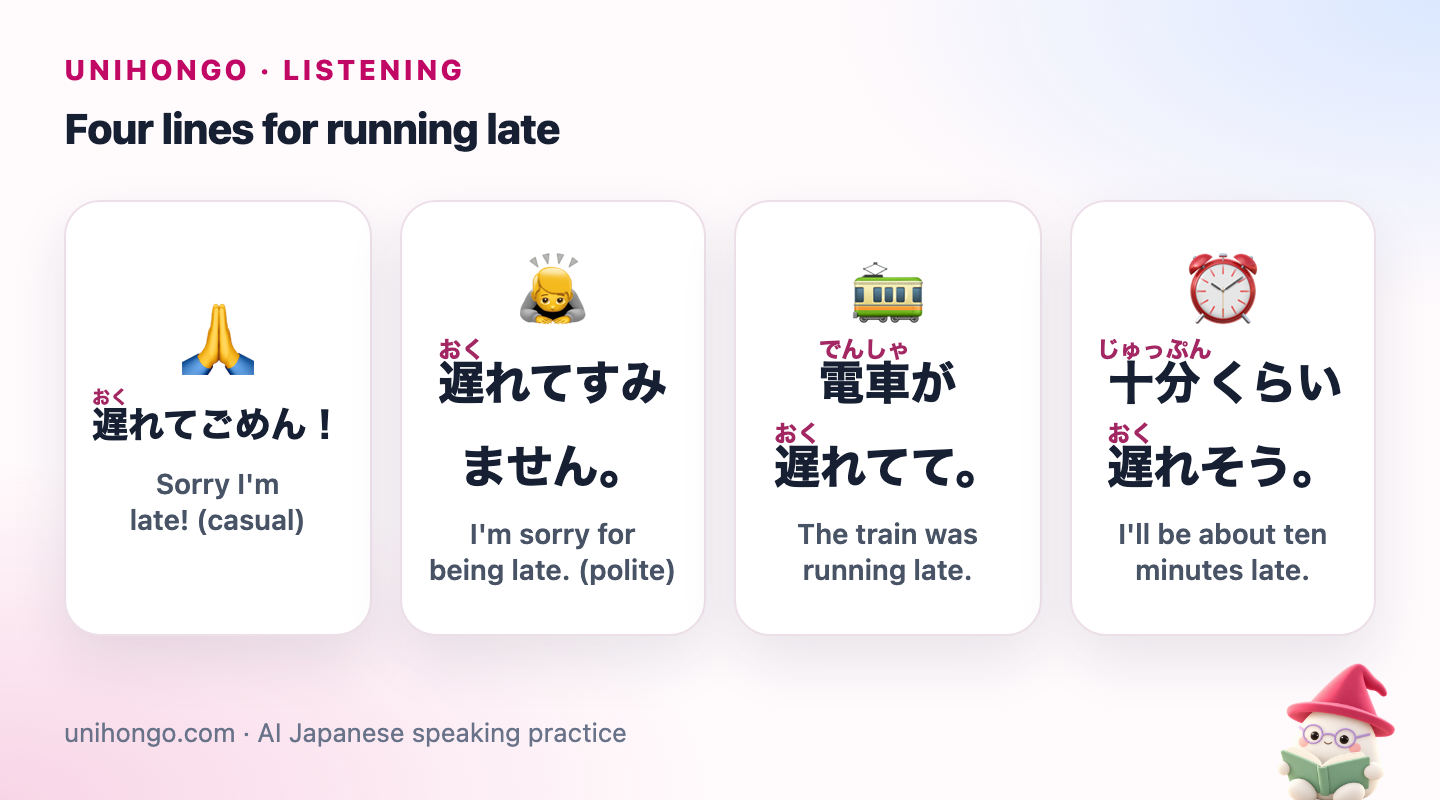
Two apologies, one reason, one time estimate: these four lines cover most late arrivals. The first is casual and the second polite, so notice how different they feel even though both say sorry I'm late.
| Japanese | Romaji | Meaning |
|---|---|---|
| 遅れてごめん! | Okurete gomen! | Sorry I'm late! (casual) |
| 遅れてすみません。 | Okurete sumimasen. | I'm sorry for being late. (polite) |
| 電車が遅れてて。 | Densha ga okuretete. | The train was running late. |
| 十分くらい遅れそう。 | Juppun kurai okuresō. | I'll be about ten minutes late. |
The script: late for a friend, late for work
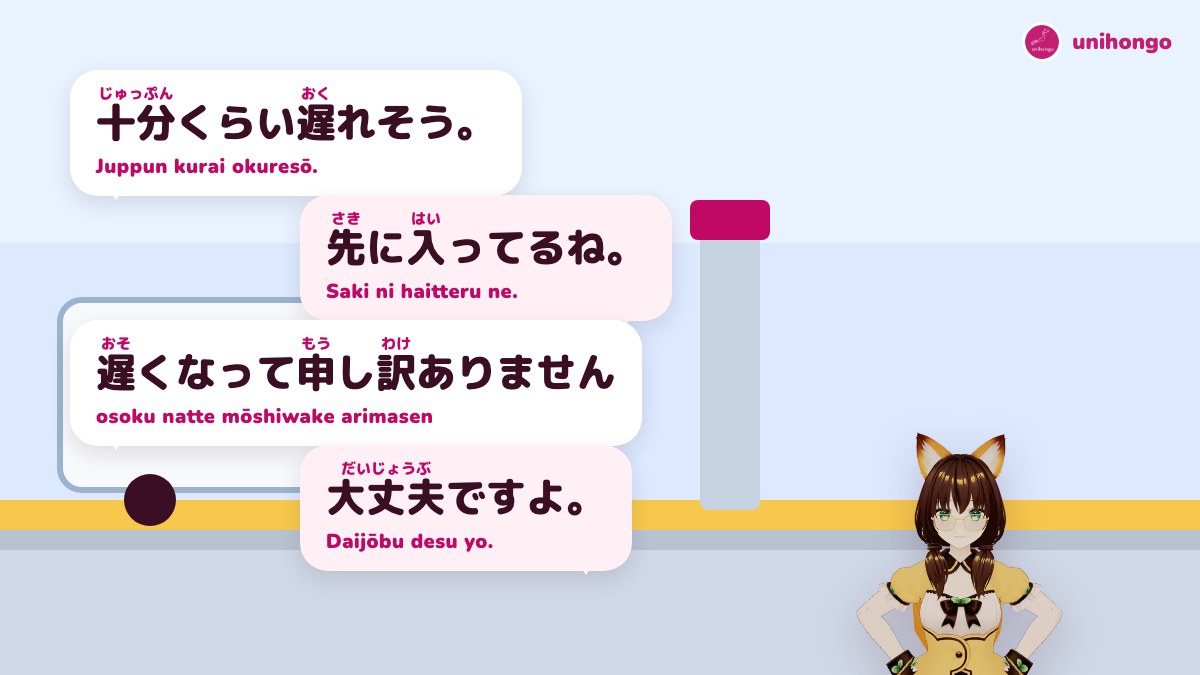
Part A is a phone call to a friend who is already waiting at a restaurant, then the moment you arrive. Part B is the same morning at the office: you walk into a meeting late and speak to your manager. Read both, then compare the length of the apologies.
| Japanese | Romaji | Meaning |
|---|---|---|
| もしもし、ごめん!今どこ? | Moshimoshi, gomen! Ima doko? | You: Hello, sorry! Where are you now? |
| もう着いてるよ。どうしたの? | Mō tsuiteru yo. Dō shita no? | Friend: I'm already here. What happened? |
| 電車が止まっちゃって、十分くらい遅れそう。 | Densha ga tomatchatte, juppun kurai okuresō. | You: My train stopped, so I'll be about ten minutes late. |
| 何線? | Nani sen? | Friend: Which line? |
| 中央線。信号トラブルだって。 | Chūō sen. Shingō toraburu da tte. | You: The Chuo Line. They say it's a signal problem. |
| そっか、大丈夫だよ。先に入ってるね。 | Sokka, daijōbu da yo. Saki ni haitteru ne. | Friend: I see, no problem. I'll go in ahead. |
| ほんとごめんね。着いたら連絡する。 | Honto gomen ne. Tsuitara renraku suru. | You: Really sorry. I'll message you when I get there. |
| お待たせ!遅れてごめん。 | Omatase! Okurete gomen. | You: Sorry to keep you waiting! Sorry I'm late. |
| 全然。気にしないで。 | Zenzen. Ki ni shinaide. | Friend: Not at all. Don't worry about it. |
| 遅くなって申し訳ありません。 | Osoku natte mōshiwake arimasen. | You: I'm very sorry for being late. |
| ああ、大丈夫ですよ。何かあったんですか。 | Ā, daijōbu desu yo. Nanika atta n desu ka. | Manager: Oh, that's all right. Did something happen? |
| 電車が遅延していまして、ご連絡が遅れてしまいました。 | Densha ga chien shite imashite, gorenraku ga okurete shimaimashita. | You: The train was delayed, and I was late in letting you know. |
| そうでしたか。今朝は雨でしたからね。 | Sō deshita ka. Kesa wa ame deshita kara ne. | Manager: I see. It was raining this morning, after all. |
| 本当に申し訳ありません。今後は早めに出るようにします。 | Hontō ni mōshiwake arimasen. Kongo wa hayame ni deru yō ni shimasu. | You: I'm truly sorry. I'll make sure to leave earlier from now on. |
| わかりました。じゃあ、始めましょうか。 | Wakarimashita. Jā, hajimemashō ka. | Manager: All right. Shall we begin? |
What to listen for
The two parts sound completely different, and the differences are worth hearing one by one. In Part A, sentences end early: 止まっちゃって and 遅れてて end in the て-form, with the rest (so I'm late, so sorry) left unsaid. Japanese listeners fill in the gap, and so should you.
In Part B, the same idea becomes 遅延していまして, a polite て-form used to give a reason in business speech. Listen for the まして ending: it signals a reason and that the apology is coming. The manager's 何かあったんですか is not an accusation; んですか asks for the story in a neutral way.
| Casual (Part A) | Polite (Part B) | Meaning |
|---|---|---|
| ごめん | 申し訳ありません | Sorry |
| 止まっちゃって | 遅延していまして | It stopped / it was delayed (reason) |
| 遅れそう | 遅れてしまいました | Late / I ended up late |
| 着いたら連絡する | 今後は早めに出るようにします | What I'll do next |
| 全然、気にしないで | 大丈夫ですよ | Forgiveness |
- ちゃう and ちゃって are casual forms of てしまう and てしまって. They add a feeling of it went wrong, which suits an apology.
- 〜だって at the end of 信号トラブルだって means they say or apparently. It reports information you heard, here from an announcement.
- ほんと is a casual ほんとう. In Part B the full 本当に is used, which sounds more serious.
- Listen to how the friend and the manager forgive: 全然 and 気にしないで are warm and casual; 大丈夫ですよ and じゃあ、始めましょうか close the matter politely and move on.
Common mistakes when apologising for lateness
- Using ごめん with a manager or a client. It sounds too light. すみません is the minimum at work; 申し訳ありません is safer.
- Starting with the reason. 電車が遅れて… before any apology can sound like an excuse. Apologise first, then add a short reason.
- Over-explaining. A long story about the train can sound as if you are shifting the blame. One clause is enough.
- Saying すみません only once you arrive. Many people in Japan send a message as soon as they know they will be late, and a late message can matter more than the late arrival.
- Forgetting the time. Say how late you will be: 五分ほど遅れます is more helpful than a vague apology.
Messages to send before you arrive
In both relationships, the message before you arrive is often more important than the apology at the door. Here are model messages in each register.
| Japanese | Romaji | Meaning |
|---|---|---|
| ごめん、十分遅れる!先に入ってて。 | Gomen, juppun okureru! Saki ni haittete. | You: Sorry, I'll be ten minutes late! Go in without me. (casual message) |
| 電車が遅れていて、五分ほど遅れます。 | Densha ga okurete ite, gofun hodo okuremasu. | You: My train is delayed, so I'll be about five minutes late. (polite) |
| 申し訳ありませんが、会議に十分ほど遅れます。 | Mōshiwake arimasen ga, kaigi ni juppun hodo okuremasu. | You: I'm very sorry, but I'll be about ten minutes late for the meeting. (formal) |
| 先に始めていただけますか。 | Saki ni hajimete itadakemasu ka. | You: Could you please start without me? (formal) |
A three-pass listening routine
- Pass 1, the facts: listen without the text and note why the speaker is late, by how much, and how each listener reacts.
- Pass 2, the registers: listen again and mark each line casual or polite. Then find the line in each part that carries the reason.
- Pass 3, the endings: read along and underline every line that ends in て or まして. Say aloud what is left unsaid after each one.
- A day later, listen only to the friend and the manager, and give your own apologies in the right register.
If you record this script yourself, record Part A at a quick, natural speed and Part B noticeably slower. The change of pace is part of what you are learning to hear.
Shadowing the two registers
Shadow Part A lightly and quickly: お待たせ!遅れてごめん has a bright, falling tone, almost a laugh. Then shadow Part B slowly and evenly, with a pause after 申し訳ありません and a slightly lower pitch. Doing both back to back trains your voice to switch registers, which is exactly the skill a real late morning needs.
Pay attention to small tsu and long vowels: 止まっちゃって has two, 申し訳 has a long vowel at the start, and 遅延 is chien, not chen.
Practise both apologies until they sound natural
Ask Mocchi /grammar ちゃう vs てしまう and you get a short explanation with examples, then a few practice sentences. Mocchi keeps track of whether you tend to choose the casual form at work, so it can bring that point back in a later review.
Then rehearse the hardest version aloud: AI Sensei has a Call Work About a Train Delay mission, where you phone your workplace, apologise and give a new arrival time while the Sensei plays your manager.