
How to Practice Japanese Speaking Alone
You can build real speaking ability alone when practice requires you to create, say, hear, and improve your own Japanese.
How to Practice Japanese Speaking Alone
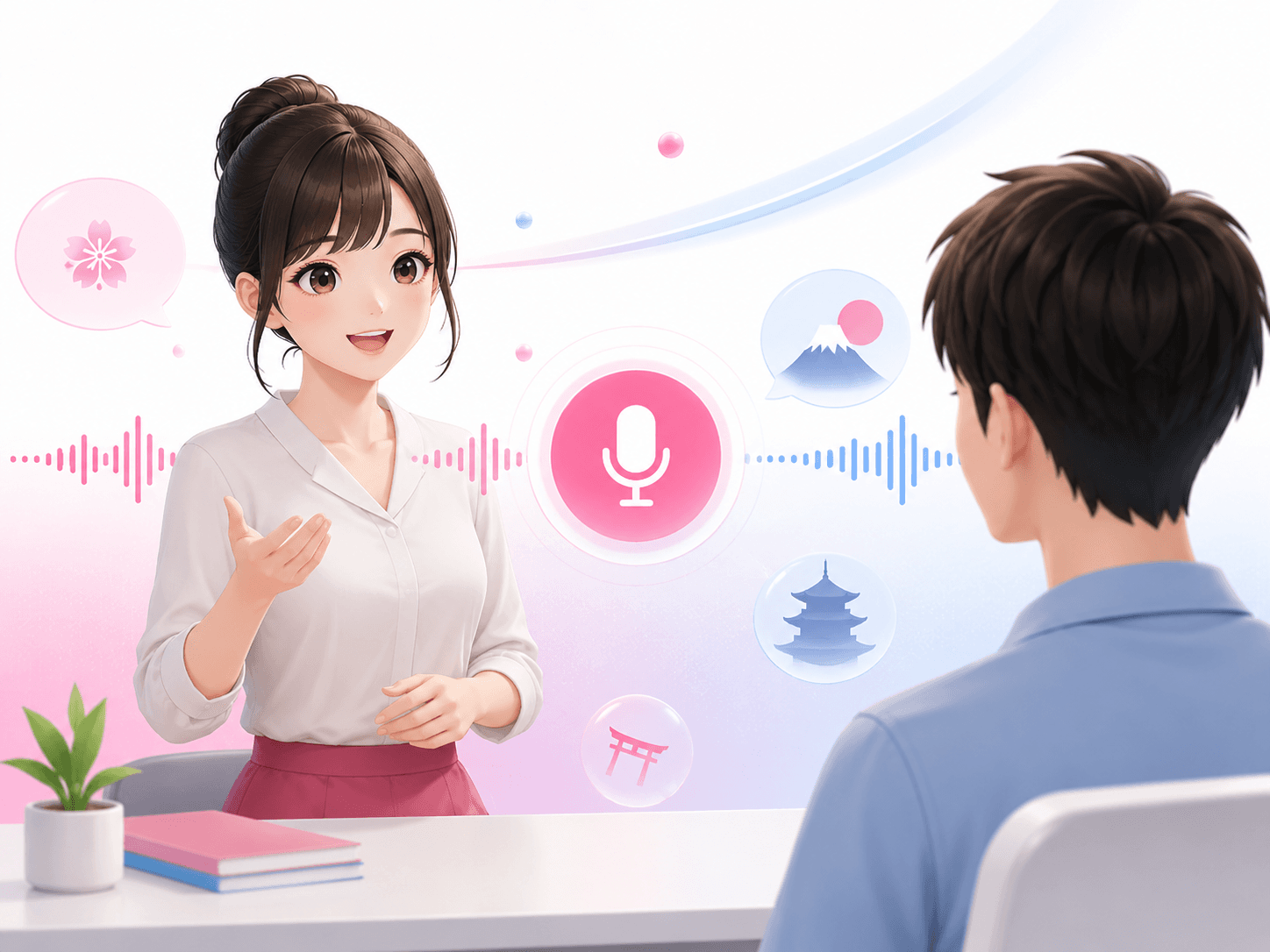
Solo speaking works best when it goes beyond silent study. Shadowing trains timing, self-talk builds quick retrieval, recordings reveal habits, and roleplay adds purpose. An AI conversation partner can add unpredictable responses when a human partner is unavailable.
Narrate simple actions and plans aloud
Answer one prompt for sixty seconds without reading
Record yourself and redo only the weakest sentence
Shadow short native audio for timing, not just speed
A practical way to improve
Use a ten-minute loop: two minutes of shadowing, three minutes answering a prompt, three minutes of roleplay or AI conversation, and two minutes reviewing one correction. Keep the same theme for several days so useful language has time to become automatic.
- 1
Choose one clear goal
Focus each session on a situation or skill you can actually use.
- 2
Practice actively
Say complete answers aloud instead of only reading or recognizing Japanese.
- 3
Review and repeat
Keep useful corrections and revisit the same skill until it feels natural.
Frequently asked questions
Can I become fluent by practising speaking alone?
Solo practice can greatly improve retrieval, pronunciation, and confidence, but interaction with human speakers remains valuable for cultural nuance and genuine communication.
What should I talk about when practising alone?
Describe your day, explain an opinion, retell a short story, rehearse an upcoming situation, or answer level-appropriate conversation prompts.
Continue learning
Turn Japanese knowledge into speaking confidence
Practice with Unihongo's AI Sensei in an immersive 3D classroom, with roleplay missions, pronunciation coaching, useful feedback, and learning games that build your vocabulary while you play.